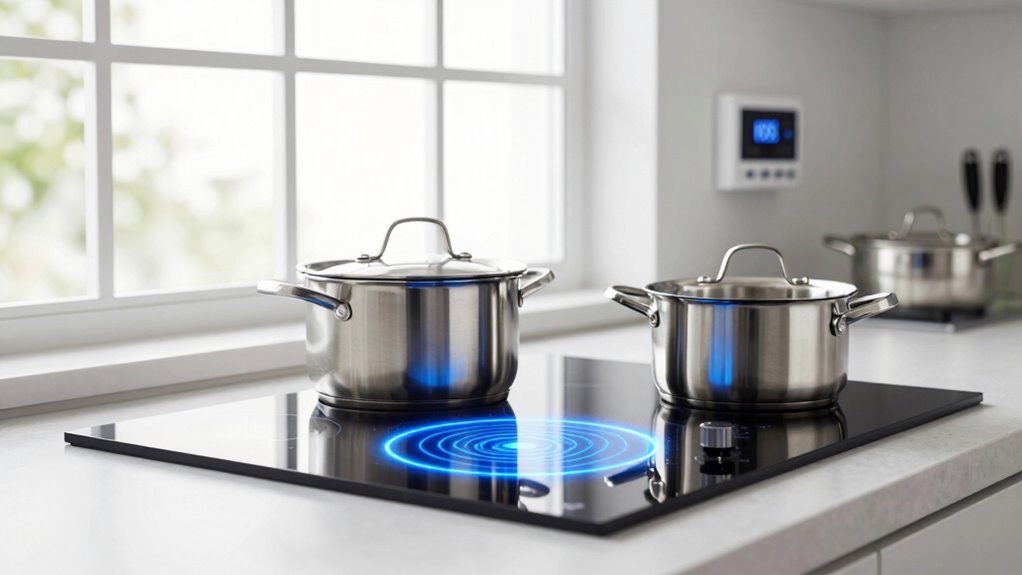
Induction cooking increases your household electrical loads because it requires a high, steady power supply to operate effectively. When you use an induction stove, it heats pots quickly, which means more energy is needed compared to traditional stoves. This sudden surge in demand can cause circuit breaker trips or voltage drops if your system isn’t prepared. To guarantee safe and efficient use, you’ll want to understand how your electrical setup handles these changes and what upgrades might be necessary.

Get backup power and energy gear delivered free — and shop member deals
- Fast, free delivery on millions of items
- Access to Prime Big Deal Days deals on October 6–7
- Prime Video, Amazon Music and more included
Key Takeaways
- Induction cooktops require high, continuous electrical power, increasing overall household electrical load.
- They operate at high power levels during use, causing significant demand fluctuations.
- Upgrading wiring and circuit breakers may be necessary to support increased load capacity.
- Rapid changes in cooking cycles demand flexible electrical systems to prevent outages.
- The higher energy efficiency impacts household energy management and consumption patterns.
Have you ever wondered how induction cooking impacts your household’s electrical system? When you switch to an induction stove, you’re not just upgrading your kitchen appliances—you’re also changing how your home manages energy. Induction cooktops are known for their energy efficiency because they directly heat pots and pans through electromagnetic fields, reducing wasted heat compared to traditional electric or gas stoves. This efficiency means less energy is needed for cooking, which can be a significant benefit for your household’s overall energy consumption and utility bills. However, this shift also influences your electrical loads, requiring you to consider safety and capacity to prevent overloads.
Induction cooking demands a substantial and steady electrical supply. Unlike traditional electric stoves that may cycle on and off, induction units often operate at high power levels continuously, especially when cooking at full capacity. This means your home’s electrical system must be capable of handling these increased loads without tripping circuit breakers or causing voltage drops. If your household wiring isn’t designed to support such high demands, you might need to upgrade your circuit breaker or wiring infrastructure. Doing so ensures your induction cooktop operates safely and efficiently without risking electrical hazards or damage.
Safety considerations are critical when integrating induction cooking into your household. Since induction stoves generate heat through electromagnetic fields rather than open flames or heated coils, they reduce fire risks associated with gas leaks or exposed heating elements. However, the electromagnetic fields themselves can interfere with certain electronics or pose hazards if not properly installed. It’s essential to have a qualified electrician evaluate your electrical system before installation to ensure it can handle the power requirements safely. Proper grounding and adherence to electrical codes help mitigate potential risks. Additionally, because induction cooktops heat up quickly and are often more responsive, you might find yourself using more frequent, shorter cooking cycles. This can lead to more dynamic electrical loads, which your household wiring must accommodate. Understanding your home’s electrical capacity and how it interacts with these rapid changes in load can help prevent electrical disturbances. While induction stoves are generally safe when installed correctly, you should also consider safety features like automatic shut-offs and child locks, which add layers of protection.
By understanding the energy demands of induction cooking, you can better prepare your electrical system for a safe and efficient transition.
Frequently Asked Questions
How Does Induction Cooking Impact Overall Home Energy Bills?
Induction cooking can lower your overall energy bills because it’s highly energy-efficient, cooking food faster and with less heat loss. You’ll see cost savings as it uses less electricity compared to traditional stoves. Plus, because it heats only the cookware and not the surrounding air, your home stays cooler, reducing cooling costs. Overall, induction cooking helps you save money on energy while providing quick, efficient meals.
Can Induction Stoves Cause Power Surges or Fluctuations?
Induction stoves can sometimes cause power fluctuations if your home’s electrical system isn’t equipped to handle their demand, potentially affecting circuit stability. You might notice flickering lights or brief power surges when using high settings. To prevent this, make sure your circuit can support the stove’s power requirements. Using dedicated circuits and upgrading your electrical system can help maintain stable power and avoid fluctuations caused by induction cooking.
What Safety Measures Are Necessary for High Electrical Loads?
To keep your household safe from the mighty surge of induction cooking, you better ground everything properly and check circuit compatibility. Don’t pretend the electrical load is just a minor nuisance; treat it like a king! Grounding safety guarantees excess current safely escapes, while making certain your circuit can handle high loads prevents overloads and fires. Your kitchen’s safety depends on respecting these measures—otherwise, you might just cook up trouble!
How Does Wiring Need to Be Upgraded for Induction Cooktops?
You need to upgrade your wiring to support induction cooktops by installing a dedicated circuit with appropriate wiring gauge, typically 6 or 8-gauge wire, depending on the cooktop’s power requirements. Also, verify the outlet placement is convenient and code-compliant, often requiring a grounded, properly rated outlet directly connected to the upgraded wiring. This ensures safety, efficient power delivery, and compliance with electrical standards.
Are There Specific Circuit Breakers Recommended for Induction Appliances?
For induction appliances, specific circuit breaker specifications are vital to guarantee safety and efficiency. You should opt for dedicated, high-amperage breakers, typically 40 to 50 amps, depending on your cooktop’s power needs. Upgrading your electrical panel may be necessary to accommodate these breakers, providing proper protection and power. Always consult a professional electrician to determine the exact circuit breaker specifications and confirm your panel can handle the upgraded electrical loads.
Conclusion
As you embrace induction cooking, you’re opening a new symphony in your home’s electrical landscape. Like a swift river reshaping its course, induction changes how your household handles power—fast, efficient, and dynamic. This modern marvel doesn’t just cook; it transforms your entire electrical flow, turning your kitchen into a conductor of innovation. So, gear up for this electric revolution—your home’s energy dance is about to become more vibrant and responsive than ever before.
Fall Picks
fall essentials
As an affiliate, we earn on qualifying purchases.