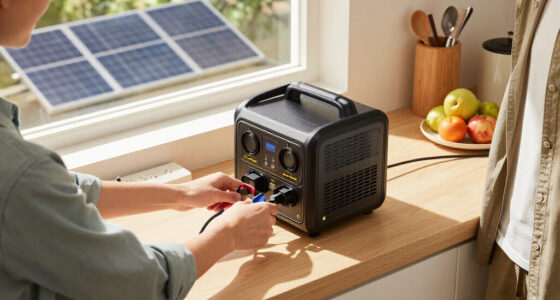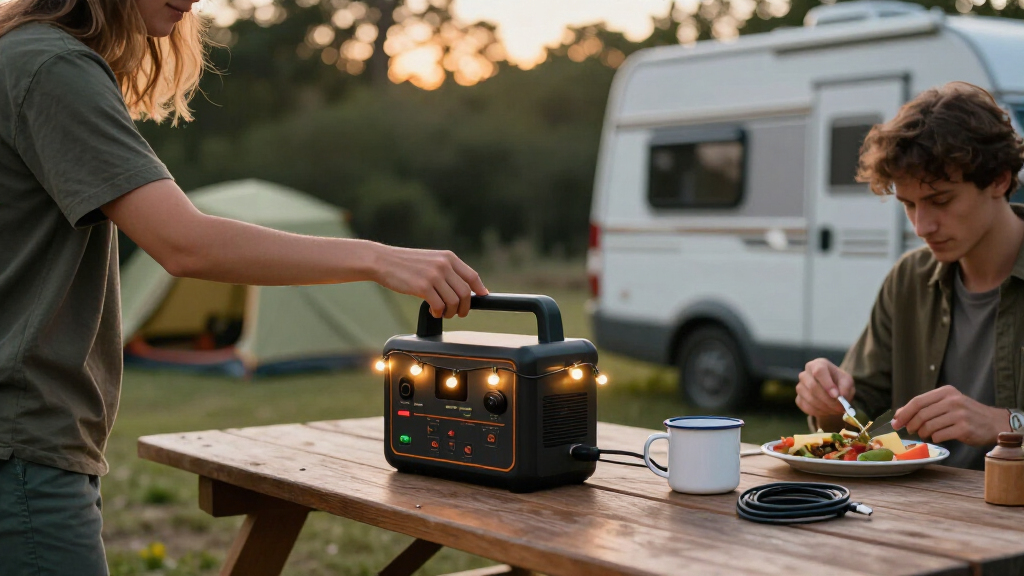
The Anker SOLIX C1000 Gen 2 is my best overall pick for balancing everyday portability with enough capacity for a broad range of backup and travel needs. For longer outages, the Jackery Explorer 2000 v2 and BLUETTI Elite 300 offer much larger energy reserves, while compact options such as the Jackery Explorer 300 suit lighter loads and shorter trips. Choosing among portable power stations means weighing capacity and output against size, charging options, and how long you need power away from an outlet. A bigger battery can run more devices for longer, but it is heavier and may be excessive for phones and small electronics. Read on for the full comparison, buying advice, and recommendations by use case.

Get backup power and energy gear delivered free — and shop member deals
- Fast, free delivery on millions of items
- Access to Prime Big Deal Days deals on October 6–7
- Prime Video, Amazon Music and more included
Complete the kit


Key Takeaways
- The Anker SOLIX C1000 Gen 2 leads as the all-around choice because this lineup includes both much smaller travel units and much larger backup stations, and the C1000 Gen 2 sits between those extremes.
- Capacity changes the job a station can do. The 88Wh MARBERO M82 and roughly 300Wh models fit small electronics and short outings, while the 1,800Wh-plus stations are more suited to longer backup needs.
- Large capacity is not the same as high output. Match a station’s wattage limit to the devices you plan to run, especially appliances with heating elements or motors.
- Battery chemistry and intended lifespan help separate the small picks. The ALLWEI 256Wh model specifies a LiFePO4 battery, a useful distinction for buyers comparing compact stations for recurring use.
- A bundled solar panel changes the setup, not the battery’s capacity. The Jackery Solar Generator 1000 V2 pairs a station with a 200W panel, which may suit off-grid charging better than buying a station alone, but solar input depends on conditions and setup.
| Anker SOLIX C1000 Gen 2 Portable Power Station |  | Best Overall | Battery capacity: 1,024Wh | Battery chemistry: LiFePO4 | Output: 2,000W; 3,000W peak | VIEW LATEST PRICE | See Our Full Breakdown |
| Anker SOLIX C300 Portable Power Station, 288Wh |  | Best for Port Variety | Capacity: 288Wh | Battery type: LiFePO4 | Running output: 300W; 600W surge | VIEW LATEST PRICE | See Our Full Breakdown |
| ALLWEI Portable Power Station, 300W, 256Wh, LiFePO4 Battery |  | Best for Flexible Recharging | Capacity: 256Wh | Battery chemistry: LiFePO4 | Continuous output: 300W; 600W peak surge | VIEW LATEST PRICE | See Our Full Breakdown |
| Jackery Explorer 2000 v2 Portable Power Station, 2042Wh |  | Best for Extended Backup | Battery capacity: 2,042Wh | Battery chemistry: LiFePO4 | AC output: 2,200W | VIEW LATEST PRICE | See Our Full Breakdown |
| Jackery Explorer 300 Portable Power Station |  | Best Compact Camping Pick | Battery capacity: 292Wh | Battery chemistry: LiFePO4 | Peak output: 600W | VIEW LATEST PRICE | See Our Full Breakdown |
| Anker SOLIX S2000 Portable Power Station, 2,010Wh |  | Best for Longer Home Backup | Battery capacity: 2,010Wh | Battery type: LiFePO4 | Continuous output: 1,500W | VIEW LATEST PRICE | See Our Full Breakdown |
| BLUETTI Elite 100 V2 Portable Power Station, 1024Wh, 1800W |  | Best for Fast-Charging Backup | Battery capacity: 1,024Wh | Battery type: LiFePO₄ | Surge output: 3,600W | VIEW LATEST PRICE | See Our Full Breakdown |
| Jackery Explorer 1000 v2 Portable Power Station |  | Best for Lightweight 1kWh Portability | Capacity: 1,070Wh | Battery type: LFP | Output power: 1,500W | VIEW LATEST PRICE | See Our Full Breakdown |
| Jackery Solar Generator 1000 V2 with 200W Solar Panel |  | Best Solar-Ready Bundle | Battery capacity: 1,070Wh | Battery type: LFP | AC output: 1,500W | VIEW LATEST PRICE | See Our Full Breakdown |
| BLUETTI Elite 30 V2 Portable Power Station, 288Wh, 600W |  | Best Compact Backup | Capacity: 288Wh | Battery type: LFP | Continuous output: 600W | VIEW LATEST PRICE | See Our Full Breakdown |
| BLUETTI Elite 300 Portable Power Station, 3014Wh |  | Best for RV and Extended Backup | Battery capacity: 3014Wh | Battery type: LiFePO4 | AC output: 2400W | VIEW LATEST PRICE | See Our Full Breakdown |
| EBL Acc2400 Portable Power Station, 1843.2Wh LiFePO4 Battery, 2400W |  | Best for Multiple Devices | Battery capacity: 1843.2Wh | Battery type: LiFePO4 | Output wattage: 2400W | VIEW LATEST PRICE | See Our Full Breakdown |
| 500W Portable Power Station, 519.48Wh |  | Best for Small Electronics and Camping | Battery capacity: 519.48Wh | AC output: 500W pure sine wave | AC outlets: 2, 110V | VIEW LATEST PRICE | See Our Full Breakdown |
| BLUETTI AC180 Portable Power Station, 1152Wh LiFePO4 Battery, 1800W Output |  | Best Balanced Mid-Size Station | Battery capacity: 1152Wh | Battery type: LiFePO4 | Running output: 1800W | VIEW LATEST PRICE | See Our Full Breakdown |
| MARBERO M82 Portable Power Station, 88Wh |  | Best Compact Emergency Companion | Battery capacity: 88Wh | Running output: 80W | Surge output: 120W | VIEW LATEST PRICE | See Our Full Breakdown |
| portable power station | Weight | Battery capacity | Battery type |
|---|---|---|---|
| Anker SOLIX C1000 Gen 2 Portab | 11.3kg | 1,024Wh | — |
| Anker SOLIX C300 Portable Powe | 4.13kg | — | LiFePO4 |
| ALLWEI Portable Power Station | 6.4lb | — | — |
| Jackery Explorer 2000 v2 Porta | 39.5lb | 2,042Wh | — |
| Jackery Explorer 300 Portable | About 7.5lb | 292Wh | — |
| Anker SOLIX S2000 Portable Pow | 35.7 lbs | 2,010Wh | LiFePO4 |
| BLUETTI Elite 100 V2 Portable | 25 lbs | 1,024Wh | LiFePO₄ |
| Jackery Explorer 1000 v2 Porta | 23.8 lbs | — | LFP |
| Jackery Solar Generator 1000 V | 23.8 lbs | 1,070Wh | LFP |
| BLUETTI Elite 30 V2 Portable P | 9.5 lbs | — | LFP |
| BLUETTI Elite 300 Portable Pow | 58 lbs | 3014Wh | LiFePO4 |
| EBL Acc2400 Portable Power Sta | Listed as 54–55 pounds | 1843.2Wh | LiFePO4 |
| 500W Portable Power Station | 18 lbs | 519.48Wh | — |
| BLUETTI AC180 Portable Power S | 37.4 pounds | 1152Wh | LiFePO4 |
| MARBERO M82 Portable Power Sta | 3.2 lbs | 88Wh | — |
More Details on Our Top Picks
Anker SOLIX C1000 Gen 2 Portable Power Station
The Anker SOLIX C1000 Gen 2 is my strongest all-around pick for buyers who need more than device charging but don’t want to carry a 2,000Wh-class station. Its 1,024Wh battery and 2,000W output can handle a broader mix of backup and campsite equipment than the compact Anker SOLIX C300 or Jackery Explorer 300. Fast AC charging is useful when outages are brief or a departure is coming up, while solar input and app controls add flexibility away from an outlet. The under-10ms UPS switchover is a notable advantage for keeping sensitive electronics powered, though it does not replace a dedicated home backup system. The tradeoffs are its 11.3kg carry weight and 600W solar-input ceiling, which limits how quickly it can take advantage of larger solar arrays.
Pros:- 1,024Wh capacity and 2,000W output support more demanding gear than the 300W compact models in this lineup.
- AC charging takes 49 minutes, with solar charging supported up to 600W.
- UPS switchover under 10ms suits short interruptions affecting connected electronics.
- LiFePO4 battery is rated to retain at least 80% capacity after 4,000 cycles.
Cons:- At 11.3kg, it is less convenient to carry than the Anker SOLIX C300 or Jackery Explorer 300.
- The 600W solar-input limit may slow recharging compared with stations that accept larger solar arrays.
Best for: Campers and households wanting one mid-capacity station for electronics, small appliances, and short backup periods, with fast recharging and UPS support.
Not ideal for: Buyers who need long runtimes for several high-wattage appliances or want to carry a station comfortably over long distances; a larger-capacity unit or a lighter compact model is a better fit.
- Battery capacity:1,024Wh
- Battery chemistry:LiFePO4
- Output:2,000W; 3,000W peak
- AC charging time:49 minutes
- Solar input:600W maximum, 60V maximum
- UPS switchover:Under 10ms
- Weight:11.3kg
- Warranty:5 years
Our verdict“Choose the C1000 Gen 2 for a versatile mix of useful capacity, high output, and fast recharging, provided its weight and solar-input limit fit your plans.”
Anker SOLIX C300 Portable Power Station, 288Wh
The Anker SOLIX C300 makes sense for travelers who run several small devices and value flexible connections more than appliance power. Its eight charging ports, including USB-C output up to 140W, give it an edge over the ALLWEI 300W station’s six listed ports when charging a varied collection of phones, cameras, and laptops. It is also slightly lighter than the Jackery Explorer 300, though both remain compact, low-output choices rather than substitutes for a full-size backup station. Wall, car, USB-C, and compatible solar charging offer several ways to top it up, and the 25dB noise figure suits quiet campsites. The limits are clear: 300W running output rules out many appliances, and the solar panel is optional, with compatibility needing attention. A shoulder strap is also sold separately.
Pros:- Eight ports accommodate a wide range of devices at once.
- USB-C output reaches 140W, useful for compatible high-power laptops.
- Can recharge by wall outlet, car, USB-C, or compatible solar panel.
- LiFePO4 battery is rated for 3,000 cycles, with a 5-year warranty.
Cons:- The 288Wh capacity and 300W running output limit appliance use and longer runtimes.
- Solar panel is optional, and some Anker panels are incompatible.
- Shoulder strap is sold separately.
Best for: Travelers and campers charging phones, cameras, and USB-C laptops who want multiple connection options in a quiet, compact station.
Not ideal for: Buyers who need to power appliances above 300W or want one included solar setup; consider a higher-output station or budget for a compatible panel.
- Capacity:288Wh
- Battery type:LiFePO4
- Running output:300W; 600W surge
- Charging ports:8
- USB-C output:Up to 140W
- Recharge to 80%:50 minutes via wall outlet
- Weight:4.13kg
- Noise level:25dB at 3.3ft
- Warranty:5 years
Our verdict“Pick the C300 when port flexibility and quiet device charging matter more than running appliances or maximizing battery capacity.”
ALLWEI Portable Power Station, 300W, 256Wh, LiFePO4 Battery
The ALLWEI 300W is a practical compact pick for buyers who may need to recharge in different settings rather than rely on one power source. It supports AC, car, solar, and combined AC-and-solar charging, a useful distinction from the Anker SOLIX C300 and Jackery Explorer 300, whose listed charging options do not include combined AC-and-solar input. At 6.4lb, it is also lighter than the Anker, making it easier to pack for a short trip. Its six ports cover common devices, while the LED light’s SOS mode adds a basic emergency feature. Capacity is only 256Wh, however, and 300W continuous output keeps it firmly in phone, laptop, and small-device territory. The solar panel is sold separately, and this is not the station to choose for higher-wattage appliances.
Pros:- Supports AC, 12V car, solar, and combined AC-and-solar recharging.
- At 6.4lb, it is lighter than the Anker SOLIX C300.
- Six output ports include 60W USB-C PD and an AC outlet.
- LiFePO4 battery is rated for 3,000 cycles, and the LED light includes SOS mode.
Cons:- The 256Wh capacity offers less stored energy than the Anker SOLIX C300 and Jackery Explorer 300.
- 300W continuous output limits use to lower-wattage equipment.
- Solar panel is sold separately.
Best for: Light-pack campers and road travelers who want a small station with several charging routes and an emergency light for phones and modest electronics.
Not ideal for: People planning to run higher-wattage appliances or needing extended power for multiple devices; its 256Wh capacity and 300W continuous output are restrictive.
- Capacity:256Wh
- Battery chemistry:LiFePO4
- Continuous output:300W; 600W peak surge
- Output ports:1 AC, 2 DC5521, 1 car, 1 USB-A, 1 USB-C
- USB-C output:60W PD
- Recharging methods:AC, 12V car, solar, AC + solar
- Weight:6.4lb
- Dimensions:9.25 × 5 × 6.81in
- Warranty:5 years
Our verdict“Choose the ALLWEI if low carry weight and multiple recharging methods matter more than capacity or appliance-level output.”
Jackery Explorer 2000 v2 Portable Power Station, 2042Wh
For buyers who prioritize stored energy over easy carrying, the Jackery Explorer 2000 v2 offers roughly twice the capacity of the Anker SOLIX C1000 Gen 2 and a little more AC output. That larger 2,042Wh LiFePO4 battery can keep compatible devices running longer between recharges, making it a stronger fit for extended camping or home backup than the smaller stations here. AC charging reaches 80% in 66 minutes, while quiet charging below 30dB may matter in a tent or shared living space. Its 20ms backup switching is slower than the Anker C1000 Gen 2’s under-10ms figure, so I would favor the Anker for faster transfer to connected electronics. The Jackery’s own tradeoff is portability: 39.5lb is substantial, and solar panels are optional.
Pros:- 2,042Wh capacity provides substantially more stored energy than the Anker SOLIX C1000 Gen 2.
- 2,200W AC output supports higher loads than the 300W compact stations.
- AC charging reaches 80% in 66 minutes, with solar charging supported.
- Quiet charging is rated below 30dB, and the battery uses LiFePO4 chemistry.
Cons:- At 39.5lb, it is much less convenient to carry than the C1000 Gen 2 or compact models.
- 20ms backup switching is slower than the Anker C1000 Gen 2’s under-10ms transfer.
- Solar panels are sold separately.
Best for: Campers and households seeking longer runtimes for compatible gear and willing to move a heavier station only occasionally.
Not ideal for: People who need a lightweight station for frequent carrying or particularly fast UPS transfer; the Anker SOLIX C1000 Gen 2 is lighter and has a shorter listed switchover time.
- Battery capacity:2,042Wh
- Battery chemistry:LiFePO4
- AC output:2,200W
- AC outlets:3
- USB-C output:100W PD
- AC charging time:0–80% in 66 minutes
- Solar charging time:As few as 6 hours with 400W panels
- Backup switching:20ms
- Weight:39.5lb
Our verdict“Choose the Explorer 2000 v2 for longer runtimes and stronger output when you can accept its substantial carry weight and slower backup switching.”
Jackery Explorer 300 Portable Power Station
The Jackery Explorer 300 is a straightforward compact option for charging everyday devices on a campsite or during short trips. Its 292Wh capacity and 300W rated output put it in the same basic power class as the Anker SOLIX C300 and ALLWEI 300W, so none should be mistaken for appliance-focused backup stations. The Jackery’s listed connections include two AC outlets and a 100W USB-C PD port, offering a useful mix for small electronics; the Anker C300, by comparison, provides more ports and higher USB-C output. At about 7.5lb, the Explorer is still portable, though heavier than the Anker C300 and ALLWEI. Solar charging is supported, but the panel is separate, and the stated wall charging time of four hours is less compelling for buyers who need a rapid turnaround.
Pros:- 292Wh capacity and 300W rated output suit common portable electronics.
- Two AC outlets, USB-C PD, USB-A, and a car port provide varied connections.
- Solar charging is supported, with 80% charge listed in about 2.8 hours using a 100W panel.
- Compact dimensions make it easier to pack than larger backup stations.
Cons:- Solar panel is not included.
- 300W rated output limits the appliances it can run.
- At about 7.5lb, it is heavier than the Anker SOLIX C300 and ALLWEI 300W.
Best for: Campers and day-trip travelers who want a familiar, compact station for phones, cameras, and other modest electronics, with optional solar charging.
Not ideal for: Buyers needing fast wall recharging, more than 300W of continuous output, or the lightest compact option; the Anker SOLIX C300 is lighter and offers more ports.
- Battery capacity:292Wh
- Battery chemistry:LiFePO4
- Peak output:600W
- Ports:2 AC, 1 USB-C PD, 2 USB-A, 1 car port
- USB-C output:100W PD
- Weight:About 7.5lb
- AC charge time:4 hours
- Solar charging:About 80% in 2.8 hours with a 100W panel; panel not included
Our verdict“Pick the Explorer 300 for compact campsite device charging if its slower listed wall charge and modest output suit your needs.”
Anker SOLIX S2000 Portable Power Station, 2,010Wh
The 2,010Wh LiFePO4 battery gives this Anker a longer-running backup role than the roughly 1,000Wh Jackery Explorer 1000 v2, while its 1,500W continuous output suits many everyday appliances. An eight-outlet layout and several recharge routes—including solar, generator, alternator charger, and car outlet—make it adaptable when wall power is unavailable. Its stated fridge runtime of up to 35 hours is a useful planning reference, not a guarantee; actual use depends on the appliance and conditions. At 35.7 pounds, it is heavier than the Jackery and the BLUETTI Elite 100 V2, so moving it often is a tradeoff. I’d also flag the missing 12V DC port for buyers with gear that needs a direct DC connection.
Pros:- 2,010Wh capacity paired with 1,500W continuous and 3,000W peak output
- Eight outlets provide room to power or charge several devices
- AC, solar, generator, alternator-charger, and car-outlet recharge options
- LiFePO4 battery is rated for 10,000 charge cycles
Cons:- No 12V DC port for devices that need a direct DC connection
- At 35.7 pounds, it is less convenient to carry than the Jackery Explorer 1000 v2
- Actual runtime varies with appliance, use, and temperature
Best for: Campers and households seeking a higher-capacity station for fridge backup and several devices, with multiple ways to recharge.
Not ideal for: Buyers who need a 12V DC port or plan to carry their station frequently; the missing port and 35.7-pound weight are drawbacks.
- Battery capacity:2,010Wh
- Battery type:LiFePO4
- Continuous output:1,500W
- Peak output:3,000W
- Solar input:Up to 400W
- Outlets:8
- Weight:35.7 lbs
- UPS switchover:Less than 10 ms
- Warranty:5 years
Our verdict“Choose the SOLIX S2000 for longer backup and varied recharging options, but skip it if a DC port or lower carry weight matters more.”
BLUETTI Elite 100 V2 Portable Power Station, 1024Wh, 1800W
The Elite 100 V2 combines a 1,024Wh battery with 1,800W rated output, giving it more output headroom than the Jackery Explorer 1000 v2’s 1,500W rating despite similar capacity. Its standout advantage is recharge speed: the stated TurboBoost AC mode reaches 80% in about 45 minutes, useful when an outage or departure leaves little time to refill. At 25 pounds, it is also lighter than the Anker SOLIX S2000, though it stores far less energy. Eleven ports, app control, and a UPS switchover of up to 10ms make it a flexible station for electronics and moderate backup needs. The tradeoffs are that vehicle fast charging requires a separate BLUETTI Charger 1, and 25 pounds may still feel heavy for frequent hand-carrying.
Pros:- 1,800W rated AC output exceeds the Jackery Explorer 1000 v2’s 1,500W rating
- TurboBoost AC charging is stated to reach 80% in about 45 minutes
- Eleven ports, including four AC outlets, plus Wi-Fi and Bluetooth app control
- UPS switchover of up to 10ms and a 30dB silent mode
Cons:- Vehicle fast charging requires a separate BLUETTI Charger 1
- The 1,024Wh capacity offers less stored energy than the Anker SOLIX S2000
- At 25 pounds, it may be cumbersome for frequent carrying
Best for: People who need a roughly 1kWh station with strong AC output, rapid wall charging, app controls, and UPS backup.
Not ideal for: Buyers prioritizing multi-day appliance backup or very light carry; its capacity is far below the Anker SOLIX S2000, and 25 pounds is still substantial.
- Battery capacity:1,024Wh
- Battery type:LiFePO₄
- Surge output:3,600W
- Ports:11 total; 4 AC outlets
- AC charging:About 45 minutes to 80% with 1,200W TurboBoost
- UPS switchover:Up to 10ms
- Weight:25 lbs
- Battery life:Over 4,000 cycles to 80% capacity
Our verdict“Pick the Elite 100 V2 if fast wall charging and higher output matter more than the longer runtime offered by a larger station.”
Jackery Explorer 1000 v2 Portable Power Station
At 23.8 pounds, the Explorer 1000 v2 is the lightest of the two Jackery 1,070Wh options here, making it a sensible pick for buyers who move a station between a car, campsite, and home. Its 1,500W output and 3,000W surge give it more appliance headroom than the compact BLUETTI Elite 30 V2, while three AC outlets and USB ports cover a mix of gear. Wall charging takes about 1.7 hours by default, or one hour with emergency charging enabled in the app. That faster mode is not the standard setting. Solar panels are not included, and the station is compatible only with Jackery panels, so its solar setup is less flexible than a model with broader panel compatibility. The included port mix also has just one USB-A and one DC car port.
Pros:- 1,070Wh capacity and 1,500W output in a 23.8-pound unit
- Three pure sine wave AC outlets, two USB-C ports, and a DC car port
- App controls include charging modes and quiet overnight operation
- LFP battery is rated to retain over 70% capacity after 4,000 cycles
Cons:- Solar panel is not included and solar charging is compatible only with Jackery panels
- One-hour charging requires emergency charging to be enabled in the app
- Only one USB-A port and one DC car port are listed
Best for: Campers and road-trip travelers who want about 1kWh of capacity in a relatively light station for its class.
Not ideal for: Buyers who already own non-Jackery solar panels, want a solar panel included, or need several USB-A and DC outputs.
- Capacity:1,070Wh
- Battery type:LFP
- Output power:1,500W
- Surge power:3,000W
- Weight:23.8 lbs
- AC outlets:3 pure sine wave
- Other ports:2 USB-C, 1 USB-A, 1 DC car port
- Charging time:About 1.7 hours by default; 1 hour with emergency charging enabled
- Solar compatibility:Jackery panels only; panel not included
Our verdict“Choose this Jackery for a portable 1kWh station without a bundled panel; look to the Solar Generator 1000 V2 if you want a 200W panel included.”
Jackery Solar Generator 1000 V2 with 200W Solar Panel
This bundle pairs the same 1,070Wh, 1,500W Explorer 1000 v2 format with a 200W solar panel, giving buyers a ready starting point for recharging away from wall power. That makes it a clearer choice than the standalone Jackery Explorer 1000 v2 for campers who want solar included, while the station remains lighter at 23.8 pounds than the higher-capacity Anker SOLIX S2000. The tradeoff is that the supplied panel does not remove the need to plan around sunlight, and the station and panel ship separately. Its one-hour AC recharge figure also depends on enabling emergency charging in the app. With three AC outlets, USB-C, USB-A, and a car port, it covers common devices, but it shares the standalone model’s dependence on Jackery panels for solar charging.
Pros:- Includes a 200W solar panel, unlike the standalone Jackery Explorer 1000 v2
- 1,070Wh capacity and 1,500W AC output support a range of common devices
- 23.8-pound station has a portable format for camping and road trips
- Multiple AC and USB ports, app controls, and a 5-year warranty
Cons:- Station and solar panel ship separately
- One-hour full charging requires emergency charging to be enabled in the app
- Solar charging works only with Jackery panels
Best for: Campers and road-trippers who want a portable 1kWh-class station with a 200W solar panel in the package.
Not ideal for: Buyers who need more stored energy than 1,070Wh, already own another brand’s solar panels, or need both components to arrive together.
- Battery capacity:1,070Wh
- Battery type:LFP
- AC output:1,500W
- Surge peak:3,000W
- Solar panel:200W
- Ports:3 AC, 2 USB-C, 1 USB-A, 1 DC car port
- Weight:23.8 lbs
- Fast charging:0–100% in 1 hour with emergency charging enabled in the app
- Warranty:5 years
Our verdict“Choose this bundle over the standalone Explorer 1000 v2 if an included solar panel matters more than panel flexibility or a higher-capacity station.”
BLUETTI Elite 30 V2 Portable Power Station, 288Wh, 600W
The 288Wh Elite 30 V2 is the compact choice in this group: at 9.5 pounds, it is much easier to carry than the 23.8-pound Jackery Explorer 1000 v2, but its smaller battery is suited to shorter outages and lighter loads, not extended appliance backup. Its 600W continuous output handles smaller devices, while Power Lifting Mode reaches 1,500W for compatible equipment; that mode should not be read as the same continuous capacity as the Jackery’s 1,500W rating. Nine total outlets and several charging methods add flexibility, and wall charging reaches 80% in 45 minutes. The ≤10ms UPS function can help keep sensitive devices powered through an outage. Solar charging is supported, but no panel is listed among the included items, so buyers must plan that part separately.
Pros:- Compact 9.5-pound design is easier to carry than the larger stations in this group
- 600W continuous output with up to 1,500W Power Lifting Mode for compatible devices
- Reaches 80% charge in 45 minutes with wall charging
- Nine total outlets and a UPS switching time of 10ms or less
Cons:- 288Wh capacity is limited for extended outages or appliance backup
- 600W continuous output does not suit higher-power appliances
- Solar panel is not listed among the included items
Best for: Travelers, campers, and home-office users who need a light station for phones, small electronics, and brief backup.
Not ideal for: People seeking long appliance runtimes or enough continuous output for higher-power equipment; its 288Wh capacity and 600W rating are limiting.
- Capacity:288Wh
- Battery type:LFP
- Continuous output:600W
- Power Lifting Mode:Up to 1,500W for compatible devices
- Total power outlets:9
- Weight:9.5 lbs
- Wall charging:380W; 0–80% in 45 minutes
- UPS switching time:≤10ms
- Charging methods:AC, solar, car, lead-acid, generator
Our verdict“Pick the Elite 30 V2 for portable, short-duration backup and lighter loads, not as a substitute for a 1kWh-class station.”
BLUETTI Elite 300 Portable Power Station, 3014Wh
The BLUETTI Elite 300 is the capacity pick here: its 3014Wh battery gives it more stored energy than the Jackery Explorer 2000 v2, making it better suited to longer outages or trips when recharging is uncertain. Its TT-30 RV outlet and 12V/30A DC output also make it a more purpose-built fit for RV power than the EBL Acc2400. A stated 78-minute AC recharge to 80% can help shorten time connected to a generator or wall outlet. The tradeoff is portability: at 58 pounds, it is a heavy unit to move often, and the supplied details list only two total power outlets, limiting simultaneous AC connections. I’d choose it for capacity and RV compatibility, not frequent carry or lots of plug-in devices.
Pros:- Large 3014Wh LiFePO4 capacity for longer power needs
- 2400W output with 4800W surge power
- TT-30 RV outlet and 12V/30A DC output
- AC, solar, car, lead-acid, and generator charging options
Cons:- At 58 pounds, it is cumbersome to carry regularly
- Only two total power outlets are listed, restricting simultaneous connections
- The 10ms UPS response is useful for backup but does not remove the need to match connected equipment to the available output
Best for: RV owners and households seeking substantial stored power for longer backup periods, especially when the TT-30 and 12V/30A outputs match their equipment.
Not ideal for: Campers who move their power station frequently or anyone needing many simultaneous AC connections; its 58-pound weight and two listed outlets are limiting.
- Battery capacity:3014Wh
- Battery type:LiFePO4
- AC output:2400W
- Surge power:4800W
- RV outlet:TT-30
- DC output:12V/30A
- UPS transfer time:10ms
- Weight:58 lbs
- Recharge time:78 minutes to 80%
Our verdict“Choose the Elite 300 for high capacity and RV-ready outputs, but skip it if light carry weight or plentiful outlets matter more.”
EBL Acc2400 Portable Power Station, 1843.2Wh LiFePO4 Battery, 2400W
The EBL Acc2400 is a practical choice when the number and variety of connections matter as much as capacity. It lists 12 device connections, including four AC outlets, USB-A, USB-C, DC, car, and wireless charging, so a group can keep different devices powered without relying on a small set of sockets. Its 2400W output matches the BLUETTI Elite 300’s stated running output, though the Elite 300 stores considerably more energy at 3014Wh versus 1843.2Wh. The EBL’s 0.1-second backup switching is slower than the Elite 300’s 10ms response, but still offers a quick handoff for compatible backup needs. At about 54–55 pounds, it is no lightweight, and the product details give two different weights. Pick it for connection flexibility; choose a higher-capacity station for longer runtimes.
Pros:- Four AC outlets and a broad mix of connection types
- 2400W output for compatible higher-demand devices
- LiFePO4 battery rated for over 3,500 charge-discharge cycles
- 0.1-second emergency backup switching
Cons:- Heavy at about 54–55 pounds
- Product details list two different weights
- Less stored energy than the BLUETTI Elite 300 for extended use
Best for: Households, campers, or job-site crews that need to connect a mix of AC, USB, and DC devices at once.
Not ideal for: Buyers prioritizing long runtimes or easy carrying; its 1843.2Wh capacity is below the BLUETTI Elite 300, and its roughly 54–55-pound listed weight is substantial.
- Battery capacity:1843.2Wh
- Battery type:LiFePO4
- Output wattage:2400W
- AC ports:4
- Maximum device connections:12
- Emergency backup switching:0.1 seconds
- Battery cycle life:Over 3,500 charge-discharge cycles
- Weight:Listed as 54–55 pounds
- Warranty:2 years
Our verdict“Choose the Acc2400 when connecting many kinds of devices is the priority, not when you need the lineup’s longest capacity or an easy-to-carry unit.”
500W Portable Power Station, 519.48Wh
This 519.48Wh portable power station makes more sense for phones, laptops, lights, and other modest loads than for household appliances. Its 500W pure sine wave inverter is a clear limit: devices drawing more than that are outside its stated capacity, unlike the 1800W BLUETTI AC180. For smaller electronics, the mix of 10 outputs—including USB-C PD up to 60W, QC3.0 USB-A, DC, car, and wireless charging—helps a group share the unit. Wall, car, and compatible solar charging add flexibility away from home, though the solar panel is not included. At 18 pounds, it is lighter than the much larger EBL Acc2400, but it still has less stored energy than compact options such as the 519.48Wh figure suggests only in capacity; check your device draw and expected runtime before relying on it.
Pros:- 10 output ports cover AC, USB-A, USB-C, DC, car, and wireless charging
- Pure sine wave AC output suits compatible sensitive electronics
- Can recharge from a wall outlet, car, or compatible solar panel
- Built-in protections cover temperature, overvoltage, overcurrent, and short circuits
Cons:- 500W maximum output rules out devices with higher power demands
- Solar panel is not included
- 18-pound weight is less convenient than the compact MARBERO M82
Best for: Car campers and day-trip users who need to charge phones, laptops, lights, and other devices drawing no more than 500W.
Not ideal for: Buyers who need to run high-wattage appliances or power equipment above 500W; also skip it if you expect solar charging without buying a compatible panel.
- Battery capacity:519.48Wh
- AC output:500W pure sine wave
- AC outlets:2, 110V
- USB-A outputs:3 QC3.0, up to 18W each
- USB-C output:PD, up to 60W
- Total output ports:10
- Recharge methods:Wall outlet, car charger, compatible 100W or 200W solar panel
- Weight:18 lbs
- Dimensions:11.57 x 7.95 x 7.95 in
Our verdict“Pick this station for a varied set of small electronics and modest camping loads, not for appliances that exceed its 500W ceiling.”
BLUETTI AC180 Portable Power Station, 1152Wh LiFePO4 Battery, 1800W Output
The BLUETTI AC180 sits between small-device stations and the heavier, higher-capacity models in this roundup. Its 1152Wh battery and 1800W running output give it more headroom for compatible appliances than the 500W Portable Power Station, while its 37.4-pound weight is notably below the EBL Acc2400’s roughly 54–55 pounds. A 2700W peak output supports compatible devices with a brief higher demand, and the stated one-hour AC recharge helps when there is limited time to refill. Solar charging is supported, though the stated 2.8–3.3-hour time depends on suitable conditions. The tradeoff is capacity: it cannot match the BLUETTI Elite 300 for extended backup. I’d choose the AC180 as a middle-ground station, not as a substitute for a high-capacity outage setup.
Pros:- 1800W running output with a 2700W peak for compatible loads
- 1152Wh LiFePO4 battery in a mid-size capacity class
- Stated one-hour AC charging time
- Includes AC, car, and solar charging cables and has a 5-year warranty
Cons:- At 37.4 pounds, it is not a light carry for frequent trips on foot
- Solar charging is stated to take 2.8–3.3 hours under the specified conditions
- Less stored energy than large backup options such as the BLUETTI Elite 300
Best for: People who want a mid-size LiFePO4 station for camping or backup, with more appliance output than small electronics-focused models and less weight than large-capacity units.
Not ideal for: Buyers planning long outages without frequent recharging; its 1152Wh capacity is well below the BLUETTI Elite 300’s 3014Wh.
- Battery capacity:1152Wh
- Battery type:LiFePO4
- Running output:1800W
- Peak output:2700W
- AC charging time:1 hour
- Solar input:500W
- UPS response time:20ms
- Weight:37.4 pounds
- Warranty:5 years
Our verdict“Choose the AC180 for a balance of appliance output and manageable capacity, but opt for a larger station if longer backup runtime is the priority.”
MARBERO M82 Portable Power Station, 88Wh
The MARBERO M82 is the carry-first option in this group: at 3.2 pounds and 88Wh, it is suited to topping up personal electronics and providing light in a tent or during a brief outage. Its eight ports include AC, USB, USB-C PD, and car DC, while the three-level LED with SOS mode adds a useful emergency function without separate gear. Compared with the 519.48Wh Portable Power Station, the M82 is far easier to pack, but its 80W running output and small battery sharply limit both the appliances it can run and how long it can do so. Solar charging requires a compatible MARBERO panel, which is not listed as included. I’d treat it as a compact device charger and light source, not a household backup station.
Pros:- Compact 3.2-pound design with an ergonomic handle
- Eight output ports for several small devices
- Built-in LED offers three brightness levels and SOS mode
- Can charge from the included adapter or a compatible MARBERO solar panel
Cons:- 80W running output limits the appliances it can power
- 88Wh capacity is suited to short, modest charging needs rather than extended backup
- Compatible solar panels are not listed as included
Best for: Backpackers, drivers, and emergency-kit owners who want a lightweight source of phone charging and LED light for short-duration needs.
Not ideal for: Anyone seeking appliance power or extended backup; 88Wh capacity and 80W running output are far below the 519.48Wh, 500W station in this batch.
- Battery capacity:88Wh
- Running output:80W
- Surge output:120W
- Output ports:8
- Weight:3.2 lbs
- Dimensions:6.5 x 4.6 x 3.1 inches
- Charging time:0–80% in 2 hours with included adapter
- Solar compatibility:MARBERO 30W or 60W panels
- Lighting:Three brightness levels and SOS mode
Our verdict“Choose the M82 for portable personal-device charging and emergency light, not for running appliances or powering a home.”
How We Picked
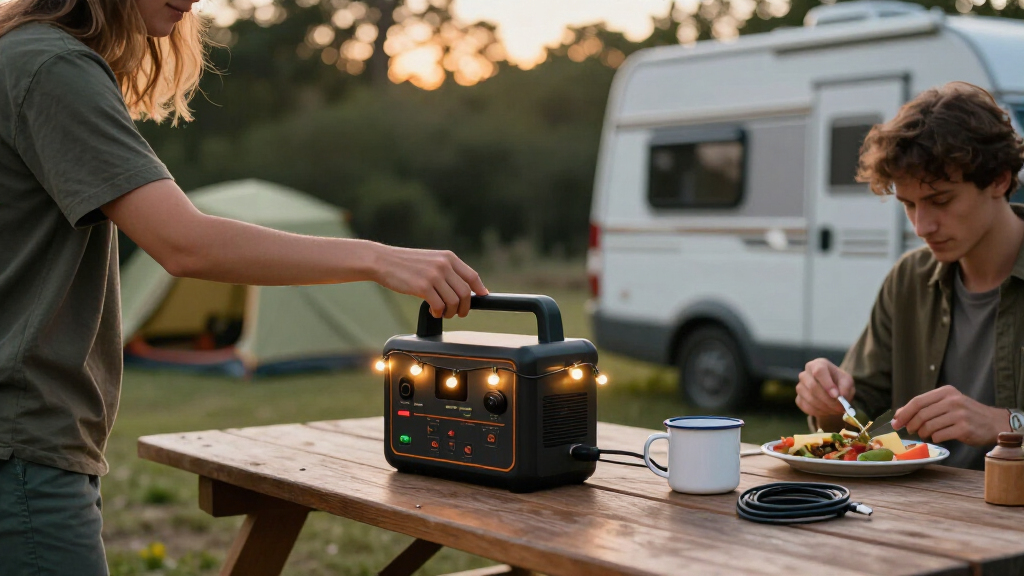
I compared these 15 portable power stations by the factors that shape real buying decisions: usable capacity, AC output, portability, battery chemistry, charging flexibility, and intended role. Capacity indicates how much energy a unit can store; output determines which devices it can operate at once. I also separated standalone stations from the Jackery Solar Generator bundle, since a panel adds a charging option but does not increase the station’s stored energy.
The ranking favors models that appear to offer a practical balance of capability and everyday usability, rather than simply rewarding the largest battery. Large units such as the BLUETTI Elite 300 and Jackery Explorer 2000 v2 rank well for extended backup but lose ground on portability. Compact picks make more sense for light loads and travel, though their limited capacity restricts runtime. Where a listed specification does not establish a feature or performance result, I avoid treating it as a proven advantage.
Factors to Consider When Choosing Portable Power Stations
Before choosing a portable power station, work backward from the devices you need to run and the length of time you need them powered. Capacity, output, and portability are separate tradeoffs; a station that excels at one may be a poor fit for another. These checks can narrow the field before you compare particular models.
Size the Battery for Runtime, Not Just Device Count
List the devices you plan to power and estimate how many hours each will run. Add their watt-hours where known, then allow for conversion losses and differences between rated battery capacity and energy delivered to an appliance. A phone and a laptop may need little stored energy, while a refrigerator or medical device can draw power for many hours. Do not assume a station with a larger headline capacity will run every device for a full day; the appliance’s consumption determines the result. Small stations in the 88–300Wh range are easier to carry but call for shorter, lighter-duty plans. For outage preparation, estimate a realistic daily energy budget before moving up to a 1,000Wh or larger unit.
Check Output Limits Before Plugging in Appliances
Capacity tells you how long energy may last, while the inverter’s output limit tells you what the station can power at a given moment. Check the continuous wattage required by each appliance and its starting surge, since motors and compressors can briefly draw more power when they start. A station can have ample stored energy and still be unable to start a high-demand appliance. Add together the loads you expect to run at the same time, rather than checking each device separately. If your plan includes a kettle, heater, or power tool, verify its demand against the station’s specifications before buying. For phones, lights, and small electronics, a lower-output compact station may avoid carrying capacity you will not use.
Treat Portability as a Practical Constraint
Battery capacity tends to bring added weight and bulk, which matters if you will carry the unit between a car, campsite, and shelter. Think through the full route: a station that is manageable in a vehicle may be awkward on stairs or over uneven ground. Small units such as the MARBERO M82 are easier to move but cannot substitute for a large backup battery. Large-capacity models make more sense when they can stay in one place or roll between nearby locations. Check the unit’s dimensions and weight against your storage space, lifting ability, and travel method. If you need to move it often, choosing a slightly smaller station can be more useful than buying the largest one available.
Compare Battery Chemistry and Expected Use Frequency
Battery chemistry can affect cycle life, weight, and how a station fits into a regular-use routine. LiFePO4 models, including the listed ALLWEI 256Wh and several larger units, may appeal to buyers who expect frequent charging and discharging, but compare the manufacturer’s cycle and warranty information rather than relying on chemistry alone. A station reserved for occasional emergencies has different demands from one used for camping every weekend. Check whether the manufacturer states a battery management system, storage guidance, and recommended operating conditions. Repeatedly leaving a battery fully charged or fully depleted for long periods can be hard on many battery types. Choose based on the maker’s documented care instructions and your expected use, not a chemistry label by itself.
Plan How You Will Recharge Away From an Outlet
Charging options matter most when the station will be used off-grid or during a prolonged outage. Compare AC charging, vehicle charging, and supported solar input, including the input limits and accessories required. A solar panel does not guarantee a particular recharge time; sunlight, panel placement, weather, and the station’s input limit all affect results. The Jackery Solar Generator 1000 V2 bundles a 200W panel, which can simplify a solar-ready purchase, but the panel does not add stored capacity. If you buy a standalone station, confirm panel compatibility before choosing a separate panel. For home backup, a known wall-outlet recharge plan may matter more than solar capability; for extended camping, solar can add flexibility when conditions cooperate.
Pay for Features That Match Your Backup Plan
It can be tempting to choose a larger station for peace of mind, but unused capacity adds weight and can make the unit harder to store and move. Pay more for a premium or higher-capacity model when you have a defined need, such as running several devices, covering a longer outage, or supporting higher-wattage loads. For occasional phone charging, lights, and small electronics, a compact station can be the more sensible fit. Check the number and types of outlets, charging speed, warranty terms, and any expansion support before comparing models. Also distinguish a portable power station from a home backup system: transfer equipment and installation may be needed to connect to household circuits safely. A clear list of loads and a runtime estimate can prevent buying either too little capacity or far more than you need.
Frequently Asked Questions
What size portable power station do I need for a weekend camping trip?
Start with the devices you will actually bring, then estimate their energy use across the trip. Phones, lights, and a laptop may fit a compact station, while a portable fridge or frequent appliance use can call for substantially more capacity. Also check the station’s output limit against the highest-wattage device you plan to plug in. Among these options, the roughly 300Wh models are aimed at lighter loads, while 1,000Wh-class units provide a larger reserve at the cost of more bulk. If you expect to recharge by solar, confirm panel compatibility and plan for changing sunlight rather than assuming a panel will refill the battery each day.
Can a portable power station run a refrigerator during an outage?
It may, but the answer depends on the refrigerator’s running draw, startup surge, and how often its compressor cycles. Check both the appliance’s power requirements and the station’s continuous and surge output ratings; capacity alone does not tell you whether the fridge can start. Estimate energy use over the number of hours you need backup, allowing for conversion losses and other devices sharing the station. The larger models in this lineup have more capacity for extended loads than the compact travel units, but their weight and storage needs are greater. If a refrigerator is a priority, verify its actual draw and test the full setup before relying on it during an outage.
Is a solar generator bundle better than buying a power station by itself?
A bundle can be a simpler route if you already know you want solar charging and its included panel is compatible with your use. In this roundup, the Jackery Solar Generator 1000 V2 includes a 200W panel, while the other listed stations are presented without that same bundle. The panel gives you an additional way to recharge; it does not raise the battery’s capacity or guarantee a specific charging time. Buying a station alone can make sense if you already own compatible panels or expect to recharge mainly from a wall outlet or vehicle. Compare panel output, connector compatibility, station input limits, and your likely sunlight conditions before choosing.
Should I choose a LiFePO4 power station for occasional emergency use?
LiFePO4 may be appealing if you expect to use and recharge a station often, but it is not the only factor that determines a good emergency purchase. Compare stated cycle life, warranty, storage guidance, capacity, and output alongside battery chemistry. If the unit will sit unused for long periods, follow the manufacturer’s instructions for storage charge and periodic checks. The lineup includes LiFePO4 options across different sizes, so chemistry alone does not tell you which one suits your household. Match the battery type to your expected use pattern, and choose a capacity that can run your priority devices for the time you need.
Can I power household circuits directly from one of these stations?
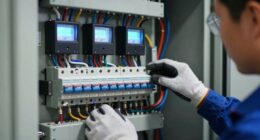
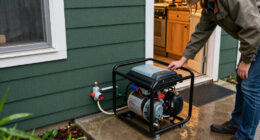
Do not assume that a portable power station can connect directly to household wiring. Powering selected circuits may require compatible transfer equipment and installation by a qualified professional, and the station must support the intended loads. Plugging a station into a wall outlet to feed a home circuit can create a dangerous backfeed risk. For basic backup, many buyers use appliance cords to connect individual devices directly to the station, within its output limits. Review the manufacturer’s instructions and local electrical requirements before planning any connection to household wiring.
Conclusion
For a single station that balances travel-friendly size with broader everyday usefulness, I would start with the Anker SOLIX C1000 Gen 2 as the best overall pick. Buyers seeking the best value for light-duty use should compare the Jackery Explorer 300 and ALLWEI 300W, 256Wh, choosing by output needs and the value they place on LiFePO4 chemistry. For premium, longer-duration backup, the BLUETTI Elite 300 and Jackery Explorer 2000 v2 offer far more stored energy, with portability as the tradeoff. Beginners with modest charging needs can start with the Jackery Explorer 300 rather than carrying a large unit they may not use. For an especially compact setup, consider the MARBERO M82; for solar-ready buying, consider the bundled Jackery Solar Generator 1000 V2. Choose by your actual device loads and runtime target, then confirm output, charging compatibility, and weight before deciding.
Halloween Picks
halloween
As an affiliate, we earn on qualifying purchases.