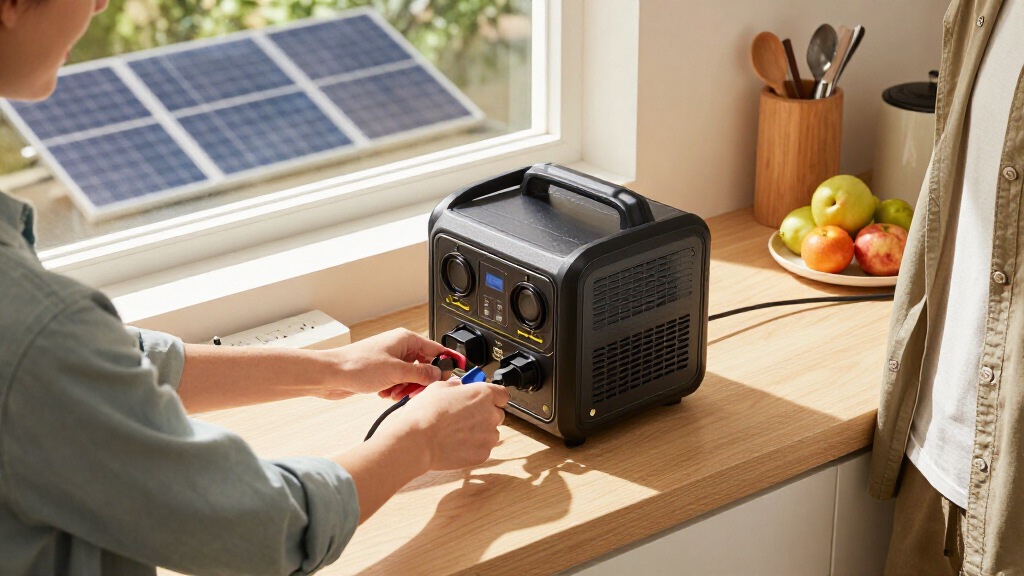

The best solar generator for home backup is the Jackery HomePower 3600 Plus with 2x200W Solar Panels, which pairs a 3584Wh battery with 3600W of AC output — enough to run a refrigerator, lights, and a few essentials through a multi-day outage. For whole-home ambitions on a budget, the ABOK Ark3600 with 400W of solar input undercuts the big names on price while matching their capacity, and the OSCAL PowerMax 6000 pushes into true heavy-duty territory with 3x400W panels. The core tradeoff in this category is simple: capacity and wattage cost money and weight, while compact units like the Jackery Explorer 300 stay portable but can’t back up anything beyond phones and a lamp. Battery chemistry, solar input speed, and expandability separate models that look similar on paper. Keep reading for the full breakdown of all 14 options and which one fits your home’s real backup needs.

Get backup power and energy gear delivered free — and shop member deals
- Fast, free delivery on millions of items
- Access to Prime Big Deal Days deals on October 6–7
- Prime Video, Amazon Music and more included
Complete the kit


Key Takeaways
- The Jackery HomePower 3600 Plus took the top spot because it balances 3600W output, 3584Wh capacity, and included solar panels at a mid-premium price — no other pick matched all three.
- The ABOK Ark3600 appears three times in this lineup in different bundles, and the version with the 400W panel and 2000W solar input is the clear best value of the three because it recharges roughly four times faster than the 3x200W kit.
- Anything under 1000Wh — the Jackery Explorer 300, the 300W Portable with 60W panel, and the Solar Generator 300 — is a camping device mislabeled as home backup; it will not run a refrigerator overnight.
- The OSCAL PowerMax 6000 is the only pick here suited to powering well pumps, electric water heaters, or heavy power tools, but its weight and price make it overkill for apartment dwellers and small homes.
- Fast solar input is the hidden differentiator: models like the EcoFlow Delta 3 and ABOK Ark3600 recharge from panels in a few hours, while budget kits can take a full day or more of sun to refill.
| Portable Solar Generator 300W with 60W Solar Panel | 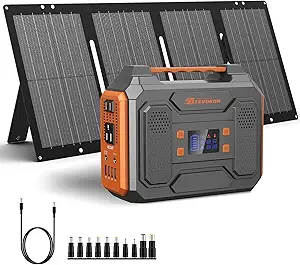 | Best Budget Starter Kit | Power Output: 300W | Solar Panel: 60W monocrystalline, foldable | Charging Inputs: AC, solar, car 12V | VIEW LATEST PRICE | See Our Full Breakdown |
| Anker SOLIX C1000 Gen 2 Portable Power Station |  | Best for Fast Recharging | Battery Capacity: 1024Wh | Continuous Output: 2000W (3000W peak) | AC Recharge: 49 minutes (HyperFlash) | VIEW LATEST PRICE | See Our Full Breakdown |
| ABOK Ark3600 Portable Power Station with 400W Solar Panel, 2000W Solar Input |  | Best for Serious Off-Grid Recharging | Battery Capacity: 3840Wh, expandable to 11520Wh | Battery Type: LiFePO4, 4000+ cycles | Output: 3600W rated, 4500W peak | VIEW LATEST PRICE | See Our Full Breakdown |
| Jackery HomePower 3600 Plus with 2x200W Solar Panels |  | Best Whole-Home Backup Value | Capacity: 3584Wh | AC Output: 3600W (7200W in parallel) | Battery Lifespan: 6000 cycles / 10 years | VIEW LATEST PRICE | See Our Full Breakdown |
| ABOK Ark3600 Portable Power Station 3600W, 3840Wh LiFePO4 Battery |  | Best Expandable Foundation (Station Only) | Battery Capacity: 3840Wh, expandable to 11520Wh | Battery Type: LiFePO4, 4000+ cycles | Rated Output: 3600W | VIEW LATEST PRICE | See Our Full Breakdown |
| Jackery Explorer 300 Portable Power Station, 292Wh |  | Best Compact Pick | Capacity: 292Wh | Rated Output: 300W (600W surge) | AC Outlets: 2 | VIEW LATEST PRICE | See Our Full Breakdown |
| Jackery Solar Generator 1000 V2 with 200W Solar Panel, 1070Wh, 1500W AC |  | Best Value Solar Kit | Capacity: 1070Wh | AC Output: 1500W (3000W surge) | Battery Type: LFP | VIEW LATEST PRICE | See Our Full Breakdown |
| Jackery HomePower 3600 Plus Power Station, 3584Wh, 3600W AC Output |  | Best Overall for Home Backup | Capacity: 3584Wh | Power Output: 3600W | Voltage: 120V & 240V in parallel | VIEW LATEST PRICE | See Our Full Breakdown |
| Jackery Solar Generator 300 with 40W Solar Panel |  | Best Budget Starter Kit | Capacity: 292Wh | Rated Output: 300W | AC Outlets: 2 | VIEW LATEST PRICE | See Our Full Breakdown |
| EcoFlow Portable Power Station Delta 3 Classic, 1024Wh, 1800W AC |  | Best Fast-Charging Contender | Capacity: 1024Wh | Output Wattage: 1800W (3600W surge) | Battery Type: LiFePO4 | VIEW LATEST PRICE | See Our Full Breakdown |
| Jackery HomePower 3000 with 2x200W Solar Panels, 3072Wh, 3600W AC Output |  | Best Overall | Capacity: 3072Wh | AC Output: 3600W (7200W surge) | Battery Type: LiFePO4 | VIEW LATEST PRICE | See Our Full Breakdown |
| ABOK Ark3600 Portable Power Station with 3×200W Solar Panels |  | Best Expandable Capacity | Capacity: 3840Wh (expandable to 11,520Wh) | Rated Output: 3600W | Battery Type: LiFePO4 | VIEW LATEST PRICE | See Our Full Breakdown |
| Anker SOLIX S2000 Portable Power Station, 2010Wh, 1500W |  | Best Compact and Lightweight | Capacity: 2010Wh | Continuous Power: 1500W (3000W peak) | Battery Type: LFP (Lithium Iron Phosphate) | VIEW LATEST PRICE | See Our Full Breakdown |
| OSCAL PowerMax 6000 Solar Generator with 3×400W Solar Panels |  | Best Premium Whole-Home Backup | Capacity: 3600Wh | Rated Power: 6000W | Surge Power: 9000W | VIEW LATEST PRICE | See Our Full Breakdown |
| solar generator for home backup | Battery Type | Capacity | Weight |
|---|---|---|---|
| Portable Solar Generator 300W | — | — | — |
| Anker SOLIX C1000 Gen 2 Portab | — | — | 11.3 kg (25 lbs) |
| ABOK Ark3600 Portable Power St | LiFePO4, 4000+ cycles | — | 92 lbs |
| Jackery HomePower 3600 Plus wi | — | 3584Wh | — |
| ABOK Ark3600 Portable Power St | LiFePO4, 4000+ cycles | — | 92 lbs |
| Jackery Explorer 300 Portable | LiFePO4 | 292Wh | 7.5 lbs |
| Jackery Solar Generator 1000 V | LFP | 1070Wh | 23.8 lbs |
| Jackery HomePower 3600 Plus Po | — | 3584Wh | — |
| Jackery Solar Generator 300 wi | LiFePO4 | 292Wh | 7.5 lbs |
| EcoFlow Portable Power Station | LiFePO4 | 1024Wh | 26.7 lbs |
| Jackery HomePower 3000 with 2x | LiFePO4 | 3072Wh | — |
| ABOK Ark3600 Portable Power St | LiFePO4 | 3840Wh (expandable to 11,520Wh) | — |
| Anker SOLIX S2000 Portable Pow | LFP (Lithium Iron Phosphate) | 2010Wh | 35.7 lbs |
| OSCAL PowerMax 6000 Solar Gene | LiFePO4 | 3600Wh | — |
More Details on Our Top Picks
Portable Solar Generator 300W with 60W Solar Panel
Buyers on a tight budget get a complete package here — station plus a 60W foldable solar panel — which most cheap options leave out. The 300W output is genuinely modest, though: it runs phones, tablets, a router, and maybe a small fan, but a refrigerator is out of the question. Compared with something like the Jackery Explorer 300, the included panel gives this bundle a real edge for true off-grid recharging, since you can trickle-charge during a multi-day outage rather than draining a fixed tank. The tradeoffs are real: 20.5% conversion efficiency and low-light performance mean solar recharging is slow, and the non-waterproof junction box limits where you can deploy the panel. For a first dip into backup power, or a blackout kit for essentials only, it covers the basics without draining a wallet.
Pros:- Includes a 60W foldable solar panel, so you can recharge during extended outages
- Seven output ports plus quick-charge USB keeps small devices topped up simultaneously
- AC, solar, and car charging gives three independent recharge paths
- Full suite of safety protections at a low price point
Cons:- 300W output cannot handle refrigerators or most kitchen appliances
- Slow solar recharging, especially in cloudy or low-light conditions
- Junction box is not waterproof, restricting panel placement
Best for: Budget-conscious buyers or apartment dwellers who want a complete starter kit for keeping phones, lights, and a router alive during short outages
Not ideal for: Anyone hoping to run a fridge, microwave, or medical device — the 300W ceiling rules out nearly all major appliances
- Power Output:300W
- Solar Panel:60W monocrystalline, foldable
- Charging Inputs:AC, solar, car 12V
- Outlets:2 AC, 1 DC, 3 USB, 1 quick-charge USB
- Conversion Efficiency:20.5%
- Protection:Short circuit, over-current, over-voltage, overload, overheating
Our verdict“A sensible, low-cost first step for essentials-only backup, as long as you accept that real appliances are off the table.”
Anker SOLIX C1000 Gen 2 Portable Power Station
The standout story here is speed: HyperFlash AC recharging in 49 minutes and a full solar top-up in 1.8 hours — figures the 300W budget unit above simply can’t touch. During a rolling outage, that matters more than raw capacity, because you can refill between blackout windows. The 1024Wh / 2000W pairing is enough to cycle a refrigerator through a day or run a home office indefinitely, putting it in the same weight class as the EcoFlow Delta 3 Classic but with a faster refill. Where it falls short of bigger units like the ABOK Ark3600 is endurance: this is a one-day bridge, not a multi-day solution, and several advanced features are locked behind the app. For apartment dwellers or suburban homeowners wanting a fast-cycling midsize unit, the compact 11.3 kg frame makes it easy to store and move.
Pros:- 49-minute AC recharge is among the fastest in its class
- 2000W continuous output runs most kitchen appliances including a full-size fridge
- Solar recharge in 1.8 hours pairs well with a modest panel array
- Compact and light at 11.3 kg for genuine portability
Cons:- Higher price per watt-hour than budget competitors
- Key power-management features require the companion app
- Nine outlets may feel tight for whole-room setups
Best for: Suburban homeowners and apartment dwellers who want a midsize unit that refills fast between outage windows
Not ideal for: Households needing multi-day fridge-plus-appliance coverage — 1024Wh runs out well before the Ark3600 or HomePower 3600 would
- Battery Capacity:1024Wh
- Continuous Output:2000W (3000W peak)
- AC Recharge:49 minutes (HyperFlash)
- Solar Recharge:1.8 hours
- Total Outlets:9
- Weight:11.3 kg (25 lbs)
- Dimensions:15.1″ x 8.2″ x 9.6″
Our verdict“The pick for buyers who value refill speed over sheer capacity and need a nimble unit for short-to-medium outages.”
ABOK Ark3600 Portable Power Station with 400W Solar Panel, 2000W Solar Input
This configuration of the ABOK Ark3600 earns its place through solar muscle: a bundled 400W panel feeding a 2000W solar input, meaning you can add more panels later and genuinely live off sunlight rather than just supplementing it. Blended AC + solar charging hits full in 1.29 hours, which beats the Jackery HomePower 3600 Plus (2 hours hybrid) despite the two having nearly identical capacity. The 3840Wh LiFePO4 core, expandable to 11520Wh, covers a fridge, lights, and electronics for days. The costs are physical and financial: 92 pounds of station plus a large panel, a steep price tag, and a setup process that assumes some comfort with power systems. Wheels and an extendable handle mitigate but don’t eliminate the weight problem for anyone moving it over stairs or rough ground.
Pros:- 2000W solar input with a bundled 400W panel enables true solar-first operation
- 3840Wh capacity expandable to 11520Wh for growing power needs
- 15 output ports run a whole household’s worth of devices at once
- Blended charging reaches full in just 1.29 hours
Cons:- 92 lb weight makes transport difficult without wheels-friendly terrain
- Expensive compared with simpler bundled kits
- Setup and app pairing can overwhelm users new to large power stations
Best for: Off-grid cabins and hurricane-zone homeowners who plan to recharge primarily from sunlight and may expand capacity later
Not ideal for: Casual campers or first-time buyers — the price, weight, and setup complexity far exceed occasional-outage needs
- Battery Capacity:3840Wh, expandable to 11520Wh
- Battery Type:LiFePO4, 4000+ cycles
- Output:3600W rated, 4500W peak
- Solar Input:2000W max
- Included Panel:400W
- Charging Time:1.29 hrs (AC+PV), 3 hrs (AC only)
- Output Ports:15
- Weight:92 lbs
Our verdict“A solar-recharging powerhouse for buyers building a genuine off-grid or storm-ready system, provided the budget and the brawn match the ambition.”
Jackery HomePower 3600 Plus with 2x200W Solar Panels
For buyers prioritizing household endurance over everything else, this bundle delivers 3584Wh of capacity with 3600W of output — enough to run a fridge, lights, and electronics for days, and Jackery claims over two weeks of appliance runtime with careful management. Against the ABOK Ark3600 with 400W panel, the tradeoffs are clear: the HomePower offers a longer 6000-cycle battery life and a clever luggage-style design, but its 400W of bundled solar trails the ABOK’s solar input ceiling, so off-grid recharging is slower at roughly 4 hours to full. The hybrid 2-hour AC recharge is the quiet advantage — plug it in overnight and it’s ready before the next outage window. Note that the two panels ship separately, so confirm all boxes arrive before an emergency. It’s the most balanced big-capacity package here for typical suburban use.
Pros:- 3584Wh capacity powers household appliances for days or even weeks
- 6000-cycle battery rated for 10 years of service
- Four recharge paths including a gas generator — rare flexibility during extended outages
- Luggage-style wheels and telescopic handle make it far easier to move than the 92-lb ABOK
Cons:- Solar recharge takes about 4 hours with the included 400W of panels
- Panels ship separately, risking incomplete deliveries
- No published weight makes portability planning harder
Best for: Suburban families who want multi-day fridge-and-essentials coverage with the easiest big-unit handling on the market
Not ideal for: Buyers wanting to run heavy continuous loads or expand past one unit cheaply — higher capacity means buying additional stations
- Capacity:3584Wh
- AC Output:3600W (7200W in parallel)
- Battery Lifespan:6000 cycles / 10 years
- Included Solar:2x 200W panels
- Charging Time:2 hrs hybrid, 2.5 hrs AC, 4 hrs solar
- Design:Luggage-style with wheels and telescopic handle
- Parallel Output:120V & 240V
Our verdict“The most well-rounded whole-home backup choice for families, provided slower solar recharging and split shipments don’t scare you off.”
ABOK Ark3600 Portable Power Station 3600W, 3840Wh LiFePO4 Battery
This panel-free version of the ABOK Ark3600 is aimed at buyers who already own solar — or plan to buy panels separately at higher wattage than any bundle includes. The core proposition matches its 400W-bundle sibling: 3840Wh expandable to 11520Wh, 3600W output, 15 ports, and a 7200W starting wattage that handles motor-heavy appliances like a well pump or air conditioner startup surge. Compared with the Jackery HomePower 3600 Plus, it skips the panel cost up front but shares the same 92-lb heft, and its 4000-cycle battery rating trails Jackery’s 6000 cycles. One spec deserves scrutiny: the 1-hour runtime figure at full 3600W load is honest but clarifies that this capacity class is for load management, not running everything at max simultaneously. For system builders, it’s the most flexible starting block in this lineup.
Pros:- Expandable to 11520Wh, the highest ceiling in this lineup
- 7200W surge rating starts motor-driven appliances like fridges and pumps
- 15 output ports plus Bluetooth app monitoring for system control
- 4000+ cycle LiFePO4 cells for a 10-year service life
Cons:- No solar panel included, adding significant cost before the system is complete
- 92 lb weight limits mobility despite wheels and handle
- Only about 1 hour of runtime at full 3600W load
Best for: DIY system builders who already own solar panels or want to choose their own array and plan to expand capacity over time
Not ideal for: Buyers wanting a complete out-of-the-box kit — with no panels included, this is not usable for solar recharging without extra purchases
- Battery Capacity:3840Wh, expandable to 11520Wh
- Battery Type:LiFePO4, 4000+ cycles
- Rated Output:3600W
- Starting Wattage:7200W
- Output Ports:15
- Connectivity:Bluetooth app control
- Weight:92 lbs
- Dimensions:21.6″ x 12.6″ x 18.5″
Our verdict“The right foundation for a custom, expandable backup system — but only for buyers ready to add their own panels and handle serious hardware.”
Jackery Explorer 300 Portable Power Station, 292Wh
This option stands out as the lightest unit in the entire lineup at just 7.5 lbs, and that changes what it’s for. While the Jackery HomePower 3600 Plus can run a refrigerator for a day, the Explorer 300 is designed for essentials-only backup: phones, a router, a CPAP machine, a few lights during a short outage. The 300W output ceiling means no microwaves, no hair dryers, no power tools — this is the tradeoff you accept for the size. What justifies the price is the LiFePO4 chemistry rated for 4,000+ cycles, which far outlasts older NMC units and means the battery won’t be toast after two years of sitting in a closet. Compared with the similarly-sized Jackery Solar Generator 300, this one skips the bundled panel, so you’ll need to add solar separately if off-grid recharging matters.
Pros:- Featherweight at 7.5 lbs — the easiest unit in the roundup to store and carry
- LiFePO4 battery rated for 4,000+ cycles for years of standby reliability
- Versatile ports including 100W USB-C PD for fast laptop and device charging
Cons:- 300W rated output can’t handle most kitchen or heating appliances
- No solar panel included, so off-grid recharging requires an extra purchase
Best for: Renters, apartment dwellers, or anyone who wants a grab-and-go emergency kit for phones, medical devices, and networking gear during brief outages
Not ideal for: Homeowners who need to run refrigerators, sump pumps, or any appliance over 300W — capacity and output are both too small for whole-home essentials
- Capacity:292Wh
- Rated Output:300W (600W surge)
- AC Outlets:2
- USB-C PD:100W
- Battery Type:LiFePO4
- Charge Cycles:4,000+
- Weight:7.5 lbs
Our verdict“Buy this if you need affordable, ultra-portable backup for devices rather than appliances — skip it if keeping a fridge running is the goal.”
Jackery Solar Generator 1000 V2 with 200W Solar Panel, 1070Wh, 1500W AC
This kit earns its spot because it’s the most complete mid-size package: you get the station and a 200W panel together, which most rivals in this roundup sell separately. Against the EcoFlow Delta 3 Classic, the Jackery 1000 V2 gives up 300W of AC output but matches the near-1kWh capacity, comes in almost 3 lbs lighter at 23.8 lbs, and includes the solar panel — that’s the value case in one sentence. The 1500W output is enough for a refrigerator, a microwave on a low setting, or a space heater briefly, which makes it a realistic first line of defense for a home outage lasting a day or so. Fast charging is genuinely useful here: a full wall recharge in about 3 hours, or roughly 6 hours of sun. The tradeoff is that hitting maximum fast-charge speeds requires app setup, and the panel ships separately from the station, so don’t expect everything in one box.
Pros:- Station and 200W solar panel bundled together for true out-of-the-box readiness
- 1500W AC output handles refrigerators and most kitchen appliances
- Full AC recharge in roughly 3 hours, or about 6 hours via solar
- LFP battery engineered for a 10+ year service life
Cons:- App setup is needed to unlock the fastest charging speeds
- Panel and station arrive in separate shipments, complicating delivery
Best for: First-time solar generator buyers who want a matched station-plus-panel kit that can run a fridge and essentials through a day-long outage
Not ideal for: Households with medical equipment or long outages — 1070Wh drains quickly under sustained appliance loads, and the 1500W ceiling rules out heavy appliances
- Capacity:1070Wh
- AC Output:1500W (3000W surge)
- Battery Type:LFP
- Charging Time:1 hr fast charge, 3 hr full AC, 6 hr solar
- Ports:3 AC, 2 USB-C, 1 USB-A, 1 DC car port
- Weight:23.8 lbs
- Extras:LED lights, app control, 100W PD USB-C
Our verdict“The best balance of capacity, portability, and included solar for buyers who want one purchase instead of piecing a system together.”
Jackery HomePower 3600 Plus Power Station, 3584Wh, 3600W AC Output
When the question is specifically home backup, this is the pick I’d put at the top of the list. The 3584Wh capacity paired with 3600W of output means it can simultaneously run a refrigerator, a freezer, lights, and a microwave — the appliances that actually matter in an outage. Compared with the ABOK Ark3600, the Jackery counters with 6,000 cycle life, a luggage-style design that’s roughly a third lighter than comparable large stations, and a 2-hour AC recharge that gets you back to full fast between storm waves. That recharge speed matters more than most buyers realize: a slow-charging unit can’t recover if outages come in succession. The honest drawback is price — this is a premium investment, and if your needs are a fridge and a router, the cheaper Jackery Solar Generator 1000 V2 covers that job for far less. Larger homes may also want a second unit, since even 3.6kWh runs dry in a day under heavy loads.
Pros:- 3600W output runs a fridge, freezer, and cooking appliances simultaneously
- 6,000-cycle battery rated for a 10-year lifespan
- 2-hour AC recharge means fast turnaround between outages
- Luggage-style design is roughly 34% lighter than comparable large stations
Cons:- Premium price point is a real barrier for many buyers
- Bigger homes with well pumps or HVAC may need a second parallel unit
Best for: Homeowners in outage-prone areas who need to run multiple major appliances at once and want fast recovery between outages
Not ideal for: Budget buyers or those with minimal backup needs — it’s expensive overkill if you only need to keep phones charged and a router alive
- Capacity:3584Wh
- Power Output:3600W
- Voltage:120V & 240V in parallel
- Cycle Life:6,000 cycles
- Lifespan:10 years
- Charging Time:2 hrs (AC+DC), 4 hrs (solar)
Our verdict“The strongest all-around answer for true whole-essentials home backup, provided the budget fits.”
Jackery Solar Generator 300 with 40W Solar Panel
This bundle takes the same 7.5 lb Explorer 300 station as the Jackery Explorer 300 standalone and adds a 40W panel, making it the cheapest entry point into solar backup in this roundup. For a first-time buyer, that matters: you learn how solar charging works without committing four figures. The catch is math — that 40W panel needs about 7.5 hours of good sun to fill the battery, versus roughly 2.8 hours with a 100W panel. So this kit makes the most sense for trickle-maintenance (keeping the battery topped up on a shelf or balcony) rather than rapid recovery during an outage. Compared with the Jackery Solar Generator 1000 V2, it’s a fraction of the price but a fraction of the capability: 292Wh and 300W versus 1070Wh and 1500W. It’s a learning tool and an emergency phone bank, not a home power solution.
Pros:- Lowest-cost way into a complete station-plus-panel solar kit
- 7.5 lb station is effortless to carry and store anywhere
- LiFePO4 chemistry rated for 4,000+ cycles outlasts budget NMC rivals
Cons:- 40W panel takes roughly 7.5 hours of sun for a full charge
- 300W output rules out virtually all kitchen appliances
- Panel may ship separately from the station
Best for: Curious first-timers, campers, and budget-limited buyers who want to try solar backup for devices without a large spend
Not ideal for: Anyone expecting outage protection for appliances — the 300W output and 292Wh capacity cover small electronics only
- Capacity:292Wh
- Rated Output:300W
- AC Outlets:2
- USB-C PD:100W
- Battery Type:LiFePO4
- Charge Cycles:4,000+
- Solar Charge Time:~7.5 hrs with 40W panel, ~2.8 hrs with 100W panel
- Weight:7.5 lbs
Our verdict“A sensible low-risk starter kit for device-level backup — just know it’s a toe in the water, not a home power system.”
EcoFlow Portable Power Station Delta 3 Classic, 1024Wh, 1800W AC
What separates the Delta 3 Classic from the pack is raw recharge speed: 0–80% in 45 minutes from a wall outlet — a full workday’s worth of power back in under an hour. In an outage stretched across days, that speed lets you top up during brief grid returns or a friend’s outlet, something the Jackery Solar Generator 1000 V2 (3 hours to full) can’t match. The 1800W output also edges out the Jackery’s 1500W, enough headroom for a microwave alongside a fridge. Add UPS protection, which switches over instantly when the grid drops, and you have a genuinely capable desktop-of-the-den backup unit. The tradeoffs are real, though: it doesn’t accept EcoFlow’s Delta 2 or Delta 3 expansion batteries, so you can’t grow capacity later — a limitation the Jackery ecosystem handles better. And at 26.7 lbs with only 6 outlets, it’s better treated as a semi-stationary unit than something you haul around.
Pros:- 0–80% recharge in 45 minutes is the fastest in this capacity class
- 1800W output with 3600W surge handles appliances the Jackery 1000 V2 can’t
- UPS pass-through protects computers with seamless switchover
- LiFePO4 battery rated for 10+ years of service
Cons:- No compatibility with Delta 2 or Delta 3 expansion batteries caps future growth
- 26.7 lbs with a 6-outlet limit makes it less travel-friendly than rivals
Best for: Buyers who prioritize rapid recharging and instant UPS switchover for computers and home-office equipment during flickering or repeated outages
Not ideal for: Anyone planning to expand capacity later — no expansion battery compatibility — or buyers who want panels bundled in the box
- Capacity:1024Wh
- Output Wattage:1800W (3600W surge)
- Battery Type:LiFePO4
- Charging Time:0–80% in 45 min (AC), 2.5 hrs (solar)
- Outlets:6
- Voltage:120V
- Weight:26.7 lbs
- Extras:Smart app control, UPS protection
Our verdict“The pick for speed-obsessed home-office backup, as long as you accept its fixed capacity.”
Jackery HomePower 3000 with 2x200W Solar Panels, 3072Wh, 3600W AC Output
Jackery HomePower 3000 hits the balance point most home-backup buyers are actually looking for: 3072Wh of capacity paired with 3600W of AC output, which is enough to run a refrigerator, lights, and a few heavy draws simultaneously. Compared with the Anker SOLIX S2000, it nearly doubles the continuous output, meaning it can handle a well pump or space heater where the Anker would trip its limit. Its 2.2-hour AC recharge is genuinely fast for this capacity class, and the LiFePO4 chemistry rated for 4,000 cycles means roughly a decade of typical backup use. The tradeoff: the included 400W of solar is modest, so off-grid recharging takes up to nine hours — slower than the OSCAL PowerMax 6000’s 2400W solar input.
Pros:- 3600W output runs most household appliances simultaneously
- Fast 2.2-hour AC recharge with 1.7-hour hybrid option
- LiFePO4 battery rated for 4,000 cycles
- Compact, portable design compared with larger 3600Wh-class units
Cons:- Only 400W of included solar panels, so solar recharging is slow
- Panels ship separately and may arrive in separate packages
Best for: Homeowners who want a set-and-forget backup unit that covers essentials during multi-hour outages without paying whole-home prices
Not ideal for: Off-grid users relying primarily on solar, since 400W of panels makes full recharges slow
- Capacity:3072Wh
- AC Output:3600W (7200W surge)
- Battery Type:LiFePO4
- Cycle Life:4,000 cycles
- AC Charging Time:2.2 hours
- Hybrid Charging Time:1.7 hours
- Solar Recharge:Up to 80% in 9 hours
- Included Panels:2×200W
Our verdict“The safest all-around choice for home backup — enough power and capacity for real outages at a mid-tier size and price.”
ABOK Ark3600 Portable Power Station with 3×200W Solar Panels
What separates the ABOK Ark3600 from fixed-capacity rivals like the Jackery HomePower 3000 is expandability: 3840Wh base capacity grows to 11,520Wh, enough to stretch backup runtime from a day to several. That matters for buyers in areas with multi-day outages who would otherwise need a second generator. The 1.29-hour recharge using combined AC plus solar input is the fastest in this batch, beating even the OSCAL PowerMax 6000’s 1.96 hours. Port selection is generous, including a 30A AC outlet for RV or high-draw applications. The compromise is size — expanded configurations are effectively stationary installations, and 600W of included solar will only trickle-charge a battery this large off-grid.
Pros:- Expandable from 3840Wh to 11,520Wh for multi-day outages
- Fastest recharge in the lineup: 1.29 hours with AC plus solar
- 30A AC outlet supports RV and high-draw equipment
- Smart app control for monitoring and management
Cons:- Expansion batteries add substantial cost and bulk
- 600W of included solar is underpowered for the battery’s size
Best for: Households in outage-prone regions who want to start with one unit and scale up to multi-day whole-house runtime
Not ideal for: Anyone wanting a grab-and-go emergency kit, since the unit and expansion batteries are large and heavy
- Capacity:3840Wh (expandable to 11,520Wh)
- Rated Output:3600W
- Battery Type:LiFePO4
- Charge Cycles:4,000+
- Recharge Time:1.29 hours (AC + solar)
- Max Input:1500W AC, up to 2000W solar
- Output Ports:13 ports including 30A AC, USB-C PD 100W, XT60
- Included Panels:3×200W
Our verdict“The right pick if your biggest fear is a multi-day outage — buy the base unit now, expand when you need it.”
Anker SOLIX S2000 Portable Power Station, 2010Wh, 1500W
At 35.7 lbs and roughly the footprint of a small cooler, the Anker SOLIX S2000 is the one unit here a single person can carry upstairs or stash in a closet without planning ahead. That portability comes at the cost of muscle: its 1500W continuous output is less than half the Jackery HomePower 3000’s 3600W, so a microwave plus a fridge simultaneously may be too much. Still, 2010Wh covers roughly 35 hours of fridge runtime, and the 10,000-cycle LFP battery is the longest-lived in this roundup — a meaningful edge if the unit sits idle most of the year. The absence of a 12V DC port is an odd omission for anyone running car-style accessories.
Pros:- Lightest and most compact in the roundup at 35.7 lbs
- 10,000-cycle LFP battery with a 15-year lifespan
- Up to 35 hours of refrigerator backup on one charge
- Four recharge methods including car outlet and generator
Cons:- 1500W continuous output limits simultaneous appliance use
- No 12V DC port for car-style accessories
Best for: Apartment dwellers and renters who need fridge-and-essentials backup they can store and move easily
Not ideal for: Houses with well pumps or electric heating, since 1500W won’t run high-draw appliances
- Capacity:2010Wh
- Continuous Power:1500W (3000W peak)
- Battery Type:LFP (Lithium Iron Phosphate)
- Cycle Life:10,000 cycles
- Weight:35.7 lbs
- Dimensions:8.2 × 11.1 × 12.7 inches
- Max Solar Input:400W
- Recharging Options:AC, solar, generator, car outlet
Our verdict“Choose this if portability and battery longevity matter more than raw power — skip it if you need to run big appliances.”
OSCAL PowerMax 6000 Solar Generator with 3×400W Solar Panels
The OSCAL PowerMax 6000 is the closest thing in this lineup to a true standby system: 6000W of rated output with 9000W surge, 120V/240V dual voltage for running 240V appliances like dryers or well pumps, and automatic switchover during outages so the lights stay on without you touching anything. Neither the Jackery HomePower 3000 nor the ABOK Ark3600 offers that hands-off transfer. With 1200W of included solar and 2400W solar input, it also recharges off-grid far faster than the Jackery’s 400W panel setup. You pay for it in weight, price, and a shorter 2-year warranty versus the 10-year battery ambitions of competitors like the Anker SOLIX S2000.
Pros:- 6000W output with 9000W surge handles whole-home loads
- 240V dual-voltage support for high-demand appliances
- Automatic switchover during power outages
- 1200W of included solar with 2400W input for fast off-grid recharge
Cons:- Heavy and bulky — effectively stationary once placed
- 2-year warranty is short for a premium investment
- Higher price than every other pick in this roundup
Best for: Homeowners who want near-standby-generator performance with solar recharging and automatic outage response
Not ideal for: Budget buyers or anyone needing a portable unit — it’s heavy, bulky, and priced accordingly
- Capacity:3600Wh
- Rated Power:6000W
- Surge Power:9000W
- Battery Type:LiFePO4
- Cycle Life:Up to 3,500 cycles
- Charging Time:1.96 hours (0–100%)
- Max Input:2200W AC, 2400W solar
- Voltage Output:120V/240V dual voltage
- Included Panels:3×400W
Our verdict“If you want backup that behaves like a built-in standby system rather than a portable power station, this is the one to buy.”
How We Picked
I ranked these 14 solar generators on four buyer-facing criteria, weighted for the home backup use case specifically. First, capacity and output: a unit needs enough watt-hour storage and inverter capacity to run essential appliances — a refrigerator alone demands roughly 150W running with a 600W+ startup surge, which immediately disqualified sub-500Wh units from top rankings. Second, recharge speed and solar input ceiling, because during a multi-day outage the only way to refill the battery is the sun; a 2000W solar input rating matters as much as battery size. Third, battery chemistry and lifespan, with LiFePO4 cells earning preference for their 3000+ cycle ratings versus older lithium-ion packs. Fourth, real value: what the included panels, warranty, and app ecosystem add relative to price.
The ranking logic follows a capacity-to-purpose ladder. Whole-home performers (Jackery HomePower 3600 Plus, OSCAL PowerMax 6000, ABOK Ark3600) sit at the top because they answer the search intent directly. Mid-size units like the Anker SOLIX C1000 and EcoFlow Delta 3 fill the apartment-and-essentials tier. Small models rank lower not because they’re bad products, but because they serve a different job than the one this reader is trying to solve — and I say so plainly in each review rather than pretending a 292Wh power station backs up a house.
| solar generator for home backup | Battery Type |
|---|---|
| Portable Solar Generator 300W | — |
| Anker SOLIX C1000 Gen 2 Portab | — |
| ABOK Ark3600 Portable Power St | LiFePO4, 4000+ cycles |
| Jackery HomePower 3600 Plus wi | — |
| ABOK Ark3600 Portable Power St | LiFePO4, 4000+ cycles |
| Jackery Explorer 300 Portable | LiFePO4 |
| Jackery Solar Generator 1000 V | LFP |
| Jackery HomePower 3600 Plus Po | — |
| Jackery Solar Generator 300 wi | LiFePO4 |
| EcoFlow Portable Power Station | LiFePO4 |
| Jackery HomePower 3000 with 2x | LiFePO4 |
| ABOK Ark3600 Portable Power St | LiFePO4 |
| Anker SOLIX S2000 Portable Pow | LFP (Lithium Iron Phosphate) |
| OSCAL PowerMax 6000 Solar Gene | LiFePO4 |
Factors to Consider When Choosing Solar Generator For Home Backup
Before spending anywhere from $300 to $4,000 on a solar generator, it helps to understand where buyers most often go wrong. These are the factors that actually determine whether your unit performs during a real outage, not just on a spec sheet.Size Your Battery to Your Real Load, Not Your Imagination
The most common mistake is buying capacity you don’t need — or worse, buying half of what you do. Start by listing the appliances you genuinely must run during an outage: usually a refrigerator (roughly 1.5kWh per day), phone and laptop charging, a few LED lights, and maybe a CPAP machine or a fan. Add those daily figures up, multiply by your target number of outage days, and you have your minimum watt-hour requirement. A 1000Wh unit covers one day of true essentials; a 3500Wh unit covers a family’s essentials for two to three days or partial whole-home use. The people who regret their purchase most often bought small to save money and then discovered their fridge died at 2 a.m.
Surge Wattage Matters More Than Rated Wattage
Appliances with motors — refrigerators, freezers, well pumps, sump pumps, furnaces — draw two to four times their running wattage for a second or two at startup. A generator rated at 1000W continuous may shut down entirely when a fridge’s compressor kicks on, even though the fridge only uses 150W while running. Look at the surge or peak rating and confirm it exceeds your largest appliance’s startup draw by a comfortable margin. This is a major hidden reason a ‘1500W’ unit can’t back up a home while a ‘3600W’ unit can: it’s rarely about the running load and almost always about that compressor spike. If you have a well pump or anything with a large induction motor, budget for 2000W of surge headroom minimum.
Solar Input Speed Determines Whether It’s Actually Backup
A big battery with slow solar recharging is just a battery that dies once. During an extended outage, the question isn’t capacity — it’s whether daily solar harvest outpaces daily consumption. A 400W panel array in average conditions produces roughly 1.5–2kWh per day, which covers a fridge and lights but not much else. Models with high solar input ceilings (1000W–2000W) let you add more panels later and refill fully in a single sunny day, while entry-level kits with a single 60W panel can take a week to recharge a large battery. Check two numbers: the included panel wattage and the maximum solar input the station accepts. Buying a station that accepts 2000W of input with only 200W of panels included is often smarter than a kit that maxes out at 200W, because you can expand later.
Battery Chemistry and Cycle Life Affect Total Cost of Ownership
LiFePO4 (lithium iron phosphate) batteries now dominate this category for good reason: they tolerate 3000+ charge cycles versus roughly 500–800 for older lithium-ion chemistries. Over a decade of occasional outage use and regular top-offs, that difference means the cheaper NMC-based unit may need replacement while the LiFePO4 unit is still going strong. Nearly every model in this lineup uses LiFePO4, which tells you the market has settled this question — but if you find a discounted older unit elsewhere, the chemistry is the first thing to check. Also verify whether the battery is expandable with add-on modules; buying into an expandable ecosystem (as with the larger Jackery and ABOK systems) lets you start smaller and grow capacity without replacing the whole unit.
UPS or Pass-Through Charging: The Feature Nobody Thinks About Until It’s Too Late
The best home backup setup is one where your critical devices are already plugged into the solar generator before the outage happens. Units with true UPS functionality (typically under 20ms switchover) keep a fridge, router, or medical device running without even a flicker when grid power drops. Pass-through charging — running devices while the station charges from wall or solar — is the more common but slower alternative. This single feature changes how you use the product: with UPS capability, the generator lives between your wall outlet and your fridge permanently; without it, you’re fumbling with cables in the dark. Check the spec sheet for ‘EPS mode’ or ‘UPS switchover time’ if your plan involves anything that can’t tolerate an interruption, like a sump pump or CPAP machine.
Weight, Noise, and Indoor Use: Why Solar Beats Gas for Home Backup
Every unit here is silent and fume-free, which is precisely why solar generators have displaced gas generators for essential-load backup in many homes. But that silence comes with weight: the 3600Wh-class stations weigh 40–80 pounds and are not ‘portable’ in any casual sense, so plan where the unit will live before buying. If you want something you can also take camping or store in an apartment closet, that pushes you toward the 1000–2000Wh class even at some capacity cost. And don’t forget placement of panels: you’ll need a balcony, patio, yard, or window access that gets real sun, because a panel shaded by a building gets you almost nothing. The right mental model is that you’re buying a small power system, not a gadget, and siting is part of the purchase.
Frequently Asked Questions
Can a solar generator actually run my whole house?
For most homes, no single portable solar generator replaces grid power for everything — and the models in this lineup that come closest are the OSCAL PowerMax 6000 and expandable versions of the Jackery HomePower systems. What they can realistically do is run your essential circuits: refrigerator, lights, internet router, fans, phones, and medical devices, typically for one to three days depending on capacity. Whole-home backup including air conditioning, electric heating, and electric water heating generally requires 10kWh or more of storage and 6000W+ of inverter power, often across stacked or expandable battery modules. The smarter approach for most buyers is to identify your true essentials, size to those, and accept that HVAC stays off during an outage.
How many watt-hours do I need to run a refrigerator during an outage?
A typical modern refrigerator consumes about 1–2kWh per day, so a 1024Wh unit like the EcoFlow Delta 3 Classic or Jackery 1000 V2 covers roughly one day of refrigeration alone before solar recharge. The catch is startup surge: the compressor can briefly draw 600–1200W, so your inverter needs at least that much peak capacity — this is where a 1500W AC output is genuinely sufficient but a 300W unit fails completely. If you pair a 1000Wh station with even a modest 200W panel and decent sun, you can stretch refrigeration indefinitely. For a fridge plus other essentials across multiple cloudy days, the 3000Wh+ tier is where you stop worrying about the forecast.
Is it better to buy one large solar generator or two smaller ones?
Two smaller units give you redundancy and flexibility — one can be recharging in the sun while the other runs your fridge indoors, which is a genuinely useful workflow during long outages. The downside is cost per watt-hour is almost always higher, you have two systems to maintain, and neither unit can handle a large surge load like a well pump. One large unit is more efficient, usually offers higher solar input ceilings, and supports expansion batteries, but if it fails or runs dry, you have nothing. Households with medical devices often prefer the redundancy of two units; households planning for heavy loads should buy one big expandable system. A reasonable compromise: one large primary unit plus a small portable like the Jackery Explorer 300 for go-bags and travel.
Why are there three different ABOK Ark3600 bundles, and which should I buy?
The ABOK Ark3600 station itself is identical across the three listings — 3600W output and a 3840Wh LiFePO4 battery — so the difference is entirely in the solar package, and that difference is bigger than it looks. The bundle with the single 400W panel and 2000W solar input ceiling recharges the battery far faster than the 3x200W kit, and the bare station version makes sense only if you already own compatible panels. If your goal is home backup rather than casual use, prioritize solar input ceiling over panel count, because a higher ceiling lets you add panels cheaply later. Among the three, the 400W panel bundle is the one I’d point most buyers toward — the bare station only wins if you’re building a custom panel array.
Do solar generators work on cloudy days or in winter?
They work, but output drops sharply — panels typically produce 10–25% of their rated wattage under heavy overcast, so a 400W array might yield only 40–100W. This is the strongest argument for oversizing both your battery and your panel array relative to your needs, and for choosing a station with a high solar input ceiling so you can add more panels. In winter, shorter days and lower sun angle cut daily harvest further, sometimes by half compared to summer. Panel placement matters too: tilting panels toward the sun and keeping them out of shade can double harvest compared to laying them flat. If you live somewhere with long cloudy winters, budget your system for the worst season, not the average one.
Conclusion
The right pick depends entirely on what ‘home backup’ means for your household. For most buyers, the Jackery HomePower 3600 Plus with 2x200W panels is the best overall choice: 3600W of output, 3584Wh of capacity, and a proven app ecosystem cover nearly every essential-load scenario without paying ultra-premium prices. Best value goes to the ABOK Ark3600 with 400W panel and 2000W solar input, which matches the big names on specs while costing noticeably less and recharging faster than its sibling bundles.
At the top end, the OSCAL PowerMax 6000 is the best premium pick for large homes, well pumps, and anyone who refuses to compromise during an outage — it’s the only unit here that behaves like a true standby power system. For beginners and apartment dwellers, the EcoFlow Delta 3 Classic or Anker SOLIX C1000 offer the gentlest entry point: enough capacity for a fridge and electronics, fast USB-C charging, and interfaces that require zero learning curve. And for portability-first buyers who occasionally need emergency power but mostly want a camping companion, the Jackery Explorer 300 or Solar Generator 300 makes sense — just don’t expect them to back up a house. Whatever you choose, size for your refrigerator’s surge draw and your worst-weather solar harvest, and you won’t be caught off guard when the grid goes down.
Evergreen bestsellers Picks
bestsellers
As an affiliate, we earn on qualifying purchases.