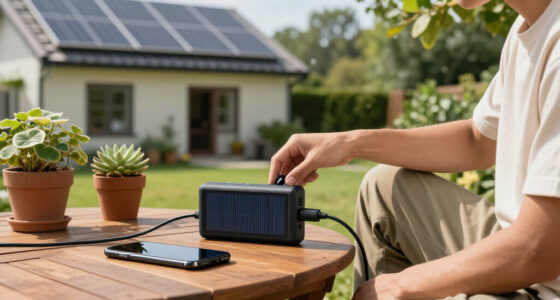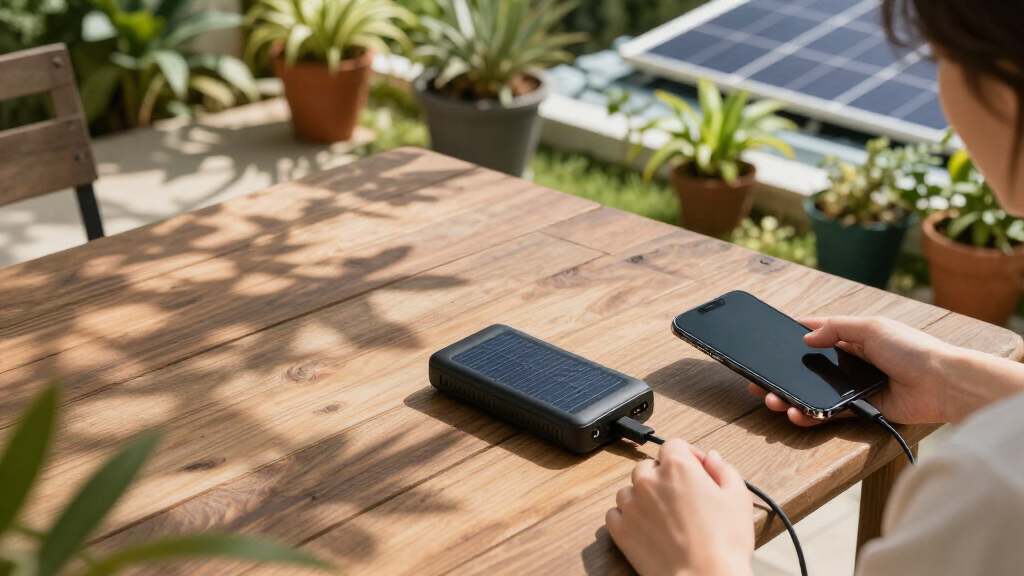

Solar-powered backup power banks fall into two very different camps: pocket-size battery packs with a small solar strip, and full solar generators that can run appliances during an outage. The Jackery Solar Generator 1000 V2 takes the top spot because it pairs a 1070Wh station with a genuine 200W panel, bridging both worlds. If you only need phone recharges off-grid, the BLAVOR Solar Power Bank 20000mAh delivers far better value, while the Anker SOLIX C1000 Gen 2 is the strongest whole-home backup contender. The main tradeoff is weight and price versus capacity: the small panels on budget power banks trickle-charge slowly, so anyone serious about solar input needs a bundled panel. Keep reading for the full breakdown.

Get backup power and energy gear delivered free with Prime
- Fast, free delivery on millions of items
- Prime Video, Amazon Music and more included
- Member-only deals all year
Complete the kit


Key Takeaways
- The lineup splits cleanly into two categories — sub-$60 power banks under 50Wh and solar generators from 89Wh to 3000Wh — and confusing them is the most common buying mistake.
- Built-in solar strips on power banks like the SOARAISE and YELLOMIN provide emergency trickle charging only; every serious solar setup in this roundup relies on a separate foldable panel of 21W or more.
- Anker SOLIX C1000 Gen 2 beat comparable Jackery units on output (2000W vs 1500W) but costs more, which is why the Jackery 1000 V2 won best overall on balance.
- LiFePO4 models like the Daran 89.6Wh last roughly six times more charge cycles than standard lithium-ion power banks, which matters more than raw capacity for long-term emergency prep.
- The Takki 88.8Wh and Portable 300W generator fill the middle ground for under $200, but their smaller bundled panels (21W–60W) mean multi-day recharge times that casual buyers often underestimate.


| solar-powered backup power bank | Capacity |
|---|---|
| Jackery Solar Generator 1000 V | 1070Wh |
| SOARAISE Solar Power Bank 4800 | 48000mAh |
| Jackery HomePower 3000 with 2x | 3072Wh |
| Jackery Explorer 300 Portable | 292Wh |
| BLAVOR Solar Power Bank 20000m | — |
| Portable Solar Generator 300W | — |
| Solar Charger Power Bank 20000 | 20000mAh |
| Anker SOLIX C1000 Gen 2 Portab | 1024Wh |
| YELLOMIN 38800mAh Solar Power | 38800mAh |
| Solar Power Bank 40000mAh PD20 | 40000mAh |
| Daran Portable Power Station 8 | — |
| Anker SOLIX C300 Portable Powe | 288Wh |
| Takki Solar Generator 120W Pea | — |
More Details on Our Top Picks
Jackery Solar Generator 1000 V2 with 200W Solar Panel
The Jackery Solar Generator 1000 V2 earns the top spot because it balances capacity, output, and portability better than anything else in this lineup. With 1070Wh of capacity and 1500W of AC output, it can run a mini fridge, lights, and laptops simultaneously during an outage or a weekend off-grid. The one-hour fast recharge is the standout — most rivals in this class, including the smaller Explorer 300, take far longer to top up. Compared with the SOARAISE power bank, it trades pocket portability for genuine appliance-grade power. The tradeoffs are real: the panel and station ship separately, and the fast-charging feature is locked behind the app, which feels unnecessary for a premium product. Still, for buyers who want one system that handles both camping and home backup, this pick makes the most sense.
Pros:- 1500W AC output runs multiple appliances at once
- 1-hour fast recharge dramatically cuts downtime
- LFP battery rated for over 10 years of use
- App control and versatile port selection including 100W-class USB-C
Cons:- Solar panel and generator arrive in separate shipments
- Fast charging requires enabling through the app
- Cannot ship to PO Box addresses
Best for: Campers and households who want a single system capable of running appliances during outages and extended off-grid trips
Not ideal for: Day hikers or travelers prioritizing pack weight — at 23.8 lbs it’s a car-camping tool, not a backpack companion
- Capacity:1070Wh
- AC Output:1500W (3000W surge)
- Battery Type:LFP
- Charging Time:1 hour fast, 3 hours full AC, 6 hours solar
- Ports:2 USB-C, 1 USB-A, 1 DC car port, 3 AC
- Weight:23.8 lbs
- App Control:Yes
Our verdict“If you only buy one solar backup system, this is the one that covers both emergencies and outdoor adventures without compromise.”
SOARAISE Solar Power Bank 48000mAh Wireless Portable Charger with 4 Cables
The SOARAISE 48000mAh power bank fills a gap the power stations can’t: keeping a whole group’s phones, tablets, and wearables charged without hauling a generator. Its four built-in solar panels fold out to recharge far faster than the single-panel BLAVOR, and with built-in cables plus wireless charging it can handle up to seven devices at once — no one needs to remember their own cord. Compared with the BLAVOR, the extra capacity and panel count make it better suited to multi-day group trips, though it pays for that in weight and bulk. Solar charging still depends heavily on direct sunlight, so treat the panels as a top-up rather than a primary charging method. This option stands out as the group kit piece: one device, everyone’s gear covered.
Pros:- Massive 48000mAh capacity for multi-day use
- Four solar panels recharge faster than single-panel rivals
- Built-in cables and wireless charging eliminate forgotten cords
- Charges up to 7 devices simultaneously
Cons:- Bulky and heavy compared with standard power banks
- Solar charging is slow and dependent on strong direct sunlight
Best for: Group campers and festival-goers who need to keep several phones and small devices alive over a multi-day trip
Not ideal for: Anyone needing AC power for appliances — this charges USB and wireless devices only, unlike the Jackery units
- Capacity:48000mAh
- Solar Panels:4 high-efficiency panels
- Ports:2 USB-A, 1 USB-C (input/output)
- Wireless Charging:Yes
- Built-in Cables:USB-C, Phone, USB-A, Micro
- Fast Charging:3A via USB-C
- Devices Charged Simultaneously:Up to 7
Our verdict“Buy this if you’re the designated power person for a group trip; skip it if anyone needs wall-outlet power.”
Jackery HomePower 3000 with 2x200W Solar Panels
The HomePower 3000 is the heavyweight answer in this roundup, built for whole-home essentials rather than campsites. Its 3072Wh capacity and 3600W output can run refrigerators, medical devices, and power tools — territory the Solar Generator 1000 V2 simply can’t reach. The 1.7-hour hybrid recharge means it’s ready before the next outage window closes, and the LiFePO4 cells are rated for 4,000 cycles, roughly a decade of regular use. Compared with the 1000 V2, this model costs considerably more and weighs far more, but for households that lose power for days, not hours, that capacity gap is the whole point. The bundled 400W of solar panels take up to 9 hours for an 80% charge, so solar here is a supplement, not a lifeline. This model is better suited to buyers planning for real emergencies than to weekend adventurers.
Pros:- 3072Wh capacity and 3600W output run major home appliances
- Hybrid recharging reaches full in as little as 1.7 hours
- LiFePO4 battery rated for 4,000 cycles
- Includes 400W of solar panels in the bundle
Cons:- Solar recharge takes up to 9 hours for 80%
- Heavy despite being lighter than comparable capacity units
- Panels may arrive in separate packaging
Best for: Homeowners in outage-prone areas who need to run refrigerators, CPAP machines, or other essentials for extended periods
Not ideal for: Campers and van lifers — the capacity and weight are overkill when the 1000 V2 does the same job for less
- Capacity:3072Wh
- AC Output:3600W (7200W surge)
- Battery Type:LiFePO4
- Cycle Life:4,000 cycles
- Recharge Time (AC):2.2 hours
- Recharge Time (Hybrid):1.7 hours
- Recharge Time (Solar):Up to 80% in 9 hours
- Solar Panels Included:2x200W
Our verdict“This is the emergency-preparedness purchase for households that treat power outages as multi-day events, not minor inconveniences.”
Jackery Explorer 300 Portable Power Station, 292Wh
The Explorer 300 is the entry point into real power-station territory without the back strain. At 7.5 lbs with an integrated handle, it disappears into a car trunk or camper shelf — something neither the 1000 V2 nor the HomePower 3000 can claim. The 292Wh capacity won’t run a fridge, but it comfortably covers phones, cameras, drones, and a laptop across a weekend, and the 100W USB-C PD port charges modern laptops at full speed. Compared with the SOARAISE power bank, it adds two AC outlets and a 4,000-cycle LiFePO4 battery, making it the smarter buy for anyone with devices that plug into the wall. The catch: no solar panel is included, so you’ll pay extra to make it truly solar-capable. This pick makes the most sense for solo travelers who want AC power without the bulk.
Pros:- Featherweight 7.5 lbs with integrated handle
- Two AC outlets plus 100W USB-C PD for laptops
- LiFePO4 battery rated for over 4,000 cycles
- Fast solar charging when paired with a panel
Cons:- Solar panel sold separately
- 292Wh capacity limits runtime for larger devices
Best for: Solo campers, photographers, and remote workers who need AC outlets and laptop charging in a carry-friendly package
Not ideal for: Buyers expecting whole-trip appliance power — 292Wh drains quickly under anything beyond small electronics
- Capacity:292Wh
- Weight:7.5 lbs
- AC Outlets:2
- USB-C PD Port:100W
- USB-A Ports:2
- Car Port:120W
- Peak Surge:600W
- Charge Cycles:Over 4,000
Our verdict“The right choice if you want genuine AC outlets in a pack-and-go size, as long as you accept its capacity ceiling.”
BLAVOR Solar Power Bank 20000mAh Wireless Charger for Cell Phones & Apple Watch
The BLAVOR 20000mAh power bank is the affordable insurance policy of this roundup — a rugged, pocket-adjacent brick that belongs in a glovebox or go-bag. Unlike the SOARAISE, it focuses on durability over raw capacity: it’s waterproof, shockproof, and dustproof, with a flashlight, compass, and carabiner rounding out a survival-kit identity. The Apple Watch wireless charging is a genuinely rare feature at this price, and the built-in cable selection keeps the kit cord-free. Solar charging is slow given the smaller panel area, so think of it as an emergency trickle rather than a primary input. Compared with the SOARAISE, you give up capacity and multi-panel speed but gain a tougher, cheaper, more travel-friendly package. This option stands out for preparedness-minded buyers who want backup power they can forget about until it’s needed.
Pros:- Waterproof, shockproof, and dustproof construction
- Wireless charging for phones and Apple Watch
- Built-in cables plus flashlight, compass, and carabiner
- Fast 20W USB-C charging at a budget price
Cons:- Solar input is slow with limited panel area
- Larger size than typical 20000mAh banks
- Feature-heavy design may overwhelm casual users
Best for: Preparedness-minded buyers and hikers who want a cheap, rugged emergency charger stashed in a car or bug-out bag
Not ideal for: Power users needing multi-day charging capacity — 20000mAh runs out fast when serving several people
- Battery Capacity:20000mAh
- Wireless Charging:Yes (phones and Apple Watch)
- Fast Charging:20W USB-C
- Built-in Cables:2 USB-C, 1 iOS, 1 USB-A
- Devices Charged Simultaneously:6
- Waterproof:Yes
- Shockproof:Yes
- Dustproof:Yes
Our verdict“A low-cost, tough-as-nails emergency charger for solo users — just don’t expect it to power a group or charge quickly from the sun.”
Portable Solar Generator 300W with 60W Solar Panel
This option stands out for being one of the few in this lineup that ships as a true generator kit — the 60W foldable monocrystalline panel comes in the box, so there is no second purchase needed to go off-grid. Compared with the Anker SOLIX C1000 Gen 2, the capacity is far smaller, but the Anker requires you to source 600W of solar input separately, which changes the real cost considerably. The 20.5% conversion efficiency is respectable for a bundled panel at this price. The tradeoff is the 300W ceiling: a portable heater or full-size blender is off the table, and the junction box is not waterproof, so the panel needs dry placement. Compared with simple power banks like the YELLOMIN 38800mAh, this adds real AC outlets for laptops and small appliances — something no pocket-sized unit can do.
Pros:- Solar panel included in the box, unlike most power stations in this roundup
- Three recharge paths: AC wall, solar, and 12V carport
- BMS protection plus a cooling fan for safer sustained use
- 20.5% conversion efficiency is strong for a bundled budget panel
Cons:- Hard 300W output limit excludes many common appliances
- Junction box is not waterproof, restricting panel placement
- Battery degrades noticeably if left uncharged for long stretches
Best for: Campers and van-lifers who want AC power and a solar panel included without paying power-station prices
Not ideal for: Anyone running appliances over 300W — mini fridges or power tools will overload it
- Power Output:300W
- Solar Panel:60W monocrystalline foldable
- AC Outlets:2 x 300W max
- USB Ports:3 x 5V/3A, 1 x Quick Charge USB
- Recharging Options:AC outlet, solar (DC5521 13V-23V), 12V carport
- Conversion Efficiency:20.5%
- Safety Features:BMS protection, cooling fan
Our verdict“This kit makes the most sense for buyers who want a plug-and-play solar generator with AC outlets at a budget price, not for powering hungry appliances.”
Solar Charger Power Bank 20000mAh Wireless & Fast Charging Portable Solar Battery Pack
Where the YELLOMIN 38800mAh and the 40000mAh PD20W chase raw capacity, this model takes a different approach: eight outputs and four inputs, letting a whole camp share power simultaneously, including Qi wireless charging for phones that support it. Compared with the BLAVOR 20000mAh, the capacity is identical but the port selection here is broader, which matters more for groups than for solo hikers. The silicone-wrapped ABS shell survives drops that would crack slimmer chargers, and the flashlight covers steady, strobe, and SOS modes — genuinely useful in an emergency rather than a gimmick. The real cost of that versatility is weight and bulk: at this size it belongs in a pack, not a pocket, and wireless charging speeds lag behind wired output noticeably.
Pros:- Eight outputs let multiple devices charge at the same time
- Wireless Qi charging eliminates cable clutter for compatible phones
- Drop-resistant silicone armor handles rough outdoor handling
- Flashlight includes a true SOS mode for emergencies
Cons:- Heavy and bulky for everyday pocket carry
- Wireless charging speeds vary and trail wired output
- Solar panel is best treated as a trickle backup, not a primary recharge method
Best for: Group campers and families who need to charge several devices at once, including wirelessly
Not ideal for: Ultralight backpackers — the weight and bulk make it a poor pocket carry
- Capacity:20000mAh
- Wireless Charging:Yes (Qi)
- Outputs:8 (USB, USB-C, Micro USB, wireless)
- Inputs:4 (USB-C, iOS, Micro USB)
- Material:ABS with silicone protection
- Flashlight Modes:SOS, Strobe, Steady
- Waterproof/Dustproof:Yes
Our verdict“This pick makes the most sense for groups who value simultaneous charging versatility over minimal weight.”
Anker SOLIX C1000 Gen 2 Portable Power Station, 1024Wh, 2000W
This is the heavy hitter of the batch. With 2000W of continuous output (3000W peak) and a 1024Wh battery, it runs things nothing else here can touch — microwave, space heater, power tools — while the 300W Portable Solar Generator taps out at small appliances. The standout spec is HyperFlash recharging in roughly 49 minutes from the wall, and full solar recharge in 1.8 hours when fed 600W of panels. Compared with the Jackery Solar Generator 1000 V2 (1070Wh, 1500W), the Anker pushes 500W more output and claims 4000 cycles to 80% capacity, which translates to years of emergency-use longevity rather than seasons. The tradeoffs are real: hitting that solar recharge speed requires a 600W panel array you must buy separately, and the app-control documentation is thin, which matters if smart energy management is why you’re paying premium prices.
Pros:- 2000W continuous output runs nearly any household appliance
- HyperFlash wall recharge in about 49 minutes
- 4000-cycle battery rating for years of reliable service
- 14% smaller and 11% lighter than comparable 1kWh stations
Cons:- Full-speed solar recharge requires a separate 600W panel investment
- App control details are sparsely documented
- No panel included, unlike budget generator kits in this guide
Best for: Homeowners wanting whole-apartment emergency backup and off-grid users who need serious AC output
Not ideal for: Day hikers or casual campers — it costs and weighs far more than a phone-charging trip justifies
- Capacity:1024Wh
- Power Output:2000W (3000W peak)
- Wall Recharge:~49 minutes (HyperFlash)
- Solar Recharge:1.8 hours with 600W input
- Ports:10
- Battery Cycles:4000 cycles to 80% capacity
- Size:14% smaller, 11% lighter than comparable models
Our verdict“If your goal is genuine emergency home backup rather than topping off phones, this is the station in this roundup worth stretching the budget for.”
YELLOMIN 38800mAh Solar Power Bank Portable Charger with USB-C Fast Charging, Dual LED Flashlights, Waterproof Design
At just 280g, this model carries nearly double the battery of the 20000mAh wireless power bank above while weighing less than many smaller chargers — that ratio is the whole reason it earns a spot. Compared with the 40000mAh PD20W, the YELLOMIN gives up built-in cables and true IP67 rating but wins on packability, which matters more if your kit lives in a backpack rather than a glovebox. The waterproof, dustproof shell handles rain and trail dust that would kill an ordinary power bank, and the dual flashlights with SOS and strobe modes double as emergency signaling. The honest limitation: solar charging is sunlight-dependent and slow, so this is best treated as a big battery you recharge at home, with the panel as a top-up between outlets rather than the plan.
Pros:- 38800mAh capacity at a remarkably light 280g
- Waterproof and dustproof construction for real trail conditions
- Dual flashlights with steady, SOS, and strobe modes
- Both USB-C and dual USB-A outputs cover older and newer devices
Cons:- Solar charging output drops sharply in low light
- Bulkier than compact everyday-carry chargers
- USB-A ports limited to 5V/2.4A — slower than PD options like the 40000mAh model
Best for: Hikers and backpackers who want maximum stored capacity without maximum weight
Not ideal for: Buyers expecting solar to be the primary recharge method — wall charging is still the realistic routine
- Capacity:38800mAh
- Input/Output:USB-C, 2x USB-A 5V/2.4A
- Weight:280g
- Flashlight Modes:Steady, SOS, Strobe
- Waterproof:Yes
- Dustproof:Yes
Our verdict“This is the pick for weight-conscious adventurers who measure value in charges-per-gram and accept solar as a backup, not a primary input.”
Solar Power Bank 40000mAh PD20W Fast Charging Portable Solar Charger
The pitch here is self-sufficiency: built-in Type-C, iOS, and Micro USB cables mean an emergency kit stays complete even when the cables are forgotten at home — a practical advantage over the YELLOMIN, which assumes you brought your own. The PD20W USB-C port recharges a modern phone fast enough to matter during an outage, putting it ahead of the YELLOMIN’s slower 2.4A USB-A output. With an IP67 rating, it survives submersion, not just splashes — more robust than the drop-resistant-but-not-sealed 20000mAh wireless model. Like every solar power bank in this guide, the panel is a slow trickle: the manufacturer positions solar as emergency backup, and buyers should believe that. Daily use means the wall adapter, and the size is closer to a paperback than a pocket charger.
Pros:- Built-in iOS, Type-C, and Micro USB cables eliminate forgotten-cable failures
- 20W PD fast charging rivals a wall adapter for speed
- IP67 rating survives full submersion, not just rain
- 40000mAh capacity recharges a phone many times over
Cons:- Solar input is genuinely slow and only a backup, per the manufacturer’s own positioning
- Large paperback-sized body is not pocket-friendly
- Fast daily recharging still requires a standard wall adapter
Best for: Emergency-preparedness builders stocking a car kit or go-bag where built-in cables and IP67 durability matter
Not ideal for: Commuters wanting a slim daily-carry charger — the size and weight only make sense in a kit context
- Capacity:40000mAh
- Fast Charging:PD20W Type-C
- Built-in Cables:Type-C, iOS, Micro USB
- Output Ports:USB-C (in/out), USB-A, Micro input
- Flashlights:Dual high-lumen LED, 4 modes
- Material:ABS
- Waterproof Rating:IP67
Our verdict“This model makes the most sense as the power cornerstone of a preparedness kit, where its built-in cables and IP67 toughness solve problems a lighter charger cannot.”
Daran Portable Power Station 89.6Wh LiFePO4 Battery with 100W Output and Fast Charging
What sets this option apart from similarly sized units like the Takki solar generator is its LiFePO4 chemistry rated for 3500+ cycles — roughly triple the lifespan of standard lithium cells. That makes this pick makes the most sense for buyers who plan to keep a small emergency station on a shelf for years, cycling it occasionally rather than treating it as disposable. At 2.54 pounds with six output ports plus AC, it covers phones, laptops, and small fans without clutter. The 0-80% recharge in 1.5 hours beats the Takki’s 2-hour figure, though both trail the Anker SOLIX C300 dramatically. The tradeoff: capacity is small, output caps at 100W, and like most options here, you supply your own solar panel — so the ‘solar-powered’ promise depends on an extra purchase.
Pros:- LiFePO4 battery rated for 3500+ cycles, far outlasting typical lithium-ion packs
- Fast AC recharging from 0-80% in 1.5 hours
- Six output ports (2 AC, 2 USB-C, 2 USB-A) plus DC for flexible device coverage
- 12-point BMS safety protection and silent operation with built-in flashlight
Cons:- Solar panel sold separately, adding to the true cost of a solar setup
- 100W continuous output caps what appliances it can handle
Best for: Preppers and apartment dwellers who want a small, long-lived emergency backup that will still hold up after years of storage and light cycling
Not ideal for: Anyone expecting to run appliances or bridge multi-day outages — 89.6Wh won’t keep a fridge or CPAP running through the night
- Battery Capacity:89.6Wh
- Battery Type:LiFePO4
- Output Power:100W (200W peak)
- Ports:2 AC, 2 USB-C, 2 USB-A, DC5521
- Weight:2.54 lbs
- Cycle Life:3500+ cycles
- Charging Methods:AC, USB-C PD, car, solar panel
Our verdict“Buy this if battery lifespan and safety matter more to you than raw capacity in a grab-and-go emergency station.”
Anker SOLIX C300 Portable Power Station, 288Wh Solar Generator for Camping
The 80% recharge in 50 minutes is the headline here, and no other compact unit in this roundup comes close — the Daran needs 1.5 hours for a battery a third the size. That speed changes how you camp: top up during a lunch stop instead of planning your day around an outlet. Compared with the Jackery Explorer 300, the C300 matches the capacity class but adds three AC outlets, a car socket, and a 25dB noise floor quiet enough for tent-side use. The LiFePO4 cells and 3,000-cycle rating mean it won’t age out quickly either. Frustrations are real but narrow: no panel included, the shoulder strap costs extra, and it oddly won’t pair with Anker’s own SOLIX PS30 USB-C panel — check panel compatibility before buying.
Pros:- Blazing 80% recharge in 50 minutes, the fastest in its class here
- 288Wh capacity with 3 AC outlets, car socket, and multiple USB ports
- Whisper-quiet 25dB operation suitable for sleeping nearby
- LiFePO4 batteries rated for 3,000 cycles
Cons:- Solar panel and shoulder strap sold separately
- Incompatible with certain USB-C panels like the Anker SOLIX PS30, limiting solar pairing options
Best for: Weekend campers and van lifers who want to recharge quickly between stops and run several small devices at once
Not ideal for: Buyers wanting a one-box solar kit — you’ll need to buy a compatible panel and strap separately, which pushes the price past budget alternatives
- Capacity:288Wh
- Power Output:300W (600W surge)
- Battery Type:LiFePO4
- Recharging Time:80% in 50 minutes
- Charging Ports:3x AC, 1x car socket, 3x USB-C, 1x USB-A
- Cycle Life:3,000 cycles
- Noise Level:25dB
Our verdict“This is the pick for campers who value rapid turnaround between charges more than an all-in-one bundle.”
Takki Solar Generator 120W Peak Portable Power Station with 21W Solar Panel, 88.8Wh Battery, AC Outlet for Camping and Emergency
This is the only product in this batch that actually ships with a solar panel in the box — the foldable 21W panel weighs under a pound and clips straight in, which is something neither the Daran nor the Anker SOLIX C300 can claim. For a true solar-powered backup out of the box, that matters more than raw specs. The combined 3.2-pound kit is genuinely trail-friendly, and the LED flashlight with SOS mode rounds out the emergency story. The compromises are clear: an 80W device ceiling rules out anything demanding, solar recharge takes a leisurely 5-7 hours to 80%, and — an odd limitation — you’re advised not to charge devices while the station itself recharges, which forces you to plan usage windows carefully.
Pros:- Includes a foldable 21W solar panel, so the solar setup is complete out of the box
- Featherlight 2.29 lbs station plus a 0.92 lbs panel for easy backpacking
- AC, USB, and DC ports cover most small devices
- Built-in LED flashlight with SOS mode for emergencies
Cons:- Only supports devices up to 80W continuous, below its 120W peak headline
- Cannot reliably charge devices while the station itself is charging
- Solar recharge takes 5-7 hours to reach 80% in good conditions
Best for: First-time buyers and hikers who want a genuinely working solar setup on day one without researching and buying a separate panel
Not ideal for: Anyone powering gear above 80W or needing pass-through charging during an outage — both limitations will bite quickly
- Battery Capacity:88.8Wh
- Peak Power:120W (80W continuous device limit)
- Solar Panel Power:21W foldable panel included
- Weight:2.29 lbs (station) + 0.92 lbs (panel)
- Dimensions:5.7 x 4.13 x 3 inches
- AC Charging Time:2 hours to 80%
- Solar Charging Time:5-7 hours to 80%
Our verdict“Choose this if you want the simplest path to an actual solar charging kit — just keep your power expectations modest.”
How We Picked
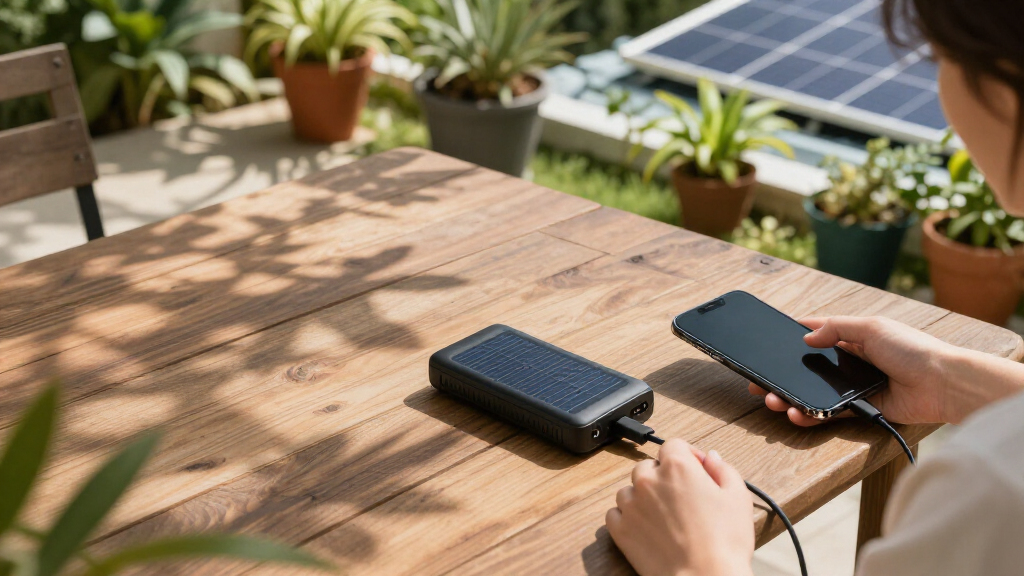
My ranking logic starts with one question: does this product actually deliver usable solar backup? That meant weighing solar input capability (panel wattage and recharge time), battery chemistry and cycle life, output capacity versus weight, and port selection against real-world use cases like outages, camping, and everyday phone top-ups. A 40000mAh power bank with a tiny solar strip scores well on portability but poorly on solar independence, and I ranked accordingly.
From there, I layered in value, build reputation, and versatility. Established brands with strong warranty support (Jackery, Anker, BLAVOR) edged out generic listings with inflated capacity claims, because a backup that fails during an emergency is worse than no backup at all. Finally, I assigned each product a distinct role — home backup, budget phone charging, beginner camping, compact emergency — so the ordering reflects fit-for-purpose rather than specs alone.
Factors to Consider When Choosing Solar-powered Backup Power Banks
Before clicking buy on any solar backup, it helps to understand what the specs actually mean for your situation. These are the factors that most often separate a smart purchase from an expensive disappointment.Capacity: Watt-Hours Versus Milliamp-Hours
Power banks advertise milliamp-hours (mAh) while solar generators use watt-hours (Wh), and the numbers are not directly comparable. A 40000mAh power bank sounds enormous, but at 3.7V internal cells that is roughly 148Wh — less than a sixth of the Jackery 1000 V2’s capacity. Some budget brands also inflate mAh figures, so treat claims above 30000mAh from unknown manufacturers with skepticism. Match capacity to the actual load: a phone needs 15–20Wh per charge, a laptop 50–70Wh, and a mini fridge can pull 600Wh or more per day. Buying double what you need adds weight and cost for no benefit, while buying half leaves you dark on day two of an outage.
Solar Input: The Most Overlooked Spec
The single biggest mistake in this category is assuming any product with the word solar in its name recharges itself meaningfully from the sun. A small strip of solar cells on a 20000mAh power bank might produce 1–2W in good light, meaning days of direct sun for a full charge. Those strips are best treated as emergency top-ups when no outlet exists. Real solar charging requires a dedicated panel — 21W keeps a small generator topped up, 60W works for weekend camping, and 200W or more makes sense for 1000Wh-class stations. If solar independence is your priority, budget for panel wattage first and battery capacity second.
Battery Chemistry and Lifespan
Standard lithium-ion power banks typically survive 300–500 charge cycles before capacity fades to around 80%, while LiFePO4 cells in stations like the Daran and Anker SOLIX units are rated for 3000+ cycles. For something you recharge weekly, chemistry barely matters over two years. For an emergency kit that sits on a shelf for a decade, it matters enormously — degraded cells are the reason old backup batteries die right when you need them. LiFePO4 also handles heat better, which is relevant if the unit lives in a car or garage. Storage habits count too: keep batteries around 50% charge and recharge every few months rather than storing them full or empty.
Output Power and Port Selection
Capacity tells you how long a battery lasts; output wattage tells you what it can run at all. A 20000mAh power bank cannot run a CPAP machine or a laptop charger that needs 100W through AC, no matter how full it is. Check for a true sine wave AC inverter if you plan to power sensitive electronics, and count the ports realistically — one USB-C PD port limits you to charging one fast device at a time. Pass-through charging (recharging the bank while it powers devices) is a quietly important feature for camping, letting you leave the panel plugged in all day while devices draw power. Decide which two or three devices you actually need running during an outage and buy output headroom above that.
Weight, Size, and Real Portability
Manufacturers describe anything with a handle as portable, but there is a practical difference between a one-pound pocket charger and a 25-pound station you would not carry beyond the car. If your backup plan involves walking, hiking, or a go-bag, stay under about two pounds — which rules out every solar generator in this roundup except the smallest power banks. Car campers get more flexibility, since anything under 15 pounds moves easily from trunk to tent. Home backup weight barely matters, so prioritize capacity and output instead. Be honest about how the unit will actually move, because the best-specced station is useless if it stays home when you need it elsewhere.
Price Traps and Brand Trust
This category is flooded with white-label listings that copy each other’s descriptions and inflate capacity numbers, which is why I weighted brand reputation in the rankings. A reliable rule of thumb: legitimate capacity costs roughly 50 cents to $1 per watt-hour for stations, and quality power banks cost $1–1.50 per 10000mAh. Anything dramatically cheaper usually cuts corners on cells, protection circuitry, or both — and battery fires are not a spec sheet issue you can ignore. Warranty length is a useful proxy for build confidence; Jackery and Anker back their stations with multi-year coverage while generic power banks often offer 30 days. Spend a little more once rather than replacing a failed budget unit twice.
Frequently Asked Questions
Can a solar power bank fully recharge itself using only its built-in solar panel?
Realistically, no — at least not on any reasonable timescale. The small solar strips on power banks like the SOARAISE or YELLOMIN generate around 1–2 watts in direct sunlight, so a 20000mAh bank could take 40–80 hours of peak sun for a full charge, spread across many days. That still has value: in a true emergency with no outlet, a day of sunshine might recover 10–20% capacity, enough for a few phone calls or a GPS fix. But if you want meaningful solar recharging, you need a separate panel of 20W or more paired with a power station. Treat built-in solar as a last-resort trickle, not the primary charging method.
Should I buy a large power bank or a small solar generator for emergency backup?
It depends entirely on what you need powered. If your emergency plan is keeping phones, a tablet, and maybe a headlamp alive, a 20000–40000mAh power bank costs a fraction of a generator and weighs under two pounds. The moment you add a CPAP machine, a laptop for remote work, a mini fridge for medication, or any AC appliance, you need an inverter-based station like the Jackery Explorer 300 or larger. A useful middle path is the Takki 88.8Wh or Daran 89.6Wh, which add an AC outlet without the cost of a full generator. Honestly listing the devices you cannot live without during a 48-hour outage will usually make this decision for you.
How much solar panel wattage do I actually need?
Panel wattage determines recharge speed more than anything else, and most buyers underestimate what is required. A 21W panel like the Takki’s bundled unit can take 8–10 hours of good sun to refill an 88.8Wh battery — fine for a weekend if the weather cooperates. A 60W panel makes 300Wh-class stations practical for multi-day camping. For 1000Wh stations, a single 200W panel needs about 6–8 peak sun hours, so serious home backup benefits from two panels. Remember that real-world output runs 50–75% of the rated wattage depending on angle, clouds, and heat, so size up from your theoretical calculation.
Are the huge capacity ratings on budget solar power banks, like 40000mAh, accurate?
Often not, and this is one of the most common complaints in the category. Generic brands have been caught advertising cell capacities that laboratory teardowns show to be half or less of the claim, and there is little enforcement on marketplace listings. Established brands like BLAVOR and Anker have reputations to protect and generally rate honestly. A practical safeguard is price-per-capacity: if a 40000mAh bank costs the same as a reputable 20000mAh model, assume the cheap one has weaker cells or inflated numbers. Reading recent verified reviews that mention actual recharge counts is more reliable than the product listing itself.
Is it worth paying extra for LiFePO4 battery chemistry?
For anything meant to sit ready for emergencies over many years, yes. LiFePO4 cells are rated for roughly 3000–6000 cycles versus 300–500 for standard lithium-ion, and they degrade more gracefully and resist heat damage better. The Daran 89.6Wh and the Anker SOLIX line use LiFePO4, which partly justifies their higher price per watt-hour. The tradeoff is weight — LiFePO4 packs less energy per pound, which is why ultralight pocket power banks stick with lithium-ion. For a shelf-stored emergency kit, the chemistry premium pays for itself in longevity; for a power bank you drain monthly and replace every few years anyway, it is less compelling.
Conclusion
For best overall, the Jackery Solar Generator 1000 V2 earns it with a genuine 200W panel, 1070Wh of capacity, and a proven warranty — the most balanced package in the lineup. The Anker SOLIX C300 takes best value among serious generators by delivering quality and LiFePO4 longevity at a friendlier price, while the BLAVOR Solar Power Bank 20000mAh is the value pick if you only need phone-level backup. Best premium goes to the Jackery HomePower 3000, the only option here capable of running a household through an extended outage. Beginners and casual campers should start with the Jackery Explorer 300 or the Takki 120W kit — simple, affordable, and enough to learn what you actually use. For specific needs, the Daran 89.6Wh suits long-shelf-life emergency kits, the SOARAISE 48000mAh covers families needing to charge multiple phones at once, and the YELLOMIN 38800mAh fits anyone who wants a rugged, waterproof pocket backup. Whichever route you take, match the capacity to your real devices rather than the biggest number on the listing.
Columbus Day / Indigenous Peoples' Day Picks
long weekend sales
As an affiliate, we earn on qualifying purchases.