
Your home’s electrical panel can handle an EV charger if its capacity and current load support the additional power demand. Check your main breaker’s amperage rating and how much load your existing circuits carry. If your system is close to capacity or trips frequently, load sharing or upgrades may be needed to avoid overloads. Keep in mind, proper evaluation and potential improvements can help you safely add an EV charger—discover how to keep your system balanced below.
Key Takeaways
- Check your main breaker’s amperage rating to determine overall panel capacity before adding an EV charger.
- Map existing loads on circuits to identify if your system can support additional high-demand devices.
- Evaluate signs of overload, such as frequent breaker trips or flickering lights, indicating capacity issues.
- Consider load sharing strategies to distribute electrical demand and prevent overloading when installing an EV charger.
- Upgrading your panel or adding subpanels may be necessary to safely support EV charging without overload risks.
Understanding Electrical Load and Capacity
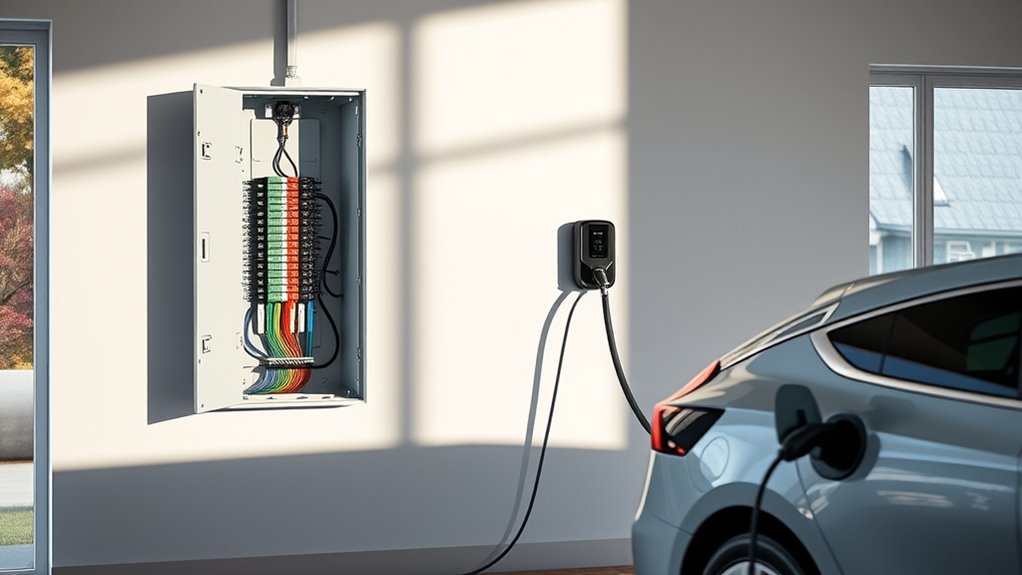
Have you ever wondered how much electricity your home can safely handle? Understanding your electrical load and capacity is key, especially when considering upgrades like adding an EV charger. Your panel’s capacity depends on wiring configurations and overall system design. Solar compatibility plays a role here, as solar panels can supplement your power needs, but they also influence wiring setup and load calculations. To determine if your panel can support additional devices, check the main breaker size and existing load. Proper wiring configurations ensure safe distribution of power and prevent overloads. Being aware of your home’s electrical capacity helps you plan for future needs confidently, ensuring your system remains safe, efficient, and ready for upgrades like EV charging. Additionally, understanding how electrical load is distributed across your system can help prevent potential overloads and maintain safety standards. Recognizing load management strategies can further optimize your system’s performance and safety. Exploring power capacity can provide deeper insight into your system’s ability to handle increased demands, especially with emerging technologies.
How EV Chargers Impact Your Home’s Electrical System
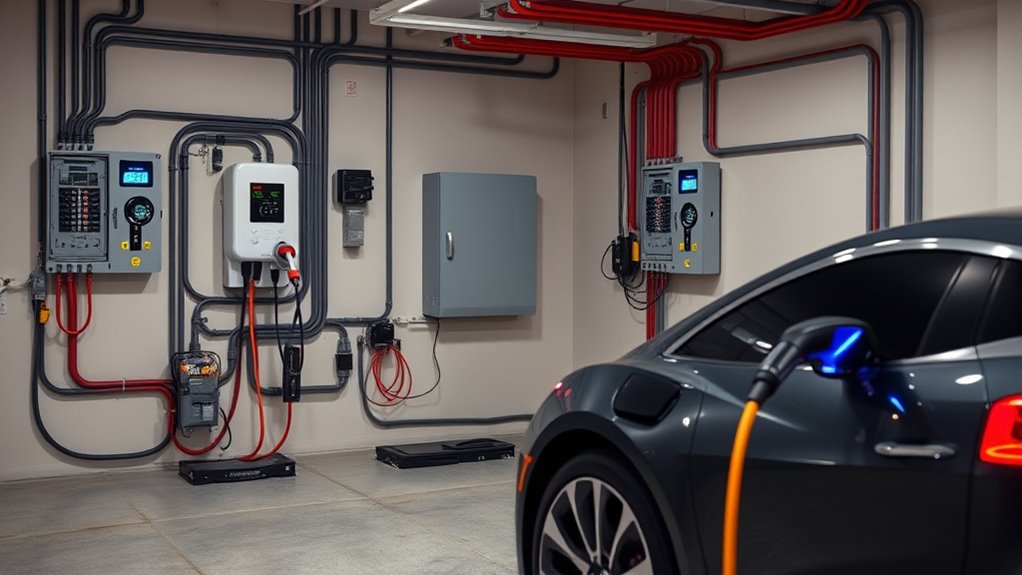
Adding an EV charger to your home increases your electrical load, which can strain your existing system. If your panel’s capacity is already close to its limit, installing a charger might require upgrades to avoid overloads. Understanding these impacts helps you plan for safe, efficient charging without risking electrical issues. Proper navigation and mapping of your electrical system can help identify potential overload points before installation. Additionally, knowing your panel’s capacity and load can prevent unexpected electrical problems during and after installation. Regular system assessments can ensure your electrical setup remains safe as your energy needs evolve. Monitoring your power consumption can further help prevent overloads and maintain system stability. Being aware of your system’s load capacity is essential for integrating new high-demand appliances like EV chargers safely.
Electrical Load Increase
As more homeowners install electric vehicle (EV) chargers, the electrical load on your home’s system can increase considerably. This added demand can strain your existing setup if it isn’t equipped. For example:
- Your current panel might need to handle the extra power needed to charge your EV.
- Solar panels may need to work harder or be supplemented by backup generators during peak charging times.
- Your system’s capacity could be taxed if multiple appliances, like HVAC or water heaters, run simultaneously with EV charging. Incorporating load management strategies can help optimize energy use and prevent overloads.
- Recognizing the importance of proper load management can help prevent overloads and ensure your electrical system remains reliable and safe.
- Understanding electrical load capacity is essential for planning upgrades and avoiding potential hazards as your energy demands grow.
- Being aware of your home electrical system’s limits allows you to implement effective strategies for integrating additional loads without risking system failure. Additionally, evaluating vehicle charging demands can assist in designing a balanced and safe electrical setup.
Panel Capacity Limits
When you install an electric vehicle charger, it’s essential to take into account your home’s panel capacity, as these chargers can draw significant power that may exceed your current system’s limits. Your electrical panel has a maximum capacity, which can be strained by high-demand appliances like EV chargers, especially if you have solar panels or focus on energy efficiency. Overloading the panel can cause circuit breakers to trip or, worse, damage your electrical system. To avoid this, evaluate your panel’s capacity and consider upgrades if needed. Balancing your energy use—by using solar power during peak charging times or installing a dedicated circuit—can help prevent overloads. Additionally, consulting with a qualified electrician can ensure your system is properly assessed and upgraded if necessary. Understanding your panel’s limits and load management strategies ensures safe, efficient charging without compromising your home’s electrical integrity. Implementing smart charging solutions can further optimize energy use and prevent overloads during peak demand periods. Being aware of your panel capacity limits can also help you plan your energy consumption more effectively.
Assessing Your Existing Electrical Panel’s Capacity

Before making any changes or additions to your home’s electrical system, it’s essential to assess your existing electrical panel’s capacity. Start by checking the main breaker’s amperage rating to determine the total power distribution potential. Then, review how your circuits are currently balanced to avoid overloading any single branch. Finally, evaluate the load on each circuit to see if there’s room for an EV charger without overtaxing your system. Specifically:
- Verify the main panel’s amperage capacity (e.g., 100A, 200A).
- Inspect circuit breakers for signs of overload or frequent trips.
- Map out your current power usage, focusing on circuits dedicated to high-demand appliances.
- Consider the security features of your electrical system, such as surge protection or monitoring, which can help prevent overloads or faults.
Additionally, understanding the family photoshoot fails can help you identify potential issues with unexpected loads or disruptions that might affect your electrical system.
Assessing your system’s overall capacity ensures safe power distribution and helps prevent overloads when adding new loads like EV chargers. This assessment helps you understand if your existing panel can handle additional load or if upgrades are necessary for safe power distribution and effective circuit balancing.
The Concept of Load Sharing and Its Benefits
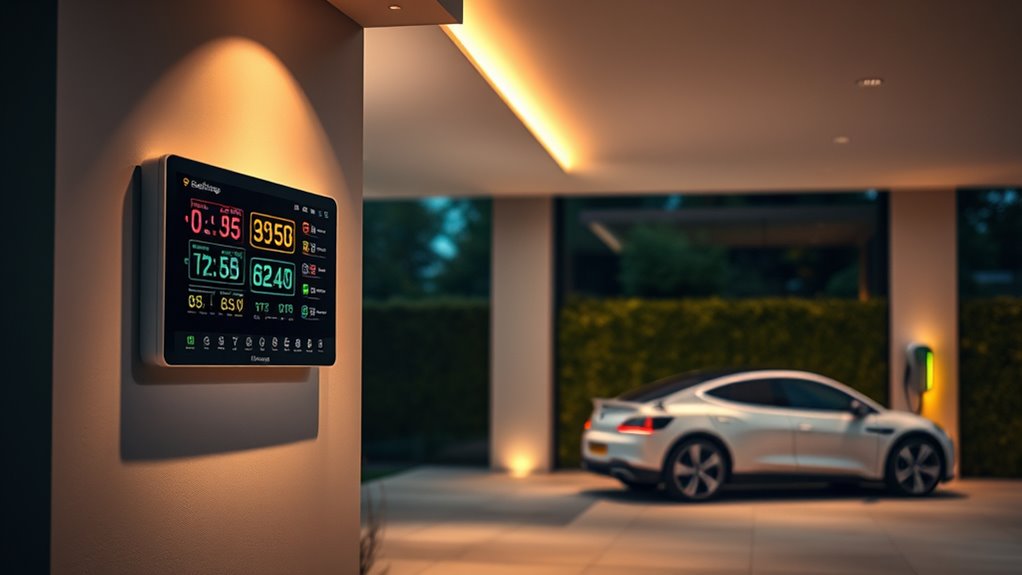
Load sharing involves distributing electrical loads across multiple circuits or systems to prevent any one part from becoming overloaded. This approach guarantees your home’s electrical system remains safe and reliable, especially when adding high-demand devices like an EV charger. By integrating features like wireless charging and solar power, load sharing maximizes efficiency and reduces strain on your main panel. Solar integration allows excess energy to be diverted or stored, easing the load during peak times. Wireless charging can also be managed through load sharing systems, avoiding overloads when multiple devices charge simultaneously. Overall, load sharing enhances your home’s capacity to handle new energy demands without costly upgrades, ensuring a seamless and safe energy experience. Advanced Techniques can further optimize your load management strategies for better efficiency. Implementing load balancing strategies is essential for maintaining system stability and preventing overloads during high power usage periods. Additionally, employing smart circuit breakers can help dynamically respond to changing loads, further enhancing your home’s electrical safety and efficiency. Incorporating system monitoring tools provides real-time insights into your energy usage, helping you make informed decisions to optimize load sharing and prevent overloads. To maximize energy management, integrating automated controls can streamline load distribution and improve overall system performance.
Identifying Your Home’s Main Electrical Service Size
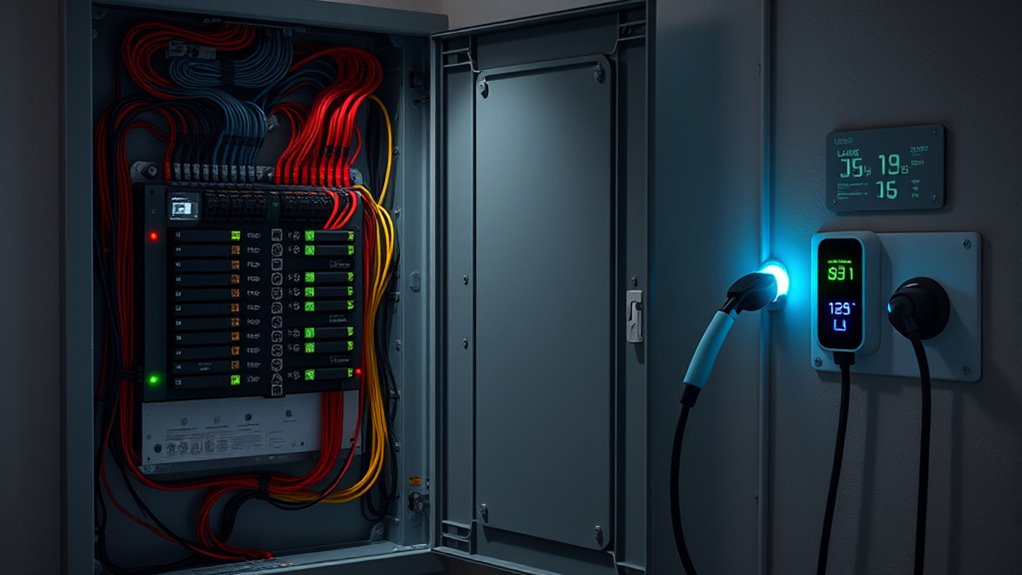
To accurately determine your home’s main electrical service size, start by locating your main electrical panel, typically found in the basement, garage, or utility area. Once found, open the panel to examine the labels and markings. Look for these key indicators:
- The amperage rating, often displayed on the panel door or inside the panel, such as “200A.”
- Panel labels that specify the main breaker size, which shows your total service capacity.
- Adherence to electrical codes, which ensure your panel’s labeling is correct and up to date.
Calculating the Additional Load of an EV Charger
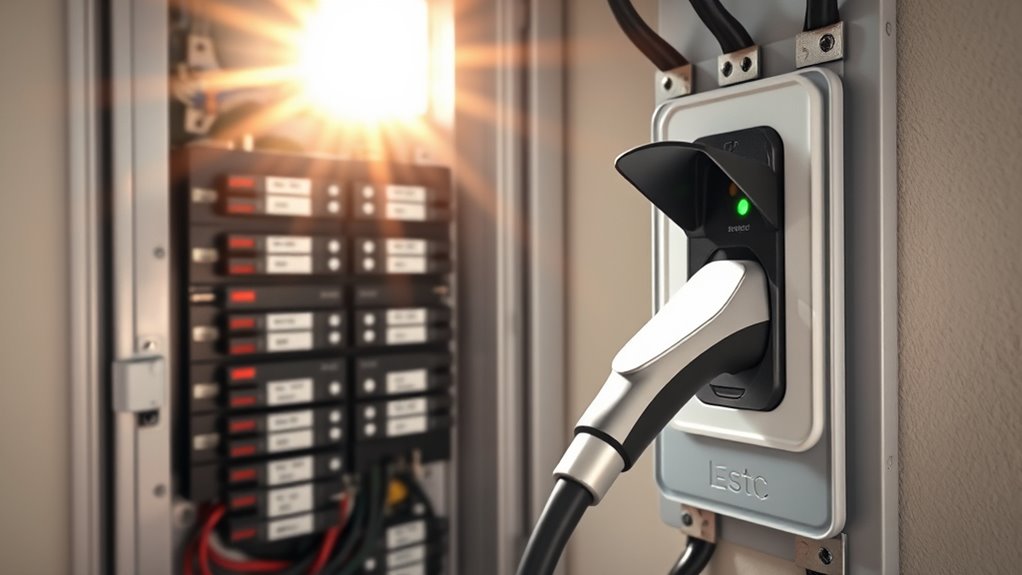
When adding an electric vehicle (EV) charger to your home, calculating its additional load is vital to make certain your electrical system can handle the extra demand. Start by identifying the charger’s power requirements, usually measured in kilowatts (kW). Consider whether you plan to use standard wired charging or wireless charging, which may have different power profiles. Your EV’s battery capacity determines how much energy it needs to recharge and influences the charger’s load. For example, a larger battery capacity requires more power, increasing load calculations. To stay safe, add the charger’s wattage to your existing home load and compare it with your panel’s capacity. This guarantees your system can support frequent charging without risking overload.
Signs Your Panel May Be Overloaded
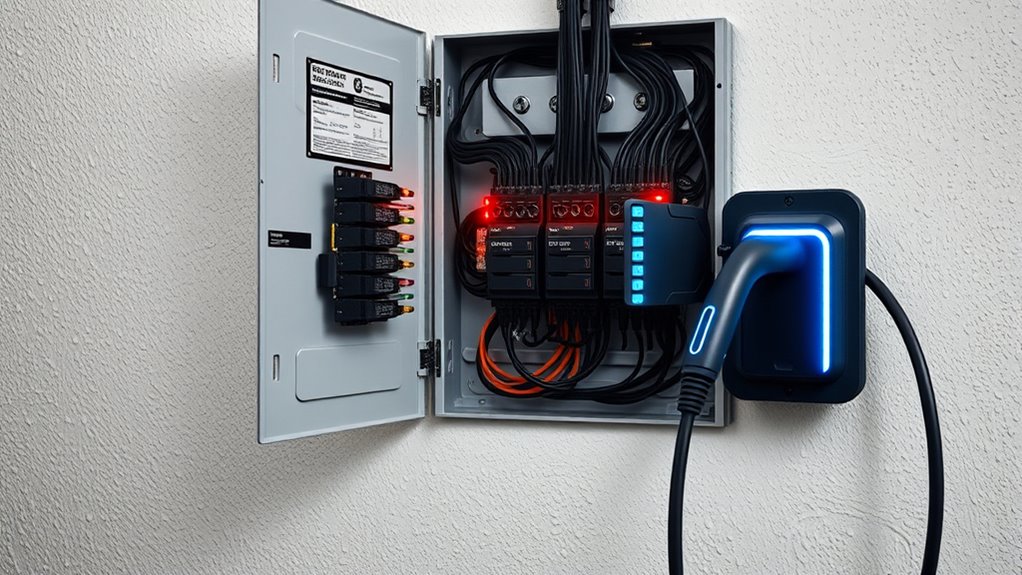
Have you noticed frequent circuit breaker trips or flickering lights in your home? These are common signs your electrical panel may be overloaded. You might also experience dimming lights when using high-power appliances or difficulty integrating solar compatibility or a generator. To assess overload risk, look for these signs:
- Repeatedly tripping circuit breakers during peak usage
- Flickering or dimming lights when appliances run
- Difficulty adding solar or generator systems without upgrades
If these signs appear, your panel might struggle to handle additional loads like EV charging. Overloading can compromise safety and system efficiency. Upgrading your panel or balancing your load can prevent future issues and support your home’s evolving energy demands, including solar compatibility and generator integration.
Options for Upgrading or Adding Support for EV Charging
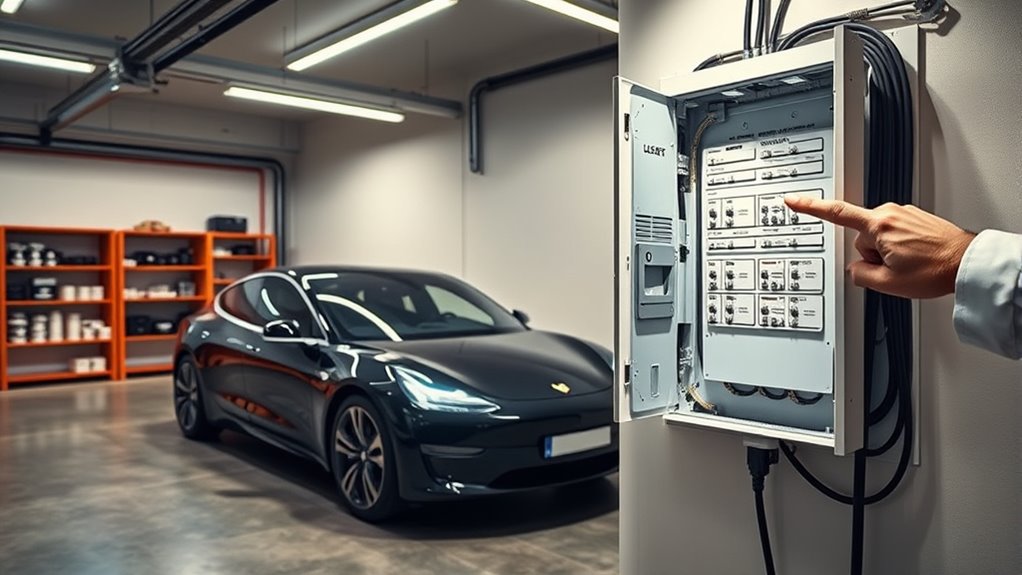
As your home adapts to new energy needs, supporting EV charging often requires upgrading your electrical system. You might consider adding a dedicated circuit or installing a Level 2 charger for faster charging. To maximize efficiency, integrating battery storage allows you to store excess energy generated from renewables like solar panels, helping balance your load and reduce strain on your main panel. Upgrading your electrical panel or adding a subpanel can provide the extra capacity needed for both EV charging and renewable energy systems. These options enhance your home’s ability to handle higher loads and support sustainable energy practices. Consulting with an electrician can help determine the best upgrades tailored to your energy profile, ensuring safe, reliable, and efficient EV support at home.
Consulting a Professional Electrician for Safe Integration
Consulting a professional electrician is essential to guarantee your home’s electrical system safely and effectively supports your EV charging and renewable energy upgrades. They’ll assess your panel’s capacity, ensuring it can handle additional loads without risking overloads. Here’s what they’ll do:
- Evaluate your existing electrical system for compatibility with smart home and renewable energy equipment.
- Design a load management plan that balances EV charging with other devices.
- Install necessary upgrades or subpanels to prevent overloads and ensure safety.
Frequently Asked Questions
Can I Install Multiple EV Chargers on One Panel?
Yes, you can install multiple EV chargers on one panel, but it depends on your panel capacity and circuit distribution. You need to evaluate whether your existing panel can handle the additional loads without overloading. Proper load sharing ensures each charger gets enough power without tripping circuits. Consulting a professional electrician helps determine if your panel can support multiple chargers or if upgrades are necessary for safe, efficient operation.
How Long Does It Take to Upgrade My Electrical Panel?
Upgrading your electrical panel typically takes about one to two days, but it depends on your home’s complexity. First, your electrician will secure electrical permits and schedule safety inspections to ensure everything meets code. The process involves removing the old panel, installing the new one, and testing the system. Proper permits and inspections assure safety and compliance, making the upgrade smoother and more reliable.
Are There Portable Solutions for EV Charging Without Panel Upgrades?
Think of portable chargers as your EV’s travel buddy—ready to hit the road without needing a full upgrade. Yes, there are portable power solutions that let you charge your EV without upgrading your panel. These devices are compact, easy to move, and perfect for emergencies or occasional use. Keep in mind, they might not support fast charging, but they’re a practical option when convenience and flexibility are your priorities.
What Are the Costs Associated With Panel Upgrades for EVS?
The cost estimation for panel upgrades varies depending on your home’s existing electrical system and the complexity of the upgrade process. Typically, you can expect to pay between $1,500 and $3,500. You’ll need to take into account labor, permit fees, and new equipment costs. To ensure a smooth upgrade, get a professional assessment, which helps you understand the total expenses and the necessary steps to safely support your EV charging needs.
How Often Should I Have My Electrical System Inspected for EV Readiness?
Like tuning up a classic car, you should have your electrical system inspected annually to guarantee panel safety and wiring capacity are up to date for your EV. Regular check-ups help catch potential issues early, prevent overloads, and confirm your panel can handle the added load. If you notice flickering lights or frequent breaker trips, schedule an inspection sooner—it’s better to be safe than stranded.
Conclusion
Think of your electrical panel as the heart of your home’s energy flow. Just like a heart can only pump so much blood before it needs support, your panel has limits too. By understanding your system and considering load sharing, you can keep everything running smoothly without overloading. With a little planning and professional guidance, you’ll guarantee your home’s energy pipeline flows seamlessly, powering your EV without skipping a beat.