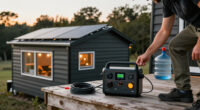
Portable solar generators pair a battery power station with solar charging, but the right choice depends on how much power you need and how quickly you need to recharge. My best overall pick is the Anker SOLIX C1000 Gen 2, which balances a substantial 1,024Wh capacity with a 200W panel; the Jackery Solar Generator 1000 v2 is another capable mid-size option, while the BLUETTI Elite 400 stands out for buyers seeking much more stored energy. The main tradeoffs are capacity versus portability, included panel size versus charging time, and simple operation versus greater output and expansion options. Small 100–300Wh units suit phones and modest loads, but they cannot replace the runtime of a multi-kilowatt-hour system. Read on for the full breakdown of all 15 options and how I’d match them to different needs.

Get backup power and energy gear delivered free with Prime
- Fast, free delivery on millions of items
- Prime Video, Amazon Music and more included
- Member-only deals all year
Complete the kit


Key Takeaways
- The Anker SOLIX C1000 Gen 2 is my best overall balance: its 1,024Wh capacity and included 200W panel suit broader everyday and outdoor use than the 100–300Wh units, without the bulk of the largest systems.
- The lineup spans very different power needs: the 100Wh-class MARBERO and 300Wh-class options fit small electronics, while the 2,048–3,840Wh models are better suited to longer outages and larger loads.
- Panel size changes the solar experience: several kits include only 30W, 40W, or 60W panels, so their convenience comes with slower replenishment than the 200W-panel bundles.
- There are two near-duplicate Jackery Explorer 300 listings: one includes a 40W solar panel and one is the 292Wh power station alone, so buyers should check whether a panel is part of the package.
- Large capacity carries a real portability tradeoff: the BLUETTI Elite 400 and Jackery HomePower 3600 Plus hold far more energy than compact picks, but make more sense for stationary backup than frequent carrying.
| EnginStar 296Wh Portable Solar Generator, Pure Sine Wave Power Station |  | Best Lightweight Option | Battery capacity: 296Wh | Continuous output: 300W | Peak output: 600W | VIEW LATEST PRICE | See Our Full Breakdown |
| Jackery Explorer 300 Portable Power Station with 40W Solar Panel |  | Best Small Solar Starter Kit | Battery capacity: 292Wh | Peak output: 600W | Battery chemistry: LiFePO4 | VIEW LATEST PRICE | See Our Full Breakdown |
| BLUETTI Elite 400 Solar Generator with Two 200W Solar Panels, 3840Wh |  | Best for Extended Backup | Battery capacity: 3,840Wh | Battery type: LiFePO4 | AC output: 2,600W | VIEW LATEST PRICE | See Our Full Breakdown |
| BLUETTI Elite 100 V2 Portable Power Station with 200W Solar Panel, 1024Wh |  | Best Balanced Solar Generator | Battery capacity: 1,024Wh | Battery type: LiFePO4 | Surge power: 3,600W | VIEW LATEST PRICE | See Our Full Breakdown |
| ZeroKor 300W Portable Power Station with 60W Solar Panel |  | Best Included Solar Panel for Small Loads | Maximum power station output: 300W | Included solar panel: 60W monocrystalline | Solar panel conversion efficiency: 20.5% | VIEW LATEST PRICE | See Our Full Breakdown |
| Anker SOLIX C1000 Gen 2 Portable Power Station with 200W Solar Panel |  | Best Overall for Fast Recharging | Battery capacity: 1,024Wh | Battery chemistry: LiFePO4 | Continuous / peak output: 2,000W / 3,000W | VIEW LATEST PRICE | See Our Full Breakdown |
| Jackery HomePower 3600 Plus Power Station – 3584Wh, 3600W AC Output |  | Best for Expandable Home Backup | Battery capacity: 3,584Wh | Expandable capacity: Up to 21kWh per unit; 43kWh with multiple units | Battery chemistry: LFP | VIEW LATEST PRICE | See Our Full Breakdown |
| Anker SOLIX C2000 Gen 2 Portable Power Station, 2,048Wh, 2,400W |  | Best Mid-Size Capacity Upgrade | Battery capacity: 2,048Wh | Battery chemistry: LiFePO4 | Expandable capacity: Up to 4kWh | VIEW LATEST PRICE | See Our Full Breakdown |
| Jackery Solar Generator 1000 v2 with 200W Solar Panel |  | Best Lightweight 1kWh Solar Kit | Battery capacity and type: 1,070Wh; LFP | AC output / surge peak: 1,500W / 3,000W | Included solar panel: 200W | VIEW LATEST PRICE | See Our Full Breakdown |
| Apowking 100W Portable Power Station with 40W Solar Panel |  | Best Compact Solar Kit for Small Devices | Battery capacity: 146Wh / 39,600mAh | Running / peak wattage: 100W / 200W | Included solar panel: 40W monocrystalline | VIEW LATEST PRICE | See Our Full Breakdown |
| EnginStar 300W Portable Power Station with 60W Foldable Solar Panel |  | Best for a Ready-to-Go Solar Kit | Battery capacity: 296Wh | Battery type: Lithium-ion | AC output: 300W | VIEW LATEST PRICE | See Our Full Breakdown |
| Apowking 300W Portable Power Station with 40W Solar Panel |  | Best Lightweight Camping Bundle | Battery capacity: 220Wh | Battery type: Lithium-ion | Peak output: 600W | VIEW LATEST PRICE | See Our Full Breakdown |
| Jackery HomePower 3600 Plus Portable Power Station with Two 200W Solar Panels |  | Best for High-Capacity Backup | Battery capacity: 3,584Wh | Battery chemistry: LFP | AC output: 3,600W | VIEW LATEST PRICE | See Our Full Breakdown |
| MARBERO M82MAX 111Wh Portable Power Station with 30W Solar Panel |  | Best Ultra-Compact Solar Pick | Battery capacity: 111Wh | Battery type: Lithium-ion | AC output: 80W, 120W peak | VIEW LATEST PRICE | See Our Full Breakdown |
| Jackery Explorer 300 Portable Power Station, 292Wh |  | Best for Long-Term Battery Durability | Battery capacity: 292Wh | Battery chemistry: LiFePO4 | Peak output: 600W | VIEW LATEST PRICE | See Our Full Breakdown |
| portable solar generator | Battery capacity | Weight |
|---|---|---|
| EnginStar 296Wh Portable Solar | 296Wh | 6.5 lb |
| Jackery Explorer 300 Portable | 292Wh | 12.9 lb |
| BLUETTI Elite 400 Solar Genera | 3,840Wh | 86 lb |
| BLUETTI Elite 100 V2 Portable | 1,024Wh | 25 lb |
| ZeroKor 300W Portable Power St | — | — |
| Anker SOLIX C1000 Gen 2 Portab | 1,024Wh | — |
| Jackery HomePower 3600 Plus Po | 3,584Wh | 77.2 lb |
| Anker SOLIX C2000 Gen 2 Portab | 2,048Wh | — |
| Jackery Solar Generator 1000 v | — | 23.8 lb |
| Apowking 100W Portable Power S | 146Wh / 39,600mAh | — |
| EnginStar 300W Portable Power | 296Wh | — |
| Apowking 300W Portable Power S | 220Wh | — |
| Jackery HomePower 3600 Plus Po | 3,584Wh | 77.2 lb |
| MARBERO M82MAX 111Wh Portable | 111Wh | — |
| Jackery Explorer 300 Portable | 292Wh | 7.1–7.5 lb, listings differ |
More Details on Our Top Picks
EnginStar 296Wh Portable Solar Generator, Pure Sine Wave Power Station
The EnginStar earns its place for buyers who value low weight and simple portability over long runtimes. At 6.5 pounds, it is much easier to carry to a campsite than the 12.9-pound Jackery Explorer 300, while its 296Wh capacity and 300W continuous output are close to that model’s core power class. Pure sine wave AC suits compatible sensitive electronics, and the mix of AC, DC, USB-A, and USB-C ports lets it handle phones, laptops, lights, and small fans. The tradeoff is that solar charging requires a separate panel, unlike the Jackery bundle, and the 300W ceiling rules out high-draw appliances. I’d choose this for light loads and easy transport, not as a ready-to-use solar kit or substantial home backup.
Pros:- At 6.5 pounds, it is lighter than the Jackery Explorer 300.
- Pure sine wave AC supports compatible sensitive electronics.
- AC, DC, USB-A, and USB-C outputs cover varied small-device needs.
- Can recharge from a wall outlet, car charger, or a separately purchased solar panel.
Cons:- Solar panel is not included, so solar charging requires an additional purchase.
- The 300W continuous output cannot run high-draw appliances such as microwaves or grills.
- Its 296Wh capacity limits runtime for multiple devices or extended trips.
Best for: Campers and day-trippers who need a light power station for phones, laptops, lights, and other devices under 300W.
Not ideal for: Buyers seeking a complete solar bundle, long off-grid runtimes, or power for appliances above 300W.
- Battery capacity:296Wh
- Continuous output:300W
- Peak output:600W
- AC outlets:2 × 110V pure sine wave
- USB-C:18W
- Weight:6.5 lb
- Dimensions:9 × 5.5 × 7.5 in
- Charging methods:Wall charger, car charger, or solar panel (sold separately)
Our verdict“Choose the EnginStar if carrying less matters more than getting a solar panel in the box or powering larger appliances.”
Jackery Explorer 300 Portable Power Station with 40W Solar Panel
The Jackery Explorer 300 is a practical entry point for buyers who want a matched power station and solar panel rather than sourcing the panel separately. Its 292Wh capacity and 300W rated output put it in much the same small-device category as the EnginStar 296Wh, but this bundle includes a 40W panel and adds a 100W USB-C PD port for compatible devices. The LiFePO4 battery is rated for over 4,000 cycles before reaching 70% capacity, giving it a stated longevity advantage over the EnginStar’s unspecified lithium-ion cycle life. That convenience comes with a cost in portability: at 12.9 pounds, it weighs nearly twice as much as the EnginStar, and a 40W panel is a modest charging source. I’d pick it for casual camping and light solar use, not for fast recharging or demanding appliances.
Pros:- Includes a 40W solar panel, unlike the EnginStar bundle configuration.
- LiFePO4 battery is rated for over 4,000 cycles before reaching 70% capacity.
- 100W USB-C PD port supports compatible higher-power USB-C devices.
- Multiple AC, USB, and car-port outputs support a range of small electronics.
Cons:- At 12.9 pounds, it is substantially heavier than the 6.5-pound EnginStar.
- The included 40W panel provides a limited solar input for replenishing the battery.
- The 300W rated output is not suited to high-draw appliances.
Best for: First-time solar-generator buyers who want a compact-capacity station and included panel for phones, laptops, and campsite electronics.
Not ideal for: Hikers prioritizing minimal carry weight, or households needing high output, large capacity, or rapid solar charging.
- Battery capacity:292Wh
- Peak output:600W
- Battery chemistry:LiFePO4
- Included solar panel:40W
- USB-C PD:100W
- Weight:12.9 lb
Our verdict“Pick the Explorer 300 bundle if an included panel and a long-cycle LiFePO4 battery matter more than low weight or faster solar charging.”
BLUETTI Elite 400 Solar Generator with Two 200W Solar Panels, 3840Wh
The BLUETTI Elite 400 is the clear choice here for buyers who need substantial stored energy and appliance-level output, rather than a small station for charging personal devices. Its 3,840Wh LiFePO4 battery and 2,600W output dwarf the 1,024Wh BLUETTI Elite 100 V2, making the Elite 400 better suited to longer outages, RV setups, and running several essentials. Two 200W panels are listed in the bundle, and the rolling trolley helps move an 86-pound unit across a home or campsite. A UPS switchover of up to 15ms adds value for supported backup uses, though it is slower than the Elite 100 V2’s stated 10ms. The major compromise is mobility: the trolley helps with rolling, but this is not a station I’d choose for frequent hand-carrying. Solar charging is also listed at about 9.5–19 hours from empty.
Pros:- 3,840Wh capacity supports longer use than the Elite 100 V2’s 1,024Wh battery.
- 2,600W output and 3,900W surge rating accommodate more demanding loads than small 300W stations.
- Two 200W solar panels are listed with the system.
- Rolling trolley and UPS function add practical value for backup and stationary use.
Cons:- At 86 pounds, it is unsuitable for routine hand-carrying.
- Listed solar charging time is about 9.5–19 hours from empty.
- The UPS switchover of up to 15ms is slower than the Elite 100 V2’s stated 10ms.
Best for: RV owners and households seeking high-capacity backup for multiple essentials and willing to move a heavy station on wheels.
Not ideal for: Campers who need a lightweight carry-in power source or buyers whose needs are limited to phones and small electronics.
- Battery capacity:3,840Wh
- Battery type:LiFePO4
- AC output:2,600W
- Surge output:3,900W
- Included solar panels:2 × 200W
- UPS switchover:Up to 15ms
- Weight:86 lb
Our verdict“Choose the Elite 400 for extended home or RV backup where capacity matters far more than easy transport.”
BLUETTI Elite 100 V2 Portable Power Station with 200W Solar Panel, 1024Wh
The Elite 100 V2 sits between the small 300W-class stations and the much heavier BLUETTI Elite 400: its 1,024Wh capacity and 1,800W AC output can support a broader set of household essentials without the Elite 400’s 86-pound bulk. The included 200W panel gives it a stronger solar starting point than the Jackery Explorer 300’s 40W panel, while the 25-pound station remains more manageable for car camping or moving around the house. Its 10ms UPS switchover and app monitoring add useful backup control, and the LiFePO4 battery is rated for over 4,000 cycles to 80% capacity. The compromise is that 25 pounds is still substantial for frequent carrying, and its capacity cannot match the Elite 400 for prolonged outages. I’d choose it as a middle-ground system, not a lightweight day-trip companion.
Pros:- 1,024Wh capacity and 1,800W output exceed the small EnginStar and Jackery Explorer 300 class.
- Includes a 200W solar panel and supports solar, AC, and car charging.
- UPS switchover is up to 10ms, faster than the Elite 400’s stated 15ms.
- LiFePO4 battery is rated for over 4,000 cycles to 80% capacity.
Cons:- At 25 pounds, it is less convenient to carry than compact stations such as the EnginStar.
- Its 1,024Wh capacity is far below the Elite 400’s 3,840Wh for extended backup.
- The included panel and station may not arrive together, according to the product listing.
Best for: Households and car campers wanting a versatile 1kWh-class station with a substantial included panel, app monitoring, and UPS backup.
Not ideal for: Backpackers needing a very light unit, or buyers seeking the longest possible backup runtime for multiple household loads.
- Battery capacity:1,024Wh
- Battery type:LiFePO4
- Surge power:3,600W
- Included solar panel:200W
- Maximum solar input:1,000W
- UPS switchover:Up to 10ms
- Weight:25 lb
Our verdict“Choose the Elite 100 V2 if you want a capable mid-size solar system without stepping up to the Elite 400’s weight and capacity.”
ZeroKor 300W Portable Power Station with 60W Solar Panel
The ZeroKor stands out among the small stations for pairing a 300W power limit with a 60W solar panel, giving solar-focused buyers a higher-wattage included panel than the Jackery Explorer 300’s 40W option. Its AC, DC, and USB outputs cover basic campsite electronics, while the panel itself offers USB-A, USB-C, and DC outputs. Built-in MPPT charging and AC or car recharging add flexibility, and the flashlight’s reading and SOS modes give it a modest emergency-use angle. Against the EnginStar, the ZeroKor arrives with a panel but does not list battery capacity, making runtime harder to compare. The 300W ceiling remains restrictive, and the manufacturer advises against fully draining the battery or leaving it uncharged for long periods. The panel junction box is not waterproof, so weather protection needs attention.
Pros:- Includes a 60W monocrystalline solar panel, higher wattage than the Jackery Explorer 300’s 40W panel.
- Built-in MPPT and AC, car, and solar charging provide several recharge routes.
- AC, DC, and USB outputs support common small-device loads.
- Flashlight includes reading and SOS modes.
Cons:- Battery capacity is not stated in the supplied product data, limiting runtime comparisons.
- The 300W maximum output cannot support appliances drawing more power.
- The panel junction box is not waterproof, and the manufacturer cautions against fully draining or storing the battery uncharged.
Best for: Budget-conscious campers who want an included solar panel for phones, lights, and other modest loads, and can protect the panel from wet conditions.
Not ideal for: Buyers who need a clearly stated battery capacity, high-draw appliance support, or a solar panel setup suitable for exposed wet weather.
- Maximum power station output:300W
- Included solar panel:60W monocrystalline
- Solar panel conversion efficiency:20.5%
- AC outlets:2, 300W maximum
- DC output:9–12.6V, 10A maximum
- USB ports:3 × 5V/3A maximum and 1 quick-charge USB port
- Solar input:13–23V with built-in MPPT
- Included items:Power station, 60W solar panel kit, AC adapter, cigarette lighter adapter, car charging cable, and two manuals
Our verdict“Choose the ZeroKor for a small-load setup with a stronger included panel than the Jackery Explorer 300, provided its unstated capacity and care limits work for you.”
Anker SOLIX C1000 Gen 2 Portable Power Station with 200W Solar Panel
I’d put the Anker SOLIX C1000 Gen 2 near the top for buyers who want a capable portable solar generator without stepping up to a much heavier, higher-capacity unit. Its 1,024Wh LiFePO4 battery and 2,000W continuous output can handle demanding appliances, while the compact format is easier to move than the 77.2-pound Jackery HomePower 3600 Plus. HyperFlash can recharge it in 49 minutes from a suitable AC source, which is a major convenience between outages or trips. The tradeoff is solar speed: the included 200W panel is useful for off-grid charging, but it limits replenishment compared with larger solar setups. I’d also plan for the station and panel arriving in separate packages. Choose this over the Jackery Solar Generator 1000 v2 if faster AC recharge and higher continuous output matter more than its lighter listed weight.
Pros:- 2,000W continuous output and 3,000W peak give it room for more demanding devices than many compact stations.
- 49-minute HyperFlash AC recharge can reduce downtime when grid power is available.
- LiFePO4 battery is rated to retain 80% capacity after 4,000 cycles.
- Compact dimensions and app-based power management make it easier to place and monitor.
Cons:- The included 200W panel can make solar-only recharging slow, especially in weak sunlight.
- The station and panel ship in separate packages, which can delay a ready-to-use setup.
Best for: Campers and outage-prone households who want strong appliance output, quick AC recharging, and a manageable station paired with a starter solar panel.
Not ideal for: Buyers who need fast solar-only replenishment or a complete kit that is certain to arrive in one shipment.
- Battery capacity:1,024Wh
- Battery chemistry:LiFePO4
- Continuous / peak output:2,000W / 3,000W
- Output ports:9
- HyperFlash recharge:49 minutes at 1,600W
- Included solar panel:200W bifacial
- Dimensions:15.1 × 8.2 × 9.6 in
- Warranty:5 years
Our verdict“Choose the C1000 Gen 2 if you want a compact, high-output station with exceptionally quick AC recharging and can accept modest solar input from the included panel.”
Jackery HomePower 3600 Plus Power Station – 3584Wh, 3600W AC Output
The Jackery HomePower 3600 Plus is the strongest fit here for buyers treating a portable solar generator as a movable home-backup system. Its 3,584Wh LFP battery and 3,600W continuous output provide substantially more reserve and appliance capacity than the Anker SOLIX C1000 Gen 2, and expansion can take one unit to 21kWh. It also offers several charging routes, including solar and hybrid AC+DC, so users can adapt when grid power is limited. That capability comes with a clear portability penalty: at 77.2 pounds, the wheels and telescopic handle help on smooth ground but do not make it easy to lift into a vehicle or carry to a campsite. Compared with the Anker SOLIX C2000 Gen 2, this is the more scalable backup choice, but it is much heavier and more oriented toward household reserves than casual travel.
Pros:- 3,584Wh capacity and 3,600W continuous output suit broader home-backup needs than the smaller stations in this group.
- Expandable capacity reaches 21kWh per unit, with further scaling listed for multiple units.
- AC, solar, hybrid AC+DC, and gas-generator charging offer flexibility during outages.
- Wheels and a telescopic handle make rolling the heavy unit easier on suitable surfaces.
Cons:- At 77.2 pounds, it is difficult to lift and is less practical for frequent travel than the Anker SOLIX C2000 Gen 2.
- Its large capacity and expansion focus may be excessive for buyers powering only phones, laptops, or small camping gear.
Best for: Households seeking substantial outage reserves, high appliance output, and the option to expand capacity for longer backup periods.
Not ideal for: Solo campers, frequent travelers, or anyone who must regularly lift a power station into a car or carry it over uneven ground.
- Battery capacity:3,584Wh
- Expandable capacity:Up to 21kWh per unit; 43kWh with multiple units
- Battery chemistry:LFP
- Continuous / parallel output:3,600W / 7,200W
- Voltage options:120V; 240V in parallel
- Weight:77.2 lb
- Charging options:AC, solar, hybrid AC+DC, and gas generator
- Cycle life and warranty:6,000 cycles; 5-year warranty
Our verdict“Pick the HomePower 3600 Plus for expandable, high-output household backup, not for a power station you expect to carry often.”
Anker SOLIX C2000 Gen 2 Portable Power Station, 2,048Wh, 2,400W
I’d choose the Anker SOLIX C2000 Gen 2 when a 1kWh-class station no longer provides enough reserve, but the Jackery HomePower 3600 Plus feels too heavy and large. Its 2,048Wh battery, 2,400W rated output, and 4,000W peak give it a useful middle ground for road trips, camping, and home backup. The stated 58-minute recharge is a standout when a suitable AC-and-solar charging setup is available, while optional expansion doubles capacity to 4kWh. That bigger reserve still has a physical cost: at 41.7 pounds, it is portable in the sense that it can be moved, but it is not an easy one-person carry for every trip. Unlike the C1000 Gen 2, it offers twice the listed battery capacity, though buyers must add an expansion battery to reach 4kWh and the supplied components do not include a solar panel.
Pros:- 2,048Wh battery provides twice the listed capacity of the Anker SOLIX C1000 Gen 2.
- 2,400W rated and 4,000W peak output support a broad range of appliances.
- Can expand to 4kWh for longer trips or extended backup.
- Listed 58-minute recharge supports quick turnaround with the required charging setup.
Cons:- The 4kWh figure requires a separate expansion battery.
- At 41.7 pounds, it is less convenient to carry than smaller stations such as the Jackery Solar Generator 1000 v2.
- The listed included components do not include a solar panel, so solar charging may require a separate purchase.
Best for: Road-trippers and households who need more than 1kWh of storage, high output, and optional expansion without moving up to a 77-pound station.
Not ideal for: Buyers who need an included solar panel, a genuinely lightweight carry, or the full 4kWh capacity without purchasing an expansion battery.
- Battery capacity:2,048Wh
- Battery chemistry:LiFePO4
- Expandable capacity:Up to 4kWh
- Recharge time:58 minutes
- Alternator charging:800W; full charge in 3 hours
- Weight and dimensions:41.7 lb; 18.1 × 9.8 × 10.1 in
- Warranty:5 years
Our verdict“Choose the C2000 Gen 2 if you want a meaningful capacity step up with strong output and can handle its weight and separate solar-panel needs.”
Jackery Solar Generator 1000 v2 with 200W Solar Panel
The Jackery Solar Generator 1000 v2 makes a persuasive case for buyers who want around 1kWh of storage in a relatively light package with a solar panel included. At 23.8 pounds, it is easier to move than the Anker SOLIX C1000 Gen 2, while its 1,070Wh LFP battery and 1,500W AC output can cover more than small-device charging. The included 200W panel gives it an off-grid starting point that the Anker SOLIX C2000 Gen 2, as listed, does not provide. The tradeoff is lower AC output than the C1000 Gen 2 and a 1-hour recharge that requires emergency charging to be enabled in the app; the default time is 1.7 hours. The station and panel also ship separately. I’d favor this Jackery for lighter trips, not for buyers prioritizing maximum appliance output or a single-package arrival.
Pros:- At 23.8 pounds, it is lighter than the Anker SOLIX C1000 Gen 2 and easier to move for trips.
- Included 200W solar panel provides a ready starting point for off-grid charging.
- 1,070Wh LFP battery and 1,500W AC output offer more capability than small-device-only power banks.
- USB-C ports support up to 100W PD for compatible laptops and other devices.
Cons:- Its 1,500W AC output is lower than the Anker SOLIX C1000 Gen 2’s 2,000W continuous rating.
- The 1-hour recharge requires emergency charging to be enabled; the default listed time is 1.7 hours.
- The station and solar panel ship separately.
Best for: Campers and travelers who want a roughly 1kWh station with an included 200W panel and a lighter carry than the Anker SOLIX C1000 Gen 2.
Not ideal for: Buyers running higher-draw appliances, seeking the fastest standard recharge, or expecting the station and panel to arrive together.
- Battery capacity and type:1,070Wh; LFP
- AC output / surge peak:1,500W / 3,000W
- Included solar panel:200W
- Weight:23.8 lb
- AC outlets:3 pure sine wave
- USB ports:2 USB-C up to 100W PD; 1 USB-A
- Charging time:1 hour with emergency charging enabled; 1.7 hours default
- Warranty:5 years
Our verdict“Pick the Solar Generator 1000 v2 for a lighter, panel-included 1kWh travel kit, and choose the C1000 Gen 2 if higher AC output matters more.”
Apowking 100W Portable Power Station with 40W Solar Panel
The Apowking 100W is the small-kit choice in this group: its 3.3-pound weight and included 40W panel suit light camping, camera charging, and phone or laptop top-ups better than the larger Jackery Solar Generator 1000 v2. Seven outputs and built-in LED lights add practical utility when the goal is keeping personal electronics and basic lighting available. But its 146Wh capacity and 100W running limit put it in a different class from the 1kWh stations; it is not a substitute for the Anker SOLIX C1000 Gen 2 when someone needs to run larger appliances or maintain power through a long outage. Solar input is also modest, and real-world replenishment depends on sunlight. I’d choose it for a light, simple kit where portability matters more than long runtimes, and skip it if appliance power or multi-day backup is the priority.
Pros:- At 3.3 pounds, it is far easier to pack and carry than the Jackery Solar Generator 1000 v2.
- Included 40W panel gives buyers a compact solar-charging option out of the box.
- Seven outputs accommodate several small devices and connection types.
- Dual LED lights include flashlight, strobe, and SOS modes for campsite or emergency use.
Cons:- 146Wh capacity and 100W running output rule out many appliances and limit runtime.
- The 40W panel offers modest solar input, and charging can slow in weak sunlight.
- Its 12-month customer-support coverage is shorter than the five-year warranties listed for several larger models.
Best for: Day hikers, weekend campers, and photographers who need a lightweight solar kit for phones, cameras, and other small electronics.
Not ideal for: Households seeking outage backup, or campers who need to run appliances above 100W or power devices for extended periods.
- Battery capacity:146Wh / 39,600mAh
- Running / peak wattage:100W / 200W
- Included solar panel:40W monocrystalline
- Output ports:7
- AC outlets:2 × 110V
- USB and DC outputs:USB-A, USB-C with Quick Charge 3.0, and 12V DC
- Weight and dimensions:3.3 lb; 7.5 × 3.7 × 6.1 in
- Warranty:12-month customer support
Our verdict“Choose the Apowking for a very light solar kit that keeps small electronics and lights running, not for appliance use or home backup.”
EnginStar 300W Portable Power Station with 60W Foldable Solar Panel
The EnginStar pairs a 296Wh battery with a listed 60W foldable solar panel, so it suits buyers who want a small solar setup without sourcing a panel separately. Its two pure sine wave outlets and eight total output ports give it more connection options than the smaller MARBERO M82MAX, while the 300W AC limit keeps it in the phone, camera, laptop, and small-device class—not the appliance class. Solar, wall, and car charging add flexibility for campsites and road trips, though the listed maximum charging speed is only 65W, so replenishing the battery is not a quick process. I would also verify the panel package contents before ordering: the supplied information conflicts on whether the panel is included. That uncertainty matters when the solar panel is central to this kit’s appeal.
Pros:- 296Wh capacity and two pure sine wave AC outlets suit common small electronics.
- Lists solar, wall outlet, and 12V car-socket charging.
- Eight output ports give several devices charging options.
- Compact 6.5 lb power station is easier to pack than large backup units.
Cons:- 300W AC output rules out most high-power appliances.
- The source details conflict about whether the 60W solar panel is included.
- Maximum listed charging speed of 65W can make recharging slow.
Best for: Campers and road-trippers who want a sub-300Wh power station with a solar panel and several charging options in one kit.
Not ideal for: Buyers who need to run high-wattage appliances, or anyone who needs certainty that a solar panel is included without checking the package details.
- Battery capacity:296Wh
- Battery type:Lithium-ion
- AC output:300W
- AC outlets:2 pure sine wave, 110V
- Output ports:8
- Listed solar panel:60W monocrystalline foldable panel
- Charging methods:Solar panel, AC wall outlet, 12V car socket
- Power station weight:6.5 lb
Our verdict“Choose this EnginStar if you want a compact, multi-port station with solar charging, but confirm the panel is included and keep expectations to small electronics.”
Apowking 300W Portable Power Station with 40W Solar Panel
At 5 lb, the Apowking is the lightest complete small-station setup in this group, and its listed 40W panel gives campers a way to recharge away from an outlet. The 220Wh battery is smaller than the EnginStar’s 296Wh capacity, so it makes more sense for phones, lights, and short laptop top-ups than for longer multi-device trips. Its mix of AC, USB-C, USB-A, and car-port outputs helps when several personal devices need power at once, while the built-in floodlight adds practical campsite utility. The tradeoff is modest output: despite a 600W peak figure, its 300W rated limit restricts the devices it can run. Solar replenishment also depends heavily on available sunlight, and the 40W panel is a slower charging option than the 60W panel listed with the EnginStar.
Pros:- Five-pound power station is easy to carry on camping and travel trips.
- Includes a listed 40W monocrystalline solar panel.
- Two USB-C PD ports, three USB-A ports, AC outlets, and a car port support varied devices.
- Built-in approximately 300-lumen floodlight and multiple battery protections add campsite utility.
Cons:- 220Wh capacity is lower than the EnginStar’s 296Wh, limiting available runtime.
- 300W rated output is unsuitable for many household appliances.
- Solar charging speed varies with sunlight and the included panel is only 40W.
Best for: Minimalist campers and travelers who value low carry weight, a bundled solar panel, and charging for personal electronics.
Not ideal for: Buyers planning multi-day power use or hoping to run appliances above the station’s 300W rated output.
- Battery capacity:220Wh
- Battery type:Lithium-ion
- Peak output:600W
- Solar panel output:40W
- Power station weight:5 lb
- USB-C ports:2 USB-C PD
- LED light:Approximately 300 lumens, 5000K
Our verdict“Pick the Apowking for a light, panel-included camping kit focused on small electronics rather than long runtimes or appliance use.”
Jackery HomePower 3600 Plus Portable Power Station with Two 200W Solar Panels
The Jackery HomePower 3600 Plus is in a different class from the small carry-along stations here: its 3,584Wh capacity and 3,600W output can support much larger loads and longer outages than the 300W EnginStar or Jackery Explorer 300. Its LFP battery is rated for 6,000 cycles, and expansion support can take a single unit to 21kWh, giving it a longer-term backup role rather than a simple weekend-camping one. The two listed 200W solar panels and multiple charging methods add off-grid flexibility, while wheels and a telescoping handle help move the 77.2 lb unit across a home or campsite. Those wheels do not make it a light backpacking option, and the station and panels may ship separately. I would choose it for substantial backup capacity, not for buyers prioritizing compactness.
Pros:- 3,584Wh capacity and 3,600W output handle far more demanding loads than the compact stations in this roundup.
- LFP battery is rated for 6,000 cycles.
- Expansion and parallel operation allow a larger backup setup.
- Wheels and a telescoping handle aid movement despite the high weight.
Cons:- At 77.2 lb, it is much less portable than the EnginStar or Apowking.
- Solar panels and power station may arrive in separate packages.
- Its size and capacity are excessive for buyers who only need to charge personal electronics.
Best for: Households and RV users who need high-output backup, substantial stored energy, and the option to expand capacity.
Not ideal for: Backpackers, casual day campers, or anyone who needs a genuinely lightweight power station that is easy to lift.
- Battery capacity:3,584Wh
- Battery chemistry:LFP
- AC output:3,600W
- Parallel output:7,200W
- Expandable capacity:Up to 21kWh per unit
- Battery cycle life:6,000 cycles
- Weight:77.2 lb
- Solar panels listed:Two 200W panels
- Warranty:5 years
Our verdict“Choose the HomePower 3600 Plus for wheeled, expandable home or RV backup; skip it if portability means easy lifting or carrying.”
MARBERO M82MAX 111Wh Portable Power Station with 30W Solar Panel
The MARBERO M82MAX is the smallest, lightest option here for buyers who want a power station that can ride in a daypack: the unit weighs 2.3 lb and has a 111Wh battery, with a listed 30W foldable solar panel. That portability comes with a sharply lower ceiling than the Apowking’s 220Wh or the EnginStar’s 296Wh. Its 80W AC output—120W peak—makes this a device-charging companion, not a general-purpose backup source; even some small appliances may exceed its limit. Multiple USB-A, USB-C, AC, and DC outputs help spread that limited energy across personal electronics, but they do not add runtime. I’d favor it for short outings and emergency phone charging where low weight matters most. Buyers needing longer off-grid use should choose one of the larger 300W models instead.
Pros:- Power station weighs just 2.3 lb and is compact enough for a daypack.
- Includes a listed foldable 30W solar panel.
- USB-A, USB-C, AC, and DC outputs cover several small-device types.
- Protection features include overcharge, overload, and short-circuit safeguards.
Cons:- 111Wh capacity offers much less runtime than the Apowking or EnginStar.
- 80W rated AC output excludes most appliances and many higher-draw devices.
- The 30W panel provides a modest solar input for recharging.
Best for: Day hikers and short-trip campers who want a very light solar-charging option for phones, cameras, and other low-draw devices.
Not ideal for: Travelers needing laptop or appliance power for extended periods, or anyone who wants more than 111Wh of stored energy.
- Battery capacity:111Wh
- Battery type:Lithium-ion
- AC output:80W, 120W peak
- Solar panel output:30W
- Power station weight:2.3 lb
- Solar panel weight:1.8 lb
- Ports:4 USB-A, 1 USB-C, 2 AC, 1 DC
- Solar conversion efficiency:21.5–23.5%
Our verdict“Choose the M82MAX when low carry weight matters more than runtime or appliance capability.”
Jackery Explorer 300 Portable Power Station, 292Wh
The Explorer 300’s strongest distinction is its LiFePO4 battery, rated for over 4,000 cycles to 70% capacity. That makes it a compelling choice for frequent use compared with the lithium-ion EnginStar and Apowking, though its 292Wh capacity and 300W rated output keep it in the same small-device category. A 100W USB-C PD port is useful for compatible laptops and faster device charging, but buyers still need to purchase a solar panel separately; the EnginStar and Apowking are listed with panels. Jackery lists solar charging to 80% in about 2.8 hours with a 100W panel, so this can be a more capable solar setup once paired with compatible equipment. Weight details conflict between 7.1 and 7.5 lb, and neither figure makes it as easy to carry as the Apowking.
Pros:- LiFePO4 battery is rated for over 4,000 cycles to 70% capacity.
- 100W USB-C PD port supports compatible high-demand devices.
- 292Wh capacity is close to the EnginStar’s 296Wh.
- Supports solar charging with a compatible panel.
Cons:- Solar panel is sold separately, unlike the listed EnginStar and Apowking kits.
- 300W rated output limits use with high-power appliances.
- Listed weight varies between 7.1 and 7.5 lb.
Best for: Frequent campers and device users who prioritize a long-cycle-life battery and are willing to choose a compatible solar panel separately.
Not ideal for: Buyers seeking an all-in-one solar kit, very low carry weight, or enough output for high-power appliances.
- Battery capacity:292Wh
- Battery chemistry:LiFePO4
- Peak output:600W
- USB-C port:100W USB-C PD
- Charge cycles:Over 4,000 cycles to 70% capacity
- Weight:7.1–7.5 lb, listings differ
- Solar panel included:No
Our verdict“Choose the Explorer 300 for a compact station with a long-cycle-life battery and strong USB-C output, provided you are comfortable sourcing a solar panel separately.”
How We Picked
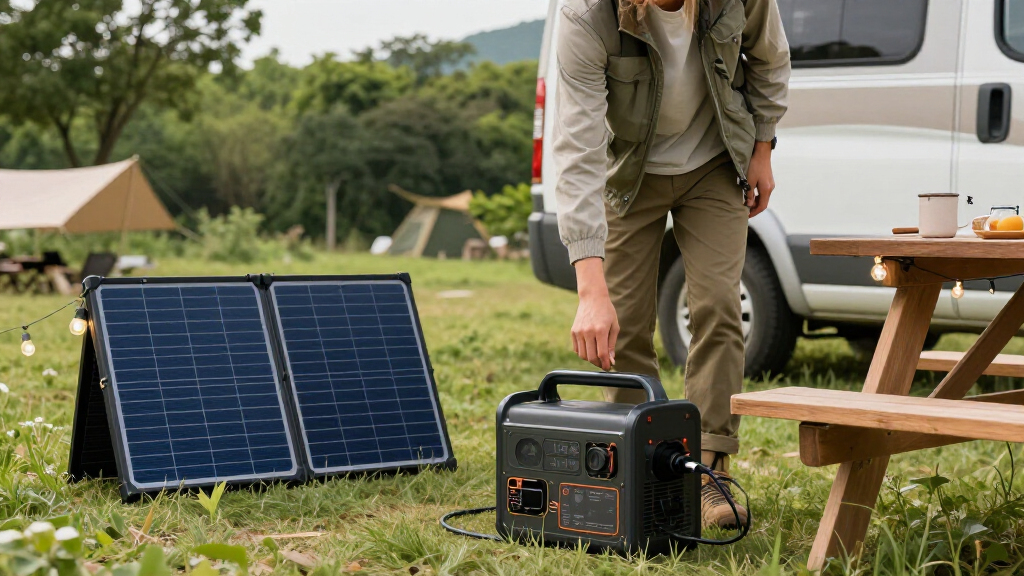
I ranked these portable solar generators by how well their capacity, output, solar bundle, and physical portability fit practical buyer needs. I gave more weight to usable scale: a small station can be a good match for phones and lights, but should not rank like a backup system capable of supporting larger loads. I also compared included panel wattage, since a bundled panel is only useful if its charging pace fits the buyer’s expectations and available sunlight.
Ranking reflects versatility, clarity of fit, and tradeoffs, not a claim that every model is right for every user. Mid-size kits with meaningful capacity and a 200W panel rank ahead for broad use; large-capacity options earn their place for extended runtime but lose points for portability, while compact units rank for light loads and simpler carry. I also accounted for bundle differences and duplicate listings, and avoided treating watt-hours alone as a promise of runtime: actual performance depends on the devices connected, their draw, and conversion losses.
Factors to Consider When Choosing Portable Solar Generators
Before choosing among these kits, I’d start with the devices you need to power and the conditions where you’ll recharge. A station’s capacity, inverter output, panel setup, and carry weight solve different problems; a larger number in one category does not guarantee a better fit overall.
Match battery capacity to the job, not a vague runtime claim
List the devices you expect to run and their wattage, then estimate how many hours each will be on. Battery capacity in watt-hours offers a starting point, but usable energy is lower after conversion losses and changes with temperature, age, and load. A phone-and-light kit has very different needs from a fridge or medical device that must run overnight. Avoid sizing a system only by the largest appliance label; startup surges and cycling behavior can affect the result. For critical equipment, leave a margin and confirm the power station’s output and runtime guidance against the device manufacturer’s requirements.
Check continuous output and surge limits separately
Capacity tells you how long energy may last, while inverter output indicates which appliances can run at all. A unit with plenty of watt-hours can still be unsuitable for a device whose draw exceeds its continuous AC rating. Motors and compressors may briefly demand more power at startup, so check surge capability as well as running watts. Add the likely simultaneous loads rather than assuming one appliance will be connected at a time. If you mainly charge USB devices, prioritize convenient ports; if you need AC appliances, verify outlet count, output, and any operating limits before buying.
Treat the solar panel as part of the system
Bundled panel wattage affects how useful a kit is away from a wall outlet. A 30W or 40W panel can be easy to carry, yet it may take a long time to refill a large battery, especially with clouds, shade, or a poor panel angle. Larger panels can gather energy faster in suitable conditions, but take more space and effort to position. Check the station’s solar input range and connector compatibility before adding a third-party panel; mismatched voltage or connectors can prevent charging. If reliable solar replenishment matters, compare expected daily energy collection with your planned use rather than focusing only on the battery size.
Decide how portable it needs to be in real life
“Portable” can mean carrying a small station from a car to a campsite, or moving a heavy backup unit between rooms occasionally. Capacity increases can bring a substantial weight and storage penalty, and a large station may be portable only in the broad sense that it is not permanently installed. Consider the whole kit: panels, cables, and the station all need transport and storage space. If you plan to move it often, prioritize manageable dimensions and a practical carry design over capacity you rarely use. For home backup, a heavier system may be a fair trade if it stays in one place and supports loads that compact units cannot.
Compare complete bundles and standalone stations
Product names can describe either a power station alone or a station bundled with one or more panels. That difference affects what you can do immediately, so check the listed package contents rather than relying on a model name. The two Jackery Explorer 300 listings illustrate why this matters: one includes a 40W panel, while the standalone version does not. A bundle is convenient when its panel suits your charging needs, but it may be a poor match if you already own compatible solar equipment. Confirm cable, connector, and panel compatibility before treating a station-only listing as ready for solar use.
Pay for features that address a specific constraint
More capacity, higher output, and faster solar input can be useful, but they do not automatically improve every buyer’s experience. Pay more for a larger system when longer runtime or demanding appliances justify the extra size; choose a compact unit when the load is limited to small electronics. For frequent travel, low weight and simple setup may matter more than a large battery. For emergency use, check charging options, operating limits, warranty terms, and how the unit should be stored and maintained. A realistic load plan often prevents both overspending on unused capacity and buying a small station that cannot handle the task.
Frequently Asked Questions
Can a portable solar generator keep a refrigerator running during an outage?
It depends on the refrigerator’s energy use, startup demand, and how long the outage lasts. A larger-capacity station such as the BLUETTI Elite 400 or a Jackery HomePower 3600 Plus is a more plausible fit than the 100–300Wh models, but capacity alone cannot confirm runtime. Check the fridge’s running and startup wattage, then estimate daily energy consumption and account for conversion losses. The included panels also need enough sunlight and time to replace the energy used. For an outage plan, test the load requirements on paper and keep a non-solar charging option available.
Is a 40W solar panel enough to recharge a 300Wh power station?
It can contribute meaningful charge in good sunlight, but it is a modest panel and may take much of a day or longer to replenish a depleted battery. Real output varies with sun angle, clouds, shade, temperature, and the station’s input limits. A 40W panel is better viewed as a compact companion for topping up than as a guarantee of fast daily recovery. If you use power every evening and need a full recharge the next day, compare larger compatible panels and their portability. Also check whether the listing includes the panel, since the two Explorer 300 packages differ.
Should I choose a 1,000Wh station or a 2,000Wh-plus model?
Choose based on the amount of energy your devices use between recharge opportunities, not on a general preference for bigger batteries. Around 1,000Wh can serve a wider range of camping and household electronics than a compact 300Wh unit, while a 2,000Wh-plus station provides a larger reserve for extended use or higher-demand plans. The bigger system will usually be harder to carry and store, and it may take longer to refill from a small panel. Write down your expected loads and hours, then add a buffer for losses and unexpected use. If the extra capacity would sit unused, the smaller class is likely the more practical choice.
Can I use a portable solar generator indoors during a power outage?
Battery power stations can generally be used indoors because they do not burn fuel while supplying electricity, but follow the manufacturer’s placement and ventilation instructions. Keep the unit dry, away from heat sources, and positioned so its vents are not blocked. Solar panels belong outdoors in suitable sunlight, with cables routed and protected according to the instructions. Do not confuse a battery station with a fuel generator, and never run a fuel-powered generator indoors or in an enclosed space. Check the specific model’s manual for operating temperature, charging, and safety guidance.
Does a solar-generator bundle work during cloudy weather or at night?
A solar panel can still produce some energy under cloud cover, but output usually falls and can become too low to meet your needs. At night, panels do not recharge the station, so the stored battery is what powers devices. For dependable use, treat solar as a way to replenish energy when conditions allow, not as continuous power on demand. Keep track of your remaining capacity and reduce nonessential loads during stretches of poor weather. If the station supports wall or vehicle charging, those options can help when sunlight is unavailable.
Conclusion
For the best overall balance, I’d choose the Anker SOLIX C1000 Gen 2 for its mid-size capacity and included 200W panel. For best value among compact options, compare the Jackery Explorer 300 bundles carefully: the panel-included version is more ready for solar, while the standalone listing makes sense if you already have compatible equipment. For beginners, the Jackery Solar Generator 1000 v2 offers a straightforward station-and-panel pairing without jumping to a very large system. For premium, extended-runtime needs, consider the BLUETTI Elite 400 or Jackery HomePower 3600 Plus, accepting their greater size in exchange for much more stored energy. For light carry and small electronics, look at the MARBERO M82MAX or a 300Wh-class option; for demanding loads or longer backup, skip those compact units and size the system around your actual wattage and runtime needs.
Fall Picks
fall essentials
As an affiliate, we earn on qualifying purchases.