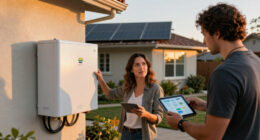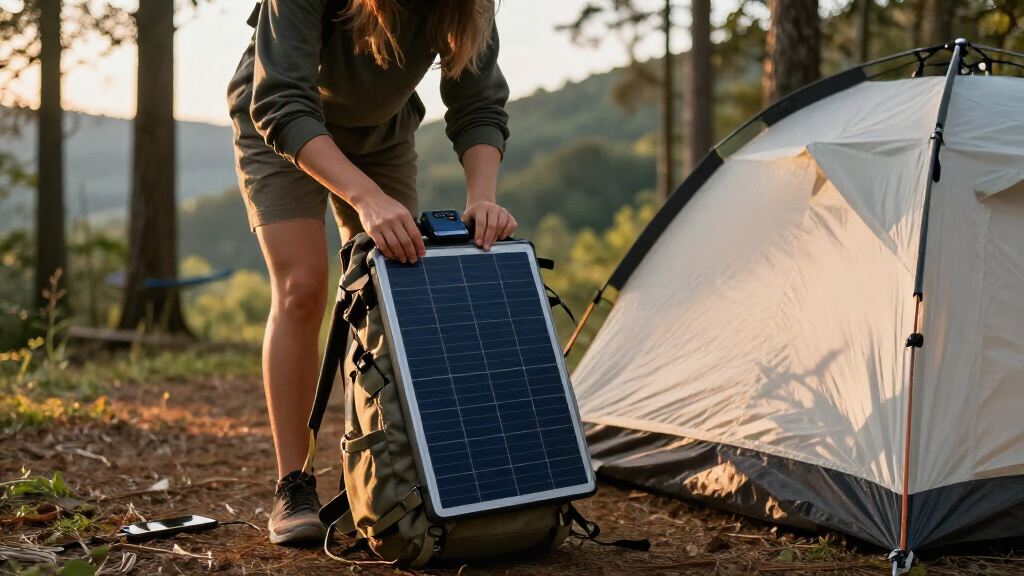
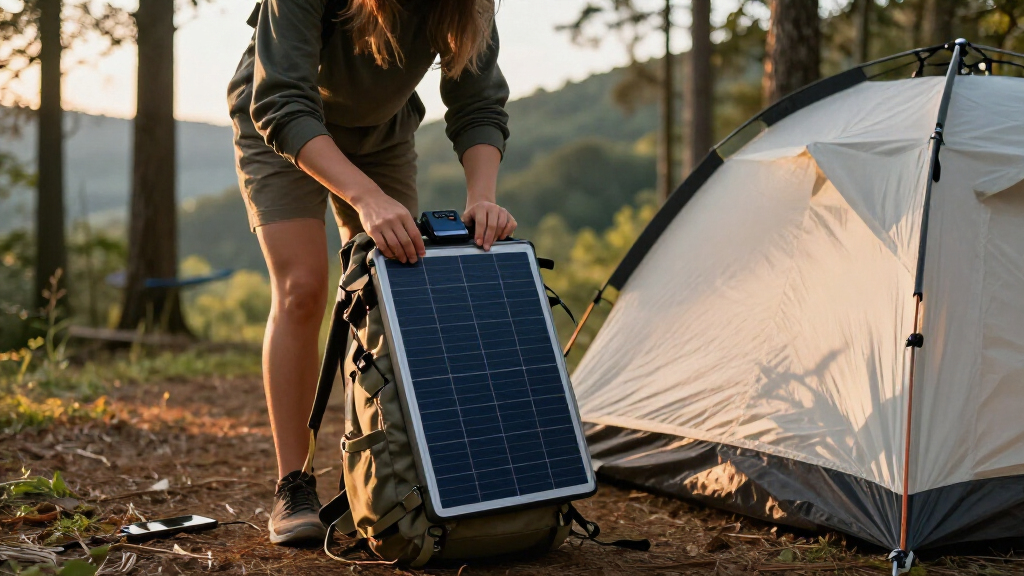
Solar power banks for camping range from pocketable phone chargers to power stations that can run larger devices. My best overall pick is the Jackery Explorer 300 with a 40W solar panel, which offers a more useful setup for multi-device trips than a small battery bank. For a simpler carry, the BLAVOR 10,000mAh stands out for its compact size, while the ZeroKor 300W with a 60W panel suits campers who need more output. The main tradeoff is portability versus usable capacity: small banks are easy to pack, but stations offer more power at the cost of bulk. Solar charging also depends on weather and exposure, so it is better treated as a supplement than a guaranteed daily refill. Read on for the full breakdown and guidance on matching a setup to your trip.

Get backup power and energy gear delivered free with Prime
- Fast, free delivery on millions of items
- Prime Video, Amazon Music and more included
- Member-only deals all year
Key Takeaways
- The Jackery Explorer 300 and 40W panel leads the roundup for campers who want a more capable, dedicated power setup rather than a phone-focused bank.
- Portable power stations and solar panels are a different class of gear from the listed 10,000–50,000mAh banks; their AC output and larger panels can suit multiple devices, but they take up more space.
- Capacity claims alone do not settle the choice. Charging ports, output, and device compatibility matter when several people share a bank or need to power more than phones.
- Built-in cables, wireless charging, and hand cranks add convenience, but they do not replace checking output requirements or planning a reliable way to recharge.
- Foldable panels on compact banks are not the same as a separate solar panel. They can offer extra flexibility in camp, while a larger dedicated panel is a more practical match for replenishing a power station.
| FEELLE 50,000mAh Solar Power Bank with Magnetic Wireless Charging and Hand Crank |  | Best for Multi-Device Emergency Backup | Battery capacity: 50,000mAh | Battery cell type: Lithium polymer | Wireless charging: Magnetic, up to 15W | VIEW LATEST PRICE | See Our Full Breakdown |
| ZeroKor 300W Portable Power Station with 60W Solar Panel |  | Best Included Solar-Panel Kit for Small Appliances | Maximum power station output: 300W | Solar panel: 60W monocrystalline; 20.5% conversion efficiency | AC outlets: 2 | VIEW LATEST PRICE | See Our Full Breakdown |
| BLAVOR 20,000mAh Solar Power Bank with Hand Crank, Built-In Cables, and Wireless Charging |  | Best for Beginners Who Want Built-In Camp Tools | Battery capacity: 20,000mAh | Battery cell type: Lithium polymer | USB-C output: Up to 20W PD fast charging | VIEW LATEST PRICE | See Our Full Breakdown |
| Jackery Explorer 300 Portable Power Station with 40W Solar Panel |  | Best for Longer-Term Campsite Power | Battery capacity: 292Wh | Peak surge output: 600W | Battery chemistry: LiFePO4; rated for over 4,000 charge cycles | VIEW LATEST PRICE | See Our Full Breakdown |
| BLAVOR 10,000mAh Solar Power Bank with Wireless Charging |  | Best Compact Phone Backup | Battery capacity: 10,000mAh | Battery type: Lithium-cobalt | Output: Up to 20W | VIEW LATEST PRICE | See Our Full Breakdown |
| Nuynix 49,800mAh Solar Power Bank with 15W USB-C Fast Charging |  | Best for High-Capacity Phone Backup | Battery capacity: 49,800mAh | Battery type: Lithium polymer | Battery voltage: 3.7V DC | VIEW LATEST PRICE | See Our Full Breakdown |
| EnginStar 300W Portable Power Station with 60W Foldable Solar Panel |  | Best for Small Appliances at Camp | Battery capacity: 296Wh | AC output: 300W | AC outlets: 2 × 110V pure sine wave | VIEW LATEST PRICE | See Our Full Breakdown |
| SOARAISE 48,000mAh Solar Power Bank with Wireless Charging and 4 Built-In Cables |  | Best for Cable-Free Group Charging | Battery capacity: 48,000mAh | Battery type: Lithium polymer | Solar panels: 4 | VIEW LATEST PRICE | See Our Full Breakdown |
| SOXONO 40000mAh Solar Power Bank with 20W PD Fast Charging and Built-in Cables |  | Best for Rough Weather and Fast Phone Charging | Capacity: 40,000mAh | Fast charging: 20W PD | Connectors: USB-C, USB-A, Micro USB, and iOS (Lightning) | VIEW LATEST PRICE | See Our Full Breakdown |
| BLAVOR 20,000mAh Solar Power Bank with Four Foldable Panels |  | Best Compact Solar Panel Setup | Battery capacity: 20,000mAh | Battery type: Lithium polymer | Solar panels: 4 foldable panels | VIEW LATEST PRICE | See Our Full Breakdown |
| SOARAISE 50000mAh Solar Power Bank with 22.5W Fast Charging and Wireless Charging |  | Best for High-Capacity Device Sharing | Battery capacity: 50,000mAh | USB-C fast charging: 22.5W | Wireless charging: Up to 15W | VIEW LATEST PRICE | See Our Full Breakdown |
| BLAVOR 20,000mAh Solar Power Bank with Wireless Charging |  | Best for Cable-Free Camp Charging | Battery capacity: 20,000mAh | USB-C output: 20W | Total USB ports: 3 | VIEW LATEST PRICE | See Our Full Breakdown |
| Apowking 100W Portable Power Station with 40W Solar Panel |  | Best for Solar-Ready AC Backup | Capacity: 146Wh / 39,600mAh | Solar panel output: 40W | Solar panel efficiency: 20.5% | VIEW LATEST PRICE | See Our Full Breakdown |
| solar power banks for camping | Battery capacity | Ports |
|---|---|---|
| FEELLE 50,000mAh Solar Power B | 50,000mAh | — |
| ZeroKor 300W Portable Power St | — | — |
| BLAVOR 20,000mAh Solar Power B | 20,000mAh | 1 USB-C and 2 USB-A |
| Jackery Explorer 300 Portable | 292Wh | 2 AC outlets, 1 USB-C PD, 2 USB-A, and 1 car port |
| BLAVOR 10,000mAh Solar Power B | 10,000mAh | — |
| Nuynix 49,800mAh Solar Power B | 49,800mAh | 3 |
| EnginStar 300W Portable Power | 296Wh | — |
| SOARAISE 48,000mAh Solar Power | 48,000mAh | 3: 2 USB-A outputs and 1 USB-C input/output |
| SOXONO 40000mAh Solar Power Ba | — | 3: USB-C input/output, USB-A output, and Micro input |
| BLAVOR 20,000mAh Solar Power B | 20,000mAh | 2 USB-A and 1 USB-C |
| SOARAISE 50000mAh Solar Power | 50,000mAh | 3 |
| BLAVOR 20,000mAh Solar Power B | 20,000mAh | — |
| Apowking 100W Portable Power S | — | — |
More Details on Our Top Picks
FEELLE 50,000mAh Solar Power Bank with Magnetic Wireless Charging and Hand Crank
The 50,000mAh capacity and four built-in cables make this FEELLE a better fit for a group campsite than the smaller BLAVOR 20,000mAh model: it can serve several devices without each person needing a cable. Its magnetic wireless charging, USB-C fast charging, and up to six-device support offer more ways to share power than a basic backup bank. The four solar panels and hand crank add emergency options, though neither should be treated as a dependable fast-recharge plan; useful input rates are not provided, and the crank takes physical effort. A compass and three-mode flashlight broaden its camp utility, while its shockproof, dustproof, water-resistant construction suits outdoor carry. I would choose it for backup versatility, not as a substitute for a solar panel and power station on a long trip.
Pros:- 50,000mAh capacity supports multiple devices across a campsite
- Four built-in cables reduce the need to pack separate charging leads
- Wireless charging and USB-C fast charging provide flexible charging options
- Four solar panels, hand crank, compass, and three-mode flashlight add emergency utility
Cons:- Solar and hand-crank charging rates are not specified, so they are difficult to rely on for routine recharging
- Magnetic wireless charging may work less effectively through thick phone cases
- The large-capacity design is less suited to weight-conscious backpacking
Best for: Campers traveling in groups who want one high-capacity bank with built-in cables, wireless charging, and emergency lighting.
Not ideal for: Backpackers minimizing weight or campers who need predictable solar recharging; its large capacity adds bulk, and solar and crank charging rates are unspecified.
- Battery capacity:50,000mAh
- Battery cell type:Lithium polymer
- Wireless charging:Magnetic, up to 15W
- USB-C output:Up to 3A; supports QC 3.0 fast charging
- Built-in cables:USB-C, Phone, Micro-USB, and USB-A
- Maximum simultaneous devices:6
- Solar panels:4
- Additional features:Hand-crank generator, compass, three-mode LED flashlight, and backpack hook
Our verdict“Choose this FEELLE for shared campsite charging and emergency features, but not when low weight or predictable solar input matters most.”
ZeroKor 300W Portable Power Station with 60W Solar Panel
Unlike the FEELLE and BLAVOR power banks, the ZeroKor is a portable power station: its two AC outlets and 300W maximum output can serve compatible small appliances as well as phones and other USB devices. The included 60W foldable monocrystalline panel gives this kit a more practical solar setup than a bank with built-in solar cells, though charging still depends on conditions and the panel’s junction box is not waterproof. Its AC, car, and solar recharge options make it useful for drive-in camps where carrying a separate station is acceptable. The main drawback is a major information gap: battery capacity is not specified, making it hard to estimate how long it can run gear. Keep loads below 300W; exceeding that limit may damage the unit.
Pros:- Includes a foldable 60W monocrystalline solar panel
- Two AC outlets extend use beyond phone charging
- Can recharge from an AC outlet, 12V car outlet, or compatible solar panel
- Multiple USB outputs and built-in electrical protections support campsite device charging
Cons:- Battery capacity is not specified, limiting runtime estimates
- The solar panel junction box is not waterproof
- Appliances drawing more than 300W may damage the unit
Best for: Car campers who want an included folding solar panel and AC power for compatible devices under 300W.
Not ideal for: Backpackers or buyers who need a clearly stated energy capacity and a panel assembly that can tolerate wet conditions.
- Maximum power station output:300W
- Solar panel:60W monocrystalline; 20.5% conversion efficiency
- AC outlets:2
- DC output:9V–12.6V, up to 10A
- USB outputs:3 USB ports up to 5V/3A, plus 1 quick-charge USB port
- Solar panel outputs:USB-A, USB-C, and DC; DC output up to 18V/3.3A and 60W
- Recharge methods:AC outlet, 12V car outlet, or compatible 13V–23V solar panel
- Protection features:Short circuit, over-current, over-voltage, overload, and overheating protection
Our verdict“Pick the ZeroKor for car camping with small AC-powered gear and an included panel, but skip it if you need a known capacity or a weatherproof panel assembly.”
BLAVOR 20,000mAh Solar Power Bank with Hand Crank, Built-In Cables, and Wireless Charging
This BLAVOR is the more manageable middle ground between the 10,000mAh BLAVOR compact bank and FEELLE’s 50,000mAh multi-device model. Its 20,000mAh capacity, four built-in cables, and support for up to seven devices suit campers who want to share a single bank without bringing a tangle of leads. USB-C PD up to 20W gives it a defined wired fast-charging advantage over options whose charging rate is less explicit; Qi wireless charging adds convenience for compatible phones. The lantern, flashlight, compass, thermometer, and carabiner make it approachable for casual camping and emergency use. Solar and hand-crank charging are extras, not a specified charging plan: no rate or capacity is provided. Choose it for an all-in-one kit, not for dependable off-grid energy generation.
Pros:- 20,000mAh capacity offers more reserve than the 10,000mAh BLAVOR compact model
- Four built-in cables and three ports support up to seven devices
- USB-C PD provides up to 20W wired charging, with Qi wireless charging up to 15W
- Includes a flashlight, camping lantern, compass, thermometer, and carabiner
Cons:- Solar and hand-crank charging rates and output capacity are not specified
- Does not provide the AC outlets or defined appliance output of the ZeroKor power station
- Its many built-in tools and cables may be unnecessary for campers packing only phone backup
Best for: New and occasional campers who want a mid-capacity shared power bank with built-in cables, lighting, and basic outdoor tools.
Not ideal for: Campers powering appliances or planning to recharge mainly from the sun or crank; it is a power bank, and those input rates are unspecified.
- Battery capacity:20,000mAh
- Battery cell type:Lithium polymer
- USB-C output:Up to 20W PD fast charging
- Wireless charging:Qi compatible, up to 15W
- Built-in cables:4: two USB-C, one iOS, and one USB-A
- Ports:1 USB-C and 2 USB-A
- Maximum simultaneous devices:7
- Additional features:Solar and hand-crank charging, flashlight, camping lantern, compass, thermometer, and carabiner
Our verdict“Choose this BLAVOR for a mid-capacity, cable-ready camp bank with useful built-in tools, but not as a primary solar generator.”
Jackery Explorer 300 Portable Power Station with 40W Solar Panel
The Jackery is the strongest fit here for campers who need more than phone backup: its 292Wh battery and 300W rated output provide a defined power source for compatible campsite gear, unlike the FEELLE and BLAVOR banks. It also offers two AC outlets, a 100W USB-C PD port, USB-A, and a car port, so several device types can draw power from one unit. Its LiFePO4 battery rated for over 4,000 charge cycles favors repeated use over time. The tradeoff is portability: at 12.9 pounds, it is better for a vehicle-accessible camp than a hiking pack. The included 40W panel is also modest for a 292Wh station; the supplied data gives about 7.5 hours to reach 80% capacity, and the panel and station may ship separately.
Pros:- 292Wh capacity and 300W rated output suit a wider range of campsite devices than power banks
- Two AC outlets, 100W USB-C PD, USB-A, and a car port support varied gear
- LiFePO4 battery is rated for over 4,000 charge cycles
- Includes a 40W solar panel for off-grid recharging
Cons:- At 12.9 pounds, it is poorly suited to carrying on a backpacking trip
- The 40W panel is specified to take about 7.5 hours to reach 80% capacity
- The station and solar panel may ship separately
Best for: Car campers and frequent off-grid users who want a known battery capacity, AC power, and multiple charging ports.
Not ideal for: Backpackers who need a light phone bank or campers expecting the 40W panel to refill the station quickly.
- Battery capacity:292Wh
- Peak surge output:600W
- Battery chemistry:LiFePO4; rated for over 4,000 charge cycles
- Solar panel:40W
- Ports:2 AC outlets, 1 USB-C PD, 2 USB-A, and 1 car port
- USB-C PD output:100W
- Weight:12.9 lbs
Our verdict“Choose the Jackery for vehicle-based camping that calls for defined AC-capable power and a cycle-rated battery, not for lightweight travel or fast solar refills.”
BLAVOR 10,000mAh Solar Power Bank with Wireless Charging
At 9.3 ounces, this BLAVOR is the easiest option here to justify for a day hike or a short camp where the priority is keeping a phone topped up. It is smaller in capacity than the BLAVOR 20,000mAh and FEELLE 50,000mAh models, so it is a personal backup rather than a shared campsite battery. In return, it is more compact and still offers up to 20W USB-C output, Qi wireless charging, and support for three devices at once. Its IPX5 water resistance, dustproof and shockproof case, dual flashlights, and compass carabiner suit outdoor carry. The limit is energy reserve: 10,000mAh may call for recharging during extended trips. Solar charging is listed, but no rate is given, so I would not plan around it as the main refill method.
Pros:- Lightweight 9.3-ounce design is easier to carry than larger-capacity banks
- Up to 20W USB-C output and Qi wireless charging offer flexible phone charging
- Can charge up to three devices at once
- IPX5 water resistance plus dustproof and shockproof construction suit outdoor use
Cons:- 10,000mAh capacity may require recharging on extended trips
- Solar charging performance and rate are not specified
- Does not offer the higher capacity or emergency hand crank of the BLAVOR 20,000mAh model
Best for: Day hikers and minimalist campers who want a light, rugged phone backup with wireless and wired charging.
Not ideal for: Groups, multi-night campers, or anyone powering larger devices; its 10,000mAh capacity is far below the FEELLE and power-station options.
- Battery capacity:10,000mAh
- Battery type:Lithium-cobalt
- Output:Up to 20W
- Connectors:USB-A, USB-C, and iOS
- Wireless charging:Qi compatible
- Maximum simultaneous devices:3
- Water resistance:IPX5
- Weight and dimensions:9.3 ounces; 5.9 x 3.1 x 0.8 inches
Our verdict“Pick this BLAVOR for compact, rugged phone backup on short outings, but choose a larger bank for shared or multi-night campsite power.”
Nuynix 49,800mAh Solar Power Bank with 15W USB-C Fast Charging
The 49,800mAh capacity makes this Nuynix a fit for campers who want substantial phone and small-device backup without carrying a power station. Its three charging ports let you share power across devices, while the 15W USB-C output offers a useful speed boost over basic charging. Compared with the BLAVOR 20,000mAh Solar Power Bank with Four Foldable Panels, Nuynix prioritizes stored capacity over a more elaborate solar-panel setup and outdoor extras. The key tradeoff is that solar is described as supplemental charging, not a dependable way to refill the bank during a short trip. Its rugged, water- and dust-resistant design and flashlight suit camp use, but no protection rating is specified, so I would not treat it as a fully weatherproof device.
Pros:- 49,800mAh capacity provides a substantial stored-power reserve.
- Three ports allow charging multiple devices at once.
- 15W USB-C output supports faster charging for compatible devices.
- Includes an LED flashlight and USB or solar charging options.
Cons:- Solar charging is presented as supplemental rather than a primary recharge method.
- No specific water- or impact-resistance rating is provided.
- 15W USB-C output is less capable than faster PD options such as the SOXONO 20W model.
Best for: Campers who want a large reserve for phones and other small USB devices, with occasional solar top-up as a backup.
Not ideal for: Backpackers who need a compact, lightweight charger or campers who need a documented water-resistance rating and reliable solar recharging.
- Battery capacity:49,800mAh
- Battery type:Lithium polymer
- Battery voltage:3.7V DC
- Ports:3
- Connectors:USB Type-A and USB Type-C
- USB-C output:15W
- Charging options:USB and solar
- Additional features:LED flashlight, indicator lights, and overcharge protection
- Warranty:12-month limited warranty
Our verdict“Choose the Nuynix if stored capacity matters more than fast solar replenishment or a verified weatherproof rating.”
EnginStar 300W Portable Power Station with 60W Foldable Solar Panel
Unlike the phone-focused power banks in this group, the EnginStar is a portable power station: its 296Wh battery and two pure-sine-wave AC outlets can run compatible small appliances as well as charge phones. It also comes with a 60W foldable solar panel, so solar recharging is more practical than the small integrated panels on the Nuynix or SOXONO. The unit accepts wall and 12V car charging too, giving campers more ways to prepare before a trip or replenish on the road. Its limits are just as relevant: 300W maximum output rules out higher-draw appliances, and the included panel may recharge slowly when sunlight is weak. At 6.5 pounds for the station plus a 4-pound panel, it suits car camping better than a backpacking loadout.
Pros:- Includes a 60W foldable monocrystalline solar panel.
- Two 110V pure sine wave AC outlets support compatible small appliances.
- Can recharge from solar, a wall outlet, or a 12V car socket.
- Eight output ports and built-in battery protections support varied camp devices.
Cons:- The 300W output limit excludes higher-power appliances.
- The 60W panel can recharge slowly in limited or inconsistent sunlight.
- The station and panel together weigh 10.5 pounds.
Best for: Car campers who want to run low-wattage AC devices and charge several small electronics from one setup.
Not ideal for: Backpackers or campers who need to power appliances above 300W or want a lightweight, pocketable phone charger.
- Battery capacity:296Wh
- AC output:300W
- AC outlets:2 × 110V pure sine wave
- USB outputs:USB-A up to 5V/3.1A and USB-C 18W
- Solar panel:60W monocrystalline, 23% conversion efficiency
- Charging methods:Solar, AC wall outlet, or 12V car socket
- Power station weight:6.5 lb
- Solar panel weight:4 lb
- Battery cycle life:More than 1,000 charge cycles
Our verdict“Pick the EnginStar for car camping when AC power and an included solar panel matter more than low weight.”
SOARAISE 48,000mAh Solar Power Bank with Wireless Charging and 4 Built-In Cables
The SOARAISE is aimed at campers who want fewer loose accessories: four built-in cables, three ports, and a wireless charging pad cover several common ways to power devices. Its 48,000mAh capacity gives it a large reserve, while the four solar panels offer an on-device top-up option. Compared with the SOXONO 40000mAh Solar Power Bank, this model trades a stated IP67 rating and 20W PD output for wireless charging and a higher listed capacity. That makes the SOXONO the clearer choice for wet, rough conditions, while SOARAISE better suits a group with mixed connectors. Solar still depends on available sunlight and should not be treated as a quick recharge method. I would also verify the listed 50g battery weight before relying on it for packing plans, since it is an unusually low figure for this capacity.
Pros:- Four built-in cables cover USB-C, phone, USB-A, and Micro connections.
- Wireless charging adds an option when a cable is inconvenient.
- 48,000mAh listed capacity provides a large stored-power reserve.
- Four solar panels, a flashlight, and ruggedness features suit outdoor backup use.
Cons:- Solar charging speed depends on sunlight and is not specified as a rapid recharge method.
- The listed 50g battery weight may warrant verification.
- Its water-resistance claims are not accompanied by a specific IP rating in the supplied specs.
Best for: Small camping groups carrying devices with different connectors who value built-in cables and wireless charging.
Not ideal for: Campers who need a clearly specified waterproof rating, a fast solar refill, or verified weight information before packing.
- Battery capacity:48,000mAh
- Battery type:Lithium polymer
- Solar panels:4
- Ports:3: 2 USB-A outputs and 1 USB-C input/output
- Built-in cables:4: USB-C, phone, USB-A, and Micro
- Wireless charging:Yes
- Maximum output current:3A
- Dimensions:6.38 × 3.43 × 1.57 inches
- Listed battery weight:50g
Our verdict“Choose this SOARAISE for shared charging convenience, but favor the SOXONO if a stated IP rating matters more.”
SOXONO 40000mAh Solar Power Bank with 20W PD Fast Charging and Built-in Cables
The SOXONO earns its place for campers who put weather protection and fast phone charging ahead of solar collection. Its IP67 rating gives it a more clearly defined outdoor protection claim than the Nuynix, whose resistance rating is unspecified, while 20W PD charging can shorten charging time for compatible phones. Four built-in cables reduce the loose-cord burden, and the dual-mode flashlights add practical emergency lighting. The tradeoff is that its 1.8W solar panel is explicitly an emergency backup, not a meaningful way to refill a 40,000mAh bank quickly. At 1.2 pounds, it is also heavier than the BLAVOR 20,000mAh model, which makes more sense for weight-conscious trips. This is a rugged reserve for camp or vehicle storage, not a lightweight backpacking pick.
Pros:- IP67 rating specifies water, shock, and dust protection.
- 20W PD output supports faster charging for compatible phones.
- Four built-in cables reduce the need to pack separate charging leads.
- Dual LED flashlights offer steady, SOS, strobe, and low modes.
Cons:- The 1.8W solar panel is intended for emergency backup and charges slowly.
- At 1.2 pounds, it is heavy for a power bank.
- Its capacity and rugged casing make it bulkier than the 20,000mAh BLAVOR option.
Best for: Car campers and outdoor users who want a rugged, clearly rated power bank with fast phone charging and built-in cables.
Not ideal for: Backpackers trying to minimize pack weight or campers expecting the small solar panel to recharge the bank during a short outing.
- Capacity:40,000mAh
- Fast charging:20W PD
- Connectors:USB-C, USB-A, Micro USB, and iOS (Lightning)
- Ports:3: USB-C input/output, USB-A output, and Micro input
- Durability:IP67 waterproof, shockproof, and dustproof
- Solar panel:1.8W
- Weight:1.2 lb
- Dimensions:6.77 × 3.46 × 1.42 inches
- Flashlight:Dual LED with 4 modes
Our verdict“Pick the SOXONO when a defined IP67 rating and 20W phone charging matter more than weight or useful solar recharge speed.”
BLAVOR 20,000mAh Solar Power Bank with Four Foldable Panels
The BLAVOR stands out among the phone-sized options for its four foldable solar panels, which provide more collection area than a single small integrated panel. That makes it a sensible choice for campers who can set the charger in strong sunlight while they are at camp. Its 18W USB-C PD and QC 3.0 outputs also give compatible phones a faster wired charge than the Nuynix’s 15W USB-C output. The compromise is capacity: 20,000mAh is well below the 40,000mAh SOXONO and 48,000mAh SOARAISE, so it offers less reserve for multiple devices or a longer trip. Solar performance remains dependent on bright sun, and the USB-C output suits only laptops that support PD. Its IPX5 rating is water-resistant, not a claim of full waterproofing.
Pros:- Four foldable panels offer more solar collection area than a single-panel design.
- 18W USB-C Power Delivery and USB-A QC 3.0 support fast charging for compatible devices.
- Built-in camping light and three-mode flashlight add camp and emergency lighting.
- Includes a compass and carabiner for outdoor use.
Cons:- 20,000mAh capacity is lower than the Nuynix, SOXONO, and SOARAISE options.
- Solar charging depends on strong sunlight and is not a dependable sole recharge plan.
- IPX5 indicates water resistance, not full waterproofing; laptop charging is limited to PD-compatible models.
Best for: Campers who want a mid-capacity phone charger with foldable solar panels, useful lighting, and outdoor-oriented accessories.
Not ideal for: Long-trip users needing the largest charge reserve, or anyone expecting dependable solar charging in shade or overcast weather.
- Battery capacity:20,000mAh
- Battery type:Lithium polymer
- Solar panels:4 foldable panels
- Solar charging detail:Up to 1.2A under 25,000 lux sunlight
- USB-C output:18W Power Delivery, bidirectional
- USB-A output:Up to 18W QC 3.0
- Ports:2 USB-A and 1 USB-C
- Protection:IPX5 water-resistant, dustproof, and shockproof
- Warranty:3 years
Our verdict“Choose the BLAVOR for a more compact solar-panel setup and useful camp extras, but not for maximum capacity or all-weather solar charging.”
SOARAISE 50000mAh Solar Power Bank with 22.5W Fast Charging and Wireless Charging
The 50,000mAh capacity and charging for up to six devices make this SOARAISE a strong fit for a camping group carrying several phones or accessories. Its 22.5W USB-C charging is faster than the BLAVOR 20,000mAh Solar Power Bank’s 20W output, while built-in USB-C and Lightning cables reduce the need to pack spares. Wireless charging adds convenience, but its speed can vary with phone alignment, cases, and attachments.
For outdoor use, the flashlight, compass, and thermometer add useful backup functions, and the unit is described as waterproof, shockproof, and dustproof. The tradeoff is that its solar panel is a backup charging option, not a dependable way to refill such a large battery quickly. Compared with the Apowking power station, this is better for phones and small devices than for powering AC equipment.
Pros:- 50,000mAh capacity suits multi-day use and charging several devices.
- 22.5W USB-C charging offers faster wired output than the BLAVOR 20,000mAh model.
- Built-in USB-C and Lightning cables reduce loose accessories.
- Flashlight, compass, and thermometer add outdoor utility.
Cons:- Solar charging is positioned as backup, so it should not be the main refill plan.
- Wireless charging performance varies with phone model, case thickness, and metal attachments.
- Its large capacity may be cumbersome for campers focused on minimizing pack weight.
Best for: Camping groups who want one large-capacity bank with built-in cables to share among phones and small USB devices.
Not ideal for: Solo campers prioritizing a small, light pack, or anyone expecting solar panels to quickly recharge the bank during a trip.
- Battery capacity:50,000mAh
- USB-C fast charging:22.5W
- Wireless charging:Up to 15W
- Simultaneous device charging:Up to 6 devices
- Built-in cables:USB-C and Lightning
- Ports:3
- Battery type:Lithium-ion
- Outdoor features:3-mode flashlight, compass, and thermometer
Our verdict“Choose this SOARAISE for shared, high-capacity phone charging at camp, but not as a lightweight or solar-first solution.”
BLAVOR 20,000mAh Solar Power Bank with Wireless Charging
The BLAVOR’s standout is its charging flexibility: four built-in cables, three USB ports, and Qi wireless charging let a group top up different devices without relying on a pouch of adapters. Its 20W USB-C output is close to the SOARAISE 50,000mAh model’s 22.5W, but the BLAVOR carries 20,000mAh rather than 50,000mAh. That smaller capacity makes it a more restrained choice for campers who value fewer loose cables over maximum shared runtime.
A camping light, flashlight, compass, and thermometer add practical functions, while the stated IPX5 water resistance and protective shell suit exposed campsites. Still, the product data does not specify solar charging speed, so I would treat sunlight as supplemental rather than plan around it. Its ability to charge an Apple Watch wirelessly is a niche advantage, though the feature-rich build may feel bulky for a solo hiker.
Pros:- Four built-in cables cover USB-C, iOS, and USB-A connections.
- Qi wireless charging supports compatible phones and Apple Watch.
- 20W USB-C output provides fast wired charging.
- IPX5 water resistance and integrated lights suit campsite use.
Cons:- Solar charging speed and performance are not specified.
- 20,000mAh is less reserve than the 50,000mAh SOARAISE for group or multi-day charging.
- The cables and outdoor features may make it bulky compared with a simpler power bank.
Best for: Campers carrying a mix of USB-C, USB-A, iOS, and Qi-compatible devices who want fewer separate cables and useful camp lighting.
Not ideal for: Long-trip groups that need the largest reserve, or ultralight solo hikers who want a compact bank with clearly specified solar input.
- Battery capacity:20,000mAh
- USB-C output:20W
- Total USB ports:3
- Built-in cables:4: 2 USB-C, 1 iOS, and 1 USB-A
- Wireless charging:Qi; phones and Apple Watch
- Water resistance:IPX5
- Charging protection:Overcharge, over-discharge, over-current, and short-circuit protection
- Outdoor features:Flashlight, camping light, compass, thermometer, carabiner, and rope
Our verdict“Pick the BLAVOR when built-in cable variety and wireless charging matter more than the largest possible battery reserve.”
Apowking 100W Portable Power Station with 40W Solar Panel
Unlike the SOARAISE and BLAVOR power banks, the Apowking is a portable power station with two 110V AC outlets and a supplied 40W solar panel. That makes it the more suitable pick for campers with small AC-powered gear, as well as phones and other USB devices. Its 146Wh capacity and 100W running limit define the use case: it can support modest loads, but it is not a substitute for a larger station when an appliance needs more continuous power.
The 3.3-pound unit is compact for a station, and the included panel gives campers a direct solar-charging option that the two banks do not specify. Yet panel output is modest and may yield little in low light, while solar charging time is not provided. For phone-only camping, the simpler SOARAISE or BLAVOR banks avoid carrying AC hardware; choose Apowking when its outlet mix and included panel earn their space.
Pros:- Included 40W monocrystalline panel provides a defined solar input.
- Two AC outlets plus USB and 12V DC outputs support varied gear.
- At 3.3 lb, it is relatively portable for a power station.
- Dual LED lights include flashlight, strobe, and SOS modes.
Cons:- 100W running output rules out many higher-demand appliances.
- The 40W panel may recharge slowly in low light, and charging time is not specified.
- For charging phones alone, it is less pack-efficient than the SOARAISE or BLAVOR power banks.
Best for: Car campers who want a compact station for small AC devices, USB gear, and solar charging from the included panel.
Not ideal for: Backpackers counting every pound, or campers needing to run appliances above 100W continuously.
- Capacity:146Wh / 39,600mAh
- Solar panel output:40W
- Solar panel efficiency:20.5%
- Running and peak wattage:100W running / 200W peak
- AC outlets:2 × 110V
- Total power outlets:7
- USB-C output:5V/3A, 9V/2A
- Weight and dimensions:3.3 lb; 7.5 × 3.7 × 6.1 in
Our verdict“Choose the Apowking for car camping when AC outlets and an included solar panel matter more than pocket-sized phone charging.”
How We Picked
I ranked these 13 camping-focused options by how well their form, capacity, and charging setup fit real trip needs. I separated compact power banks from portable power stations because their output and carrying demands serve different campers. Within each group, I weighed stated capacity alongside charging options, output details, integrated conveniences, and whether the listed solar panel is a separate panel or built into the bank.
The ranking favors usable versatility and a clear camping role over a large capacity number by itself. A station paired with a dedicated panel earns a higher place for longer trips and more demanding devices, while smaller banks rank well when they reduce packing bulk and keep phones topped up. I also considered practical tradeoffs: wireless charging and built-in cables can simplify camp use, but they do not make a small panel a dependable power source in poor sunlight. Since the product information provided does not establish real-world charging times or weather performance, I do not treat those as proven advantages.
Factors to Consider When Choosing Solar Power Banks For Camping
Start with what you need to keep powered and how far you will carry it. A phone-only weekend has very different requirements from a group trip with cameras, lights, or devices that need AC power. These factors help separate a convenient backup from a setup that can support a more demanding camp.
Match the Power Source to Your Devices
List the devices you expect to charge, then check their input needs rather than choosing by capacity alone. A USB power bank is generally the simpler fit for phones and small electronics, while a power station makes more sense when your gear needs AC output or higher power. Do not assume a large mAh figure means a bank can operate every device; capacity and output answer different questions. Check the product’s ports and stated output against each device’s requirements before buying. If your trip only involves phones, a station may add weight and features you will not use. If you have several device types, the extra output options may justify carrying one.
Treat Solar as a Refill Option, Not a Guarantee
Solar charging can help extend a trip, but actual replenishment depends on sunlight, panel placement, and how long the panel is exposed. A built-in or foldable panel on a compact bank is convenient to deploy, yet its small form is not equivalent to a separate panel supplied with a power station. A common mistake is packing a solar bank as the only charging plan for a cloudy or shaded campsite. For trips where power is essential, arrive with the battery charged and treat solar as backup capacity. Campers who expect regular recharging should compare panel size and charging compatibility, not just the words “solar powered.”
Balance Capacity Against Carrying Weight
More stored energy can reduce the need to ration charges, but it usually means a larger, heavier item to carry and store. For car camping, a power station may be reasonable because it can stay near the vehicle; on a hike, even a high-capacity bank can become an avoidable burden. Estimate how many devices will share the supply and how often they need charging before stepping up in size. Capacity labels are useful for comparing models, but they do not reveal how many full charges your particular device will receive under camp conditions. Leave room for charging losses and for power shared across several gadgets. Choose the lightest format that meets your actual needs, not the largest number on the box.
Choose Conveniences That Solve a Real Camp Problem
Built-in cables can reduce loose accessories, and wireless charging can make topping up a compatible phone simple when ports are awkward to reach. Hand-crank features may offer an emergency charging method, but they should not be treated as a substitute for a charged battery or a dependable solar panel. Before buying, check whether the integrated features work with your devices and whether they leave the ports you need available. A simpler bank can be a better choice if you already carry the right cables and want fewer features to manage. Convenience matters most when it removes a specific hassle without adding unnecessary bulk.
Plan for Shared Use and Charging Time
Solo campers can often get by with fewer ports, while a group may need several people to recharge devices without waiting. Count simultaneous connections, not just the number of gadgets brought along, and check whether the listed outputs support your planned combination. Fast-charging claims matter only when both the bank and the device support compatible charging standards. Avoid assuming every port can deliver its maximum output at the same time; check the manufacturer’s details for shared-output limits. For a group, a station’s range of connections may be more useful than a compact bank with a large stated capacity. For one person, that extra capability can be needless weight.
Decide When a Power Station Is Worth the Extra Bulk
A portable power station is a stronger match when your camping kit includes devices that cannot charge from USB alone or when several people need a shared supply. It also pairs naturally with a separate solar panel, which gives you a more distinct charging setup than a small panel attached to a bank. That added capability comes with more space and weight to manage, so it is not automatically the better camping choice. For short trips focused on keeping a phone alive, a compact bank is easier to pack and handle. Pay for the station format when you have a defined need for its output, rather than assuming more equipment means more useful power.
Frequently Asked Questions
Can a solar power bank keep my phone charged throughout a cloudy camping trip?
It may keep a phone charged if the bank starts full and the phone’s use is modest, but cloudy weather can limit solar replenishment. A small integrated panel should not be treated as a reliable way to replace all the power used each day. For a trip where phone access matters, charge the bank before leaving and carry a backup charging plan. Reduce screen use and switch off features you do not need to stretch stored capacity. If the forecast or campsite is likely to mean little sun, prioritize battery capacity and dependable pre-trip charging over the solar feature alone.
Should I choose a power bank or a portable power station for camping?
Choose a power bank if your main goal is charging phones and other small USB devices with minimal packing bulk. A portable power station is a better fit when you need its higher output options, AC power, or a shared source for several campers. The station-and-panel combinations in this roundup are more capable setups, but they take up more room than compact banks. Think through the devices you will bring and check their required inputs before choosing. If none needs station-level output, a power bank is often the simpler match.
Are built-in solar panels enough to recharge a power bank at camp?
They can provide some additional charging when placed in strong, direct sunlight, but their small size limits how much energy they can collect. Their contribution varies with weather, shade, panel angle, and time in the sun. Do not plan on a built-in panel fully replenishing a heavily used bank during a short camp day. A separate panel supplied with a power station gives you a larger dedicated solar setup, though it still depends on suitable sun. For either format, arriving with a full battery is a safer plan than relying on solar alone.
Does a higher mAh capacity mean a bank will charge my phone more times?
A higher stated capacity can indicate more stored energy, but it does not translate directly into an exact number of phone charges. Charging losses, phone battery size, cable and output performance, and other devices drawing power all affect the result. A large bank may also be heavier, which matters if you carry it on a hike. Compare capacity alongside output and weight, then think about how many devices will share it. The most useful choice is the one that meets your trip’s charging needs without adding capacity you will not use.
Is wireless charging or a built-in hand crank useful for camping?
Wireless charging can cut down on cable clutter if your phone supports it, but it still draws from the bank’s stored energy and may not suit every device. Built-in cables can be more practical for keeping small accessories organized, provided they match your devices. A hand crank may offer an emergency option, but it is not a substitute for routine charging or a full battery. These features are most useful when they solve a specific problem in your camp setup. If they add bulk without fitting your gear, a simpler bank may be the better buy.
Conclusion
For most car campers seeking a more capable setup, I recommend the Jackery Explorer 300 with its 40W solar panel as the best overall pick. The BLAVOR 10,000mAh bank is my best value-style choice for campers who want a compact, uncomplicated phone charger, while the ZeroKor 300W with a 60W panel is the premium-style option for buyers who need a larger station format and more output. Beginners should start with a small bank such as the BLAVOR 10,000mAh and avoid carrying a station unless their devices call for one. For specific needs, choose a bank with built-in cables or wireless charging when those features match your gear, and consider the BLAVOR 20,000mAh with four foldable panels if integrated solar flexibility is your priority. My final rule is simple: pick for the devices and trip you actually have, and treat solar as helpful backup rather than guaranteed power.
Halloween Picks

Panefright Halloween Window Projector – Scary Projector for Spooky Decor

Govee Outdoor Halloween Projector Light, 3D Dynamic Visual Holiday Decor

Gemmy 6-Foot Leatherface Animatronic Halloween Decoration
As an affiliate, we earn on qualifying purchases.