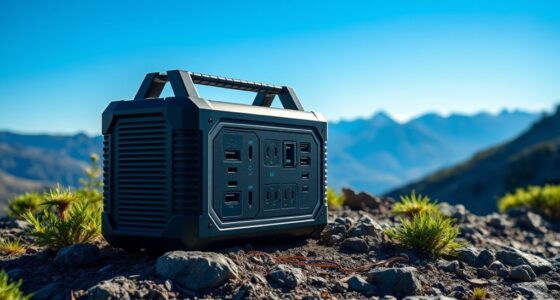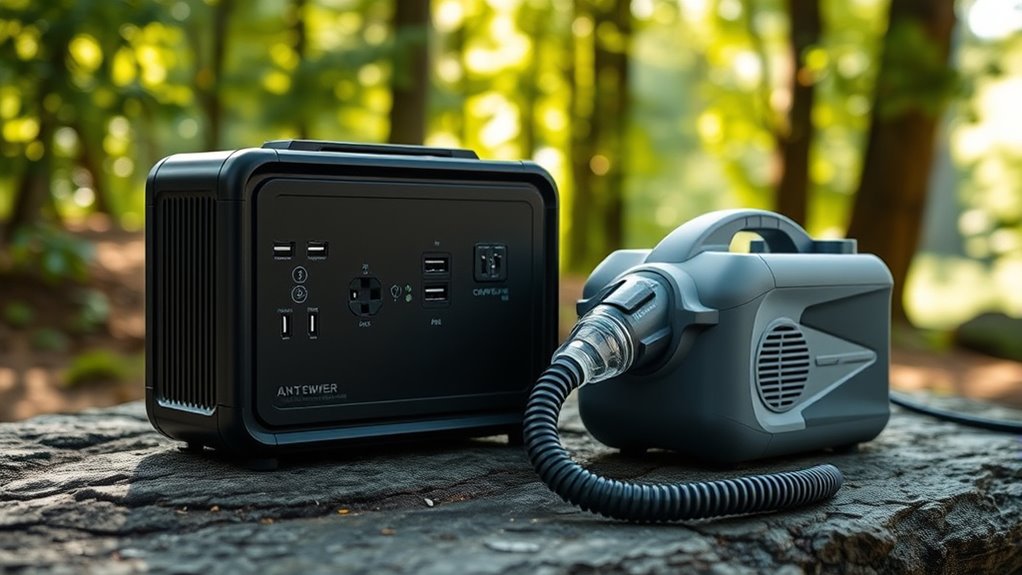
If you’re looking for the best portable power stations for CPAP machines in 2025, I recommend options like the Jackery Explorer 1000 v2, EnginStar 300W, and S1200 for high capacity. These units offer reliable power, multiple charging methods, and safety features ideal for maintaining your CPAP during emergencies or travel. Considering factors like capacity, recharge time, and portability will help you choose the right one. If you keep exploring, you’ll find more options to stay powered on the go.
Key Takeaways
- Look for power stations with at least 300Wh capacity and 60W+ USB-C or AC output for reliable CPAP operation.
- Prioritize units with pure sine wave inverter to ensure safe, stable power for sensitive CPAP devices.
- Choose portable, lightweight models with built-in safety features and easy recharging options like AC, car, or solar.
- Consider high-cycle LiFePO4 batteries for long-term durability and consistent performance during extended outages.
- Select stations with favorable reviews for quiet operation and consistent power output to avoid disruptions in sleep therapy.

EnginStar Portable Power Station 300W 296Wh Battery Bank with 110V Pure Sine Wave AC Outlet for Outdoors Camping Hunting and Emergency, 80000mAh Backup Battery Power Supply for CPAP
- Compact and Lightweight: 9 x 5.5 x 7.5 inches, 6.5 pounds
- High Capacity and Power: 296Wh, 300W AC output
- Multiple Device Charging: 8 output ports for various devices
As an affiliate, we earn on qualifying purchases.
EnginStar Portable Power Station 300W (296Wh) Battery Bank
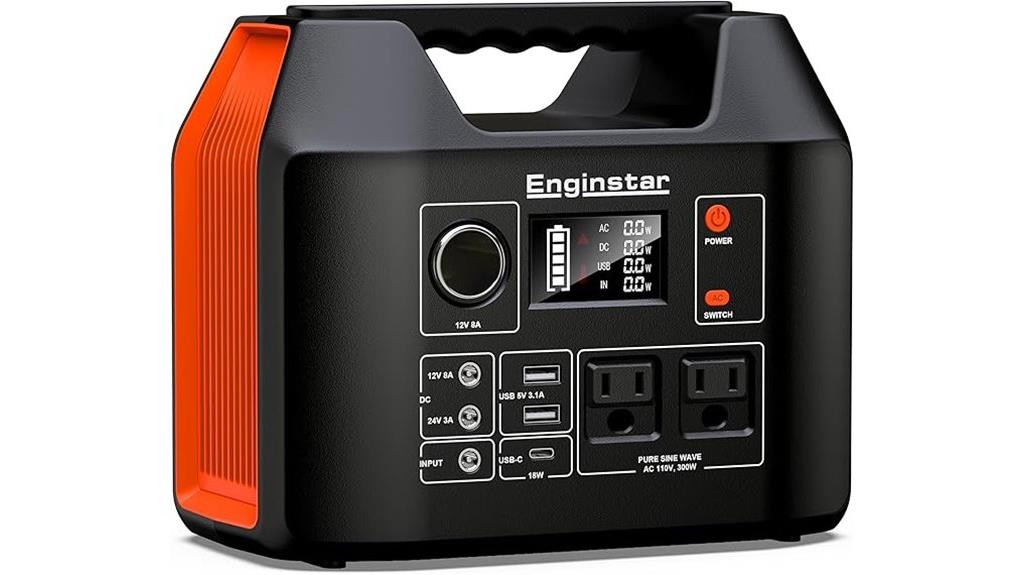
If you’re looking for a reliable power source that can keep your CPAP machine running during outdoor adventures or emergencies, the EnginStar Portable Power Station 300W is an excellent choice. Weighing just 6.5 pounds and compact enough to carry easily, it offers 296Wh of capacity and eight output ports for multiple device charging. It features two pure sine wave AC outlets, ideal for sensitive devices like your CPAP, plus USB-C and DC options. Charging is flexible—via solar, wall outlet, or car socket—and it supports over 1000 cycles. Safety features protect your devices, making it a dependable, versatile power solution for on-the-go use.
Best For: outdoor enthusiasts, campers, and emergency preparedness individuals needing reliable portable power for sensitive devices like CPAP machines and multiple electronics.
Pros:
- Supports multiple devices simultaneously with 8 output ports, including AC, USB, and DC options.
- Compact and lightweight design (6.5 pounds) for easy portability during outdoor activities or emergencies.
- High-quality lithium-ion batteries with over 1000 charge cycles ensure long-lasting performance and reliability.
Cons:
- Solar panel not included, requiring additional purchase for solar charging.
- Charging time from wall outlet is approximately 7 hours, which may be long in urgent situations.
- Limited 300W power output may not suffice for high-demand appliances or power tools.

Jackery Explorer 1000 v2 Portable Power Station,1070Wh,1500W
- High Power Output: 1500W AC with 3000W surge peak
- Portable and Lightweight: 23.8 lbs with foldable handle
- Fast Charging: Full charge in 1 hour with app
As an affiliate, we earn on qualifying purchases.
Jackery Explorer 1000 v2 Portable Power Station
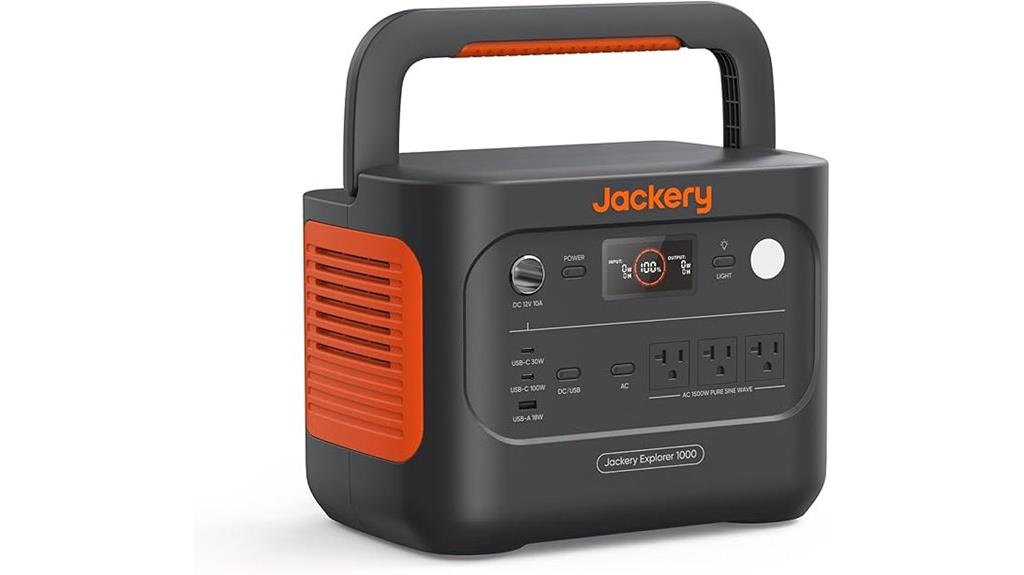
The Jackery Explorer 1000 v2 Portable Power Station stands out as an excellent choice for CPAP users who need reliable, long-lasting power on the go. With a 1070Wh LiFePO4 battery, it offers over 10 years of lifespan and maintains 70% capacity after 4,000 cycles. Its 1500W continuous AC output and multiple ports—including USB-C, USB-A, and a car port—ensure you can power your CPAP and other devices easily. Weighing just 23.8 lbs with a foldable handle, it’s highly portable. Fast charging in about 1.7 hours, combined with solar support, makes it perfect for camping, emergencies, or off-grid use.
Best For: CPAP users and outdoor enthusiasts seeking reliable, long-lasting portable power for medical devices, camping, or emergency backup.
Pros:
- Long lifespan with over 10 years and 4,000 charge cycles maintaining 70% capacity
- High 1500W continuous AC output and multiple ports suitable for powering CPAPs and other devices
- Lightweight and portable at just 23.8 lbs with a foldable handle for easy transport
Cons:
- Solar panels are sold separately, requiring additional purchase for solar charging
- Relies on Jackery solar panels for solar charging, limiting compatibility with other brands
- Slightly higher price point compared to smaller or less feature-rich portable power stations

EnginStar Portable Power Station 300W 296Wh Battery Bank with 110V Pure Sine Wave AC Outlet for Outdoors Camping Hunting and Emergency, 80000mAh Backup Battery Power Supply for CPAP
- Compact and Lightweight: 9 x 5.5 x 7.5 inches, 6.5 pounds
- High Capacity and Power: 296Wh, 300W AC output
- Multiple Device Charging: 8 output ports for various devices
As an affiliate, we earn on qualifying purchases.
EnginStar Portable Power Station 300W (296Wh) with AC Outlet

Designed with portability and reliable power output in mind, the EnginStar Portable Power Station 300W (296Wh) is an excellent choice for CPAP users on the go. Weighing just 6.5 pounds, it’s compact enough to carry easily while providing enough power to run essential devices. It features two AC outlets with pure sine wave output, along with multiple USB and DC ports, making it versatile for charging phones, laptops, and CPAP machines. With over 1000 charge cycles and safety protections like overload and overcharge safeguards, it offers dependable, safe power. Its digital display and flashlight further enhance usability, making it a solid portable power solution for outdoor adventures or emergencies.
Best For: outdoor enthusiasts, camping trips, and CPAP users needing reliable portable power for essential devices.
Pros:
- Lightweight and compact design weighing only 6.5 pounds for easy portability
- Multiple charging options including AC, USB, and DC outputs for versatile device compatibility
- Safe with advanced protections and over 1000 charge cycles ensuring durability and reliability
Cons:
- Limited continuous power output of 300W may not support high-demand appliances
- Recharge time of approximately 7 hours could be lengthy for urgent needs
- Solar panel not included, requiring additional purchase for solar recharging

Jackery Explorer 300 Portable Power Station,292Wh
- Lightweight Design: Only 7.5 lbs with 292Wh capacity
- Multiple Device Compatibility: Power for laptops, drones, cameras, and more
- Robust Power Output: 300W rated, 600W surge capacity
As an affiliate, we earn on qualifying purchases.
Jackery Portable Power Station Explorer 300
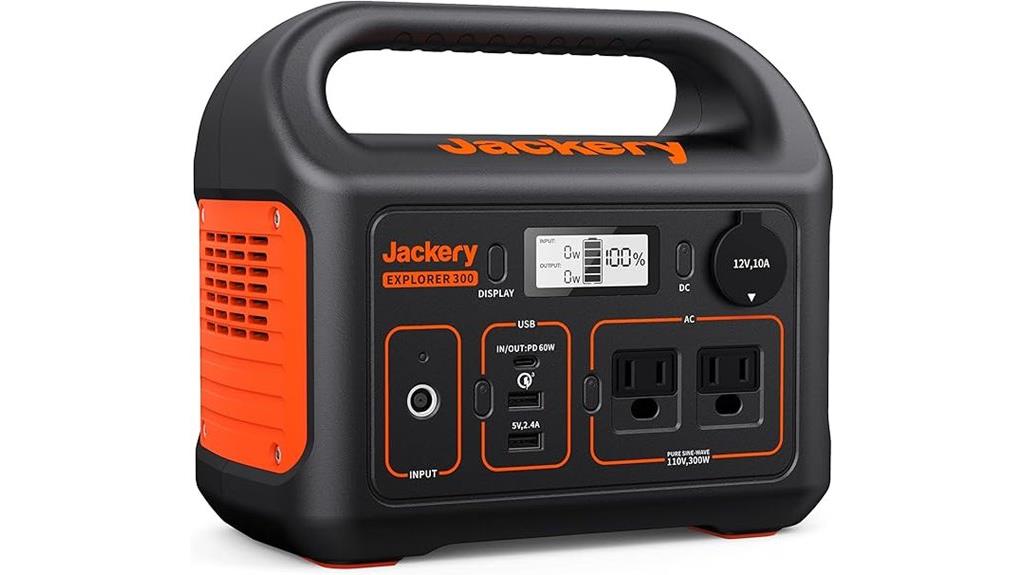
The Jackery Explorer 300 stands out as an excellent choice for those needing a lightweight, reliable power source to keep their CPAP machines running during outdoor adventures or power outages. Weighing only 7.1 pounds, it features a 293Wh lithium-ion battery, making it highly portable. It recharges quickly—80% in just 2 hours via wall outlet—and supports solar charging with the Jackery SolarSaga 100 panel. With two AC outlets, a USB-C port, and multiple device ports, it can power up to six devices simultaneously. Its safe, steady power and versatile charging options make it a dependable companion for off-grid life or emergencies.
Best For: outdoor enthusiasts, travelers, and emergency preparedness individuals seeking a lightweight, reliable power source for small devices and off-grid use.
Pros:
- Compact and lightweight design at only 7.1 pounds for easy portability
- Fast recharging capability: 80% in 2 hours via wall outlet
- Supports multiple devices simultaneously, including drones, laptops, and cameras
Cons:
- Limited power capacity of 293Wh may not support larger appliances
- Solar panel sold separately, increasing overall setup cost
- Only two AC outlets, which might be insufficient for higher power demand scenarios
ALLWEI Portable Power Station 300W
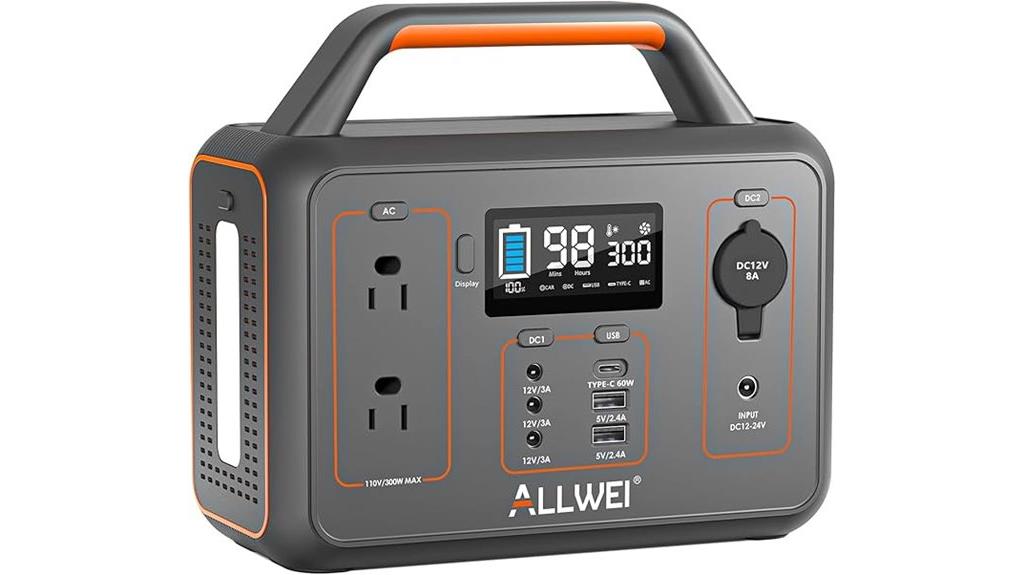
If you’re looking for a reliable, portable power solution for your CPAP machine, the ALLWEI Portable Power Station 300W stands out due to its compact size and robust 280Wh capacity. Weighing just 6 pounds and measuring 8.86×4.53×8.07 inches, it’s easy to carry on outdoor adventures or emergencies. It supports multiple devices at once—like phones, laptops, and even small fridges—thanks to its variety of ports, including AC outlets, USB-C, and DC. With fast recharging options via wall, car, or solar, plus safety features like a BMS system, it’s a dependable choice for keeping your CPAP running reliably wherever you go.
Best For: those needing a portable, reliable power source for outdoor activities, emergency backup, or powering essential devices like CPAP machines, laptops, and small appliances.
Pros:
- Compact and lightweight design (6 lbs, 8.86×4.53×8.07 inches) for easy portability
- Supports multiple devices simultaneously with various ports, including AC, USB-C, and DC outlets
- Fast recharging options via wall, car, or solar panels, with built-in MPPT for efficient solar charging
Cons:
- Limited to 300W output, which may not power high-wattage devices
- Fan noise during operation could be noticeable in quiet environments
- Solar panel compatibility requires separate purchase, adding to overall cost
PROGENY 300W Portable Power Station
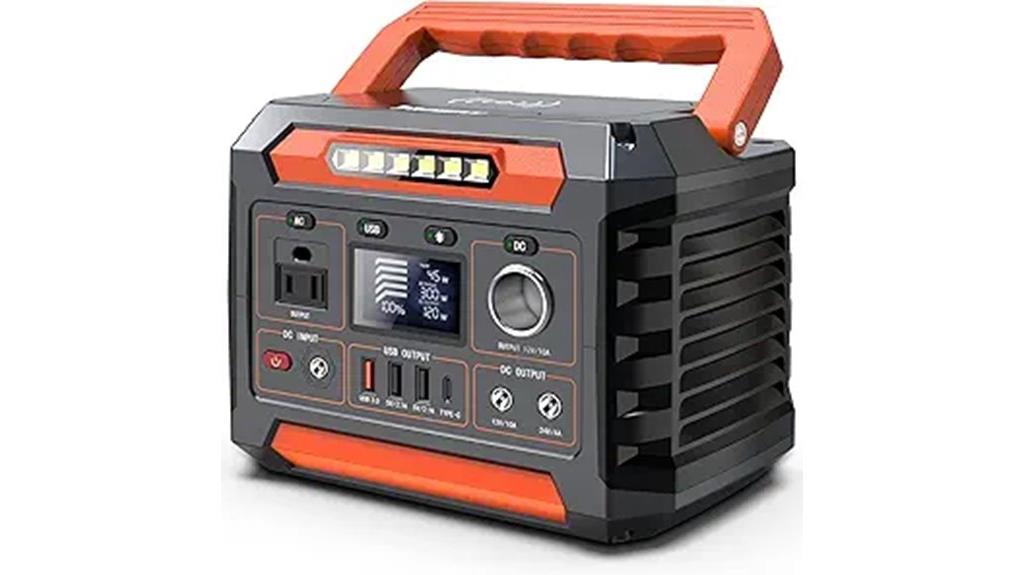
The PROGENY 300W Portable Power Station stands out for its stable and safe power output, making it an excellent choice for CPAP users who need reliable energy during outages or travel. Weighing just 7 pounds, it’s lightweight yet powerful, capable of running a CPAP for 2-4 nights. It offers multiple charging options, including a pure sine wave AC outlet, USB-C, and car port, with pass-through charging for convenience. Its smart regulated 12V power prevents shutdowns and guarantees safe operation. With MPPT solar charging, it’s versatile for off-grid use, and the built-in BMS guarantees long-term reliability and protection for sensitive devices.
Best For: campers, travelers, and emergency preparedness enthusiasts seeking a lightweight, reliable power source for sensitive devices like CPAP machines and smartphones.
Pros:
- Lightweight and portable at only 7 pounds for easy transport
- Stable, pure sine wave AC output with smart regulated 12V power for safe device operation
- Multiple charging options including solar, car, and wall outlet with fast MPPT recharge capability
Cons:
- Limited 300W continuous power may not support high-demand appliances
- Recharge times via solar panel (~6-7 hours) depend on sunlight conditions, which can vary
- Small capacity (299Wh) may require frequent recharging for extended use of larger devices
Anker SOLIX C1000 Gen 2 Portable Power Station
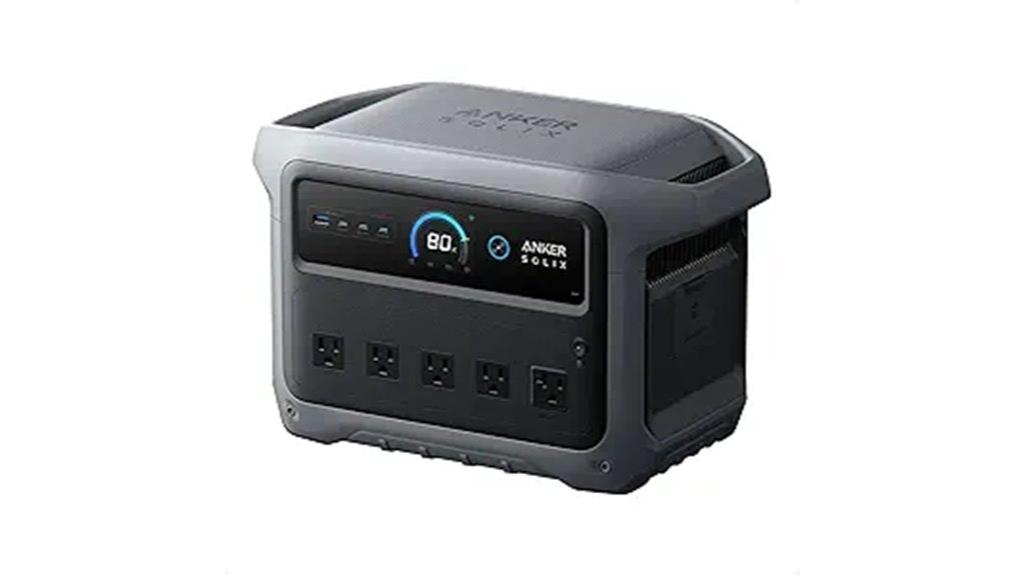
For anyone needing reliable backup power for a CPAP machine, the Anker SOLIX C1000 Gen 2 stands out with its impressive 2,000W continuous output and 1,024Wh LiFePO4 battery, ensuring consistent operation during power outages or while off-grid. It recharges rapidly in just 49 minutes via HyperFlash tech and can be solar-charged in 1.8 hours with 600W input. Its compact design weighs only 24.9 pounds, making it easy to carry. With 10 ports and a 10 ms UPS backup, it can power multiple devices simultaneously, including your CPAP. Plus, the Anker app helps manage energy use efficiently.
Best For: those seeking a reliable, portable backup power solution for home, camping, RV, or off-grid use, especially for powering sensitive devices like CPAP machines.
Pros:
- High continuous power output of 2,000W with a 3,000W peak, suitable for multiple high-wattage devices simultaneously.
- Fast recharge in just 49 minutes via HyperFlash technology and solar recharge in 1.8 hours with 600W input.
- Long-lasting LiFePO4 battery with over 4,000 cycles and a 10-year lifespan, ensuring durability and reliable performance.
Cons:
- Relatively heavy at 24.9 pounds, which may affect portability for some users.
- Limited to a maximum solar input of 600W, which could slow down recharging in high-sun environments.
- Higher price point compared to basic portable power stations, reflecting its advanced features and capacity.
Portable Power Station 300W MARBERO 237Wh Camping Solar Generator
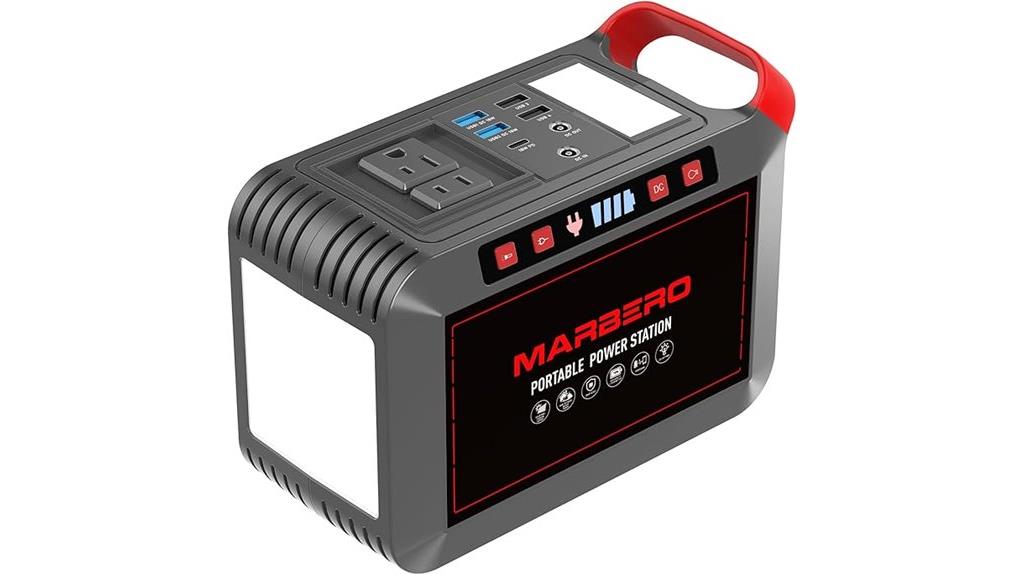
In outdoor or emergency situations where reliable power is essential, the MARBERO 300W portable power station stands out thanks to its compact design and versatile charging options. Weighing just 4.6 pounds and measuring about 8 inches, it’s easy to carry on camping trips or in emergencies. It offers multiple outputs, including AC, USB, USB-C, and DC, making it compatible with phones, laptops, cameras, and even CPAP machines. Recharging is flexible—via wall, car, or solar panel—so you can stay powered wherever you go. Its built-in LED lights and safety features ensure dependable, safe operation when you need it most.
Best For: outdoor enthusiasts, campers, and emergency preparedness individuals seeking a portable, versatile power source for multiple devices.
Pros:
- Compact and lightweight design (4.6 lbs) for easy portability
- Multiple charging options including wall, car, and solar power
- Supports a wide range of devices with various output ports and built-in LED lights
Cons:
- Limited capacity of 237Wh may not power larger appliances for extended periods
- Solar panel charging requires separate purchase and has specific voltage requirements
- Only 300W continuous output, limiting use with high-power devices
400W Portable Power Station, 296Wh Solar Generator with AC/DC & USB-C

If you’re searching for a reliable portable power source to keep your CPAP machine running during outdoor adventures or power outages, the W Portable Power Station with 296Wh solar generator stands out. It features a 400W pure sine wave inverter and multiple outlets, including AC, DC, and USB-C, supporting up to 11 devices simultaneously. Weighing just 8.58 pounds, it’s lightweight and easy to carry. Recharged via wall, car, or solar, it offers flexible options for outdoor use. Its built-in LED light and advanced battery management system ensure safety and longevity. Overall, it’s a versatile, compact solution perfect for emergency backup or camping trips.
Best For: outdoor enthusiasts, emergency preparedness, and anyone needing a portable power solution for devices like CPAP machines during outages or camping trips.
Pros:
- Compact and lightweight design (8.58 pounds) for easy portability
- Multiple charging options including wall, car, and solar support with MPPT technology
- Supports up to 11 devices simultaneously with a combined wattage limit of 800W
Cons:
- The listed dimensions (1x1x1 inches) seem to be a formatting error and may be inaccurate
- Solar panel not included, requiring additional purchase for solar recharging
- Limited continuous power output (400W) may not be sufficient for high-power appliances
Anker Portable Power Station SOLIX C300 (288Wh, 300W)

The Anker Portable Power Station SOLIX C300 stands out with its impressive 288Wh capacity and 300W continuous power output, making it an ideal choice for anyone relying on CPAP machines during travel or emergencies. Its fast-charging two-way USB-C ports can recharge the unit quickly, while the eight versatile ports support multiple devices simultaneously. Recharging is efficient, with 80% achieved in just 50 minutes via wall outlet, and solar charging is an option with compatible panels. Compact and lightweight, it’s built for portability, featuring a durable design with a long-lasting battery life of around 3,000 cycles. It operates quietly and includes essential accessories, ensuring ready power wherever you need it.
Best For: travelers, outdoor enthusiasts, and emergency preparedness individuals who need reliable, portable power for devices like CPAP machines and multiple electronics.
Pros:
- High capacity of 288Wh with a 300W continuous output suitable for various devices
- Fast charging with 140W USB-C ports and 80% recharge in just 50 minutes via wall outlet
- Compact, lightweight design with durable battery life of around 3,000 cycles for long-term use
Cons:
- Not compatible with certain solar panels like SOLIX PS30, PS200, or PS400
- Limited surge capacity of 600W, which may not support very high-power devices
- Additional accessories like straps sold separately, which could add to overall cost
Portable Power Station 600W with Solar Generator and Fast Charging

A portable power station with 600W capacity, fast charging, and solar compatibility is an excellent choice for anyone who needs reliable, on-the-go power for CPAP machines and other essential devices. Its 288Wh LiFePO4 battery supports multiple outputs, including AC, USB-C, USB-A, and a car socket, powering up to 8 devices simultaneously. With a pure sine wave output and a surge capacity of 1200W, it handles sensitive electronics safely. It recharges quickly in 1.7 hours from wall outlets or via 100W solar panels, making it perfect for camping, emergencies, or travel. Lightweight and shock-resistant, it’s built for portability and durability.
Best For: outdoor enthusiasts, emergency preparedness, and travelers needing reliable portable power for multiple devices including medical equipment like CPAP machines.
Pros:
- Supports up to 8 devices simultaneously with multiple output options including AC, USB-C, USB-A, and car socket.
- Rapid recharge time of 1.7 hours via wall outlet or solar panel, ensuring quick availability for ongoing use.
- Compact, lightweight, and shock-resistant design enhances portability and durability for outdoor and emergency scenarios.
Cons:
- Solar panels and cables are sold separately, requiring additional purchase for solar recharging.
- Limited to 600W continuous power, which may not support higher wattage appliances or heavy-duty tools.
- Requires a nearby power source for initial charging or access to solar panels, which may not be feasible in all remote locations.
MARBERO 200W Portable Power Station (148Wh) Camping Solar Generator
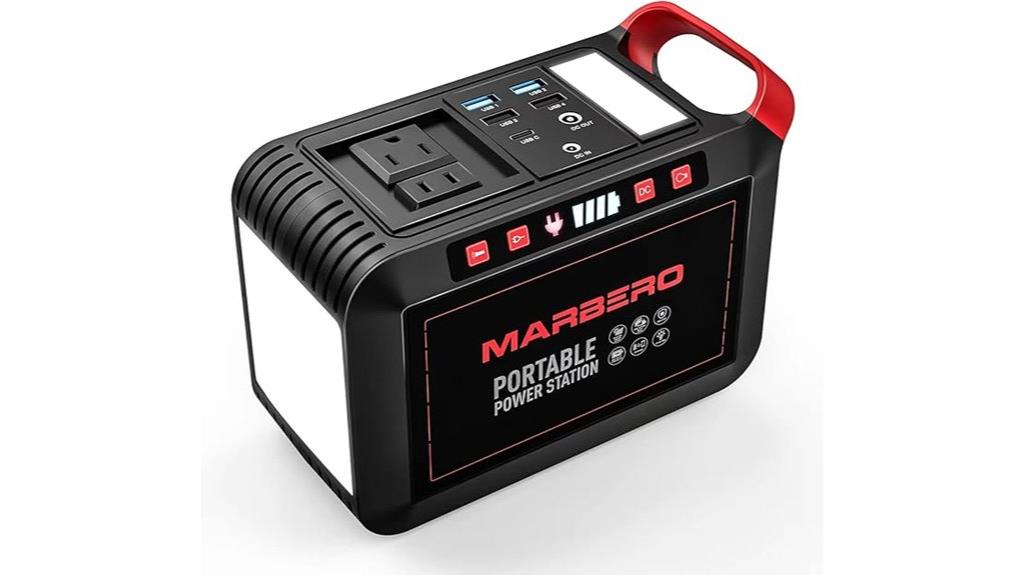
For campers and emergency users seeking reliable backup power for CPAP machines, the MARBERO 200W Portable Power Station stands out with its compact design and versatile charging options. Weighing just 3.3 pounds and measuring 7.5 x 5.3 x 3.6 inches, it’s easy to carry anywhere. It offers 146Wh capacity and supports multiple devices through USB, USB-C, and AC outlets, with a peak output of 270W. Recharging is flexible—via wall, car, or solar (panel not included). Plus, built-in LED flashlights add emergency lighting. This portable generator is perfect for outdoor adventures, camping, or backup during power outages.
Best For: outdoor enthusiasts, campers, and emergency preparedness users seeking a lightweight, versatile power backup for small appliances and devices.
Pros:
- Compact and lightweight design (3.3 lbs, 7.5 x 5.3 x 3.6 inches) for easy portability
- Supports multiple charging options: wall, car, and solar (panel not included)
- Includes built-in LED flashlights with various modes for emergency lighting
Cons:
- Capacity of 146Wh may be insufficient for larger or high-power appliances over extended use
- Solar panel not included, requiring additional purchase for solar recharging
- Limited to 200W continuous output, which may restrict some device usage
Portable Power Station 600W 293Wh Camping Lithium Battery

When choosing a portable power station for CPAP machines, reliability and portability are essential, and the BailiBatt 600W model excels in both areas. It delivers a steady 600W Pure Sine Wave AC output, enough to power most daily appliances safely and efficiently. Weighing just 7.7 pounds, it’s easy to carry on camping trips or emergency situations. Its 293Wh lithium battery supports over 1500 charge cycles, ensuring long-term durability. With seven versatile ports—including USB-C, car, and DC options—it can charge laptops, cameras, and more. The clear LCD display and built-in safety features make it simple to monitor and operate, providing peace of mind wherever you go.
Best For: users seeking a lightweight, reliable power source to operate CPAP machines, camping gear, or emergency appliances on the go.
Pros:
- Compact and lightweight at only 7.7 pounds for easy portability
- Provides a stable 600W Pure Sine Wave AC output suitable for sensitive devices
- Features multiple versatile ports including USB-C, car, and DC for broad device compatibility
Cons:
- Limited battery capacity of 293Wh may require frequent recharging for extended use
- Car charger cable not included, which could be inconvenient for some users
- Maximum output power of 600W might not support high-wattage appliances or multiple devices simultaneously
Portable Power Station 300W with Solar Generator and Lithium Battery
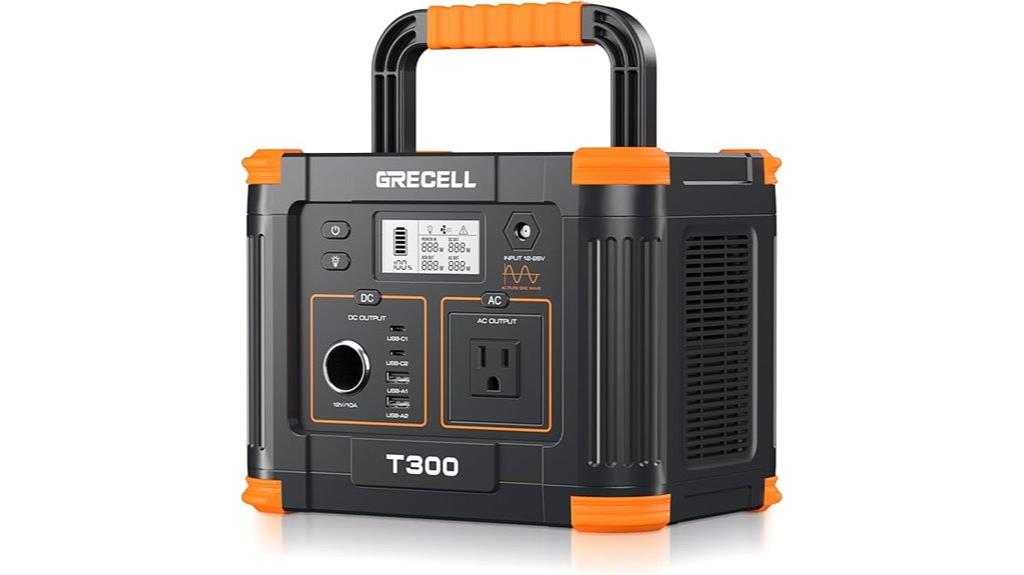
The GRECELL Portable Power Station 300W stands out as an excellent choice for anyone seeking reliable, lightweight backup power for CPAP machines during camping, travel, or emergencies. Weighing just 7.3 pounds, it offers a 230.88Wh capacity and 330W continuous power with a 600W surge, supporting laptops, phones, lights, and small appliances. It features six outlets, including AC, USB-C PD 60W, and car port, with fast charging capabilities. The station can be recharged via AC, solar, or car, thanks to its built-in MPPT controller. Its lithium battery, coupled with advanced safety protections and dual cooling fans, guarantees safe, efficient power on the go.
Best For: outdoor enthusiasts, travelers, and emergency preparedness individuals seeking lightweight, reliable backup power for essential devices and small appliances.
Pros:
- Compact and lightweight at only 7.3 pounds for easy portability
- Supports multiple recharging methods including AC, solar, and car outlet with built-in MPPT controller
- Fast-charging USB-C PD 60W port and multiple outlets to power a variety of devices simultaneously
Cons:
- Limited to 300W continuous power, may not support higher-wattage appliances
- Battery capacity of 230.88Wh may require multiple charges for extended use
- Not suitable for powering larger appliances or high-wattage equipment
S1200 1190Wh Portable Power Station with Solar Panel Option
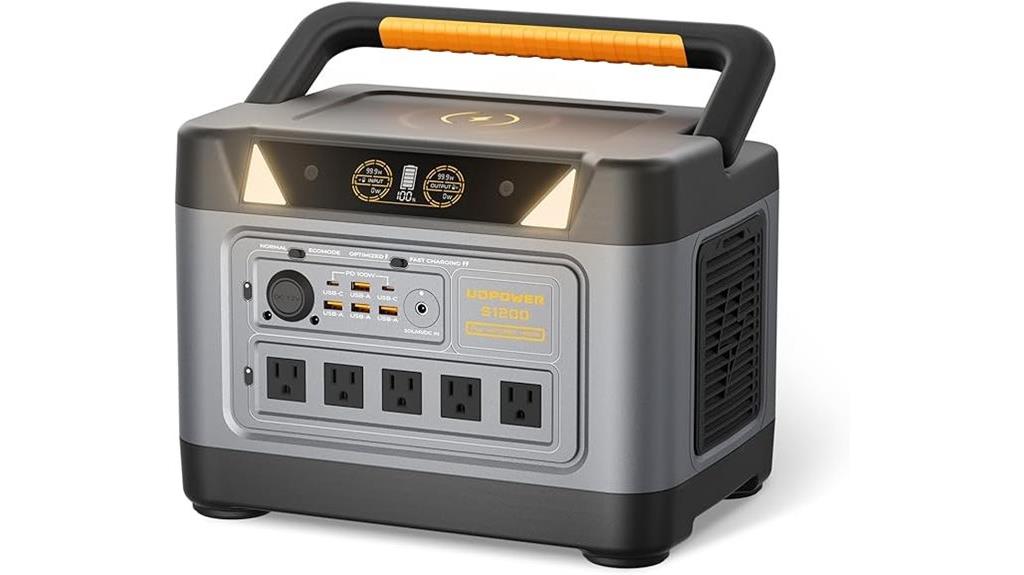
With a 1190Wh capacity and a robust 1200W pure sine wave AC output, the S1200 Portable Power Station is an excellent choice for powering CPAP machines during outdoor adventures or extended emergencies. It offers five outlets, including USB-C PD and wireless charging, making it versatile for multiple devices. Its LiFePO4 batteries provide over 4,000 cycles, ensuring durability and longevity, even in extreme temperatures. Fast charging via AC or solar input takes just 1.5 hours, and its quiet operation under 25dB is perfect for sensitive environments. Rugged and safety-equipped, the S1200 reliably delivers power when you need it most.
Best For: outdoor enthusiasts, emergency preparedness, and homeowners needing reliable backup power for sensitive devices.
Pros:
- High-capacity 1190Wh lithium iron phosphate (LiFePO4) battery with over 4,000 cycles for long-lasting durability.
- Rapid 1.5-hour fast charging via AC or solar, with multiple outlets including USB-C PD and wireless charging.
- Quiet operation (<25dB) and rugged metal casing ensure safe, discreet use in various environments.
Cons:
- Relatively heavy at approximately 25.8 pounds, which may impact portability.
- Price and availability can vary depending on retailer and online platform.
- Limited solar input capacity of 400W, which might slow down recharging during extended use outdoors.
Factors to Consider When Choosing Portable Power Stations for CPAP
When choosing a portable power station for your CPAP, I consider several key factors to guarantee it meets my needs. It’s important to think about power capacity, battery life, port options, recharging methods, and safety features. These points help me find a reliable, safe, and convenient solution for my sleep therapy.
Power Capacity Needs
Choosing the right portable power station depends heavily on its power capacity, especially for reliably running your CPAP overnight. I look for a station with a continuous wattage output of at least 60 to 100 watts to guarantee stable operation throughout the night. Battery capacity is equally important—I aim for at least 300Wh, which generally provides 4 to 12 hours of power, depending on my machine’s wattage. I also verify that the power station offers regulated 12V DC or pure sine wave AC output, as these are essential for safe, stable operation. Finally, I consider the total watt-hours to match my CPAP’s requirements and leave some reserve for unexpected needs or longer trips. This careful assessment helps me choose a reliable, long-lasting power source.
Battery Longevity & Cycles
Battery longevity and cycle life are key factors I consider after evaluating power capacity because they directly impact how long my portable power station will serve me reliably. A higher number of charge cycles means the battery can be recharged many times before its capacity substantially diminishes. For example, Lithium Iron Phosphate (LiFePO4) batteries often support 2000 to 4000 cycles, offering much longer durability than standard lithium-ion batteries. Regular maintenance, such as avoiding full discharges and maintaining ideal temperatures, can extend the battery’s lifespan. Additionally, power stations equipped with advanced Battery Management Systems (BMS) help regulate voltage, current, and temperature, further protecting the battery. If a station supports over 1000 cycles, I know it will deliver consistent performance over the long haul.
Port Compatibility & Output
To guarantee my CPAP machine runs smoothly, I pay close attention to the power station’s port compatibility and output options. I look for a 12V regulated DC outlet to ensure stable, reliable power without fluctuations that could harm my device. A dedicated AC outlet with pure sine wave technology is essential, as it prevents damage to sensitive electronics. I also verify that the wattage capacity exceeds my CPAP’s typical 50-60W consumption, guaranteeing uninterrupted operation. Multiple output ports like USB-C and additional DC outlets are helpful for powering humidifiers or adapters. Finally, I check if the power station supports pass-through charging, so I can keep my device running while recharging the station itself. These features are vital for dependable, safe power on the go.
Recharging Flexibility Options
When selecting a portable power station for my CPAP, I prioritize models that support multiple recharging options, such as AC outlets, car adapters, and solar panels. This versatility guarantees I can recharge in various settings, whether at home, on the road, or outdoors. I also look for a built-in MPPT controller, which boosts solar charging efficiency and cuts down recharge time. Checking the maximum charging wattage is vital—higher wattage, like 65W or more, means faster recharging. Ideally, I want a device that can be fully recharged within around 7 hours, so I stay prepared. Finally, pass-through charging is a big plus, allowing me to recharge the power station while powering my CPAP at the same time, making sure I never run out of options.
Safety & Protection Features
Safety and protection features are crucial when choosing a portable power station for my CPAP, as they guarantee the device operates reliably and safely. I look for units with an extensive Battery Management System (BMS) that guards against overcharging, over-discharging, short circuits, and overheating. Built-in overload protection and automatic shut-off features are essential to prevent damage during power surges or faults, ensuring my CPAP stays safe. I also verify safety certifications like ETL or UL, which show the device meets recognized safety standards. Temperature regulation mechanisms, such as cooling fans or thermal sensors, help maintain safe operating temperatures during extended use. Models with multiple integrated safety protections give me peace of mind, knowing my sensitive medical device is always protected during power outages or travel.
Frequently Asked Questions
How Long Can a Portable Power Station Run a CPAP Machine Overnight?
A portable power station can typically run a CPAP machine overnight for about 8 to 12 hours, depending on the station’s capacity and the machine’s power consumption. I always check the watt-hour rating of my station and my CPAP’s daily power needs. To guarantee uninterrupted sleep, I recommend choosing a station with at least 300 watt-hours, providing peace of mind during longer trips or power outages.
Are All Portable Power Stations Compatible With All CPAP Models?
Back in the day, I’d have to say no, not all portable power stations are compatible with every CPAP model. I’ve learned that you need to verify the power station’s specs—voltage, wattage, and connector type—and compare them to your CPAP’s requirements. Some power stations offer adjustable outlets or adapters, making them more versatile. Always double-check compatibility to ensure your CPAP gets reliable power when you need it most.
What Safety Features Should I Look for in a Power Station for CPAP Use?
When choosing a power station for my CPAP, I look for safety features like surge protection, short-circuit prevention, and overheat shutdown. These safeguard my device and ensure reliable operation overnight. I also prefer stations with automatic shutoff when the battery is low or if there’s a fault. These features give me peace of mind, knowing my equipment is safe and ready whenever I need it, especially during travel.
Can Portable Power Stations Be Recharged via Solar Panels During Use?
Did you know that over 60% of portable power stations can be recharged via solar panels? Yes, they can! I’ve found that many models support solar recharging during use, which is perfect for outdoor adventures or emergencies. This means you can keep your CPAP powered without relying solely on grid electricity. Just make sure the station is compatible with your solar panel, and you’re good to go for sustainable, uninterrupted power.
How Lightweight and Portable Are These Power Stations for Travel?
These power stations are surprisingly lightweight and portable, making them perfect for travel. I find most weigh between 3 to 6 pounds, so they’re easy to carry in a backpack or luggage. Their compact size fits comfortably in hand, and many come with built-in handles for convenience. You won’t even feel like you’re lugging extra weight, which is great when you’re on the move or camping off-grid.
Conclusion
Choosing the right portable power station is like finding a reliable friend who never lets you down—especially when powering your CPAP on the go. Whether you need compact, high-capacity, or solar options, there’s a perfect fit out there for you. I hope this guide helps you feel confident in making a choice that keeps your sleep steady and your travels worry-free. After all, dependable power is the steady heartbeat of peaceful, uninterrupted sleep.