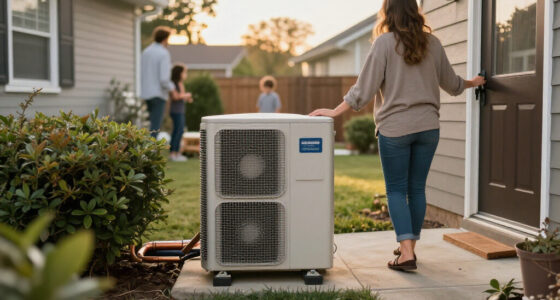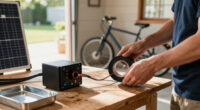
Choosing the best plug-in home energy storage systems requires balancing capacity, output power, and installation complexity. My top overall pick is the Anker SOLIX E10 because it offers a seamless whole-home backup solution with smart integration, making it ideal for households seeking resilience without complex wiring. For those prioritizing raw capacity and grid-tied flexibility, the EF ECOFLOW TITAN stands out with its massive 5017Wh capacity and high output. The primary tradeoff in this category is between portability and permanent installation; plug-in units offer ease of setup but often lack the seamless automatic switching of hardwired systems. Continue reading for a detailed breakdown of how these systems compare in performance, usability, and value.

Get backup power and energy gear delivered free with Prime
- Fast, free delivery on millions of items
- Prime Video, Amazon Music and more included
- Member-only deals all year
Key Takeaways
- Systems with integrated smart panels, like the Anker SOLIX E10, provide automatic transfer switching, eliminating the manual step of plugging in extension cords during outages.
- LiFePO4 battery chemistry is now standard across all top contenders, offering significantly longer lifespan and better thermal stability compared to older lithium-ion alternatives.
- Output wattage determines appliance compatibility; systems under 2000W struggle to run modern refrigerators or microwaves simultaneously, making 3000W+ models better for whole-home backup.
- Modular scalability is a key differentiator; brands like EcoFlow and Jackery allow users to expand capacity with additional battery packs, whereas fixed-capacity units cannot be upgraded.
- Plug-in systems often require manual activation for backup mode unless paired with specific transfer switches, a nuance that impacts usability during critical power failures.
| ECO-WORTHY PowerMega 48V 314Ah LiFePO4 Energy Storage System with 10kW Hybrid Inverter |  | Best High-Capacity DIY System | Usable Energy: 16.1kWh | Inverter Power: 10,000W | Battery Chemistry: LiFePO4 | VIEW LATEST PRICE | See Our Full Breakdown |
| EF ECOFLOW TITAN 5017Wh 7200W Power Station with Smart Home Panel 10 (240V) |  | Best All-in-One Home Integration | Capacity: 5017Wh | AC Output: 7200W | Expandable Capacity: Up to 30kWh | VIEW LATEST PRICE | See Our Full Breakdown |
| Jackery HomePower 3600 Pro Max Portable Power Station, 3584Wh |  | Best for Quiet Operation | Battery Capacity: 3584Wh | Output Wattage: 4000W | Operating Noise: Under 30dB | VIEW LATEST PRICE | See Our Full Breakdown |
| Anker SOLIX E10 Whole-Home Backup Power System with Smart Inlet Box and Two B6000 Batteries |  | Best for Outdoor Installation | Battery Capacity: 12 kWh (expandable to 30 kWh) | Continuous Output: 7.6 kW | Turbo Output: 10 kW | VIEW LATEST PRICE | See Our Full Breakdown |
| Jackery Solar Generator 1000 v2 with 200W Solar Panel, 1024Wh LiFePO4 Battery |  | Best Entry-Level Portable Backup | Battery Capacity: 1,024Wh | AC Output: 1,500W | Weight: 23.4 lbs | VIEW LATEST PRICE | See Our Full Breakdown |
| DABBSSON 2000L Portable Power Station |  | Best for Rapid Recharge | Battery Capacity: 2048Wh | Continuous Output: 2200W | Recharge Time: 1 hour (AC) | VIEW LATEST PRICE | See Our Full Breakdown |
| EF ECOFLOW DELTA Pro Portable Power Station | 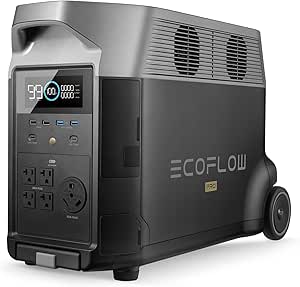 | Best for Scalability | Battery Capacity: 3600Wh (Expandable to 25kWh) | AC Output: 3600W | Weight: 99 lbs | VIEW LATEST PRICE | See Our Full Breakdown |
| ECO-WORTHY Cubix100 Server Rack Battery |  | Best for Rack-Mounted Expansion | Energy: 5120 Wh | Voltage: 51.2 V DC | Weight: 103 lb | VIEW LATEST PRICE | See Our Full Breakdown |
| Jackery HomePower 3600 Plus Portable Power Station |  | Best for Mobility | Battery Capacity: 3584Wh | Output Wattage: 3600W | Weight: 77.2 lbs | VIEW LATEST PRICE | See Our Full Breakdown |
| EcoFlow DELTA 3 Max Portable Power Station |  | Best for Sensitive Electronics | Capacity: 2048Wh | Continuous Output: 2400W | Transfer Time: <10ms | VIEW LATEST PRICE | See Our Full Breakdown |
| Jackery HomePower 3000 Portable Power Station |  | Best for High-Wattage Appliance Backup | Battery Capacity: 3072Wh | Running Output: 3600W | Surge Output: 7200W | VIEW LATEST PRICE | See Our Full Breakdown |
| Jackery HomePower 2000 Plus v2 Portable Power Station |  | Best Expandable Capacity System | Battery Capacity: 2048Wh | Expandable Capacity: Up to 12kWh | AC Output: 2400W | VIEW LATEST PRICE | See Our Full Breakdown |
| Anker SOLIX S2000 Portable Power Station |  | Best for Longevity and Efficiency | Battery Capacity: 2,010Wh | Continuous Output: 1,500W | Peak Output: 3,000W | VIEW LATEST PRICE | See Our Full Breakdown |
| plug-in home energy storage system | Weight | Battery Capacity |
|---|---|---|
| ECO-WORTHY PowerMega 48V 314Ah | — | — |
| EF ECOFLOW TITAN 5017Wh 7200W | 119 pounds | — |
| Jackery HomePower 3600 Pro Max | — | 3584Wh |
| Anker SOLIX E10 Whole-Home Bac | — | 12 kWh (expandable to 30 kWh) |
| Jackery Solar Generator 1000 v | 23.4 lbs | 1,024Wh |
| DABBSSON 2000L Portable Power | 41 lbs | 2048Wh |
| EF ECOFLOW DELTA Pro Portable | 99 lbs | 3600Wh (Expandable to 25kWh) |
| ECO-WORTHY Cubix100 Server Rac | 103 lb | — |
| Jackery HomePower 3600 Plus Po | 77.2 lbs | 3584Wh |
| EcoFlow DELTA 3 Max Portable P | — | — |
| Jackery HomePower 3000 Portabl | 59.5 lbs | 3072Wh |
| Jackery HomePower 2000 Plus v2 | 40.6 lbs | 2048Wh |
| Anker SOLIX S2000 Portable Pow | 35.7 lbs | 2,010Wh |
More Details on Our Top Picks
ECO-WORTHY PowerMega 48V 314Ah LiFePO4 Energy Storage System with 10kW Hybrid Inverter
This system stands out for those who prioritize raw capacity and integration flexibility over plug-and-play convenience. With 16.1kWh of usable energy, it dwarfs the EF ECOFLOW TITAN in base capacity, making it ideal for serious off-grid or heavy backup needs. The inclusion of a 10kW hybrid inverter with split-phase support means it can handle heavy loads like well pumps or HVAC systems that smaller units cannot. However, this power comes with complexity; unlike the Anker SOLIX E10, this setup requires significant installation effort and potentially a licensed electrician. The random inverter appearance and lack of parallel cables are minor annoyances compared to the substantial cost savings per kilowatt-hour. It is a robust choice for tech-savvy homeowners who want to build a permanent, scalable solution rather than a portable backup.
Pros:- Massive 16.1kWh usable capacity in a single unit
- 10kW hybrid inverter handles heavy split-phase loads
- Active-balancing BMS enhances battery longevity and safety
- Long 10-year warranty covers the entire system
Cons:- Requires complex installation and likely professional help
- Inverter model and exterior may vary randomly
- Parallel connection cables are not included
Best for: Tech-savvy homeowners building a permanent, high-capacity solar backup system who want maximum value per kWh.
Not ideal for: Users seeking a portable, plug-and-play solution or those without space for rack-mounted equipment.
- Usable Energy:16.1kWh
- Inverter Power:10,000W
- Battery Chemistry:LiFePO4
- Output Voltage:120V single-phase and 240V split-phase
- Cycle Life:9,000+ cycles at 80% DoD
- Warranty:10 years
Our verdict“The definitive choice for DIY enthusiasts who want maximum storage capacity and inverter power without the brand-name markup.”
EF ECOFLOW TITAN 5017Wh 7200W Power Station with Smart Home Panel 10 (240V)
The EF ECOFLOW TITAN balances high power output with a refined user experience. While the ECO-WORTHY PowerMega offers more base capacity, the TITAN’s Smart Home Panel 10 provides seamless integration with your existing electrical panel, allowing you to back up specific circuits without rewiring. The 7200W output is sufficient for most household appliances, and the ability to expand up to 30kWh ensures it grows with your needs. Compared to the Anker SOLIX E10, the TITAN is more portable, though still heavy at 119 pounds. Its UL 9540 certification adds a layer of safety assurance that DIY builders might have to source separately. This pick makes the most sense for users who want a polished, certified system that bridges the gap between portable power and permanent installation.
Pros:- Includes Smart Home Panel 10 for easy circuit backup
- Expandable up to 30kWh with additional batteries
- UL 9540 certified for enhanced safety and insurance compliance
- Fast charging via AC, solar, and generator inputs
Cons:- Heavy at 119 pounds, limiting portability
- Smart Home Panel often requires professional installation
- Base capacity is lower than dedicated rack systems
Best for: Homeowners who want certified, plug-and-play backup power with seamless smart home integration.
Not ideal for: Budget-conscious buyers who don’t need smart circuit management or portable capabilities.
- Capacity:5017Wh
- AC Output:7200W
- Expandable Capacity:Up to 30kWh
- Smart Home Panel:SHP10 (backs up 10 circuits)
- Safety Certification:UL 9540 certified
- Weight:119 pounds
Our verdict“A premium, certified solution that simplifies whole-home backup through smart panel integration.”
Jackery HomePower 3600 Pro Max Portable Power Station, 3584Wh
This unit is engineered for those who value silent reliability as much as power. With an operating noise level below 30dB, it is significantly quieter than many competitors, making it suitable for indoor use where noise matters. The under-10ms UPS switching ensures that sensitive electronics like computers do not reboot during grid fluctuations, a feature that outperforms standard portable stations. While the Jackery Solar Generator 1000 v2 is smaller, the HomePower 3600 Pro Max offers expandability up to 43kWh, rivaling larger systems. It sits between the portable ease of the EcoFlow DELTA series and the permanent nature of the ECO-WORTHY system. This model is better suited to users who need a powerful, quiet, and highly expandable unit that can still be moved if necessary, though its 74-pound weight limits frequent relocation.
Pros:- Whisper-quiet operation under 30dB
- Ultra-fast UPS switching under 10ms protects sensitive devices
- Massive expansion potential up to 43kWh
- Supports eight different recharging methods
Cons:- Solar panel is sold separately
- At 74 lbs, it is cumbersome to move regularly
- Lacks the integrated smart panel features of the EF TITAN
Best for: Users who need a quiet, high-performance backup system that can be expanded significantly over time.
Not ideal for: Those who need a lightweight, truly portable unit for camping or frequent travel.
- Battery Capacity:3584Wh
- Output Wattage:4000W
- Operating Noise:Under 30dB
- UPS Switching Time:Under 10ms
- Expandable Capacity:Up to 43kWh
- Recharging Methods:8
Our verdict“The go-to choice for noise-sensitive environments requiring massive expansion capabilities and critical load protection.”
Anker SOLIX E10 Whole-Home Backup Power System with Smart Inlet Box and Two B6000 Batteries
The Anker SOLIX E10 distinguishes itself with weather-rated durability, allowing for outdoor installation that indoor-only units like the Jackery HomePower cannot match. This flexibility is crucial for homeowners with limited interior space. The system delivers 7.6kW continuous output with a 10kW turbo boost, handling heavy loads efficiently. Compared to the EF ECOFLOW TITAN, the E10 is lighter and less portable, but its modular battery design allows for easier maintenance and replacement. The Smart Inlet Box simplifies connection to your generator inlet, offering a straightforward backup path. While it lacks the instant circuit switching of the TITAN’s smart panel, its robust build and 9kW solar input make it a formidable choice for those looking to integrate with existing solar arrays in an outdoor setting.
Pros:- Weather-rated for safe outdoor installation
- Modular design allows for easy battery replacement and scaling
- High 9kW solar input supports large existing solar arrays
- Lighter and more compact than integrated smart panel systems
Cons:- Components may be shipped separately, delaying setup
- No integrated smart panel for individual circuit backup
- Requires manual connection via inlet box rather than auto-switching
Best for: Homeowners with limited indoor space who need a weather-resistant, modular backup system.
Not ideal for: Users who need to move their power station frequently or require instant circuit-level switching.
- Battery Capacity:12 kWh (expandable to 30 kWh)
- Continuous Output:7.6 kW
- Turbo Output:10 kW
- Solar Input:Up to 9 kW per unit
- Operating Temperature:-4°F to 131°F
- Mounting:Wall or floor
Our verdict“A rugged, modular system designed for outdoor flexibility and high solar input compatibility.”
Jackery Solar Generator 1000 v2 with 200W Solar Panel, 1024Wh LiFePO4 Battery
This compact unit is the perfect entry point for those who find the Jackery HomePower series too large or expensive. At just 23.4 pounds, it is genuinely portable, unlike the 74-pound HomePower 3600 Pro Max. The 1,024Wh capacity is sufficient for keeping Wi-Fi, medical devices, and small appliances running during short outages. The inclusion of a 200W solar panel adds immediate renewable charging capability, though the panel ships separately. While it lacks the high wattage and expandability of the EF ECOFLOW TITAN, its 10ms UPS switchover ensures critical devices stay on. This pick makes the most sense for renters, apartment dwellers, or anyone needing a lightweight, reliable backup that doesn’t require installation or a dedicated storage space.
Pros:- Lightweight and highly portable at 23.4 lbs
- Includes a 200W solar panel for off-grid charging
- Fast charging capabilities via emergency mode
- Durable LFP battery rated for 4,000+ cycles
Cons:- Limited 1,024Wh capacity for whole-home use
- 1,500W output cannot handle heavy appliances
- Solar panel and generator ship separately
Best for: Renters, apartment dwellers, or travelers needing a lightweight, portable backup for essential devices.
Not ideal for: Homeowners needing to run high-wattage appliances like fridges, AC units, or power tools.
- Battery Capacity:1,024Wh
- AC Output:1,500W
- Weight:23.4 lbs
- UPS Switchover:10ms
- Battery Lifespan:Over 70% capacity after 4,000 cycles
- Included Items:Generator + 200W Solar Panel
Our verdict“The ideal starter kit for portable, solar-ready backup power without the bulk or installation requirements.”
DABBSSON 2000L Portable Power Station
This unit stands out for its one-hour AC recharge time, a speed that significantly reduces downtime between emergency uses compared to larger rivals. While the 2048Wh capacity is smaller than the EF ECOFLOW DELTA Pro, it offers a more manageable footprint for users who prioritize quick turnaround over massive storage. The semi-solid LiFePO4 chemistry supports over 4000 cycles, ensuring long-term durability for daily cycling. However, the 41-pound weight is substantial for a unit of this size, making it less ideal for frequent transport than lighter alternatives. It excels in scenarios where grid reliability is spotty, allowing for rapid top-ups during brief windows of available power.
Pros:- Recharges from empty to full in just one hour via AC.
- 4000+ cycle life extends the product’s usable lifespan.
- EPS switching under 15ms protects sensitive electronics from data loss.
Cons:- Weighs 41 lbs, making it awkward for frequent portability.
- Solar panels are sold separately, increasing total system cost.
Best for: Users in areas with unstable grids who need to recharge quickly during brief windows of available power.
Not ideal for: People needing whole-home backup — the 2048Wh capacity is insufficient for running major appliances for extended periods.
- Battery Capacity:2048Wh
- Continuous Output:2200W
- Recharge Time:1 hour (AC)
- Weight:41 lbs
- Cycle Life:4000+ cycles
- Warranty:5 years
Our verdict“A strong choice for those who value <strong>fast recharge speeds</strong> over maximum capacity.”
EF ECOFLOW DELTA Pro Portable Power Station
The DELTA Pro redefines home backup by offering expandability up to 25kWh, a feature absent in fixed-capacity units like the Jackery HomePower 3600 Plus. This modular approach allows users to start with the base 3600Wh unit and add batteries as energy needs grow. With 3600W continuous output, it handles heavy-duty appliances such as well pumps and heavy-duty power tools. The tradeoff is its 99-pound weight, which makes it nearly impossible to move without assistance. It is a serious investment for those building a long-term energy resilience strategy, rather than a simple portable battery.
Pros:- Expandable to 25kWh with additional battery modules.
- 3600W output runs high-draw appliances like space heaters.
- Supports EV station charging, offering unique charging flexibility.
Cons:- 99 lbs is too heavy for one person to move easily.
- Full solar recharge requires four 400W panels, which is a bulky setup.
Best for: Homeowners planning a long-term backup system who want to add capacity incrementally over time.
Not ideal for: Apartment dwellers or frequent campers — the 99 lb weight and large size make it impractical for transport.
- Battery Capacity:3600Wh (Expandable to 25kWh)
- AC Output:3600W
- Weight:99 lbs
- Charging Methods:EV, Solar, Wall, Generator, Car
- App Connectivity:Wi-Fi and Bluetooth
- Output Methods:15
Our verdict“The definitive pick for <strong>modular, scalable home energy storage</strong>.”
ECO-WORTHY Cubix100 Server Rack Battery
Unlike plug-in units like the DABBSSON 2000L, this system is a 5120Wh DC battery designed for integration with separate inverters. It is ideal for users building a permanent, rack-mounted energy wall. The 10-year warranty and UL9540 certification signal a focus on safety and longevity for fixed installations. You must supply your own inverter, which adds complexity and cost compared to all-in-one portable stations. However, the ability to parallel up to 32 units allows for massive custom configurations that portable units cannot match. It serves as the backbone for serious off-grid or backup setups.
Pros:- 10-year limited warranty offers superior long-term peace of mind.
- Can be paralleled with 32 units for massive capacity.
- UL9540 certified, ensuring high safety standards for home storage.
Cons:- Weighs 103 lbs, requiring two people for installation.
- Does not include an AC inverter, necessitating additional hardware.
Best for: DIY enthusiasts and off-grid homeowners building a custom, rack-mounted energy system with their own inverter.
Not ideal for: Plug-and-play users — this requires an external inverter and professional-grade installation knowledge.
- Energy:5120 Wh
- Voltage:51.2 V DC
- Weight:103 lb
- Max Parallel Units:32
- Warranty:10-year limited
- Certifications:UL9540, UL1973, CEC
Our verdict“A robust, certified foundation for <strong>custom, high-capacity home energy walls</strong>.”
Jackery HomePower 3600 Plus Portable Power Station
This unit addresses the portability struggle common in large-capacity systems. While the EF ECOFLOW DELTA Pro is heavier, the Jackery 3600 Plus integrates wheels and a telescopic handle, making it easier to maneuver around the house or to a job site. It delivers 3584Wh capacity and 3600W output, sufficient for most household emergencies. The 6,000 cycle rating is among the highest in its class, suggesting exceptional longevity. However, achieving 240V output requires connecting two units in parallel, which doubles the cost and footprint for users needing heavy-duty 240V power.
Pros:- Wheels and telescopic handle ease transportation despite the 77 lb weight.
- 6,000 cycle life promises longer service than many competitors.
- Supports hybrid AC+DC charging for faster top-ups.
Cons:- 77.2 lbs is still heavy to lift into a truck bed.
- 240V output requires two units connected in parallel.
Best for: Users who need to move their backup power frequently but still require high capacity and wattage.
Not ideal for: Those needing 240V power from a single unit — you must buy two units and connect them in parallel.
- Battery Capacity:3584Wh
- Output Wattage:3600W
- Weight:77.2 lbs
- Cycle Life:6,000 cycles
- Design Feature:Wheels and telescopic handle
- Warranty:5 years
Our verdict“The best balance of <strong>high capacity and physical maneuverability</strong>.”
EcoFlow DELTA 3 Max Portable Power Station
The DELTA 3 Max prioritizes power quality and speed. Its 10ms transfer time is faster than the DABBSSON 2000L, ensuring that sensitive equipment like medical devices or servers do not reboot during an outage. With 2400W continuous output and a 2048Wh capacity, it fits well for essential home backup without the bulk of the Jackery HomePower 3600 Plus. Reaching 80% charge in just 1.13 hours is a standout feature for rapid readiness. The tall, narrow footprint may not fit under low shelves, but its focus on seamless backup makes it ideal for critical, continuous loads.
Pros:- 10ms transfer time prevents data loss on sensitive devices.
- Reaches 80% charge in 1.13 hours for quick availability.
- X-Boost mode handles appliances up to 3400W.
Cons:- Tall profile (19.44 inches) limits placement options.
- Solar panels are not included, requiring a separate purchase.
Best for: Users with sensitive electronics or critical loads that cannot tolerate any interruption in power.
Not ideal for: Those with tight vertical storage space — the 19.44″ height is taller than many competitors.
- Capacity:2048Wh
- Continuous Output:2400W
- Transfer Time:<10ms
- Charging Time:1.13 hours (0-80%)
- Max Output:3400W (X-Boost)
- Warranty:5 Years
Our verdict“Ideal for those who need <strong>instant, uninterrupted power</strong> for sensitive equipment.”
Jackery HomePower 3000 Portable Power Station
This unit stands out for its raw power delivery. 3600W running output and 7200W surge capacity mean it can handle heavy-duty appliances like refrigerators, microwaves, or power tools that lower-wattage stations simply cannot. Compared to the Anker SOLIX S2000, which tops out at 1500W continuous, the Jackery 3000 offers double the sustained capability, making it ideal for homes with higher energy demands. The LiFePO4 battery is rated for 4,000 cycles, providing a long service life, though this falls short of the Anker’s 10,000-cycle claim. It features a TT-30 RV port, a distinct advantage for campers over competitors that lack this specific connector. However, the tradeoff is significant weight at 59.5 lbs, making it a stationary solution rather than a grab-and-go option. If you need to keep high-draw appliances running during outages, this capacity is worth the bulk.Pros:- High 3600W running output handles demanding appliances
- Includes a dedicated TT-30 RV outlet
- Fast recharge times via hybrid AC/DC input
- Two 100W USB-C PD ports for fast device charging
Cons:- Heavy at 59.5 lbs makes it difficult to move
- Solar panels are sold separately
- Battery cycle life (4,000) is lower than top-tier competitors
Best for: Homeowners needing backup for high-wattage appliances like microwaves, space heaters, or RV users requiring a TT-30 port.
Not ideal for: Users prioritizing portability or those with limited storage space, as it is heavy and bulky.
- Battery Capacity:3072Wh
- Running Output:3600W
- Surge Output:7200W
- Battery Chemistry:LiFePO4
- Cycle Life:4,000 cycles to 70%
- Weight:59.5 lbs
- UPS Switching Time:≤20ms
Our verdict“Choose this if your priority is powering high-draw appliances reliably, even if it means sacrificing portability.”
Jackery HomePower 2000 Plus v2 Portable Power Station
This model distinguishes itself through scalability. With a base capacity of 2048Wh, it matches many competitors, but its ability to expand up to 12kWh sets it apart from fixed-capacity units like the Anker SOLIX S2000. This makes it a future-proof choice for users who anticipate growing their backup needs over time. The LFP battery boasts a lifespan of over 6,000 cycles, offering better longevity than the standard 4,000 cycles found in the Jackery HomePower 3000. While it offers 2400W AC output, which is lower than the 3600W of its bigger sibling, it remains sufficient for most essential home circuits. The priority routing feature helps manage power distribution effectively, ensuring critical devices stay online. At 40.6 lbs, it is more manageable than the 3000 model, striking a balance between capacity and mobility. It is the logical pick for those who want to start small and grow later without replacing their entire system.Pros:- Expandable capacity up to 12kWh with add-on batteries
- Exceptional battery life rated for 6,000+ cycles
- Lighter than the 3000 model at 40.6 lbs
- 140W USB-C output supports high-speed laptop charging
Cons:- Lower continuous output (2400W) compared to the 3000 model
- Solar panels are optional and sold separately
- Base capacity may require expansion for whole-home backup
Best for: Users planning to scale their home energy storage over time who value battery longevity and expandability.
Not ideal for: Those needing maximum immediate wattage for high-draw tools, as the 2400W limit is lower than the HomePower 3000.
- Battery Capacity:2048Wh
- Expandable Capacity:Up to 12kWh
- AC Output:2400W
- Battery Type:LFP
- Cycle Life:6,000+ cycles
- Weight:40.6 lbs
- USB-C Output:140W
Our verdict“Ideal for those who want a system they can grow with, offering superior battery longevity and modular expansion.”
Anker SOLIX S2000 Portable Power Station
The Anker SOLIX S2000 appeals to buyers prioritizing durability and compact design. Its LiFePO4 battery is specified for up to 10,000 charge cycles, significantly outperforming the 4,000 cycles of the Jackery HomePower 3000 and the 6,000 of the HomePower 2000 Plus. This translates to a much longer usable life for daily cycling applications. With a 1500W continuous output and 3000W peak, it is less powerful than the Jackery options, meaning it will struggle with heavy-duty appliances like large microwaves or space heaters. However, its 35.7 lbs weight makes it the most portable of the three, and the 8 outlets provide ample connectivity. The sub-10ms UPS switchover is faster than the 20ms found in the Jackery 3000, offering better protection for sensitive electronics like computers. It lacks a 12V DC port, a drawback for car users compared to some rivals, but its efficiency and lifespan make it a strong contender for steady, long-term home backup.Pros:- Extremely long battery life rated for 10,000 cycles
- Fast UPS switchover time under 10ms
- Lightweight and compact at 35.7 lbs
- 8 outlets provide flexible device connectivity
Cons:- Lower continuous output (1500W) limits high-draw appliances
- No 12V DC port for car charging
- Refrigerator runtime varies significantly by ambient temperature
Best for: Users seeking maximum battery lifespan and a compact, lightweight unit for sensitive electronics and essential circuits.
Not ideal for: Those needing high-wattage power for tools or large appliances, as the 1500W output is limited.
- Battery Capacity:2,010Wh
- Continuous Output:1,500W
- Peak Output:3,000W
- Battery Type:LiFePO4 (LFP)
- Cycle Life:Up to 10,000 cycles
- Weight:35.7 lbs
- UPS Switchover:Less than 10 ms
Our verdict“Pick this for its exceptional battery longevity and compact size, provided your wattage needs remain moderate.”
How We Picked
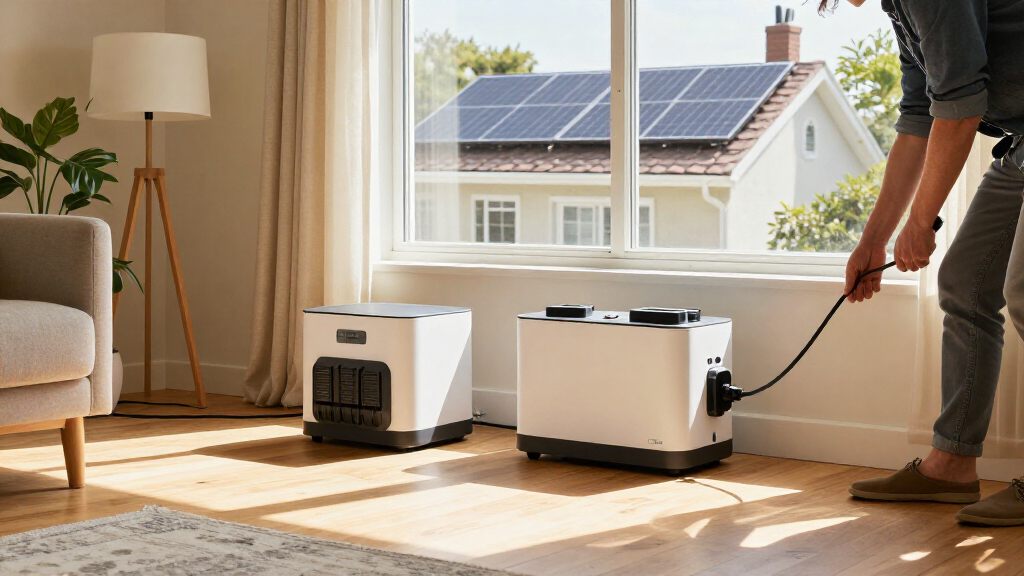
I evaluated these systems based on their ability to serve as reliable home backup sources while maintaining the convenience of plug-in installation. The primary criteria included usable capacity (how much energy is actually available after inverter losses), continuous and surge power output (to determine which appliances can run), and integration ease (whether the system requires complex wiring or simple plug-and-play setup). I also considered expandability, as homes often grow their energy needs, and software ecosystem, which dictates how well the system manages grid charging versus solar input.
Ranking logic prioritized systems that bridge the gap between portable power stations and permanent home batteries. Products that offered smart home panel integration or automatic transfer capabilities ranked higher due to superior user experience during outages. I penalized units with confusing app interfaces or limited third-party compatibility, as these factors significantly reduce long-term utility. This approach ensures the recommendations reflect real-world usability rather than just spec-sheet numbers.
Factors to Consider When Choosing Best Plug-in Home Energy Storage Systems
Selecting the right storage system involves more than just picking the largest battery. Buyers must consider how the unit interacts with their existing electrical panel, the specific appliances they intend to power, and the long-term maintenance requirements.Understanding Plug-In vs. Hardwired Integration
Most buyers assume all plug-in systems work automatically during outages, but this is a common misconception. True automatic backup requires a smart home panel or a dedicated transfer switch that disconnects the grid and connects the battery source. Without this hardware, you must manually plug in extension cords or use a generator inlet box, which is time-consuming and dangerous in wet conditions. Systems like the Anker SOLIX E10 include these components, while others require you to buy them separately. Check the included accessories carefully; a low price tag often means you are buying the battery only, not the complete backup solution.
Calculating Real-World Usable Capacity
Manufacturer specs often list total battery capacity, but this is not the same as usable energy. Inverters consume power even when idle, and batteries rarely discharge to 0% to preserve lifespan. A 3600Wh unit might only deliver 2800-3000Wh of usable energy depending on the discharge depth and efficiency losses. When planning for an outage, calculate your essential loads (fridge, lights, router, medical devices) and multiply by the expected hours of backup. Add a 20% buffer to your calculated needs to account for inefficiencies and unexpected power draws, ensuring you do not run out of power prematurely.
The Importance of Surge Power for Appliances
Continuous power is the wattage a system can sustain indefinitely, but surge power is the brief spike needed to start motors in refrigerators, well pumps, or air conditioners. A system with 2000W continuous output might fail to start a fridge that requires 1200W continuous but 3000W surge. Always check the surge rating against your most demanding appliances. If you plan to run central air conditioning, look for systems with surge ratings above 6000W. Ignoring this spec leads to frequent trip-outs and frustration when you need power the most.
Expandability and Future-Proofing
Energy needs change as you add electric vehicles, heat pumps, or smart home devices. Some systems, like the EcoFlow DELTA Pro series, are designed to be modular, allowing you to stack additional battery packs or connect external expansion units. Fixed-capacity units, such as the Jackery HomePower 3000, offer simplicity but limit your growth potential. If you anticipate increasing your energy consumption, investing in a modular system is wiser, even if the initial cost is higher. Evaluate the expansion cost per kilowatt-hour to determine if scaling up later is economically viable compared to buying a larger unit now.
App Control and Energy Management Software
The software interface determines how easily you can monitor usage, schedule charging times, and integrate with solar panels. A robust app allows you to set peak shaving schedules, charging the battery when electricity rates are low and discharging when rates are high. Poor software implementation can lead to missed savings or failed updates. Look for systems with transparent data visualization and reliable remote access. Read user feedback on app reliability, as bugs or connectivity issues can render smart features useless during critical moments.
Frequently Asked Questions
Can I use a plug-in energy storage system to power my entire house?
Generally, no. Most plug-in systems are designed to power essential circuits or specific high-draw appliances, not the entire home. To power a whole house, you would need multiple large-capacity units and a sophisticated parallel connection setup, which often exceeds the design limits of residential panels. It is more effective to identify your critical loads—such as refrigeration, lighting, internet, and medical equipment—and size the system to support those specifically. Attempting to power non-essential loads like electric ovens or central air conditioning will quickly deplete even the largest portable batteries.
Do I need a transfer switch for a plug-in home energy storage system?
Yes, for safety and functionality. A transfer switch prevents backfeeding power into the grid, which is illegal and dangerous for utility workers. It also ensures that your home’s electrical panel is isolated from the grid when the battery is active. While some systems come with built-in smart panels, others require you to install a separate manual or automatic transfer switch. Never plug a battery directly into a wall outlet without a proper isolation device, as this creates a severe hazard.
How long do LiFePO4 batteries last in these systems?
Lithium Iron Phosphate (LiFePO4) batteries typically offer 3,000 to 6,000 charge cycles before degrading to 80% capacity. This translates to roughly 10 to 15 years of regular use, assuming proper maintenance and temperature management. Unlike older lithium-ion chemistries, LiFePO4 is more stable and less prone to thermal runaway. However, extreme temperatures can accelerate degradation, so storing the unit in a climate-controlled environment is recommended to maximize its lifespan.
Can these systems charge while powering devices?
Yes, most modern systems support pass-through charging, allowing you to charge the battery from the grid or solar while simultaneously powering connected devices. This feature is useful for continuous backup scenarios or when using solar panels during the day. However, pass-through charging can generate significant heat, so ensure the unit has adequate ventilation. Check the manufacturer’s guidelines on simultaneous input and output limits, as exceeding these can damage the inverter or reduce charging efficiency.
Are plug-in systems better than portable power stations for home backup?
Plug-in systems and portable power stations often overlap, but the distinction lies in integration. Dedicated plug-in home systems usually include features like grid synchronization, solar input optimization, and smart panel connectivity, making them better suited for permanent residential installation. Portable power stations are optimized for mobility and camping, often lacking the robust software and safety features required for home integration. If your primary goal is home backup, choose a system marketed as a home energy solution rather than a general-purpose portable battery.
Conclusion
Choosing the right storage solution depends on your specific household needs and technical comfort level. The Anker SOLIX E10 is the best overall choice for homeowners who want a complete, smart-integrated backup system with minimal hassle. For those seeking maximum capacity and expandability, the EF ECOFLOW TITAN offers the flexibility to scale up as needs grow. If you are new to energy storage and want a reliable, user-friendly entry point, the Jackery HomePower 3600 Pro Max provides excellent performance with a straightforward interface. For budget-conscious buyers who need moderate backup for essentials, the Jackery Solar Generator 1000 v2 remains a solid, cost-effective option. Evaluate your critical loads and installation constraints carefully to make the best investment.