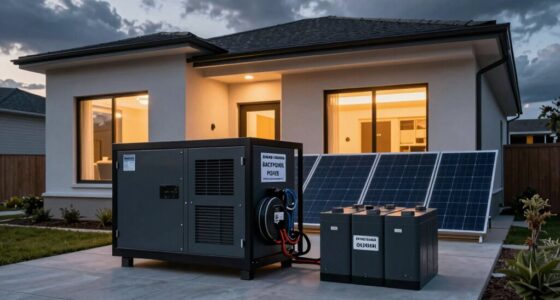
To keep your electronics safe with a backup power setup, regularly maintain batteries, ensuring they’re clean and not worn out. Use the right system size to prevent overloads, and keep your environment clean and well-ventilated. Install surge protectors to divert excess voltage, and make sure everything is properly grounded. Test your system often to confirm it works when needed. Staying on top of these steps will help you avoid damage—stick around, and you’ll discover more ways to stay protected.

Get backup power and energy gear delivered free — and shop member deals
- Fast, free delivery on millions of items
- Access to Prime Big Deal Days deals on October 6–7
- Prime Video, Amazon Music and more included
Key Takeaways
- Use surge protectors rated for your electronics to prevent voltage spikes from damaging devices.
- Ensure backup systems are properly grounded to reduce electrical shock risks.
- Regularly test and maintain batteries and surge protection devices for reliable operation.
- Install backup equipment in well-ventilated, dust-free environments to prevent overheating and fire hazards.
- Properly size and install systems according to manufacturer guidelines and environmental conditions for safety.

Have you ever considered the safety risks involved in setting up backup power systems? It’s not just about having a generator or uninterruptible power supply (UPS); it’s about guaranteeing your electronics stay protected and your setup is safe. One essential aspect is proper battery maintenance. If you neglect the batteries in your UPS or backup generator, they can become hazardous. Over time, batteries may corrode, leak, or even overheat, risking fire or damage to your equipment. Regularly inspecting for signs of wear, ensuring the terminals are clean, and replacing batteries when needed can prevent these issues. Proper maintenance also involves avoiding overcharging, which can lead to thermal runaway, and keeping batteries in a cool, dry environment to prolong their lifespan and safety. Understanding standby generator ratings and derating factors—such as altitude and temperature—also plays a crucial role in proper system sizing and safety. Additionally, using air purifiers to maintain a clean environment around backup systems can help prevent dust buildup that might impact equipment performance.
Another key component of a safe backup power setup is surge protection. Power surges can occur unexpectedly during storms or when power lines are disrupted, and they pose a serious threat to your electronics. A quality surge protector acts as a barrier, diverting excess voltage away from your devices. Without surge protection, a sudden spike can fry sensitive components, leading to costly repairs or data loss. When choosing surge protection, look for devices rated for the voltage and current your electronics require. Installing surge protectors at strategic points—especially where the backup power connects to your main system—can substantially reduce the risk of damage.
Beyond these technical precautions, it’s essential to follow safety guidelines during installation. Make sure your backup power system is grounded properly to prevent electrical shocks. Avoid working with live wires, and if you’re unsure about the wiring or setup, consulting a professional is always the safest route. Also, keep your backup power equipment in well-ventilated areas to prevent heat buildup and reduce fire hazards. Regular testing and maintenance are critical; don’t assume your system will work perfectly when you need it most. Conduct periodic tests to verify that batteries hold charge and that surge protection devices are functioning correctly.
In essence, a safe backup power setup relies on diligent battery maintenance and effective surge protection. These measures safeguard your electronics and guarantee your system operates reliably when the power goes out. Take the time to inspect, maintain, and upgrade your system as needed—your equipment’s safety depends on it. By staying proactive, you reduce risks and keep your backup power system ready to serve you safely in an emergency.
As an affiliate, we earn on qualifying purchases.
Frequently Asked Questions
How Often Should I Test My Backup Power System?
You should test your backup power system at least once every three to six months. Regular testing helps you check the battery lifespan and make certain the system can handle your load capacity when needed. During tests, verify that the batteries hold a charge and the system switches on correctly. Frequent testing keeps your backup ready for emergencies, preventing surprises when you really need it, and helps identify any maintenance issues early.
Can Backup Power Setups Cause Power Surges?
Yes, backup power setups can cause power surges if you’re not careful. A sudden surge might damage your electronics or shorten their lifespan. To prevent this, focus on power surge prevention by using surge protectors and ensuring equipment compatibility with your backup system. Regularly testing your setup helps identify potential issues. Stay vigilant, because a small oversight can turn into a costly problem for your valuable devices.
What Certifications Should My Backup Power Equipment Have?
You should look for backup power equipment certified according to industry standards like UL or IEEE, ensuring safety and reliability. These certifications help guarantee the device’s safety features, including protection against power surges, which can damage electronics. Additionally, consider equipment with good battery longevity, so your setup remains dependable over time. Certified products provide peace of mind, knowing they meet rigorous safety and performance benchmarks essential for protecting your electronics.
Is Professional Installation Necessary for Safety?
Yes, professional installation is crucial for safety. A trained technician guarantees your backup power system correctly manages load and optimizes battery lifespan. They can properly set up transfer switches, wiring, and grounding, reducing risks like overloads or electrical faults. Proper installation also ensures your system performs reliably during outages, protecting your electronics. Investing in professional setup guarantees your backup power setup is safe, efficient, and long-lasting.
How Do I Properly Maintain My Backup Power System?
To properly maintain your backup power system, regularly check the battery lifespan and guarantee the load capacity isn’t exceeded. Keep batteries clean and terminals tight, and test your system monthly to spot issues early. Replace batteries before they weaken, and monitor usage to prevent overloads. By balancing maintenance with careful usage, you keep your system reliable, ensuring your electronics stay protected during power outages.
backup power system maintenance kit
As an affiliate, we earn on qualifying purchases.
As an affiliate, we earn on qualifying purchases.
Conclusion
In the end, a safe backup power setup isn’t just about equipment—it’s about peace of mind, knowing your electronics are protected when you need them most. Sometimes, it’s the small, careful choices we make that prevent unexpected disasters. After all, when everything suddenly shuts down, isn’t it comforting to realize you’ve already taken steps to keep your home and devices safe? That quiet sense of security can make all the difference in life’s unpredictable moments.
uninterruptible power supply (UPS) with battery replacement
As an affiliate, we earn on qualifying purchases.
As an affiliate, we earn on qualifying purchases.
As an affiliate, we earn on qualifying purchases.
Fall Picks
fall essentials
As an affiliate, we earn on qualifying purchases.