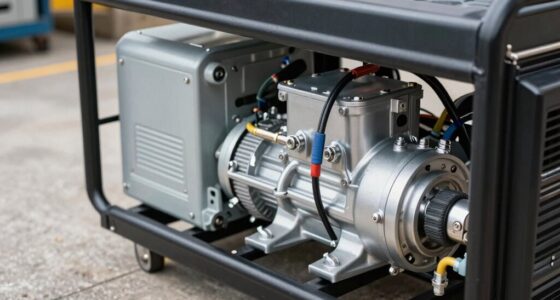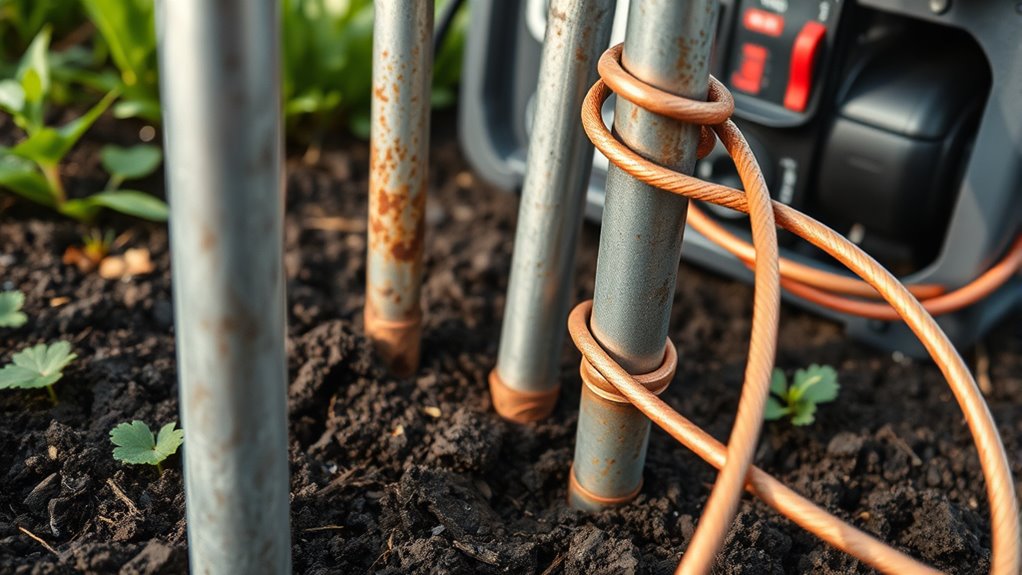

Ground rods for generators are required mainly when your system or local codes specify a proper grounding method to ensure safety and compliance. Portable generators might not need a ground rod if they are already grounded through their built-in system, but standby units often do require one for effective grounding. Always check manufacturer instructions and local regulations, as proper grounding prevents electrical faults and enhances safety. Keep exploring to discover more about when and how to properly install ground rods for your generator.

Get backup power and energy gear delivered free with Prime
- Fast, free delivery on millions of items
- Prime Video, Amazon Music and more included
- Member-only deals all year
Key Takeaways
- Ground rods are required for standby generators connected to a building’s electrical system, per local codes and standards.
- Portable generators may not need a ground rod if they are properly grounded through built-in systems.
- Always verify specific manufacturer instructions and local electrical codes before installation.
- Proper grounding involves connecting the generator to a grounding electrode, like a copper ground rod at least 8 feet deep.
- Ensuring a low-resistance, secure connection to earth enhances safety and system reliability.
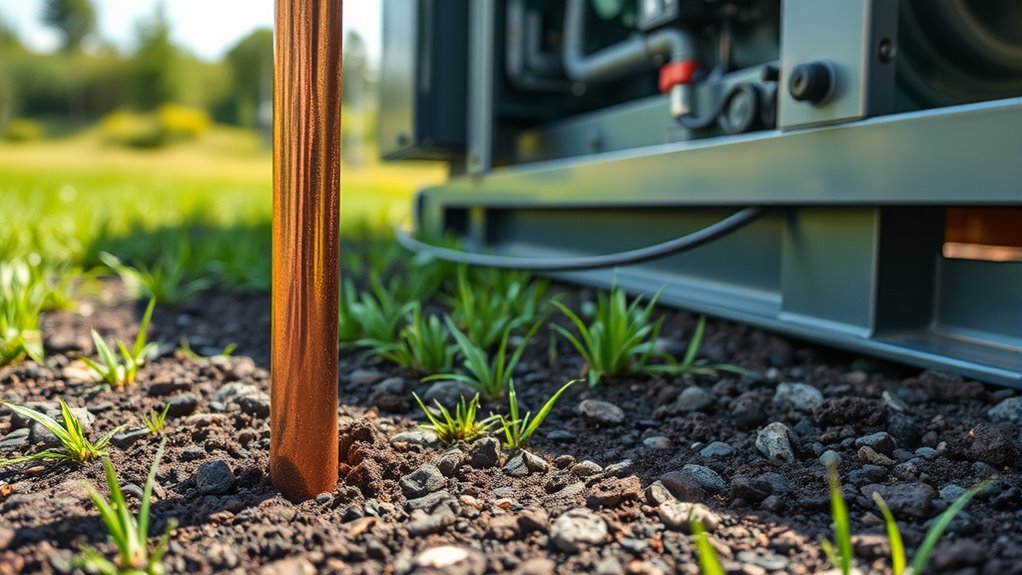
Ground rods are fundamental components for safely grounding generators, helping to prevent electrical shocks and equipment damage. When you’re installing a generator, understanding the importance of proper grounding is essential. Ground rod installation is a key part of meeting generator grounding requirements, which are designed to guarantee your system operates safely and effectively. Many local codes and electrical standards specify when and how you need to install a ground rod, so it’s important to verify these before starting your setup.
Ground rods are essential for safe generator grounding and complying with local electrical codes.
Typically, grounding your generator involves connecting it to a grounding electrode like a ground rod, which provides a direct path to the earth. This helps dissipate any stray electrical currents and reduces the risk of shocks. In most cases, the ground rod should be made of copper or another highly conductive material, and driven into the ground to a depth prescribed by local electrical codes—usually at least 8 feet. Proper ground rod installation isn’t just about hammering a rod into the soil; it requires guaranteeing a solid, low-resistance connection between the rod and your generator’s grounding system. This often involves using a grounding clamp or similar connector to secure the wire tightly.
Understanding generator grounding requirements is crucial because they can vary depending on your location and the type of generator you’re using. For example, portable generators often don’t require a ground rod if they are properly grounded through their built-in grounding system, whereas standby generators connected to a building’s electrical system typically do. If you’re working with a standalone generator, check the manufacturer’s instructions and local electrical codes to determine whether a ground rod is necessary. Failing to meet these requirements can leave you vulnerable to electrical faults and even pose safety risks.
In addition, incorporating a proper grounding system can enhance the overall safety and reliability of your generator setup. When you do need to install a ground rod, make sure to follow best practices for grounding. Drive the rod straight into the earth, avoiding rocky or overly dry soil that might impede grounding effectiveness. Keep the grounding wire as short and direct as possible, and ensure all connections are tight and corrosion-resistant. This reduces resistance and guarantees your generator is properly grounded, providing peace of mind during operation. Remember, the goal of grounding is to create a safe, low-resistance path to earth, which protects both people and equipment.
As an affiliate, we earn on qualifying purchases.
Frequently Asked Questions
Do All Generators Require Ground Rods for Safety?
Not all generators require grounding rods for safety. Your generator’s grounding depends on its type and installation. For portable generators, a grounding rod isn’t always necessary if you use a grounding wire to connect to a grounding system. However, for standby or stationary generators, proper grounding, including ground rods if specified by safety requirements, helps prevent electrical shocks and equipment damage. Always follow manufacturer instructions and local safety codes.
Can I Use an Existing Ground Rod for My Generator?
You can often use an existing ground rod for your generator if it’s properly installed and meets local codes. Check the ground rod placement to guarantee it’s driven deep enough and has good contact with the soil. Use grounding cable types like copper or copper-clad wire for a secure connection. Make sure the grounding system is continuous and compliant, and consider consulting an electrician to verify compatibility and safety.
How Deep Should a Ground Rod Be Installed?
Think of your ground rod as the backbone of your generator’s safety system. You should install it to a minimum depth of 8 feet, ensuring it reaches moist soil for good conductivity. The ground rod length typically needs to be at least 8 feet, and you should bury the entire length to meet code requirements. Proper installation depth guarantees your generator stays grounded, providing a safe, reliable connection during power fluctuations.
What Materials Are Best for Ground Rods?
You should use copper or copper-clad steel for ground rod materials because they resist corrosion and provide good conductivity. When installing, consider the rod’s length and make certain it’s driven deep enough into the ground for a solid connection. Avoid using aluminum, as it corrodes quickly. Proper installation considerations include ensuring the rod is straight, fully embedded, and connected securely to your generator’s grounding system for safety and effectiveness.
Are There Specific Codes Governing Ground Rod Installation for Generators?
Imagine a lightning bolt striking your home—grounding standards are your safety net. Yes, specific codes govern ground rod installation for generators, ensuring safe, compliant setups. You must follow installation regulations outlined in the National Electrical Code (NEC) and local electrical codes. These standards specify rod length, grounding electrode requirements, and connection methods, helping you prevent electrical hazards and ensure your generator’s grounding system is both effective and compliant.
As an affiliate, we earn on qualifying purchases.
Conclusion
Remember, using ground rods for your generator isn’t just a good idea—it’s a safety essential. Did you know that improper grounding can increase electrical shock risks by up to 30%? Ensuring proper grounding with the right rods helps protect you and your equipment. So, always follow code requirements and consult a professional if you’re unsure. Proper grounding keeps your generator safe, reliable, and ready whenever you need it most.
8 foot grounding rod for generator
As an affiliate, we earn on qualifying purchases.
As an affiliate, we earn on qualifying purchases.
As an affiliate, we earn on qualifying purchases.
Halloween Picks
halloween
As an affiliate, we earn on qualifying purchases.