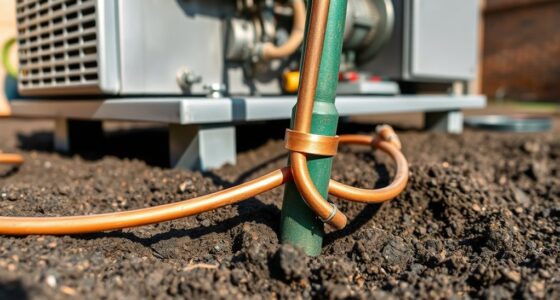
To connect your portable generator safely to your house, first assess your power needs and choose a generator with the right capacity. Use a transfer switch or a proper power inlet box installed by a professional to prevent backfeeding and guarantee reliable power. Always confirm proper grounding, follow local electrical codes, and avoid daisy-chaining extension cords. Maintaining and inspecting your setup regularly keeps everything safe. Keep these key points in mind, and you’ll find out how to make the process secure and efficient.
Key Takeaways
- Conduct a thorough load assessment and use the proper generator size with a safety margin.
- Use UL-listed transfer switches and follow manufacturer instructions for safe power transfer.
- Connect using weather-resistant, correctly rated power inlet boxes with secure, insulated wiring.
- Ensure proper grounding and adhere to regional electrical codes for safety and compliance.
- Perform regular maintenance and use appropriate extension cords following safety standards.

100A Generator Transfer Switch,24000W General-Duty Double-Throw Safety Switch,120/240-Volt Transfer Switches,Stronger Stability Manual Transfer Switches,NEMA 3R Standards for Outdoor and Indoor
- Amperage Capacity: 100A maximum handling capacity
- Power Output: 24000W power capability
- Easy Power Switching: Seamless transfer between sources
As an affiliate, we earn on qualifying purchases.
As an affiliate, we earn on qualifying purchases.
Understanding Your Power Needs and Generator Capacity

Before choosing a generator, you need to understand your power needs. Start with a thorough load assessment, listing all appliances and devices you plan to run. This helps you determine the total power requirement. Performing a precise power calculation guarantees your generator can handle the load without overloads. Consider starting wattages for appliances like refrigerators or air conditioners, as they often require more power initially. Keep in mind that running a generator at its maximum capacity can reduce its lifespan, so adding a safety margin is wise. Knowing your exact power needs allows you to select a generator with the appropriate capacity, ensuring reliable and safe operation. Conducting a power capacity assessment is essential to avoid overloading your generator and ensure smooth operation of your essential devices. Additionally, understanding your home’s electrical load can help optimize your generator choice for efficiency and safety. It is also beneficial to familiarize yourself with sound healing science principles, as quieter generators can reduce noise pollution during operation. It’s also important to consider the types of appliances you plan to power, as different devices have varying power demands that can affect your overall generator selection. Performing a power management plan can further enhance your setup by prioritizing critical devices during outages.

RVMATE Pre-Drilling 50 Amp Generator Inlet Box, NEMA SS2-50P Inlet Box
- Pre-drilling Design: Easy wiring cap removal without tools
- ETL Certified: Suitable for outdoor generator use
- Safety LED Indicator: Green light shows successful connection
As an affiliate, we earn on qualifying purchases.
As an affiliate, we earn on qualifying purchases.
Using Transfer Switches for Safe and Efficient Power Transfer

Choosing the right transfer switch is essential for safe and efficient power transfer during outages. You need to guarantee it’s the proper type and installed correctly to prevent back-feeding and other hazards. Let’s go over the key considerations for safe installation practices and selecting the right switch for your setup.
Proper Transfer Switch Types
Using the right type of transfer switch is essential for safely and efficiently connecting your portable generator to your house’s electrical system. There are two main transfer switch types: automatic and manual. Automatic transfer switches detect power loss and switch to generator power instantly, minimizing downtime and ensuring continuous operation. Manual transfer switches require you to flip a switch manually when switching power sources, offering simplicity and affordability. Your choice depends on your needs and budget. Automatic switches provide convenience and faster response, making them ideal for critical circuits. Manual switches are straightforward and easier to install, suitable for less frequent use. Understanding transfer switch types helps you select the best option for safe, reliable power transfer during outages. Proper installation and preventing electrical hazards are also key considerations to ensure safety and efficiency. Additionally, selecting a transfer switch with proper capacity ensures that your electrical system can handle the load without risking overloads or damage. Incorporating wall organization systems can also facilitate easier access to your transfer switch during emergencies, enhancing overall safety and convenience. Proper maintenance of the transfer switch is also vital to ensure reliable operation when needed, and staying informed about support hours for professional assistance can be beneficial in case issues arise.
Safe Installation Practices
Ensuring a safe and efficient connection between your portable generator and your house’s electrical system starts with proper installation of the transfer switch. Follow manufacturer instructions carefully to maximize generator efficiency and confirm your portable power sources operate safely. Always turn off the main breaker before connecting the transfer switch to prevent backfeeding, which can endanger utility workers. Use high-quality, UL-listed components to guarantee safety and reliability. Proper grounding minimizes electrical hazards, and consulting a reliable backup power professional can further ensure your setup meets all safety standards. Additionally, regularly inspecting your generator and transfer switch can help identify potential security vulnerabilities before they lead to problems. Maintaining an organized email marketing database can also help in communicating important safety updates or maintenance reminders effectively. Incorporating proper electrical connections ensures the system remains safe and compliant with electrical codes.
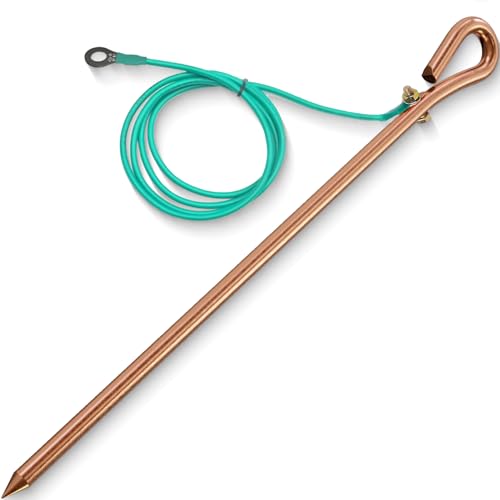
Generator Grounding Kit, 17.4 Inch Rod with 6.2ft 12 AWG Lugs Wire
- Complete Grounding Kit: Includes rod and grounding wire
- Copper-Clad Steel Rod: Resists corrosion and ensures conductivity
- 12 AWG Insulated Wire: Flexible with durable PVC insulation
As an affiliate, we earn on qualifying purchases.
As an affiliate, we earn on qualifying purchases.
Connecting With a Proper Power Inlet Box
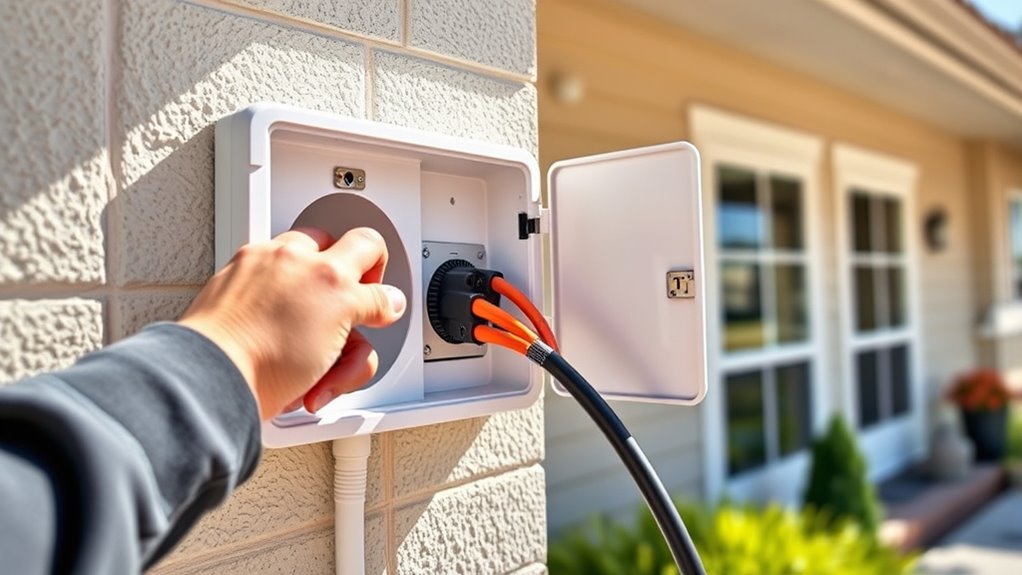
Choosing the right power inlet box is vital for a safe connection to your generator. Make certain you follow proper wiring techniques to avoid hazards, and double-check that all connections are secure. Taking these steps guarantees your setup is both safe and reliable.
Selecting the Right Box
Selecting the right power inlet box is essential for safely connecting your portable generator to your house. When choosing a box, focus on proper box selection to ensure compatibility with your setup. Look for an enclosure made from durable materials such as weather-resistant plastic or metal, which protects against moisture and damage. The enclosure materials should be sturdy enough to withstand outdoor conditions and prevent corrosion. Consider the size and number of outlets you need, making sure they match your generator’s power capacity. Properly rated boxes prevent overheating and electrical faults. Also, check for safety features like grounding terminals and secure covers. Taking these factors into account ensures a reliable, safe connection that minimizes risks and lasts over time. Additionally, verifying electrical safety standards can help guarantee your setup adheres to recommended guidelines for safe operation. Ensuring your connection method complies with proper installation practices is crucial for long-term safety and efficiency. Using a grounding system appropriately can further reduce the risk of electrical shock or fault conditions. Incorporating local electrical codes into your planning can also enhance safety and compliance.
Proper Wiring Techniques
To connect your generator to your house safely, you must follow proper wiring techniques with your power inlet box. Start by confirming all wiring follows standard color codes: black or red for hot wires, white for neutral, and green or bare for ground. Proper wiring color codes help prevent mistakes and ensure correct connections. Always incorporate circuit protection, such as a dedicated breaker or fuse, to prevent overloads and protect your system. When wiring, confirm that your connections are secure, tight, and insulated to avoid shorts or sparks. Use appropriate connectors and tools, and double-check that your wiring matches the inlet box specifications. Following these techniques ensures your setup is safe, reliable, and compliant with electrical standards. Additionally, proper grounding is essential to prevent electrical shock hazards and ensure system stability. Ensuring correct wiring methods reduces potential hazards and guarantees a safe connection. Moreover, understanding regional electrical standards can help you adhere to local safety regulations and prevent code violations. Being aware of power load requirements is also important to avoid overloading your system and causing potential hazards.
Ensuring Secure Connections
Ensuring secure connections is essential for safe and reliable generator setup. When connecting your portable power source, use a proper power inlet box designed for your generator’s specifications. This prevents accidental disconnections and reduces the risk of electrical shock or fire. Make sure the inlet box is grounded correctly and matches your generator’s power output, considering generator fuel type for peak operation. A secure connection also protects your equipment and home from power surges. Always double-check that all connections are tight and properly insulated. Using the right connection method helps maintain consistent power supply and safeguards against potential hazards. Properly securing your connections is a critical step in safely transferring portable power to your house and ensuring peace of mind during emergencies. High-quality connections are vital for maintaining durability and performance over time, especially when considering electrical safety standards. Incorporating security measures into your setup can further prevent accidental disconnections and enhance overall safety. Additionally, selecting connections that meet industry safety guidelines ensures long-term reliability and protection.

Joinfworld Generator Transfer Switch, 15A 125V
- UL Certified for Safety: Meets electrical safety standards
- Clear Wiring Labels: L, N, GND terminal labels
- Easy Installation: Minimal rewiring required
As an affiliate, we earn on qualifying purchases.
As an affiliate, we earn on qualifying purchases.
Avoiding Common Mistakes When Linking Your Generator
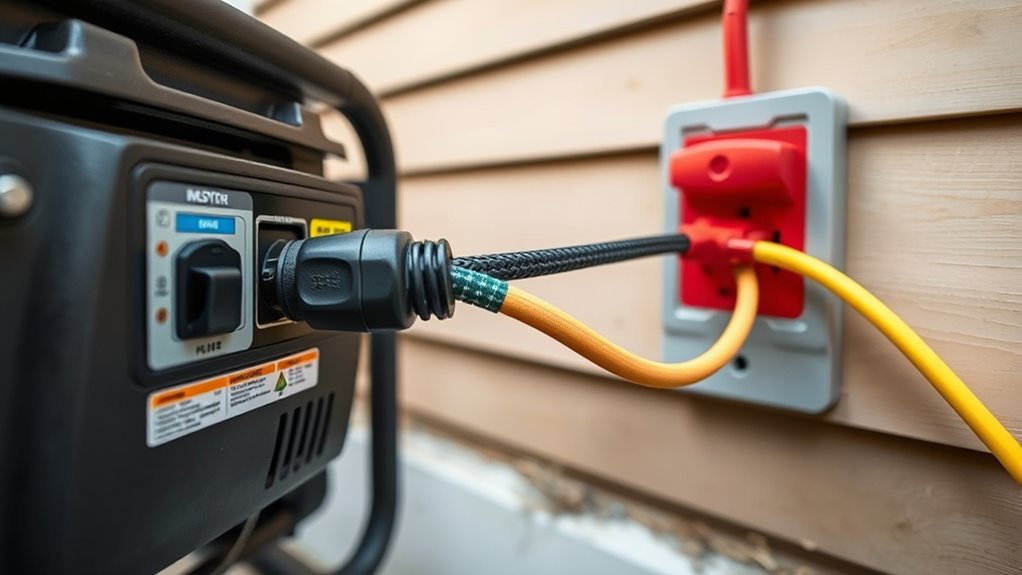
Connecting your generator correctly is essential for safety and efficiency, but many overlook common mistakes that can lead to dangerous situations. To avoid issues, focus on these key points:
- Skip proper generator maintenance—neglecting regular checks can cause malfunctions or overloads when powering your home.
- Use the wrong extension cords—always choose heavy-duty cords rated for your portable power sources to prevent overheating.
- Ignore the manufacturer’s instructions—each generator has specific connection guidelines; skipping them risks electrical hazards.
Ensuring Proper Grounding and Bonding Procedures

Proper grounding and bonding are critical steps when connecting a generator to your home, as they prevent dangerous electrical shocks and equipment damage. Follow correct grounding procedures by connecting the generator’s grounding terminal to a grounding rod or grounding system approved for your area. Use proper bonding techniques to ensure the generator’s metal frame is electrically connected to the grounding system, reducing the risk of stray voltage. Verify that all connections are secure and compliant with local electrical codes. Proper grounding and bonding help direct fault currents safely into the ground, protecting you and your appliances. Never skip these steps or improvise; doing so can create hazardous conditions. When done correctly, grounding and bonding form a safe, reliable connection between your generator and your home’s electrical system.
Using Heavy-Duty Extension Cords Safely

Using heavy-duty extension cords safely is essential to prevent electrical hazards when powering your home during an outage. To do this effectively, follow these key tips:
Prioritize safety by choosing properly rated, grounded extension cords during power outages.
- Check the extension cord ratings to ensure they can handle your device’s power demands. Never use cords rated below your appliances’ requirements.
- Use proper grounding techniques by choosing cords with grounding prongs and avoiding damaged cords that can cause shocks.
- Avoid daisy-chaining multiple extension cords, which can overload circuits and cause overheating.
Checking Local Codes and Regulations Before Connection
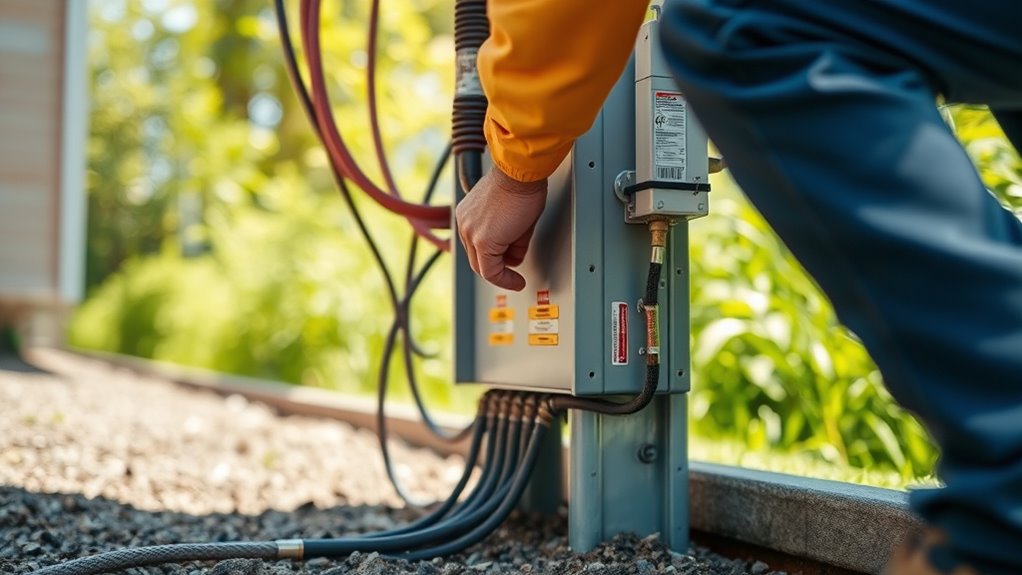
Before plugging in any extension cord, it’s important to verify that your setup complies with local electrical codes and regulations. Checking local code compliance guarantees your connection is safe and legal, preventing potential hazards or fines. Many areas have specific permit requirements for connecting portable power sources to a house, especially for permanent or semi-permanent setups. Contact your local electrical authority or review city or county regulations to understand what’s needed. Failing to adhere to these rules can result in unsafe wiring, voided insurance, or legal issues. Always obtain necessary permits before making a connection, and follow the guidelines provided. Staying compliant not only protects your property but also guarantees your setup meets safety standards.
Regular Maintenance and Inspection for Safe Operation
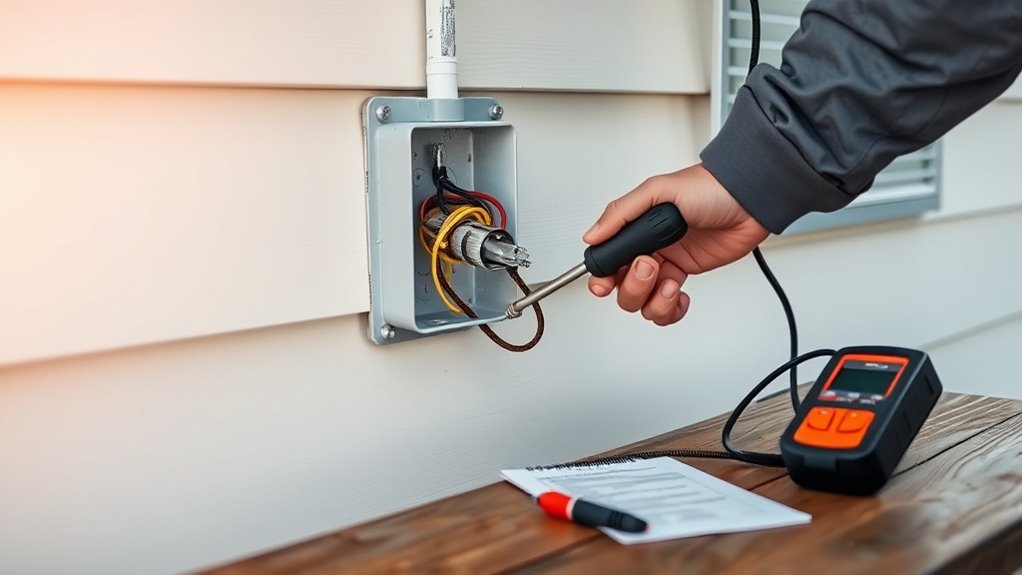
Regular maintenance and inspection are essential to guarantee your portable power setup remains safe and reliable over time. Staying on top of generator maintenance and adhering to inspection schedules help prevent accidents and ensure best performance. Here are three key steps to keep in mind:
Regular maintenance and inspections ensure your portable power remains safe, reliable, and efficient.
- Regularly check the generator’s oil, coolant, and fuel levels to prevent overheating or damage.
- Follow a strict inspection schedule to identify wear, corrosion, or loose connections early.
- Test safety features like circuit breakers and grounding connections monthly to confirm they’re functioning correctly.
Emergency Procedures and Safety Tips During Power Transfer

When transferring power from your portable generator to your house, safety must be your top priority. Before starting, ensure your generator fuel is stored safely and away from ignition sources to prevent accidents. Always disconnect your generator from the main electrical system using a transfer switch or a professionally installed interlock device; this is vital for electrical safety and to avoid backfeeding. During transfer, stay alert for any signs of electrical faults or sparks. Keep a fire extinguisher nearby, and never refuel the generator while it’s running or hot. If you notice any fuel leaks or unusual smells, shut down immediately. Following these safety tips helps prevent injuries and keeps your household safe during power transfer.
Frequently Asked Questions
Can I Connect Multiple Generators to Increase Power Capacity Safely?
You can connect multiple generators to increase power capacity safely through generator synchronization, but it’s complex and requires proper setup. You must guarantee power load balancing to prevent overloads and equipment damage. Use a synchronization panel and follow manufacturer instructions carefully. Avoid connecting generators directly without proper synchronization, as mismatched phases or loads can cause serious issues. Always consult a professional to ensure safe, reliable operation when expanding your power system.
What Are the Signs of a Faulty Transfer Switch?
Think of a faulty transfer switch as a warning sign in a busy intersection. You might notice flickering lights, frequent power outages, or appliances acting up even when the main power is stable. These faulty transfer switch signs point to malfunctions or wiring issues. If you see these signs, turn off the system and call a professional. Detecting transfer switch malfunction early keeps your home safe and your power running smoothly.
How Often Should I Inspect and Maintain My Generator?
You should inspect and maintain your generator at least every three to six months. Regular generator maintenance involves checking oil levels, inspecting spark plugs, and testing the system to ensure it runs smoothly. An established inspection schedule helps catch issues early, preventing breakdowns during emergencies. By staying consistent with your generator maintenance, you’ll ensure it operates efficiently when you need it most, providing reliable power for your home.
Are There Specific Extension Cord Ratings for Outdoor Use?
Using the wrong extension cord is like inviting trouble! You should always choose outdoor extension cords with specific ratings, such as outdoor-rated, heavy-duty, or weatherproof. These cords are built to withstand the elements and safely handle the power needed for your generator connection. Check the cord’s labels for proper extension cord ratings, ensuring they meet safety standards. Don’t compromise—your safety depends on using the right outdoor extension cords.
What Safety Equipment Should I Have During Power Transfer?
You should have essential safety gear like insulated gloves, safety goggles, and sturdy footwear ready during power transfer. These protect you from electrical shocks and accidental sparks. Additionally, familiarize yourself with emergency procedures, such as shutting off the power source quickly and knowing how to handle electrical emergencies. Always double-check your safety equipment before starting, and work in a dry, clear area to minimize risks.
Conclusion
By following these connection methods, you guarantee your home’s safety during power outages. Imagine a homeowner who ignored proper grounding and faced electrical shocks—avoid that by sticking to proven practices. Regular inspections and understanding your power needs make all the difference. When you prioritize safety and proper procedures, you protect your loved ones and your property. Don’t wait for an emergency—prepare now, and power your home safely and confidently.