
TL;DR

Get backup power and energy gear delivered free with Prime
- Fast, free delivery on millions of items
- Prime Video, Amazon Music and more included
- Member-only deals all year
A GreenBuildingAdvisor Q&A published November 2, 2026, examines an owner-designer’s choice between central ducted HVAC and four single-zone minisplit heat pumps for a planned North Texas home. The design and estimated heating load are described, but the source does not establish final equipment selection, verified installation costs, or performance results.
GreenBuildingAdvisor published a Q&A on November 2 examining whether a planned 1,200-square-foot North Texas home with an 800-square-foot conditioned attic should use central ducted HVAC or four single-zone minisplit heat pumps. The discussion matters to homeowners and builders because the options trade off room-by-room control and installation flexibility against centralized air handling, filtration, and humidity control.
The house is being designed by a GBA discussion-board member identified as “big_o,” whom the article calls “Big.” It has two bedrooms and is in North Texas, which the report places in Climate Zone 3A. Big estimates the home’s heating load at approximately 21,000 Btu per hour; the article presents that as his estimate, not as a verified load calculation.
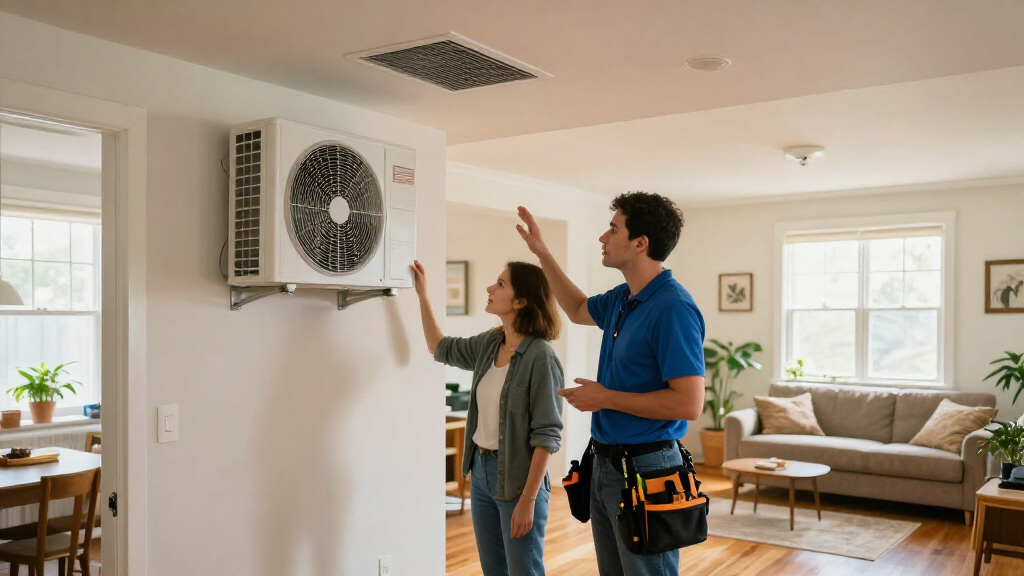
Big’s original concept uses four single-zone minisplit heat pumps: one for each bedroom, one for the living room, and one for the conditioned attic. He says four 9,000-Btu-per-hour units could be bought and installed for approximately $500 each. That figure is his estimate, and the source does not provide a contractor quote, clarify what the price includes, or confirm that the equipment has been selected or installed.
The report says people in an online group favored a central ducted system when Big presented the plan. Big disagrees with that preference, writing that he has thought the question through and that “a ducted system makes even less sense.” The published material frames the choice as a design discussion; it does not report a final decision or measured results for either system.
How the System Choice Affects the Home
The decision affects more than where heating and cooling equipment sits. Ducted systems can provide more even temperatures, support centralized filtration, and make whole-house humidity control easier to incorporate. Their ducts also require space, add installation costs, and can lose efficiency when their design or installation is poor, according to the report.
Individual minisplits can provide room-by-room temperature control and let occupants heat or cool selected areas rather than the entire house. That flexibility may appeal in a small home with distinct rooms and a conditioned attic. But the source does not establish that four indoor units would be the best configuration, or that the quoted price is achievable for this project.
For readers planning a similarly compact, energy-efficient home, the case shows why the equipment label alone cannot settle the choice. The home’s heating and cooling loads, room layout, installation details, and desired air filtration and humidity management all affect whether a system works well in practice. The article supplies a homeowner’s stated load and cost estimate, not a completed system comparison.
Products Worth Considering

LG 85-Inch QNED84B Mini LED 4K Smart TV (2026)

Hisense 85 U7 Mini-LED ULED 4K UHD Smart Google TV (85U7SG, 2026)

Shark PowerDetect Corded Stick Vacuum with HEPA Filtration, Purple (HZ4001AMZ)
As an affiliate, we earn on qualifying purchases.
The Design Behind Big’s Question
The Q&A is part of GreenBuildingAdvisor’s Q&A Spotlight series, which presents questions raised by members of its building discussion community. Its subject is a new home design, rather than a report of a completed installation or a change in building policy.
The article also points to an earlier discussion by Allison Bailes about single-zone minisplits compared with multisplit systems, where several indoor units connect to one outdoor unit. That distinction is relevant: Big’s proposal is for four single-zone systems, not one multisplit system. The source does not provide enough detail to compare the full equipment layouts or their project-specific costs.
In the Q&A, the ducted option is presented through its potential benefits and trade-offs, while Big questions whether ductwork is justified for this particular house. The article’s available text introduces his consideration of commonly cited advantages but does not provide a completed technical assessment or a system recommendation.
““I’ve thought about it a lot, and a ducted system makes even less sense.””
— Big, the GBA discussion-board member quoted in the article
Costs, Sizing and Final Equipment Choice
The available report does not say whether Big ultimately chose ducted HVAC or minisplits, or whether construction or installation has begun. His approximately $500-per-unit estimate is not supported by a contractor quote in the material, and it is unclear which equipment, labor, electrical work, or other project costs it covers.
The heating load is also presented as Big’s estimate. The source does not include a load calculation, cooling-load figures, equipment specifications, or details about how performance would vary across the house and conditioned attic. It does not report measured efficiency, comfort, or operating costs for either option. The discussion therefore cannot establish which system would perform better in this specific home.
A Project-Specific Design Decision
The next step is a project-specific comparison of equipment layouts, installation costs, and expected performance; the source does not report that such a comparison has been completed. The final design would need to account for the estimated loads in each area, the home’s duct or refrigerant-line routes, and the owner’s priorities for temperature control, filtration, and humidity management.
Readers should treat the Q&A as a record of an active design question, not a verdict for all small homes. Any eventual selection or installation outcome for Big’s house remains unreported in the source material.
Key Questions
What systems is the homeowner comparing?
Big is weighing central ducted HVAC against four single-zone minisplit heat pumps, one each for the bedrooms, living room, and conditioned attic.
What are the home’s reported size and heating load?
The design is for a 1,200-square-foot, two-bedroom house plus an 800-square-foot conditioned attic in North Texas. Big estimates its heating load at about 21,000 Btu per hour; the article does not present an independent verification.
What advantages does the report identify for ducted HVAC?
The article says ducted systems can support even temperatures, centralized filtration, and whole-house humidity control. It also notes that ductwork takes space, adds cost, and may reduce efficiency if poorly designed or installed.
Has Big chosen or installed a system?
The available source does not report a final choice or an installation. It also does not confirm the estimated cost of approximately $500 per minisplit unit.
Source: greenbuildingadvisor.com