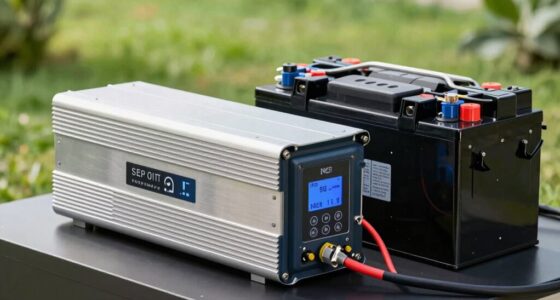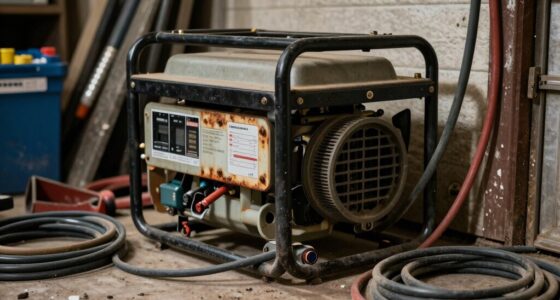
During outages, it’s important to take into account surge loads that occur when appliances, especially motor-driven ones, start up. These devices draw high inrush current that can overload your generator or damage equipment if not managed properly. To prevent issues, prioritize essential devices, avoid connecting too many at once, and evenly distribute the load. Planning ahead and understanding surge currents helps maintain system stability. Keep exploring to discover more effective strategies for handling surge loads safely.
Listen free for 30 days with Audible
Thousands of audiobooks and originals — cancel anytime.
As an affiliate, we earn on qualifying purchases.
Key Takeaways
- Identify appliances with high startup currents to prevent overloads during outages.
- Prioritize essential devices and disconnect non-critical appliances to manage surge loads effectively.
- Distribute electrical loads evenly across circuits to minimize voltage fluctuations and system stress.
- Use wattage calculations to ensure total load stays within generator capacity during outages.
- Implement protective devices and power management strategies to safeguard equipment from surge damage.
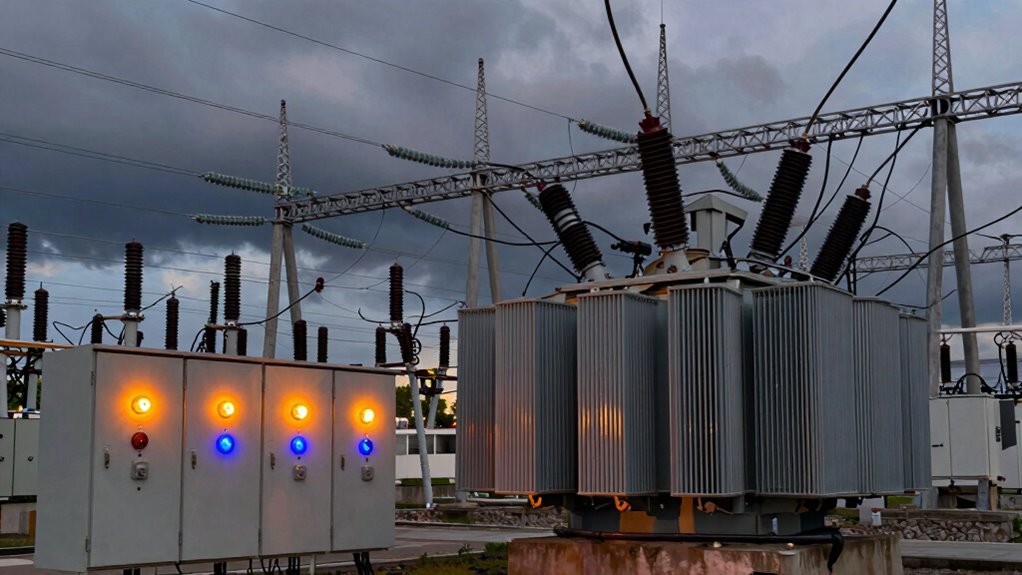
As you switch to backup power, you might notice that certain devices draw more current than usual. This is because many appliances, especially motor-driven ones like refrigerators or air conditioners, require a higher startup current known as inrush current. If this surge exceeds your generator’s rated capacity, it can cause overloads, potentially shutting down your system or damaging equipment. To prevent this, you need to be mindful of the total load you connect at once. Prioritize essential devices and avoid overloading your generator, which can lead to uneven power distribution and increased risk of generator overloads.
Understanding how power distribution occurs during outages helps you manage surge loads better. When your generator is running, it supplies power to connected devices, but if the total demand surpasses its capacity, the load becomes uneven. This imbalance can cause voltage drops or spikes, further stressing your electrical system. To keep power distribution stable, distribute the load evenly across different circuits and disconnect any non-essential devices. This reduces the chance of generator overloads and *crucially* ensures your critical appliances keep running smoothly. Additionally, being aware of surge loads and their potential impact helps you better prepare and protect your equipment during these events. Recognizing power management strategies can further enhance your ability to handle outages safely.
Being familiar with load balancing techniques can help prevent unexpected overloads and improve the longevity of your generator and appliances. Planning ahead is *essential*. Before an outage, calculate the total wattage of devices you intend to run and compare it with your generator’s capacity. Using tools like wattage calculators or power consumption measurements can assist you in creating a manageable load profile that prevents overloads and maintains proper power distribution. During an outage, start with essential appliances first, then gradually add other devices, monitoring for any signs of overload. If your generator starts to strain, shut down some devices immediately to avoid damage. Additionally, understanding surge current can help you select appropriate protective devices to guard against sudden power spikes.
As an affiliate, we earn on qualifying purchases.
Frequently Asked Questions
How Do Surge Loads Differ Between Residential and Industrial Facilities?
You’ll notice that surge loads differ between residential and industrial facilities mainly in scale and cause. Residential areas experience voltage spikes and load fluctuations mostly from appliances turning on and off, causing moderate surges. In contrast, industrial facilities face larger, more frequent surges due to heavy machinery startup loads and complex processes. This makes managing surge loads essential for both, but industrial sites require more robust solutions to handle the higher magnitude and frequency of these voltage spikes.
What Are the Best Tools for Predicting Surge Loads During Outages?
You should use advanced simulation tools like ETAP or DigSILENT PowerFactory to predict surge loads during outages. These tools help analyze voltage stability and assess load balancing, enabling you to anticipate surge conditions accurately. By modeling different outage scenarios, you can identify potential issues, optimize responses, and guarantee system reliability. Regularly updating your models with real-time data improves prediction accuracy and helps prevent equipment damage during surge events.
How Can Surge Loads Impact Equipment Lifespan?
Surge loads can considerably impact your equipment’s durability by causing stress and potential damage over time. Frequent or intense surges weaken components, leading to premature failure. Effective surge mitigation helps protect your equipment, extending its lifespan. By managing surge loads properly, you maintain ideal performance and avoid costly repairs. Always implement proper surge protection measures to guarantee your equipment remains resilient against power fluctuations during outages.
Are There Industry Standards for Managing Surge Loads?
Yes, there are industry standards for managing surge loads, focusing on load balancing and emergency protocols. You should follow guidelines from organizations like IEEE and IEC, which recommend proper system design, protective devices, and surge arresters. Implementing these standards helps you guarantee equipment damage during outages. Regularly reviewing and updating your surge management strategies ensures your system remains resilient, reducing risks associated with unexpected load spikes.
How Quickly Should Surge Load Assessments Be Conducted During Outages?
You should conduct surge load assessments immediately during outages to maintain power quality and guarantee safe load balancing. Prompt evaluation helps identify potential overloads or voltage fluctuations that could damage equipment or disrupt service. By acting swiftly, you prevent longer-term issues, optimize system stability, and adapt load management strategies effectively. Quick assessments are essential to minimize risks and maintain reliable power delivery during critical outage situations.
As an affiliate, we earn on qualifying purchases.
Conclusion
Remember, understanding surge loads during outages isn’t just a small detail—it’s the secret sauce to avoiding chaos. When you grasp how these sudden power surges can multiply stress on your systems, you’re practically wielding a superpower against potential failures. Stay vigilant, plan ahead, and treat surge loads like the fierce dragons they are—ready to erupt if ignored. Master this, and you’ll keep your systems running smoother than a well-oiled machine, no matter the storm.
power load calculator for generators
As an affiliate, we earn on qualifying purchases.
As an affiliate, we earn on qualifying purchases.
As an affiliate, we earn on qualifying purchases.
NFL season / tailgating Picks
team gear
As an affiliate, we earn on qualifying purchases.