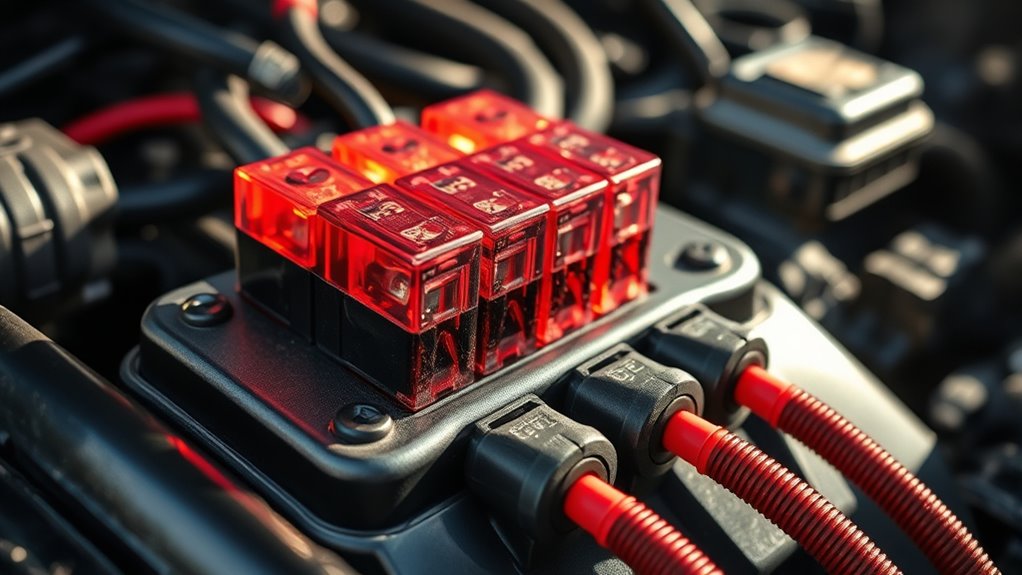

Skipping battery fuses and disconnects can put your entire electrical system at serious risk. Without them, overloads, short circuits, and electrical faults could cause costly damage, safety hazards, or even fires. Properly rated fuses and disconnects protect your batteries, wiring, and equipment, ensuring safety and reliability. Regularly inspecting and maintaining these components keeps your system running smoothly. If you want to keep your setup safe and efficient, there’s more you should know.

Get backup power and energy gear delivered free — and shop member deals
- Fast, free delivery on millions of items
- Access to Prime Big Deal Days deals on October 6–7
- Prime Video, Amazon Music and more included
Key Takeaways
- They protect your system from overloads and shorts, preventing costly damage and ensuring safety.
- Regular inspection and proper maintenance extend battery life and system reliability.
- Disconnect switches allow quick power shutdowns during emergencies or maintenance procedures.
- Correct fuse ratings and installation are essential to avoid false trips and electrical hazards.
- Skipping these safety devices increases risk of system failures, damage, and safety hazards.

Battery fuses and disconnects are crucial components that protect your vehicle’s electrical system from damage caused by overloads and shorts. Without them, a sudden surge or short circuit could cause extensive damage to your battery, wiring, or other essential components. If you’re using solar charging to keep your battery topped off, these safety devices become even more critical. Solar systems generate variable power levels, and without proper fusing or disconnects, an unexpected overload could occur, risking damage to your entire setup. Ensuring your battery is properly fused and disconnected when needed helps maintain safety, especially in renewable energy systems where voltages and currents fluctuate.
Proper fusing and disconnects ensure safety in solar systems with fluctuating voltages and currents.
When it comes to battery maintenance, neglecting fuses and disconnects can lead to costly repairs and potential safety hazards. Regularly inspecting these components allows you to catch signs of wear or corrosion early, preventing more significant issues down the line. For example, a blown fuse might seem minor, but it indicates underlying problems such as overloads or wiring faults that need addressing. Disconnect switches, on the other hand, give you a quick way to cut power in emergencies or when performing maintenance, protecting both you and your equipment. This is especially useful if you’re working on a solar-powered system or maintaining a car battery, where accidental shorts could occur. Additionally, proper maintenance of these safety devices can improve the overall reliability of your electrical system.
In solar charging setups, battery disconnects serve an additional purpose—they help isolate the battery for maintenance or emergency shutdowns. This prevents accidental discharges or short circuits during repairs and helps prolong the lifespan of your battery. Properly rated fuses should match your system’s voltage and current ratings to ensure they blow when necessary without false trips. When installing or replacing fuses, always double-check these ratings and ensure your disconnect switches are easily accessible. This proactive approach helps you avoid electrical mishaps and keeps your system running smoothly. Regularly testing your disconnects and fuses is essential to confirm they function correctly when needed.
Battery maintenance isn’t just about keeping the terminals clean and topped off; it’s about safeguarding your entire electrical system with the right fuses and disconnects. These components act as the first line of defense against electrical faults, especially in complex setups like solar charging systems. By regularly inspecting, maintaining, and replacing these safety devices as needed, you ensure your system remains safe and reliable. Remember, neglecting them can lead to more frequent breakdowns, reduced battery life, and even dangerous situations. Prioritize proper fusing and disconnects, and you’ll extend the lifespan of your battery while protecting your investment and safety. Proper selection and installation of these components are vital for electrical safety in any system.
As an affiliate, we earn on qualifying purchases.
Frequently Asked Questions
What Are the Latest Advancements in Battery Fuse Technology?
The latest advancements in battery fuse technology focus on fuse miniaturization and improved battery management. You’ll find smaller, more efficient fuses that save space and enhance safety, making them ideal for compact devices. Modern fuses also feature better thermal stability and quicker response times, ensuring your system stays protected. These innovations help optimize battery performance and longevity, giving you more reliable and efficient power management without bulky components.
How Do I Choose the Right Disconnect Size for My Vehicle?
Imagine your vehicle’s safety is a fortress; choosing the right disconnect size shields it. To do this, match the disconnect’s amperage ratings with your wire size considerations, ensuring they can handle your system’s current load. If your system demands higher power, opt for a disconnect rated accordingly. Always double-check manufacturer specifications—this way, you prevent potential failures and keep your vehicle protected, like a fortress standing strong against threats.
Are There Eco-Friendly Options for Battery Fuses and Disconnects?
Yes, there are eco-friendly options for battery fuses and disconnects. Look for products made from eco-friendly materials like recycled plastics or biodegradable components, which reduce environmental impact. Additionally, choose items from manufacturers committed to sustainable manufacturing practices. These options help lower your carbon footprint while maintaining safety and performance. By selecting eco-conscious fuses and disconnects, you support sustainability without compromising your vehicle’s electrical protection.
Can Battery Fuses Be Reused After a Fault?
Like a phoenix rising from ashes, a battery fuse can sometimes be reused after a fault if it’s a reusable fuse designed for multiple trips. You’ll need to perform fault diagnosis to guarantee it’s still safe and functional. If the fuse shows signs of damage or corrosion, replace it. Reusing a faulty fuse risks damage to your system, so always verify its integrity before reinstallation.
What Safety Standards Govern Battery Fuse Installation?
You must follow specific safety standards when installing battery fuses, governed by battery regulations and installation codes. These standards guarantee proper fuse ratings, correct placement, and secure connections to prevent electrical hazards. Always verify that your installation complies with local electrical codes and manufacturer instructions. Using the right fuse type and adhering to safety guidelines helps protect your system and ensures safe, reliable operation.
As an affiliate, we earn on qualifying purchases.
Conclusion
Don’t overlook the importance of battery fuses and disconnects—they’re your first line of defense. Skipping them might seem harmless, but one unexpected surge could lead to disaster. Stay vigilant and make certain these safety devices are in place and functioning properly. Because when you least expect it, a simple oversight could turn a minor issue into a major problem. So, are you truly prepared to protect your vehicle’s electrical system? The choice is yours—don’t wait until it’s too late.
As an affiliate, we earn on qualifying purchases.
As an affiliate, we earn on qualifying purchases.
Fall Picks
fall essentials
As an affiliate, we earn on qualifying purchases.