TL;DR
EnerVenue has secured an order for 11 MWh of battery storage at an operating oilfield in northern China, its first multi-megawatt-hour commercial contract. The project will use 26 containerized units to store onsite solar power; shipment is scheduled in two batches from December 2026 to March 2027. The buyer, project value and power rating have not been disclosed.
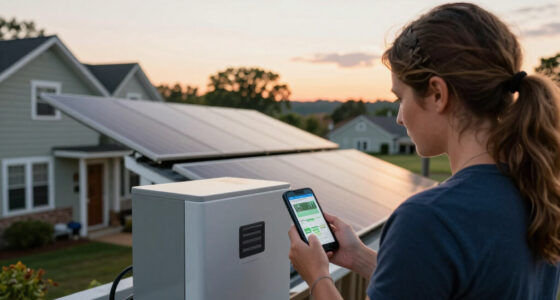
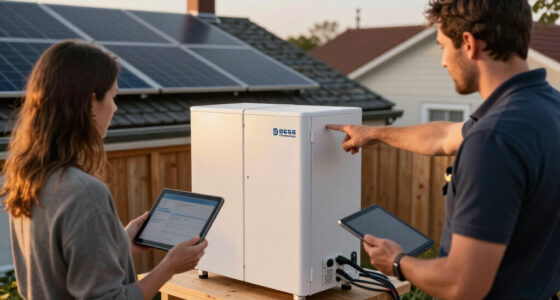
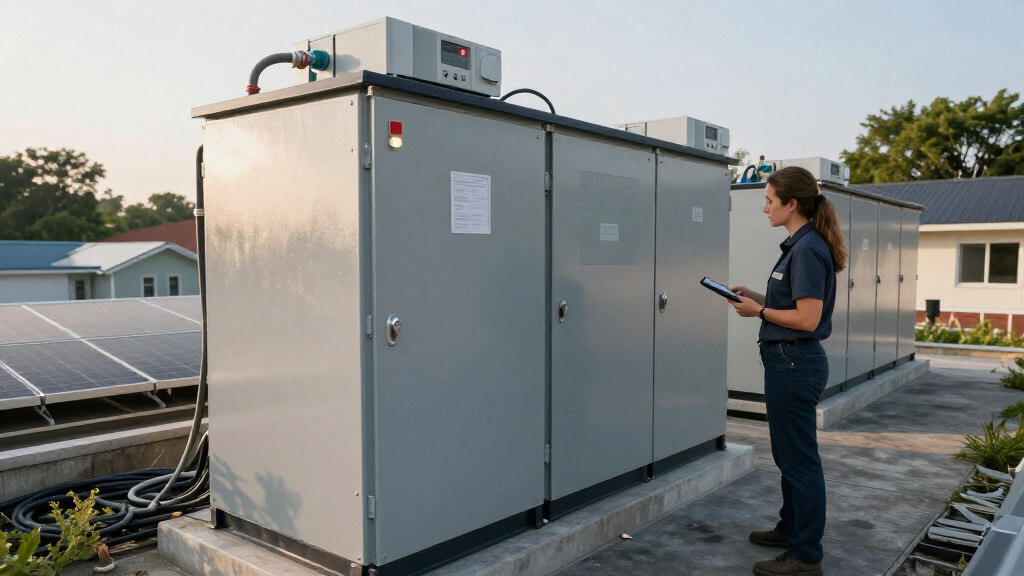
EnerVenue has received its first multi-megawatt-hour commercial order, agreeing to supply 11 MWh of battery storage for an operating oilfield in northern China. The California-based company said an unnamed Chinese oil and gas producer ordered 26 Energy Prism containerized units to store electricity from an onsite solar array and deliver it when the facility needs power.

Get backup power and energy gear delivered free with Prime
- Fast, free delivery on millions of items
- Prime Video, Amazon Music and more included
- Member-only deals all year
The first three units are scheduled to ship in December 2026, with the remaining 23 due in March 2027, according to EnerVenue. The systems will be delivered as complete units on the direct-current side, ready to connect to the site’s power-conversion equipment. The company did not disclose the project’s power rating, discharge duration, contract value or end user.
The order uses EnerVenue’s fourth-generation Aqueous Metal Cell (AMC) technology, which the company describes as a non-lithium, water-based battery chemistry derived from nickel-hydrogen cells. EnerVenue says its current cell has a nominal energy capacity of 3 kWh, a design life of 30,000 cycles and a 30-year operating life. The company also specifies 100% depth-of-discharge capability, peak round-trip efficiency above 90% and operation from -20 C to 60 C without active thermal management. These are company specifications, not results reported from this oilfield installation.
EnerVenue said safety was a central consideration for the project. Its cells use a water-based, non-flammable electrolyte and contain no lithium. The company says the chemistry does not produce the sequence of reactions associated with lithium-ion thermal runaway, and reports that UL 9540A testing showed no fire propagation at cell level. Those points describe the company’s technology and test claims; the source report does not provide project-specific safety results.
A Step Beyond Pilot Deployment
The 11 MWh order marks a move from pilot-scale deployment to a multi-megawatt-hour commercial installation for EnerVenue’s fourth-generation cells. That gives the company an opportunity to demonstrate the technology in a working industrial setting, where stored solar electricity can support an operating oilfield’s power needs. The order itself is modest in scale relative to the company’s longer-term ambitions, but it is a commercial reference point beyond its earlier deployment.
Whether the order strengthens EnerVenue’s position in the storage market will depend on performance over time. The company is pitching long life, safety characteristics and reduced maintenance needs as advantages that could lower lifetime costs. Those benefits have yet to be established at scale in this project. The buyer’s choice of the technology is also not a disclosed endorsement beyond the purchase itself, and the project’s economics cannot be assessed without pricing and operating details.
Products Worth Considering

Ring Battery Doorbell (2nd Gen) and Floodlight Cam Plus Wired Bundle

eufy C28 Robot Vacuum and Mop Combo with HydroJet Roller, 15,000 Pa Suction, and Self-Emptying Station

Roborock Qrevo S Pro Robot Vacuum and Mop, 18,500 Pa Suction
As an affiliate, we earn on qualifying purchases.
From a 150 kWh Installation
EnerVenue’s first deployment of its fourth-generation AMC technology was a 150 kWh system commissioned with Towngas in 2025 in Jintan, Changzhou. That installation pairs onsite renewable generation with electric-bus charging. The new oilfield order is substantially larger in energy capacity, though the companies have not published enough information to compare power output or discharge duration.
The oilfield units are to be made at EnerVenue’s newly opened high-volume production line in Changzhou. The first phase is rated at 250 MWh of annual capacity and is designed to produce around 300 cells a day at full automation. EnerVenue plans to raise capacity to 1 GWh in 2027 and to multiple gigawatt-hours by 2028. These are company plans; the report does not say whether the expansion targets have been achieved or secured.
EnerVenue is emphasizing lifetime economics over initial purchase price. CEO Henning Rath declined to disclose the system’s current capital cost in a media roundtable, telling ESS News only that its average cost over a 30-year operating life is already competitive. The company argues that its design may avoid scheduled battery augmentation, active cooling and, where regulations permit, dedicated fire-suppression systems. No project cost comparison was provided.
“The system’s average cost over a 30-year operating life is already competitive.”
— EnerVenue CEO Henning Rath, speaking to ESS News
Project Costs and Performance Details
Key commercial and technical details remain undisclosed. EnerVenue has not named the oil and gas producer or given the contract value, power rating or discharge duration. Without those figures, it is not possible to compare the order’s cost or expected output with other storage projects.
The cells’ stated cycle life, efficiency, temperature range and safety characteristics are company specifications or test claims. The report does not describe independent operating data for the oilfield project, nor does it establish how the batteries will perform over years of use at the site. It is also unclear when the full system will be commissioned and what share of the facility’s electricity demand the stored solar power is expected to serve.
Shipments Start in December
The first scheduled milestone is shipment of three units in December 2026, followed by the remaining 23 in March 2027. The source report gives those shipping dates but does not state when installation or commissioning will be completed. Project performance data, if released after operation begins, could help show how the cells work in an industrial setting and whether EnerVenue’s lifetime-cost claims hold up in practice.
Investors and potential customers will also be watching the Changzhou production line as EnerVenue pursues its planned capacity increases. The order is evidence of a commercial purchase; by itself, it does not confirm the company’s future production targets or prove its technology’s long-term economics.
Key Questions
What did EnerVenue sell?
EnerVenue says it received an order for 26 Energy Prism units totaling 11 MWh of storage, using its fourth-generation Aqueous Metal Cell technology.
Who is buying the system?
The buyer is described as an unnamed major Chinese oil and gas producer. Its identity has not been disclosed.
What will the batteries do at the oilfield?
They are intended to store electricity from an onsite solar array and discharge it when the operating facility needs power. The expected power rating and discharge duration are unknown.
When are the units scheduled to ship?
The first three units are scheduled to ship in December 2026, with the remaining 23 due in March 2027. The project’s commissioning date has not been announced.
Does the order prove the technology’s long-term cost or safety claims?
No. The order is a commercial step beyond EnerVenue’s earlier pilot deployment, but long-term performance and project economics remain to be demonstrated. The company’s stated specifications and safety test results are not project operating results.
Source: rss