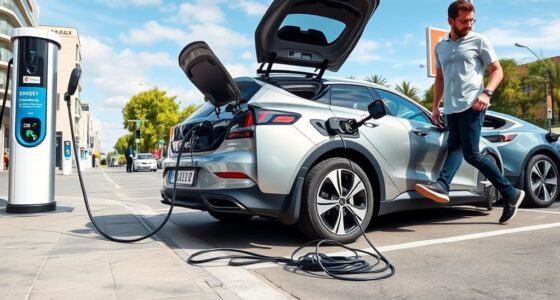

120V overnight charging works well if you have a small battery and mainly drive short distances each day. It adds about 3-5 miles of range per hour, making it suitable for overnight top-ups when your daily trips are light. However, if you have a larger battery or go on longer trips, this setup might not fully meet your needs. For more insights on when it’s enough and when to contemplate alternatives, keep exploring.
Key Takeaways
- 120V overnight charging reliably supports short daily trips within the vehicle’s range.
- It’s insufficient for quickly recharging larger batteries after long drives or urgent needs.
- Off-peak rates make 120V charging cost-effective for regular, low-mileage use.
- Limited charging speed (3-5 miles/hour) may not meet the demands of high-capacity batteries or frequent long trips.
- Supplementing with faster chargers or public stations is necessary for longer trips or rapid recharging needs.
Understanding the Basics of 120V Charging
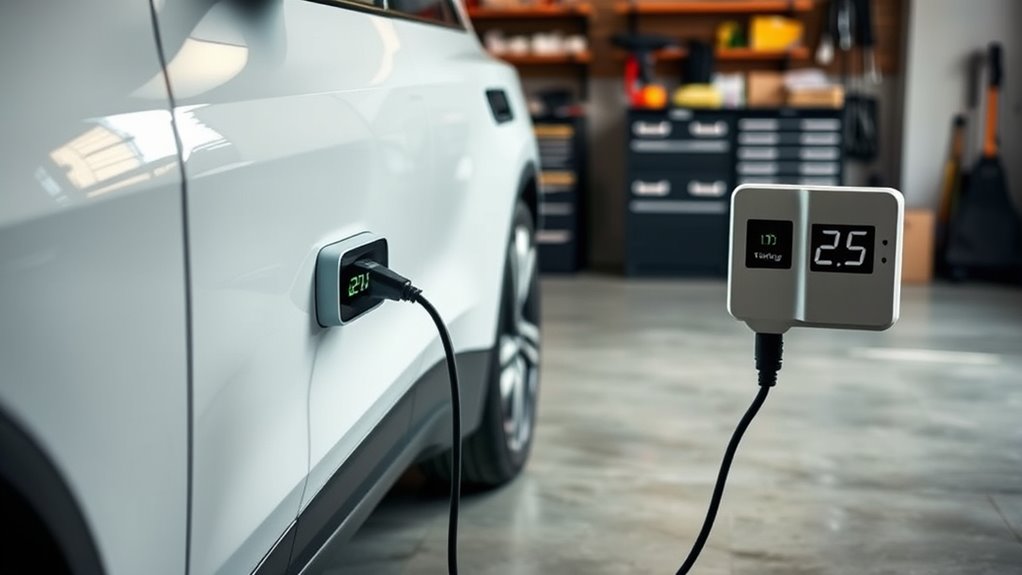
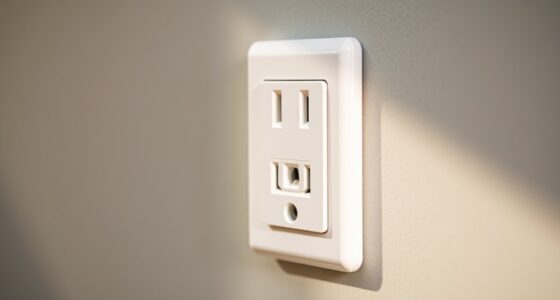
To understand 120V charging, it’s important to know that this voltage level is standard for household outlets in many regions. When you plug in your electric vehicle, the charging speed depends on your battery capacity and the available charging infrastructure. A typical 120V outlet provides a slower charging rate, often adding about 3-5 miles of range per hour. This setup is ideal for overnight charging if your daily driving distance is limited. However, the overall effectiveness hinges on your vehicle’s battery capacity—larger batteries take longer to charge fully. The existing charging infrastructure in your home makes it convenient, but it’s essential to recognize its limitations for longer trips or larger batteries. Understanding these basics helps you decide if 120V overnight charging fits your lifestyle. Additionally, considering the contrast ratio of your vehicle’s charging system can help optimize charging efficiency.
Assessing Your Daily Driving Needs
Understanding how much you typically drive each day is essential for determining if overnight 120V charging meets your needs. If most of your trips are short, within your vehicle’s daily range, then overnight charging can be sufficient. Consider your urban charging habits; if you primarily park at home or nearby, you may not need a fast charger. Additionally, check the charging station locations around your routine. Urban charging options like public chargers or workplace stations can supplement your overnight charge, extending your vehicle’s range. However, if your daily driving exceeds the available overnight charge or involves longer trips, relying solely on 120V charging might fall short. Assess your typical mileage and access to charging stations to decide if this setup fits your lifestyle.
Advantages of Overnight 120V Charging
Charging your vehicle overnight with 120V makes starting each day hassle-free, as you can plug in easily at home. It’s also a budget-friendly option that helps you save on energy costs compared to other methods. Plus, this approach works perfectly for short trips, ensuring your car is ready when you need it. Additionally, understanding your vehicle’s power requirements and proper load planning can help you avoid overloads and ensure safe, reliable charging. Being aware of your energy consumption can further improve efficiency and safety during overnight charging. Incorporating smart charging technologies can further optimize energy use and enhance safety. Monitoring your battery level regularly helps prevent unexpected power depletion and ensures optimal performance.
Convenient Nighttime Power
Charging your electric vehicle overnight with 120V power offers unmatched convenience, guaranteeing your car is ready to go each morning without interrupting your daily routine. This simple setup allows you to plug in while you sleep, freeing up your daytime schedule. Additionally, wireless charging options are emerging, making top-up sessions even more seamless and clutter-free. If your home has solar panels, integrating solar power with your overnight charging enhances sustainability and reduces reliance on the grid. This combination ensures your vehicle is charged using renewable energy, often coinciding with peak sunlight hours. Proper maintenance and system checks can help prevent potential issues and ensure consistent charging performance. Overall, overnight 120V charging provides a practical, effortless way to keep your EV ready, especially when paired with smart technologies like wireless charging and solar integration.
Cost-Effective Charging Method
Opting for overnight 120V charging can considerably reduce your overall EV expenses. This method is cost-effective because it often uses off-peak electricity rates, saving you money compared to fast charging options. Plus, it avoids the higher costs associated with wireless charging stations or rapid charging stations that can drain your wallet quickly. Additionally, understanding deep-sky imaging principles can inspire you to optimize your setup for efficiency and better performance, much like choosing the most economical charging methods. Incorporating home decor elements such as wall organization or energy-efficient fixtures can further enhance your charging environment and overall savings. Another benefit is that safety features in modern chargers help ensure secure operation during overnight use. Implementing energy-efficient fixtures can also contribute to overall household savings and reduce your environmental impact. Here are three reasons why overnight 120V charging is economical: 1. Lower electricity rates during nighttime hours 2. Less wear on your battery compared to frequent fast charging 3. Reduced need for expensive charging equipment or upgrades While not as quick as fast charging, this method suits daily commuting and long-term savings. It’s a simple, budget-friendly way to keep your EV charged without sacrificing convenience or breaking the bank.
Suitable for Short Trips
Overnight 120V charging is particularly well-suited for short trips, making it a convenient option for daily commuters and those with limited driving needs. Since your vehicle’s battery can fully recharge while you sleep, you’re ready for the day’s errands without extra stops. This setup works well with solar integration, allowing you to maximize renewable energy during the day and store it for overnight charging. If you occasionally need faster charging, fast charging stations can complement your 120V setup, ensuring you’re prepared for longer trips. For short trips, this method minimizes the need for frequent visits to public chargers and reduces your overall charging costs. It’s a simple, reliable way to keep your EV ready without complex infrastructure or high power demands. Additionally, choosing the right charging method can complement your home’s bedroom environment by ensuring convenience and efficiency during your daily routines. Moreover, understanding your vehicle’s battery capacity can help you optimize your charging schedule for maximum efficiency. For optimal results, consider charging schedules that align with your daily routine to prevent battery degradation over time.
Limitations and Challenges of 120V Charging
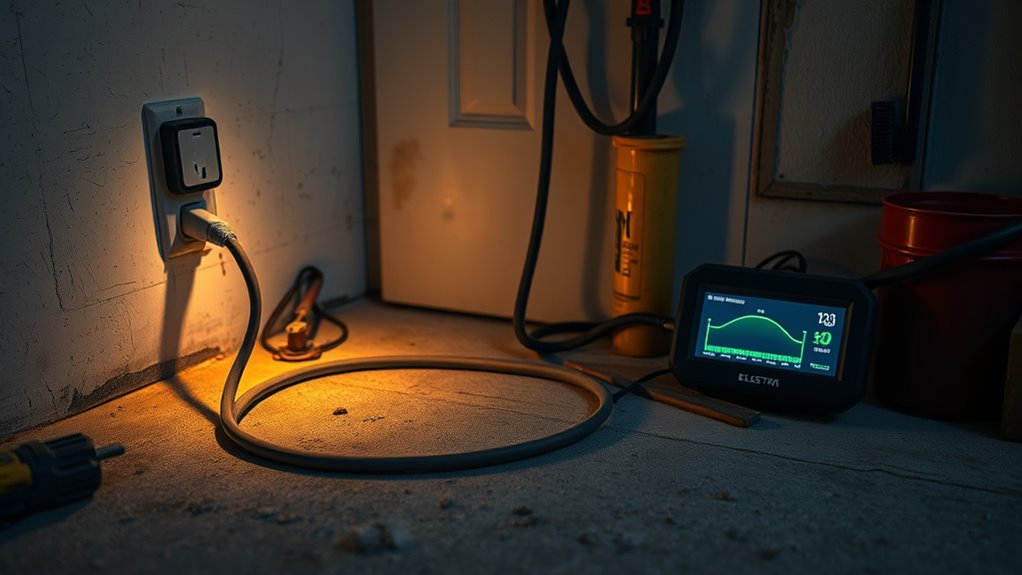
While 120V outlets are widely available, they pose several limitations for overnight charging. First, the charging speed is slow, which can extend the time needed to fully recharge your EV battery. Second, the limited power output can strain existing charging infrastructure, especially if multiple vehicles rely on the same outlet. Third, relying solely on 120V charging may not meet the demands of larger EV batteries or longer trips, risking insufficient charge when needed most. Additionally, power draw management becomes crucial to prevent overloads or tripped circuits when multiple devices share the same outlet. These challenges mean that while 120V outlets are convenient for short-term or low-mileage needs, they may not be enough for routine overnight charging if your EV battery has high capacity or your charging infrastructure is limited. Understanding these limitations helps you plan more effectively.
Indicators That You Need Faster Charging Solutions
If your battery drains quickly or takes too long to recharge, it’s a clear sign you need faster charging options. When you experience delays in getting power during urgent situations, relying solely on overnight charging may not be enough. Recognizing these indicators helps you decide when upgrading your charging setup is essential. Additionally, understanding your device’s charging capacity can help determine if your current setup meets your needs. For optimal performance, consider factors like charging standards to ensure compatibility with faster chargers. Being aware of Volkswagen Tuning options can also inspire ways to improve vehicle efficiency and responsiveness, complementing your charging upgrades. Incorporating performance enhancements through tuning can further optimize your vehicle’s overall responsiveness and energy management. Staying informed about industry transformations can guide you in adopting innovative solutions that enhance your device and vehicle performance.
Battery Drain Rate
A rapid increase in your device’s battery drain rate signals that you may need faster charging solutions. When your device’s battery health declines or it’s going through many charging cycles, drain rate can spike unexpectedly. You might notice:
- Shorter battery life despite minimal usage, indicating degraded battery health.
- Faster drain during typical tasks, suggesting the need for quick recharges.
- Increased drain rates after frequent charging cycles, showing capacity loss.
- Efficient energy use becomes crucial as aging batteries require more careful management.
- Understanding the long-term resilience of your power sources can help optimize your charging strategies.
- Monitoring battery degradation trends can help you decide when to upgrade to faster charging methods.
- Recognizing patterns in charge cycles can prevent premature battery replacement and extend device lifespan.
- Implementing fast charging technologies can reduce downtime and improve overall device productivity.
These signs mean your current setup isn’t enough to keep up, especially if you rely on overnight charging. Faster charging solutions can help maintain device performance and prolong battery longevity by reducing stress on aging batteries. Keep an eye on drain patterns to decide when you need a more efficient charging approach.
Charging Time Delays
When your device takes longer than expected to recharge, it’s a clear sign that faster charging solutions may be necessary. Slow charging times can indicate that your current setup isn’t meeting your needs, especially during busy days. Upgrading to fast chargers can considerably cut down recharge time. Solar power options can also help keep your device topped up when grid power is slow or unavailable. Consider the following factors:
| Charging Method | Speed | Suitability |
|---|---|---|
| Standard 120V | Slow | Overnight, minimal use |
| Fast Chargers | Fast | Daily, urgent needs |
| Solar Power | Variable | Off-grid, eco-friendly |
| Higher Voltage | Faster | Heavy usage |
| Power Banks | Moderate | On-the-go backup |
Recognizing delays helps you decide when to upgrade.
Urgent Power Needs
Recognizing urgent power needs is essential because waiting too long for your device to recharge can disrupt your daily routine. When you rely on your gadgets for work or safety, delays aren’t an option. If you notice these signs, it’s time to seek faster charging solutions:
- You need emergency power during unexpected outages or urgent calls.
- Your portable chargers don’t provide enough juice quickly enough.
- Your device’s battery drains faster than it can recharge overnight.
In these cases, standard 120V overnight charging might not suffice. Investing in higher-capacity portable chargers or backup power sources ensures you stay connected when it matters most. Don’t wait for a critical moment—prepare for urgent power needs before they strike.
Exploring Alternatives to Standard Overnight Charging
While overnight charging has become the standard for many, exploring alternative options can lead to more efficient and cost-effective solutions. If you want to maximize battery longevity, consider charging strategies that avoid constant deep cycles or overcharging. Using faster charging stations or Level 2 chargers can reduce charging time and improve overall battery health. Expanding your charging infrastructure with public or home-based fast chargers gives you flexibility and reduces dependency on a single charging method. Additionally, smart charging systems allow you to schedule charging during off-peak hours, saving money while protecting your battery. By diversifying your charging approach, you can better match your driving habits and prevent unnecessary wear, ultimately extending your EV’s lifespan and ensuring you’re always ready when needed.
Tips for Optimizing Your EV Charging Routine
Optimizing your EV charging routine can substantially boost battery life and reduce costs. To do this effectively, consider these tips:
- Use smart charging systems to schedule charging during off-peak hours, lowering electricity bills and reducing strain on the grid.
- Integrate solar power to supplement your charging, making your routine more eco-friendly and cost-effective.
- Avoid frequent deep discharges; instead, keep your battery between 20-80% to extend its lifespan.
Frequently Asked Questions
How Does Temperature Affect 120V Overnight Charging Efficiency?
Temperature critically influences your battery’s charging efficiency. When battery temperature is too high or too low, it can slow down the charging process or even cause damage. Ideally, keep your battery within its ideal temperature range to maximize charging efficiency during overnight 120V charging. Extreme temperatures, especially cold, reduce the rate at which your battery accepts charge, so maintaining a moderate temperature helps ensure a faster, more effective charge.
Can Multiple Devices Share a 120V Outlet Without Issues?
You shouldn’t risk an outlet overload by sharing a single 120V outlet among multiple devices. It’s like trying to fit a herd of elephants into a small room! Always prioritize power strip safety—use one with overload protection and check the total wattage. Overloading can cause overheating, damage, or even fires. So, avoid sharing outlets excessively, and always stay within safe limits to keep your devices and home secure.
Is 120V Charging Suitable for Long Road Trips?
You can use 120V charging for long road trips, but it’s not ideal for rapid charging needs. Charging speed is slow compared to higher voltage options, so it takes longer to fully power up your devices. However, power reliability is usually decent, making it suitable for maintaining a charge over extended periods. Just plan ahead and don’t rely solely on 120V outlets if you need quick, frequent boosts during your trip.
What Safety Precautions Are Necessary for Overnight Charging at Home?
You should guarantee your electrical wiring is up to code and capable of handling overnight charging. Use a dedicated outlet and avoid extension cords to prevent overloads. Regularly inspect your charging equipment for damage and disconnect it when not in use. For fire safety, keep a fire extinguisher nearby, avoid charging near flammable materials, and never leave the charger unattended overnight. These precautions help protect your home and ensure safe overnight charging.
How Do Energy Costs Vary With Overnight 120V Charging?
Your energy costs for overnight 120V charging can vary due to fluctuations in energy rates, especially between peak and off-peak hours. Charging during off-peak times typically costs less because utilities often lower rates when demand is lower. However, if you charge during peak hours, you might pay higher rates. To save money, schedule your charging during off-peak periods when rates are more favorable, reducing overall costs.
Conclusion
So, overnight 120V charging might seem perfect—until you realize it’s only enough for short trips and a little patience. Who knew that the slow, cozy charging method could actually be a test of your endurance? If you’re dreaming of quick getaways and spontaneous adventures, maybe it’s time to contemplate faster options. After all, waiting all night just to find out you’re still not ready isn’t exactly the thrill ride you signed up for.