
To properly install a wall connector, place it about 48 to 52 inches from the floor for easy access, adjusting based on your wall height and furniture. Route cables neatly using clips or conduits, avoiding sharp bends and heat or moisture sources. Establish safety zones around the connector to prevent accidental contact, and ensure clearance for safe plugging and unplugging. Following safety standards and local codes enhances safety and performance—continue through the guide to learn more about these important details.
Key Takeaways
- Install the wall connector at 48-52 inches from the floor for optimal accessibility and safety.
- Route cables close to power sources, avoiding sharp bends and obstructions to prevent damage and hazards.
- Maintain clear safety zones around the connector to prevent accidental contact and ensure compliance with safety standards.
- Consider wall material, environment, and aesthetics when choosing mounting height and cable management methods.
- Verify local electrical codes and consult professionals to ensure proper height, routing, and safety zone compliance.
Determining the Optimal Height for Wall Connectors
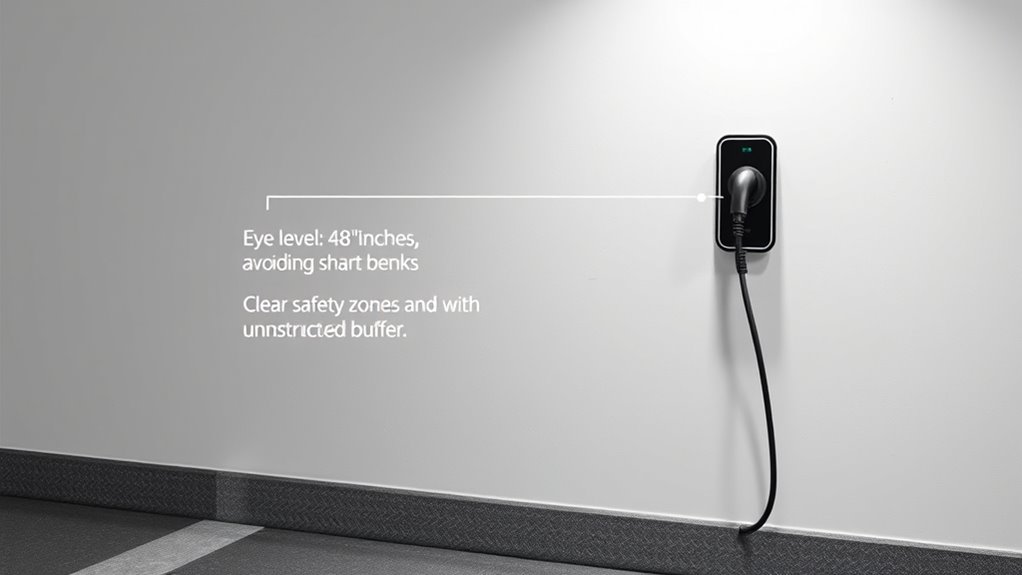
To guarantee your wall connector functions safely and conveniently, you need to determine the best height for installation. Start by considering voltage considerations to ensure easy access and proper operation. If mounted too high, you might struggle with cable management or risk damaging the connector; too low, and it could create safety hazards or aesthetic issues. Think about connector aesthetics—aim for a height that blends seamlessly with your wall while remaining accessible. Typically, installing the connector around 48 to 52 inches from the floor offers a good balance between comfort and appearance. This height makes plugging in your EV straightforward without compromising safety or visual appeal. Adjust slightly based on your wall height, furniture placement, and personal preferences. Additionally, taking into account ergonomic comfort can help prevent strain during regular use. Proper cable routing is also essential to avoid tripping hazards and ensure a clean appearance. Paying attention to safety zones around the connector can further enhance overall safety and prevent accidental damage. Incorporating compliance standards into your planning can help ensure your installation meets all necessary regulations and safety requirements. Moreover, assessing local building codes is crucial to ensure your setup complies with legal requirements and safety guidelines.
Factors Influencing Wall Connector Placement
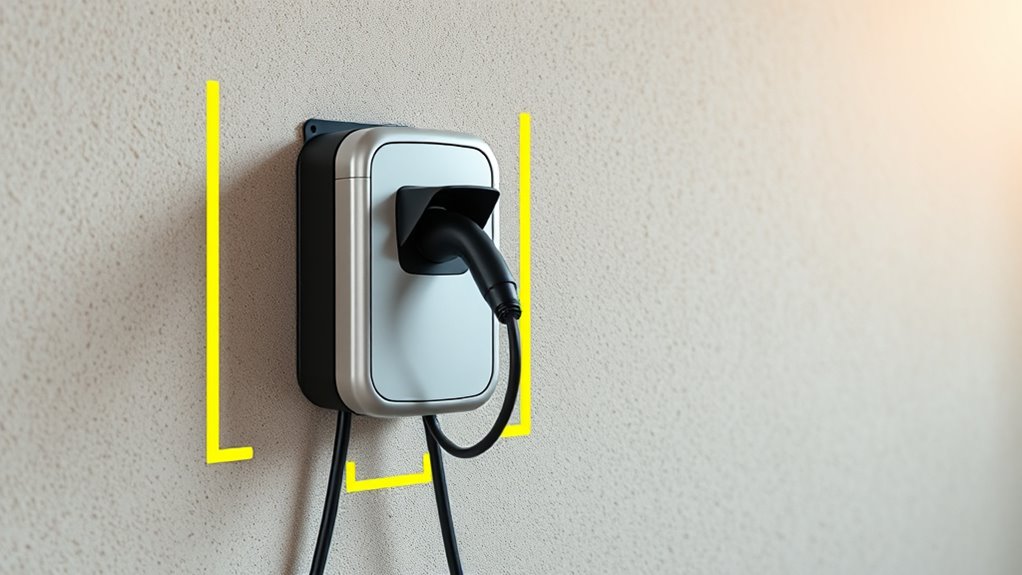
When choosing where to install your wall connector, you should consider the wall height to make certain of easy access and safety. Optimizing the cable path helps prevent strain and reduces installation issues. These factors directly impact both convenience and long-term durability of the setup. Additionally, ensuring proper airflow and ventilation can help maintain the electrical components and prevent overheating over time. Proper ventilation also supports system efficiency and prolongs the lifespan of the installation.
Wall Height Considerations
The height at which you install your Wall Connector can considerably impact its accessibility and safety. You should consider wall material considerations, guaranteeing the surface can support the weight and mounting hardware securely. For example, drywall may require anchors, while solid brick or concrete might need special anchors or drilling techniques. Additionally, think about aesthetic integration—installing the connector at a height that complements your space’s design helps it blend seamlessly. A lower placement might be more accessible for daily use, but ensure it doesn’t interfere with furniture or decor. Conversely, higher placement can keep it out of the way, but make sure it remains reachable for charging or maintenance. Balancing these factors ensures safe, functional, and visually appealing installation. Proper mounting techniques are essential to ensure long-term safety and stability. Considering load capacity is also important to prevent potential hardware failure over time. Additionally, assessing installation environment can help determine optimal placement to avoid exposure to moisture or extreme temperatures that could compromise the connection. Using appropriate anchoring methods tailored to your wall type will further enhance the safety and durability of the installation. For optimal performance, it’s also advisable to consult manufacturer guidelines to ensure compliance with safety standards and proper installation procedures.
Cable Path Optimization
Optimizing the cable path is essential for a clean, efficient installation. Proper routing reduces clutter and minimizes potential damage. First, plan your cable route to avoid sharp bends, which can impair performance and safety. Second, consider the proximity to your power source placement—keeping cables short reduces resistance and installation complexity. Third, evaluate options like wireless charging compatibility, which can eliminate some cable runs altogether. By carefully selecting a pathway that minimizes excess cable and avoids obstacles, you ensure a neat setup. This approach not only enhances safety but also simplifies future maintenance. Additionally, understanding hydrogen safety protocols is important when working with energy storage systems to prevent accidents. Incorporating cable management techniques can further enhance the safety and durability of your installation. Proper cable routing also plays a crucial role in preventing electrical hazards, ensuring a safer environment. Furthermore, adhering to industry safety standards is vital to maintain compliance and protect both installers and users. Remember, an optimized cable path leads to a more reliable connection and a professional-looking installation, making daily use safer and more convenient. Proper planning and adherence to safety standards are vital for a successful and secure setup.
Proper Cable Routing Techniques
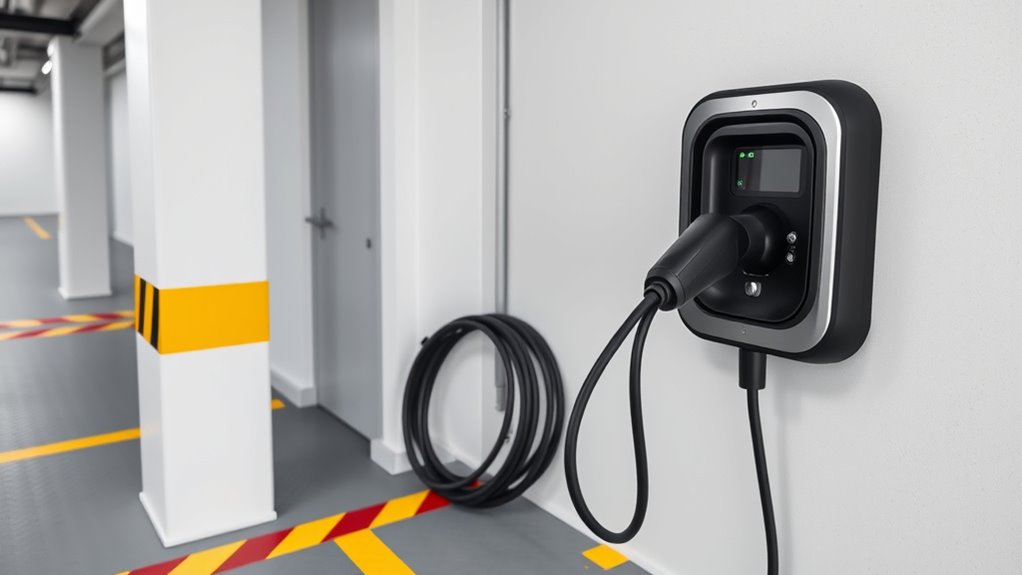
Proper cable routing guarantees your wall connector functions safely and efficiently. To achieve this, verify the cable maintains adequate ground clearance from the floor and other obstacles, preventing accidental damage or interference. Keep the cable tension snug but not tight; excessive tension can strain the connector or damage the cable over time, while loose routing may cause sagging or trip hazards. Use cable clips or conduit to secure the cable along the wall, avoiding sharp bends that could weaken the insulation. Always route the cable away from heat sources or areas prone to moisture. Properly managing ground clearance and cable tension minimizes wear and tear, improves safety, and ensures reliable charging performance. Incorporating mindfulness techniques during installation can help maintain focus and attention to detail, reducing errors and ensuring optimal setup. Additionally, consider cable compatibility to ensure the cable’s materials and connectors are suitable for your specific wall connector and environment. Being aware of local safety regulations can further help prevent hazards and ensure compliance during installation. Conducting a thorough inspection of your installation site can reveal potential hazards and help plan for safe cable routing.
Ensuring Adequate Clearance and Accessibility
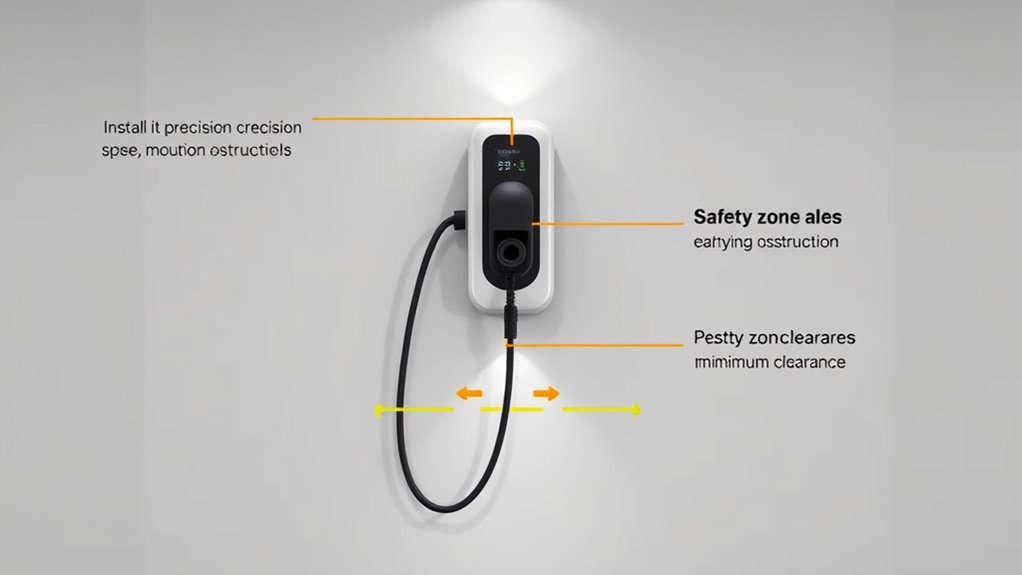
To guarantee your wall connector is easy to use, you need to choose a suitable wall mount height that allows comfortable access. Make certain the cable pathways are clear of obstructions so you can connect and disconnect without hassle. Proper clearance and accessibility prevent frustration and improve overall safety. Incorporating attention to detail during installation ensures consistent functionality and safety. Additionally, verifying that your setup aligns with industry safety standards can further enhance reliability and peace of mind. Proper paint sprayer maintenance also contributes to the longevity and safe operation of your equipment.
Optimal Wall Mount Height
Choosing the right wall mount height for your wall connector is vital to guarantee both safety and convenience. Proper placement ensures easy access and complements your space’s aesthetic design, including decorative wall options. To achieve this, consider these points:
- Mount the connector at a height that allows comfortable plug-in and unplugging without stretching or bending.
- Ensure it’s above any decorative wall options that might obstruct access or visibility.
- Maintain a height that integrates seamlessly with your aesthetic design, avoiding clutter or awkward placement.
- Also, consider the safety zones to prevent accidental contact or damage, ensuring the installation aligns with recommended clearance requirements.
This balance enhances functionality while preserving your wall’s visual appeal. The ideal height makes daily use straightforward and protects your investment, all while blending smoothly with your decor. Proper placement elevates both safety and style effortlessly.
Clear Cable Pathways
Have you considered how cable pathways impact both safety and ease of use? Ensuring clear routes for your cables prevents tripping hazards and makes accessing your wall connector straightforward. Keep pathways free of obstructions to accommodate wireless charging devices and portable chargers easily. Proper cable routing avoids tight bends or pinched wires that could damage connections or pose safety risks. When planning, leave enough clearance so you can quickly disconnect or connect chargers without hassle. Clear pathways also facilitate maintenance and future upgrades. By maintaining tidy, accessible cable routes, you reduce clutter and guarantee your charging setup remains safe and functional. Whether you’re using wireless charging pads or portable chargers, well-organized pathways improve overall safety and convenience.
Establishing Safe Zones Around Charging Stations
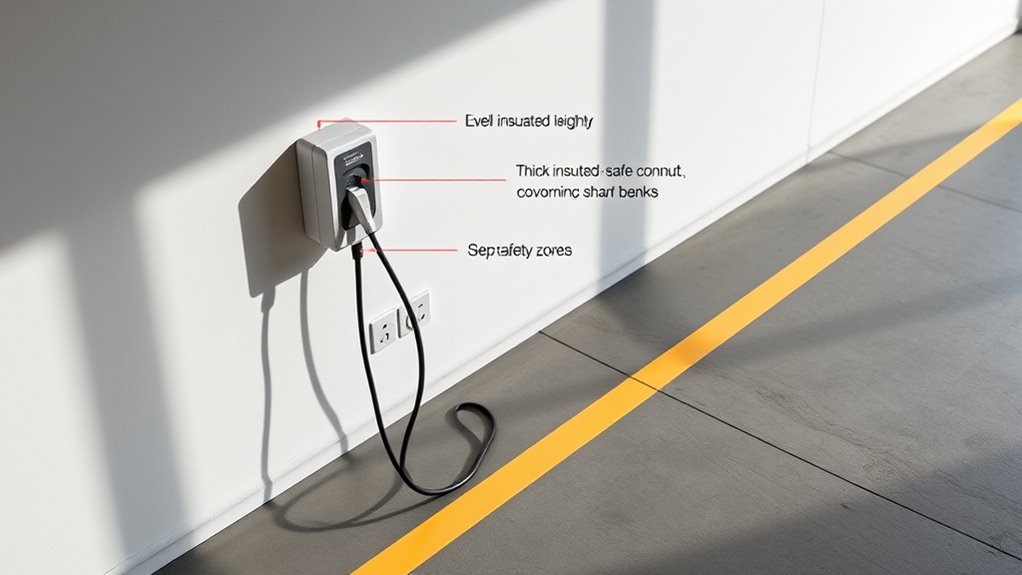
Establishing safe zones around charging stations is essential to guarantee accidents and assure smooth operation. You must prevent contact with live components and protect against power surges. To do this effectively:
Creating designated safe zones around charging stations ensures safety and reliable operation by preventing contact with live parts and safeguarding against surges.
- Keep clear of cable insulation points to avoid accidental damage or exposure.
- Designate a safety perimeter that prevents unauthorized access during charging.
- Regularly inspect the area for potential hazards, like exposed wires or damaged insulation.
Creating these zones minimizes risk and promotes safety. Remember, a well-maintained safe zone reduces the chance of electrical accidents and damage caused by power surges. By clearly marking and enforcing these boundaries, you ensure safe, reliable operation of your charging station and protect all users from potential harm.
Handling Cable Management for Safety and Aesthetics
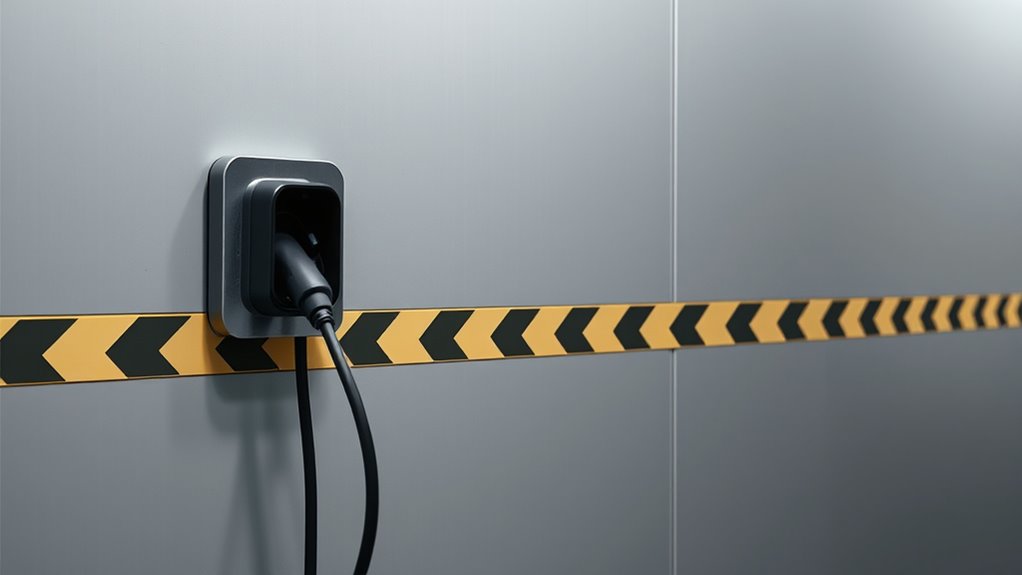
Effective cable management not only enhances the safety of your charging station but also improves its overall appearance. When organizing cables, consider using cable clips or conduits to keep wires neat and prevent tripping hazards. If your setup includes wireless charging options, guarantee cables are routed away from the wireless pad to avoid interference. Proper cable routing helps protect connector durability by reducing strain and wear over time. Avoid excessive bending or stretching of cables, which can compromise performance and safety. Concealing cables behind walls or along edges creates a cleaner look and minimizes clutter. Well-managed cables contribute to a professional appearance while reducing risks of electrical faults or damage, making your charging station safer and more visually appealing.
Compliance With Local Building and Safety Regulations
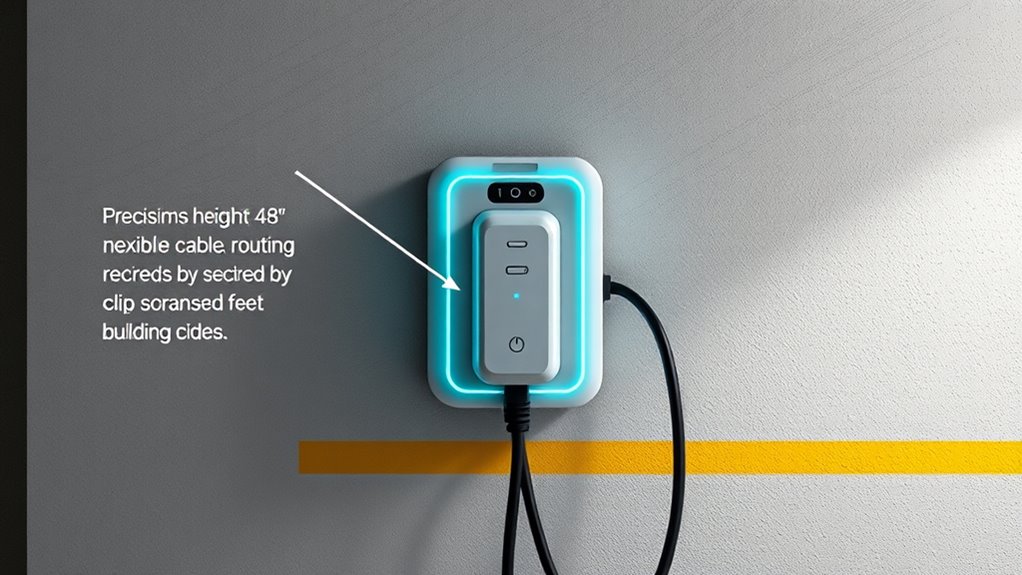
Ensuring your wall connector complies with local building and safety regulations is essential to avoid fines, legal issues, and safety hazards. Proper adherence guarantees safe electrical wiring and fire safety standards. To ensure compliance, you should:
- Verify local electrical codes before installation.
- Use approved wiring methods and materials.
- Maintain adequate clearance for fire safety and ventilation.
Following these steps helps prevent electrical faults and fire risks. Regulations often specify connector height, cable routing, and safety zone clearances, so check with local authorities. Failing to comply could result in costly violations or unsafe conditions. Making certain your installation aligns with local requirements not only protects your property but also guarantees safe, reliable operation of your wall connector. Always consult with licensed professionals if you’re unsure about compliance standards.
Installing Wall Connectors for Different Wall Materials
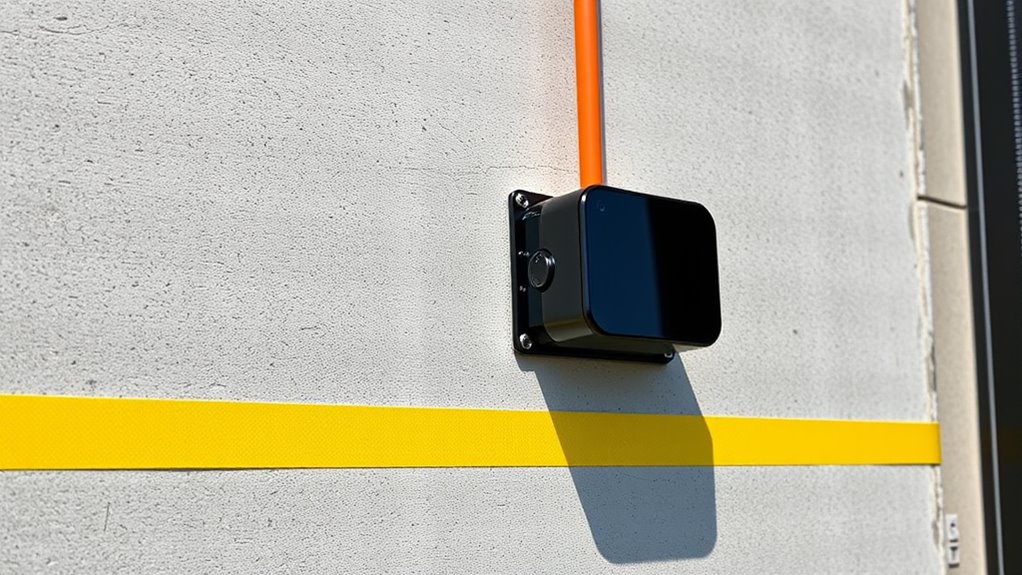
Installing your wall connector correctly depends heavily on the type of wall material you’re working with. Different wall materials, like drywall, concrete, brick, or wood, require specific mounting surface preparation and hardware. For drywall, ensure you locate studs and use appropriate anchors to secure the connector firmly. Concrete or brick walls need masonry anchors and possibly a drill with a concrete bit for proper installation. Wooden walls might allow direct mounting with screws, but check for studs or structural supports first. Always consider wall material considerations to guarantee safety and stability. Proper mounting surface preparation is essential to prevent damage and ensure the connector holds securely over time. Taking the time to assess your wall material ensures a safe, long-lasting installation.
Maintenance Tips for Long-Term Safety and Performance
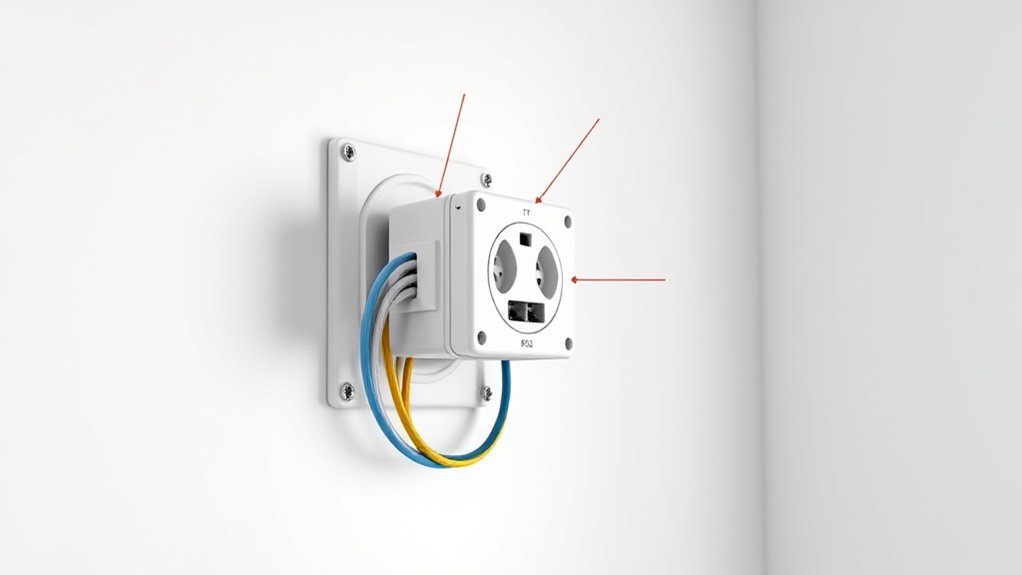
Regular maintenance is essential to keep your wall connector operating safely and efficiently over time. To guarantee long-term safety and performance, focus on these key tips:
- Regularly check for loose or damaged wiring, especially around cable routing points.
- Clean the connector and surrounding area to prevent dust buildup, which can affect wireless charging efficiency.
- Monitor your device’s battery maintenance routines to optimize charging cycles and prevent overheating, which can impact your wall connector’s performance.
Frequently Asked Questions
What Tools Are Recommended for Installing Wall Connectors Safely?
To install wall connectors safely, you should use vital tools like a drill, screwdrivers, and a level. Make sure you have the proper mounting hardware to secure the connector firmly. Wire strippers are essential for preparing cables correctly, ensuring safe and reliable connections. Always double-check your work with a voltage tester. These tools help you install the wall connector securely, preventing hazards and ensuring peak performance.
How Often Should Wall Connectors and Cables Be Inspected or Maintained?
Think of your wall connector as a trusted companion, requiring regular check-ins to stay in top shape. You should inspect your wall connector and cables at least once every six months, or more often if you notice any issues. Follow maintenance tips like keeping connections clean, tightening loose parts, and checking for wear and tear. Consistent inspections make certain your charging station remains reliable, safe, and ready to power your day.
Can Wall Connectors Be Installed Outdoors and Weatherproofed?
Yes, you can install wall connectors outdoors and weatherproof them. To guarantee durability, you should use outdoor weatherproofing materials and techniques that protect against moisture, dirt, and temperature changes. Choose connectors with corrosion resistance features, like rust-proof coatings or sealed enclosures, to prevent damage over time. Proper installation and regular inspections help maintain safety and functionality, especially in harsh weather conditions.
What Are the Common Mistakes to Avoid During Cable Routing?
Did you know that improper cable routing causes over 30% of electrical issues? When routing cables, avoid sharp bends and guarantee the cable length matches the distance without excess slack. Use designated pathways to prevent damage and interference. Avoid running cables across walkways or near heat sources. Properly securing cables prevents strain and wear, extending their lifespan. Always plan your routing pathways carefully for safe, efficient, and durable installations.
How Do Local Regulations Vary for Residential Versus Commercial Installations?
You need to understand that local regulations differ between residential and commercial installations to guarantee regulatory compliance and meet installation standards. For residential setups, codes might be more lenient, focusing on safety and accessibility, while commercial installations often require stricter adherence to building codes, permits, and safety zones. Always check with local authorities to confirm specific requirements, so your installation remains compliant and safe for everyone involved.
Conclusion
By following these tips, you’ll turn your wall connector setup into a fortress of safety and efficiency—no more cable chaos or accidental shocks! With the perfect height, smart cable routing, and clear safety zones, you’ll make charging your EV so smooth, it’ll feel like launching a spaceship. Keep everything compliant, neat, and well-maintained, and you’ll be the hero of your driveway, reigning supreme over a chaos-free, ultra-safe charging kingdom!