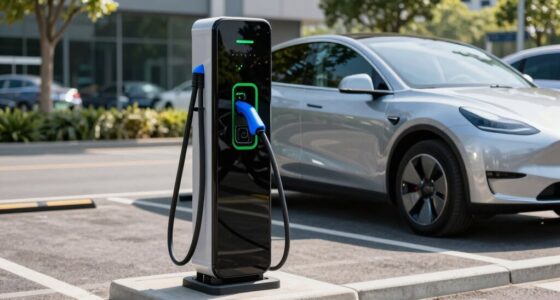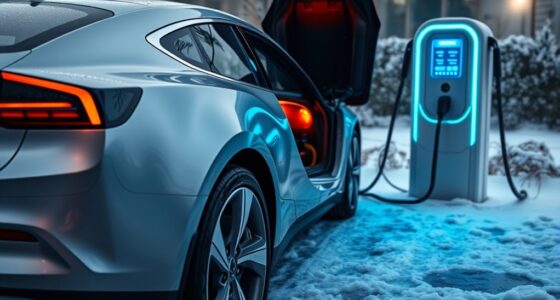

Extreme heat can cause your EV’s battery to overheat, leading the charging system to slow down through derating, which protects your battery and components from damage. Cold weather makes internal chemistry sluggish, also reducing charging efficiency. These temperature effects cause longer charging times and lower overall performance. Thermal management systems help maintain ideal temperatures, but you should stay aware of how heat impacts your charging experience. Keep exploring to discover how these factors can be managed for better EV use.

Get backup power and energy gear delivered free with Prime
- Fast, free delivery on millions of items
- Prime Video, Amazon Music and more included
- Member-only deals all year
Key Takeaways
- Extreme heat increases resistance, reducing power supply efficiency and causing energy loss during charging.
- Cold temperatures slow battery chemistry, leading to higher resistance and longer charging times.
- Derating limits maximum charging rates in extreme conditions to prevent battery damage and thermal stress.
- Thermal management systems help maintain optimal battery temperature, ensuring consistent charging performance.
- High temperatures can cause battery overheating, prompting systems to slow charging to protect battery health.
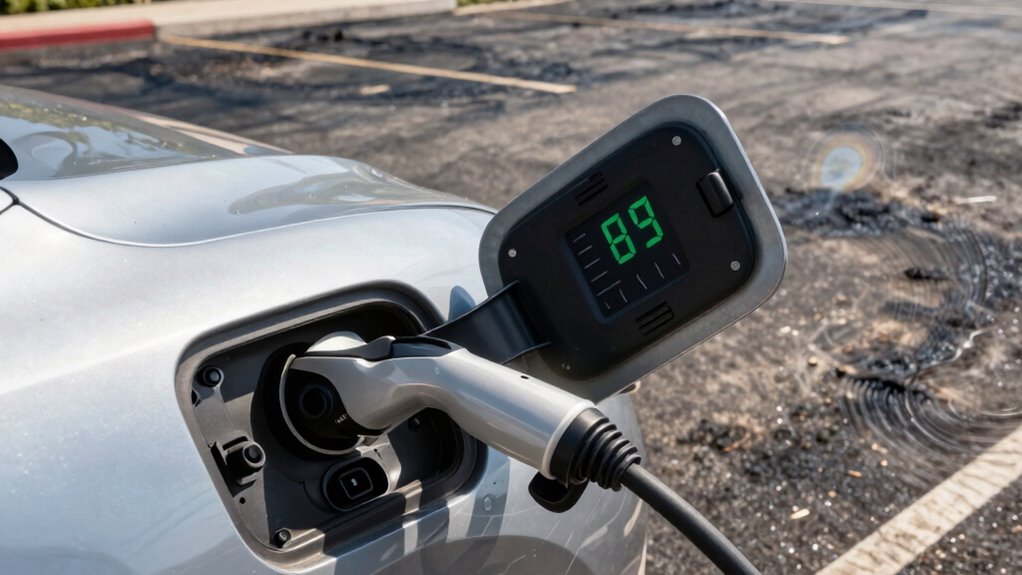
Have you ever wondered how extreme temperatures impact your EV charging experience? When the weather turns either scorching hot or freezing cold, your vehicle’s charging performance can be affected more than you might realize. One of the key factors at play is battery thermal management. Batteries operate best within a specific temperature range, and outside that range, their ability to accept charge diminishes. High temperatures can cause battery overheating, leading to the vehicle’s system slowing down the charging process to prevent damage. Conversely, in cold weather, the battery’s internal chemistry slows, increasing resistance and reducing the rate at which it can be charged. Proper thermal management systems help maintain ideal battery temperature, ensuring that your EV charges efficiently and safely even in extreme conditions. Without effective thermal regulation, the battery’s performance drops, and charging times extend, frustrating you during busy mornings or long trips.
Temperature also influences power supply efficiency during charging. When it’s too hot, the power supply can experience increased resistance and decreased efficiency. This inefficiency means that more energy is lost as heat, making the charging process less effective overall. In cold environments, power supply components may also struggle to operate at peak performance, further reducing charging speed. These thermal effects force the charging system to derate, or scale back, the maximum charging rate to prevent overheating or damage. As a result, your vehicle might charge slower than usual, especially during rapid charging sessions designed to replenish your battery quickly. This derating isn’t just inconvenient—it’s a protective measure that ensures safety and prolongs the lifespan of your EV’s components. Additionally, thermal management systems are crucial in maintaining optimal battery health and performance during extreme weather conditions. Implementing advanced technology in thermal regulation can significantly mitigate these issues and improve charging consistency. A well-maintained thermal system can also help prevent thermal stress that accelerates battery degradation over time. Proper thermal regulation plays a vital role in sustaining battery capacity and longevity, especially in regions with extreme climate variations. So, next time you experience slower charging, remember that heat and derating are working behind the scenes to keep your EV safe and functional, even in the most extreme weather.
As an affiliate, we earn on qualifying purchases.
Frequently Asked Questions
How Does Altitude Impact EV Charging Performance?
Altitude challenges can reduce EV charging performance because higher elevations lower air density, which affects cooling systems and electrical efficiency. As you charge at higher altitudes, your vehicle’s charging components may overheat more easily or operate less efficiently, leading to longer charging times or reduced power output. You might notice that charging becomes slower or less consistent due to these environmental factors, so planning for altitude effects helps optimize your EV’s charging experience.
Are There Specific Cooling Methods to Improve Charging in High Temperatures?
To improve EV charging in high temperatures, you should consider advanced cooling technologies like liquid cooling or active thermal management systems. These methods help dissipate heat efficiently, maintaining ideal battery temperature and preventing derating. Proper thermal management ensures your vehicle’s charging performance stays consistent, even in hot climates. By investing in effective cooling solutions, you can extend battery life and enhance overall charging reliability during extreme heat conditions.
What Are the Long-Term Effects of Heat on Charging Station Components?
Heat acts like a silent thief, gradually wearing down your charging station components. Over time, thermal degradation accelerates, causing parts to weaken and age faster. This persistent heat exposure can lead to increased maintenance costs, reduced reliability, and eventual failure. You might notice longer charging times or system shutdowns. Protecting your station from excessive heat preserves its lifespan, ensuring consistent performance and safeguarding your investment against the slow march of component aging.
Can Temperature Fluctuations Cause Safety Issues During Charging?
Temperature fluctuations can cause safety issues during charging if thermal safety measures aren’t in place. Sudden changes in temperature can lead to overheating, risking electrical faults or fires. You should use temperature monitoring systems to detect and manage these fluctuations promptly. This helps guarantee the charger operates within safe thermal limits, protecting both the equipment and users from potential hazards caused by inconsistent or extreme temperatures.
How Do Different Battery Chemistries Respond to Heat and Derating?
Different battery chemistries respond uniquely to heat and derating, impacting your EV’s performance and longevity. Lithium-ion batteries, for instance, are sensitive to high temperatures, which can accelerate degradation and reduce battery lifespan if not properly managed. Effective thermal management helps maintain ideal temperatures, preserving battery longevity. Conversely, some chemistries like solid-state batteries handle heat better, offering improved stability. Understanding these responses allows you to maximize charging and extend your battery’s overall life.
As an affiliate, we earn on qualifying purchases.
Conclusion
Understanding how heat and derating influence EV charging helps you appreciate the subtle dance of technology and environment. By recognizing these factors, you can better optimize your charging experience and extend the lifespan of your equipment. Embracing these nuances allows you to navigate the charging landscape with grace, ensuring your EV remains a reliable companion on your journeys. Ultimately, a mindful approach to thermal management fosters a smoother, more resilient charging experience—an elegant harmony between innovation and nature.
EV fast charger temperature regulation
As an affiliate, we earn on qualifying purchases.
As an affiliate, we earn on qualifying purchases.
As an affiliate, we earn on qualifying purchases.
Halloween Picks
halloween
As an affiliate, we earn on qualifying purchases.