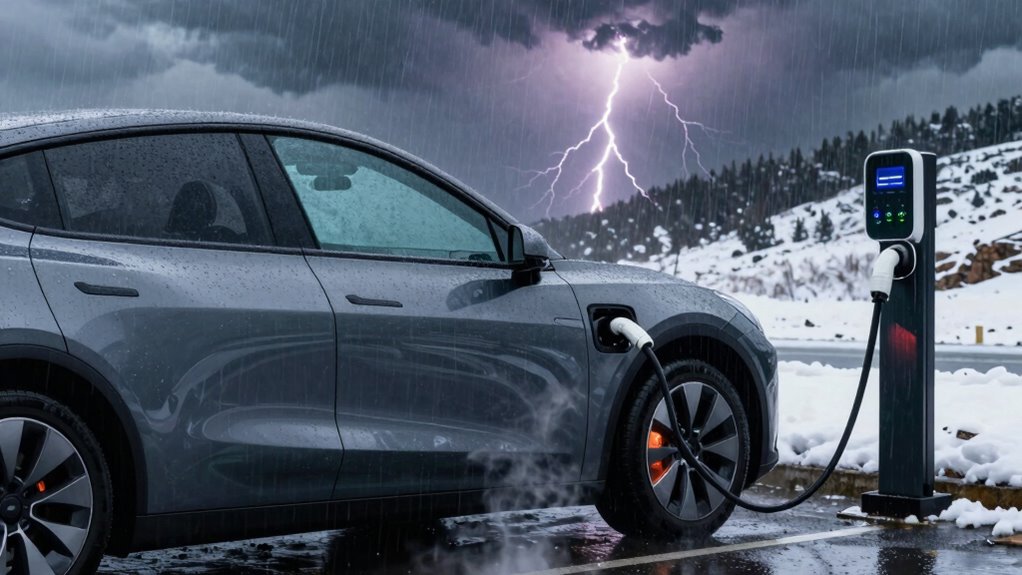
Charging your EV in rain, heat, or snow is generally reliable thanks to advances in technology and climate-aware infrastructure. Weather can slow charging or reduce range temporarily, especially in extreme cold or heat, but modern vehicles adjust charging rates automatically. Well-designed stations with thermal management and climate control minimize these issues. If you want to discover how to make your EV charging more efficient and safe in all conditions, keep exploring what’s possible.
Key Takeaways
- Extreme cold reduces battery efficiency, increases charging time, and decreases driving range.
- Hot weather can cause battery overheating, but thermal management systems help maintain performance.
- Rain and snow can impact charging station accessibility and connection quality, especially at older or exposed sites.
- Climate-aware charging infrastructure with fast chargers and climate control mitigates weather-related issues.
- Proper planning, such as charging in shaded or sheltered areas, improves EV performance in adverse weather conditions.

Ever wondered how well your electric vehicle (EV) charges in challenging weather conditions like rain, heat, or snow? Weather can markedly impact your EV’s battery efficiency, which in turn affects how effectively your vehicle charges and performs. When it’s cold outside, your battery’s chemical reactions slow down, reducing overall efficiency. This means you might notice longer charging times or slightly decreased range, especially if you’re relying on public charging stations that aren’t equipped to handle extreme temperatures. Conversely, in very hot weather, your battery can overheat, prompting your vehicle’s thermal management system to work overtime to cool it down. This process can also impact charging speed and battery longevity over time. Overall, weather conditions influence the internal temperature of your EV’s battery, directly affecting how well it charges and how far you can go on a single charge.
The charging infrastructure plays an essential role here. In regions with well-developed charging networks, stations often feature climate-controlled environments or fast-charging options that compensate for weather-related efficiency drops. Fast chargers, for example, deliver high power quickly, helping to mitigate some of the temperature-related issues by reducing the time your battery spends in a vulnerable state during charging. However, if you rely on older or less equipped charging stations, you might face slower charging rates or even difficulties connecting in bad weather. That’s why the quality of charging infrastructure is critical for maintaining reliable EV use in challenging climates. When infrastructure is modern and well-maintained, it can help you navigate weather fluctuations confidently, ensuring that your EV charges efficiently no matter the season. Additionally, advancements in molecular-scale circuits are paving the way for more resilient and efficient charging technologies that can better adapt to environmental challenges. Proper climate-aware design of charging stations is also increasingly important in supporting EV users through various weather conditions. Moreover, investing in temperature-resilient battery technology is vital for improving overall performance during extreme weather. Ensuring the reliability of charging stations is also critical, especially in regions prone to severe weather, as it directly impacts your ability to maintain consistent charging habits. You should also consider that your EV’s onboard systems typically adapt to weather conditions. Many vehicles automatically adjust charging rates based on internal and external temperatures, protecting your battery from damage and optimizing efficiency. Still, it’s helpful to plan your charging around weather forecasts—charging in a garage or shaded area during extreme heat or cold can help preserve battery health and improve overall efficiency. It’s worth noting that ongoing research into battery thermal management is focused on developing systems that can better regulate temperature in diverse climates, further enhancing EV performance. Remember, battery efficiency isn’t just about the battery itself but also about how well the charging infrastructure supports your needs. In areas with comprehensive, climate-aware charging networks, you’ll find it easier to keep your EV charged and ready to go, regardless of weather challenges. So, while rain, heat, and snow do pose some hurdles, understanding how weather impacts battery efficiency and ensuring access to quality charging infrastructure can help you maintain ideal EV performance year-round.
As an affiliate, we earn on qualifying purchases.
Frequently Asked Questions
How Do EV Chargers Perform During Extreme Cold Temperatures?
During extreme cold, EV chargers perform well because of effective thermal management and battery insulation. The thermal management system keeps the battery at an ideal temperature, preventing it from freezing or losing too much charge. Battery insulation also helps retain heat, ensuring your vehicle charges efficiently. While cold weather can slow charging speeds slightly, these features work together to keep your EV charging reliably even in harsh winter conditions.
Are There Specific EV Charging Stations Designed for Harsh Weather?
Yes, some EV charging stations are designed specifically for harsh weather. These stations are integrated into urban infrastructure, ensuring they withstand extreme rain, heat, and snow. They often feature weatherproof enclosures and heated components to improve charging station accessibility during severe conditions. By choosing these robust stations, you can confidently charge your EV regardless of the weather, knowing they’re built to perform reliably in challenging environments.
What Safety Precautions Should I Take When Charging in the Rain?
When charging in the rain, you should always guarantee the charging station is well-maintained and weather-resistant equipment is intact. Avoid using damaged or wet connectors, and keep your hands dry when plugging in. Check for clear signage and ensure the station’s enclosure is sealed against water. Regular charging station maintenance helps prevent electrical hazards, so only use trusted stations designed for harsh weather conditions to stay safe and protect your vehicle.
How Does Snow Impact EV Charging Speed and Efficiency?
Snow accumulation can reduce your EV’s charging speed and efficiency because cold temperatures lower battery performance. You might experience charging delays as the system works harder to compensate for the cold. To minimize this, pre-condition your vehicle and keep charging ports clear of snow. Recognizing these impacts helps you plan better, ensuring you don’t face unexpected delays during winter travel. Staying prepared keeps your EV charging smooth despite snowy conditions.
Can EV Batteries Be Damaged by Cold or Hot Weather During Charging?
No, your EV battery isn’t likely to explode in a heatwave or freeze in a snowstorm. Thanks to clever battery insulation and thermal management, your car keeps its cool—or warmth—during charging. It’s like a spa day for your battery, preventing damage from extreme temps. So, you can charge confidently, whether the weather’s sizzling or chilling, knowing your EV’s protected and ready for the road.
weather-resistant EV charging station
As an affiliate, we earn on qualifying purchases.
As an affiliate, we earn on qualifying purchases.
Conclusion
So, don’t let rain, heat, or snow scare you away from EV charging. Think of your vehicle as a brave explorer, ready to face the elements with a sturdy shield. As long as you follow safety tips, you’re steering through a storm, not sinking in it. Embrace the adventure; the road may be weathered, but your journey remains unstoppable. Your EV is built for the challenge—rain or shine, it’s ready to roll.
fast charger for electric vehicle
As an affiliate, we earn on qualifying purchases.
As an affiliate, we earn on qualifying purchases.
climate-controlled EV charging station
As an affiliate, we earn on qualifying purchases.
As an affiliate, we earn on qualifying purchases.