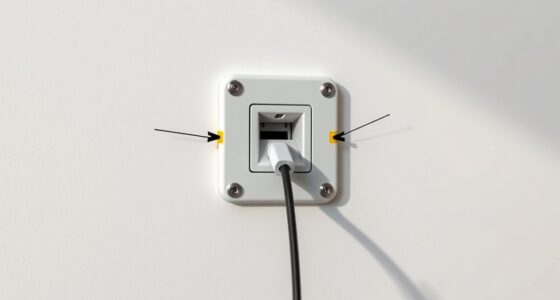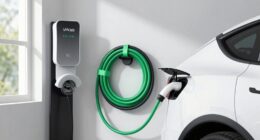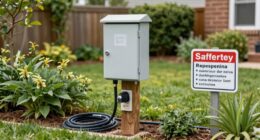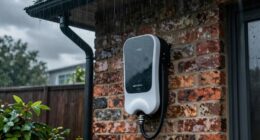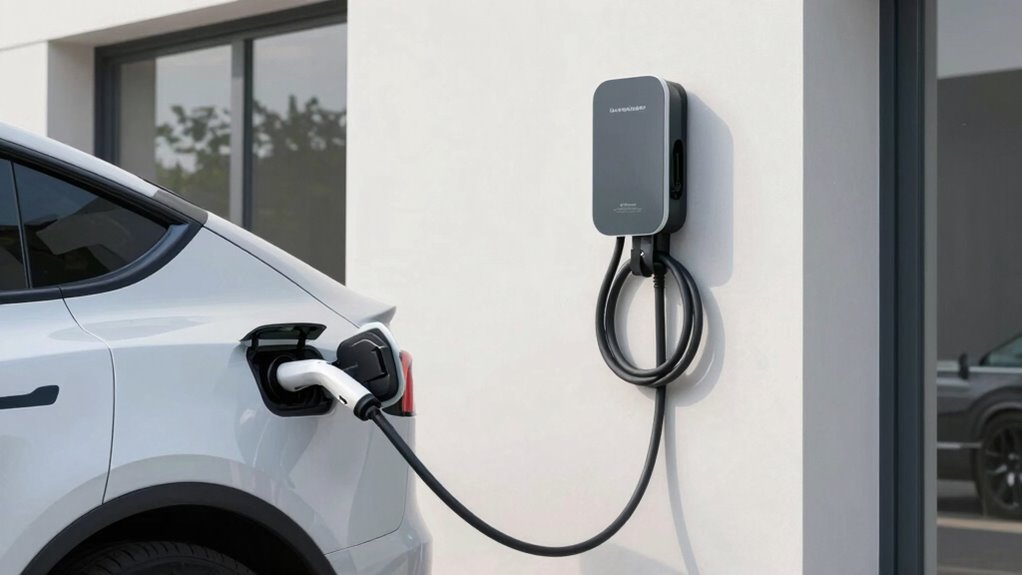

The main difference between plug-in and hardwired EV chargers is their installation and flexibility. Plug-in chargers use cords and outlets, making them easy to connect, disconnect, and relocate—great for renters or temporary use. Hardwired chargers are permanently installed into your electrical system, offering a safer and more reliable setup with less tripping hazard. While hardwired options tend to cost more upfront, they often require less maintenance long-term. To understand which choice suits your lifestyle, see what each setup entails.
Key Takeaways
- Plug-in chargers use cords and outlets, offering flexibility and mobility; hardwired chargers are permanently installed for stability.
- Hardwired systems eliminate external cords, reducing safety hazards, while plug-in chargers require safety checks for cords and outlets.
- Plug-in chargers generally have lower initial costs but may incur higher maintenance over time; hardwired chargers are more durable with higher upfront costs.
- Plug-in chargers are portable and suitable for renters or temporary setups; hardwired chargers provide a seamless, permanent charging solution.
- Hardwired systems offer enhanced safety features and reliability, ideal for long-term, fixed installation needs.

When choosing an electric vehicle (EV) charging setup, understanding the difference between plug-in and hardwired systems is vital. Both options serve the same purpose—delivering power to your EV—but they differ considerably in installation, convenience, and safety features. Your choice impacts not only how easily you can charge your car but also how safe and cost-effective the setup will be in the long run.
Plug-in chargers are designed for flexibility. They typically come with a cord and a standard outlet, making them easy to connect and disconnect whenever needed. This setup is perfect if you’re renting or want the option to move your charger somewhere else in the future. However, because plug-in chargers involve an external cord and a socket connection, charging safety becomes a key consideration. You need to guarantee that the outlet and the cord are rated for EV charging and that they’re in good condition to prevent electrical hazards. Although they are usually less expensive initially, keep in mind that ongoing maintenance and potential replacement costs for damaged cords or worn-out outlets can add up over time. Ensuring your electrical infrastructure is compatible is crucial for safe operation. Additionally, some jurisdictions may have specific regulations about outdoor electrical setups, so checking local codes is advisable. Incorporating proper electrical safety standards can further reduce risks associated with both plug-in and hardwired setups. Being aware of regional electrical codes helps ensure compliance and safety in your installation.
Plug-in chargers offer flexibility but require careful safety checks for outlets and cords.
Hardwired chargers, on the other hand, are permanently installed directly into your electrical system. This means no external cords, which can eliminate tripping hazards and reduce exposure to environmental elements. The installation costs for hardwired systems are generally higher upfront because they require professional wiring and possibly upgrades to your electrical panel. But once installed, they tend to be more durable and reliable, offering a consistent charging experience. Because they’re built to integrate seamlessly into your home’s wiring, hardwired chargers often provide enhanced charging safety. They usually include built-in safety features like ground-fault protection and surge suppression, reducing the risk of electrical issues during charging sessions.
Deciding between the two involves weighing installation costs against convenience and safety. If you want a simple, portable solution and are comfortable with a bit of ongoing maintenance, a plug-in charger might suit you best. But if you prefer a more permanent, safer option with fewer external components and are willing to invest in professional installation, a hardwired charger is a solid choice. Consider your long-term needs, your home’s electrical capacity, and your budget to make the best decision. Ultimately, both systems will get your EV charged, but understanding these differences guarantees you choose a setup that’s safe, efficient, and tailored to your lifestyle.

AIMILER Level 2 Electric Vehicle (EV) Charger(WIFI APP/Plug-play), 32A, 25ft Cable ETL Certified, 220V-240V NEMA 14-50P Plug EVSE w/ J1772 Connector, Portable EV Car Charging Stations for Home Level 2
❤ [Equipped with Nema 14-50 plug 240V, Compatible with 110-120V Nema 5-15p to 14-50r EV Adapter(Not packaged) or…
As an affiliate, we earn on qualifying purchases.
As an affiliate, we earn on qualifying purchases.
Frequently Asked Questions
Are Plug-In Chargers Compatible With All EV Models?
Yes, plug-in chargers are generally compatible with most EV models, offering great charging convenience. However, you might encounter compatibility issues with certain vehicles that require specific charging standards or connector types. It’s essential to check your EV’s specifications and the charger’s compatibility before purchasing. This way, you guarantee smooth, hassle-free charging and avoid any surprises or delays.
What Are the Safety Concerns With Hardwired Chargers?
While hardwired chargers are efficient, you should be mindful of potential safety concerns. Faulty electrical wiring can increase fire hazards, especially if not installed or maintained properly. Regular inspections help prevent issues, ensuring safety. Make sure a qualified electrician handles the installation, and stay alert to any signs of electrical problems. Proper maintenance minimizes risks, allowing you to enjoy your EV charging experience with peace of mind.
Can I Upgrade From Plug-In to Hardwired Later?
Yes, you can upgrade from a plug-in to a hardwired EV charger later. Keep in mind, a hardwired charger often offers faster charging speed and more stability, though it sacrifices portability options. Before upgrading, check your electrical system’s capacity and consult a professional to guarantee a seamless shift. Upgrading can enhance your charging experience, but proper planning is essential to maximize safety and efficiency.
Do Installation Costs Differ Significantly Between the Two?
Yes, installation costs can differ markedly between plug-in and hardwired chargers. Hardwired installations often involve more complex wiring and may require professional electrical work, increasing costs. This complexity can also affect charging speed, as hardwired units typically support higher power levels for faster charging. Conversely, plug-in chargers are usually simpler and cheaper to install, but may have limitations on charging speed. Consider your needs and budget when choosing between the two.
Which Type Offers Better Long-Term Durability?
Hardwired chargers generally offer better long-term durability, especially in harsh weather conditions—over 80% of them are weather-resistant, compared to just 60% of plug-in types. They tend to have fewer moving parts, reducing wear and tear, and provide consistent charging speeds without disconnect issues. If you want a reliable, weather-resistant solution that lasts, hardwired chargers are your best bet for long-term durability.

ChargePoint HomeFlex Level 2 EV Charger J1772 – Fast Smart Battery Power Charging at Home for Electric Automobile Vehicles – Hardwired for Electric Car
Charge with Confidence: ChargePoint builds reliable, flexible EV charging stations for home, business, and fleets. Get 24/7 support…
As an affiliate, we earn on qualifying purchases.
As an affiliate, we earn on qualifying purchases.
Conclusion
Choosing between plug-in and hardwired EV chargers is like selecting a suit—you want one that fits your lifestyle perfectly. Plug-in chargers offer flexibility and ease, like a comfortable pair of shoes you can take anywhere. Hardwired chargers, on the other hand, provide a seamless, permanent solution, like a tailored suit that enhances your style. Consider your needs carefully, and you’ll find the charging setup that keeps your electric vehicle running smoothly, like a well-oiled machine.

Lectron Level 1 EV Charger – ETL Certified, 120V, 15 Amp, 16 ft Extension Cord & J1772 Cable – Portable Electric Car Charger for J1772 EVs and Plug-in Hybrid Vehicles
Lectron Level 1 EV Charger – ETL Certified, 120V, 15 Amp, 16 ft Extension Cord & J1772 Cable…
As an affiliate, we earn on qualifying purchases.
As an affiliate, we earn on qualifying purchases.
ChargePoint HomeFlex Level 2 EV Charger J1772 – Fast Smart Battery Power Charging at Home for Electric Automobile Vehicles – Hardwired for Electric Car
Charge with Confidence: ChargePoint builds reliable, flexible EV charging stations for home, business, and fleets. Get 24/7 support…
As an affiliate, we earn on qualifying purchases.
As an affiliate, we earn on qualifying purchases.