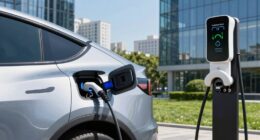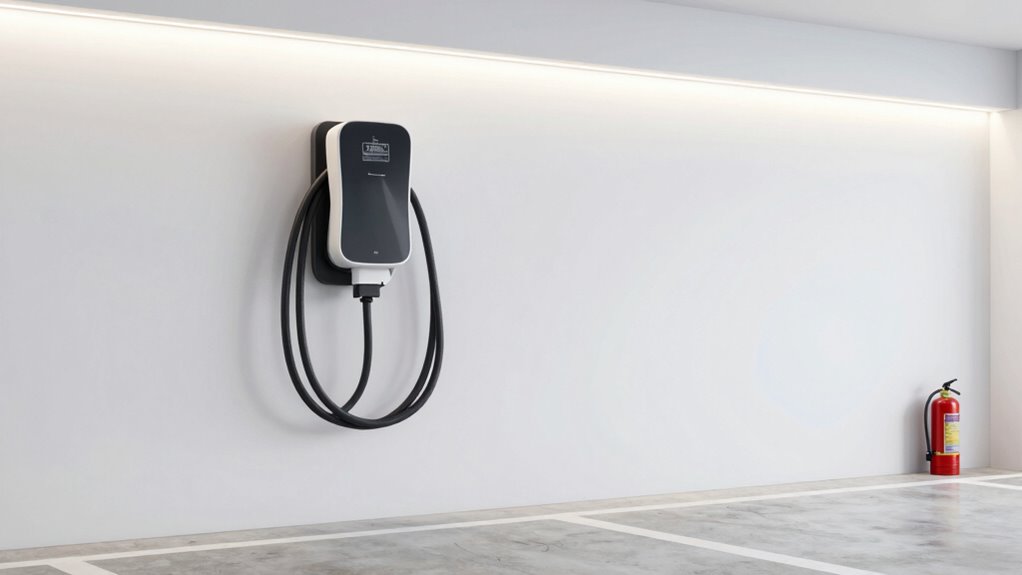
To build a safer home EV charging setup, you need to make certain your electrical system can handle the charger’s load and always use qualified electricians for installation. Verify charger compatibility, follow safety standards, and choose a suitable, dry location away from hazards. Regularly inspect and maintain your equipment to catch issues early. Prioritizing these safety measures helps protect your property and loved ones—continue to explore how to make your setup even safer.
Key Takeaways
- Consult a qualified electrician to evaluate and upgrade your home’s electrical system for EV charging capacity.
- Use UL-listed, compatible chargers and adhere to manufacturer and safety standards.
- Properly position and secure the charger in a dry, well-ventilated area away from hazards.
- Regularly inspect and maintain the charger and cables to identify and fix potential issues promptly.
- Conduct ongoing electrical safety inspections to ensure system integrity and prevent overloads or hazards.
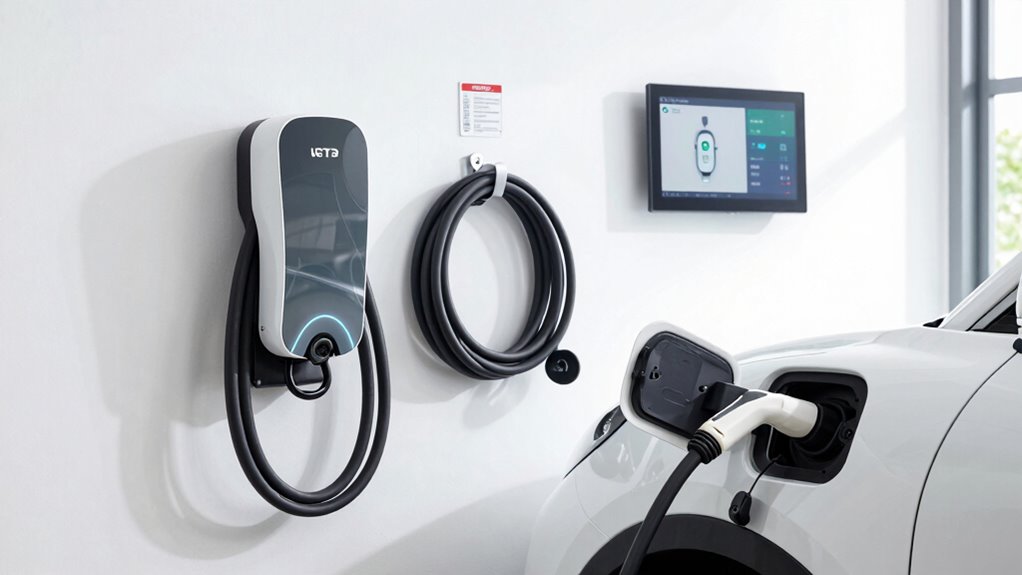
Ensuring your home EV charging setup is safe isn’t just about plugging in—it’s about understanding the key steps to prevent hazards and protect your property. The foundation of a safe charging station begins with prioritizing electrical safety. You need to ensure that your home’s wiring and electrical system can handle the additional load of an EV charger. Overloading circuits can cause overheating, shorts, or even fires. Having a qualified electrician evaluate your electrical panel is crucial. They can determine if your wiring is adequate or if upgrades are necessary. Using proper circuit breakers and fuses also plays a vital role in safeguarding your system. Never bypass safety features or attempt to modify the wiring yourself, as this increases the risk of electrical faults.
Charger compatibility is another essential factor in creating a safe EV charging environment. Not all chargers are suitable for every vehicle or home setup. You must check that the charger you install is compatible with your EV’s make and model. Using an incompatible charger could lead to poor charging performance or damage to your vehicle’s electrical system. Always follow the manufacturer’s guidelines and select a charger that meets industry safety standards. Additionally, verify that the charger’s power specifications match your home’s electrical capacity. A mismatch can cause overloads or reduce the lifespan of your equipment. Incorporating fireproof storage for your charging equipment can further enhance safety by protecting against damage or accidental fires.
Beyond compatibility, proper installation is key. Position your charger in a location that’s dry, well-ventilated, and free from potential physical damage. Avoid placing chargers in areas prone to flooding or extreme temperatures. Make sure that all connections are secure and that cables are properly routed to prevent tripping hazards or strain on the connectors. Using high-quality, UL-listed cables and adapters can prevent electrical failures and ensure reliable operation. Proper projector setup principles, such as correct placement and secure mounting, can serve as a helpful analogy for ensuring the safety of your charging station. Additionally, understanding the electrical capacity of your home can help prevent overloads and extend the lifespan of your charging system. Regular electrical safety inspections are vital to identify potential issues early and maintain a safe environment for charging. Implementing these measures also supports the proper wiring and electrical safety standards necessary for a reliable setup.
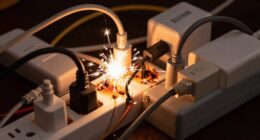
Routine maintenance and inspections are also important for ongoing safety. Regularly check your charger and cables for signs of wear or damage. Keep the area around your charging station clean and free of debris. If you notice any issues, such as frayed wires or sparks, turn off the system immediately and consult a professional. Remember, electrical safety isn’t a one-time setup; it’s an ongoing responsibility. By choosing compatible equipment, ensuring proper installation, and maintaining your setup, you significantly reduce the risk of electrical hazards and protect both your home and your vehicle. Building a safer home EV charging station is about attention to detail and a commitment to safety every step of the way.

WenStorm 50A 21ft J1772 EV Extension Cable, Level 2 EV Charger Extension Cord, Heavy-Duty 240V EV Extension Cable for Fast Charging (21FT)
Extended Charging Reach – Park Freely, Charge Anywhere: Add 21FT reach with this extra long EV charging cable….
As an affiliate, we earn on qualifying purchases.
As an affiliate, we earn on qualifying purchases.
Frequently Asked Questions
Can I Install an EV Charger Myself Without Professional Help?
You can attempt a DIY installation of an EV charger, but it’s not always recommended. While it may save you money initially, the cost comparison with professional help often includes safety and code compliance. If you’re experienced with electrical work, you might handle it safely. However, for most homeowners, hiring a licensed electrician guarantees the job’s done right, reducing risks and potential future costs due to improper installation.
What Are the Signs of an Unsafe EV Charging Setup?
You notice flickering lights or a burning smell around your charger—that’s a warning sign. Grounding issues can cause shocks, while circuit overloads lead to frequent trips or overheating. Unusual sparks or warm outlets are clear indicators of danger. If you see any of these signs, stop using the charger immediately. A safe setup relies on proper grounding and avoiding overloads, so don’t ignore these warning signals—your safety depends on it.
How Often Should I Inspect My Home EV Charger?
You should inspect your home EV charger at least once every three to six months to maintain the best charging safety. Regular inspection frequency helps you spot potential issues like frayed cords, loose connections, or signs of overheating early, preventing accidents. Stay proactive about charging safety by checking for damage or wear, ensuring your setup remains safe and reliable. Consistent inspections protect both your home and your electric vehicle.
Are There Specific Safety Standards for Residential EV Chargers?
Think of your home EV charger like a trusted ship’s anchor—safety is paramount. Yes, there are specific safety standards, including electrical wiring and grounding requirements, that guarantee your setup is secure. These standards comply with national electrical codes to prevent hazards. Always verify that your charger meets these standards, and consider consulting a professional to certify proper grounding and wiring, keeping your home and loved ones safe during every charge.
What Should I Do if My Charger Overheats or Sparks?
If your charger overheats or sparks, unplug it immediately and turn off the circuit breaker. Check for proper grounding and guarantee overcurrent protection is in place, preventing excessive electrical flow. Avoid using damaged cords or connectors. Contact a licensed electrician to inspect your setup, confirm grounding requirements are met, and verify that your system’s overcurrent protection devices are functioning correctly. Always prioritize safety to prevent further electrical hazards.

Autel Home Smart Electric Vehicle (EV) Charger up to 50Amp, 240V, Indoor/Outdoor Car Charging Station with Level 2, Wi-Fi and Bluetooth Enabled EVSE, Hardwired,25-Foot Cable,Sierra Blue
Trusted Brand: Autel has been making automotive intelligent diagnostic, inspection, and analysis products since 2004. The MaxiCharger AC…
As an affiliate, we earn on qualifying purchases.
As an affiliate, we earn on qualifying purchases.
Conclusion
Building a safer home EV charging setup is like laying a strong foundation for a sturdy house—you might not see it every day, but it supports everything above. By following proper safety guidelines, using quality equipment, and staying vigilant, you guarantee your home remains a secure haven for your electric vehicle. Remember, a well-constructed charging station is the key that grants peace of mind, turning your driveway into a fortress against potential hazards.
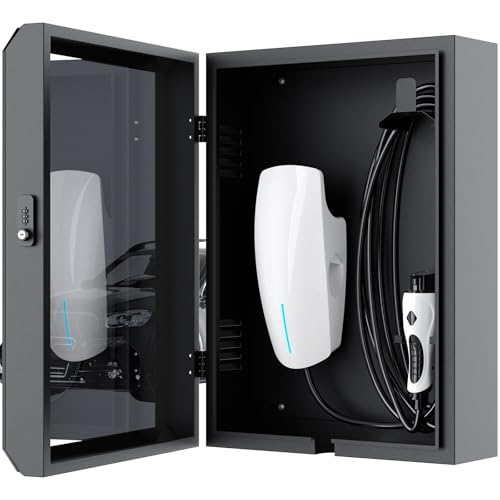
NOTASA Tesla Wall Charger Cover, Outdoor EV Charger Enclosure Universal Fit for All Electric Vehicle Chargers, Large Capacity Weatherproof Wall-Mounted Charger Box
Universal Compatibility: In addition to Tesla charger cover, it is also compatible with most other electric vehicle chargers….
As an affiliate, we earn on qualifying purchases.
As an affiliate, we earn on qualifying purchases.

VKQTS EV Charger Holder Wall Mount Design,Waterproof SAE J1772 Holder for EV Car Charger with Cable Hanger & Rain Cover,Outdoor EVs Chargers Cable Holders EVs Accessories
Cable Hanger/Rain Cover: Our EV charger holder further optimizes the experience of using it through the design of…
As an affiliate, we earn on qualifying purchases.
As an affiliate, we earn on qualifying purchases.