
TL;DR

Get backup power and energy gear delivered free with Prime
- Fast, free delivery on millions of items
- Prime Video, Amazon Music and more included
- Member-only deals all year
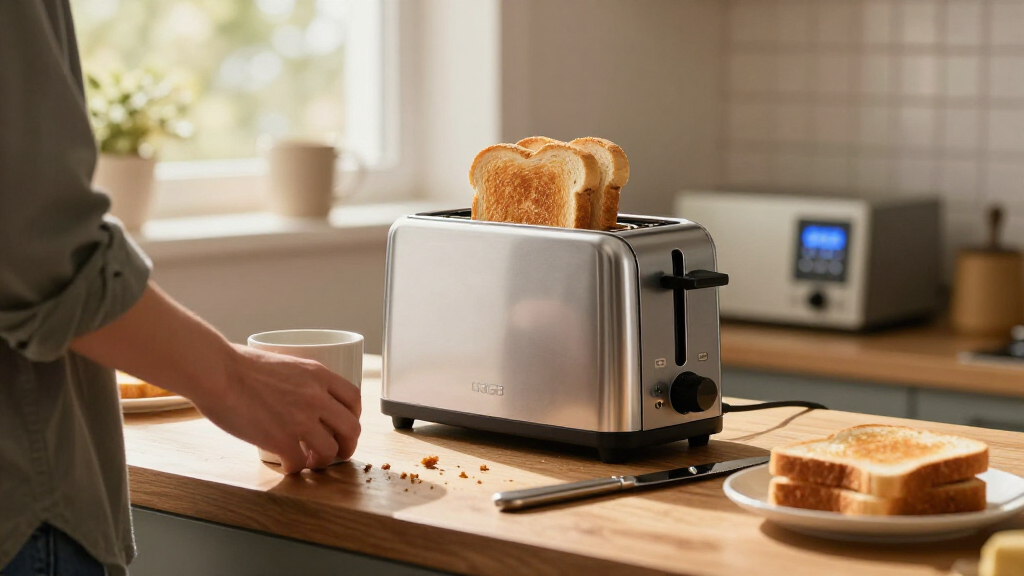
Sage has introduced the Eye Q Auto toaster, which uses optical sensors to monitor toast colour and stop when it reaches a selected shade. Ideal Home’s reviewer reported golden results with sourdough, crumpets and white bread, but the review does not establish that the toaster prevents burning in all conditions. Prices start at £249.95 for the two-slice model.
Sage has introduced the Eye Q Auto toaster, a premium appliance that uses optical sensors to monitor bread as it browns and stop when it reaches the selected colour. The feature is intended to make toast results more consistent across different types of bread; the two-slice model is listed at £249.95, while a four-slice version costs £349.95.
The toaster’s Eye Q Optic Sensor tracks colour change using green and infrared LEDs, according to Ideal Home’s report. The sensors reportedly check the bread up to 10 times per second, with the appliance stopping once the chosen shade is reached. Sage describes the sensor technology as patent-protected; the source does not provide independent testing of its performance.
Ideal Home reviewer Holly Cockburn said she tried the toaster with sourdough, crumpets and white bread and obtained a deep golden colour with each. That is a reported personal test, not evidence that every bread type, slice thickness or starting condition will produce identical results. The central claim is that colour-based stopping may be less dependent on fixed timing than a conventional toaster dial.
The Eye Q also has a timed mode for people who prefer a traditional setting, an automatic lift-and-lower function and a ceramic-coated top that Sage says repels crumbs and resists rust. The source lists both two- and four-slice models. It says the larger version can store two programmes, allowing settings to be personalised for two people.
Why Colour-Based Toasting Matters
Many standard toasters use a time or heat setting rather than measuring how brown the bread has become. As the Ideal Home report explains, results can vary with the bread: sourdough and fruit bread, for example, may toast differently at the same dial setting. A sensor that responds to colour could reduce repeated guesswork for households that regularly switch between bread types.
The practical trade-off is price. At £249.95 for two slices, the Eye Q costs far more than a basic toaster, so the appeal depends on whether more consistent results and the added features justify the premium. The reported test suggests the sensor worked for one reviewer across three foods, but buyers do not yet have detailed independent comparisons or long-term reliability findings in the supplied material.
Products Worth Considering

Philips Hue Smart Light Starter Kit with Bridge and 4 White and Color A19 Bulbs

Philips Hue Festavia 130-Foot Indoor/Outdoor Smart String Lights, 500 Mini Color-Changing LEDs

Philips Hue Bridge Pro Starter Kit with 4 A19 E26 Smart Bulbs
As an affiliate, we earn on qualifying purchases.
How the Eye Q Differs
Conventional toaster controls commonly offer numbered browning settings, but the same setting can produce different results depending on the bread and its condition. Sage’s approach, as described in the report, is to monitor the bread’s changing colour rather than rely solely on a preset period. The toaster stops when the selected shade is reached, while its timed mode preserves a more familiar way to toast.
Ideal Home presents the product as a new use of optical sensing in a domestic toaster and reports that Sage calls the sensor patent-protected. The source does not include patent documentation, a launch announcement from Sage, or a detailed comparison with competing products. Its testing and product descriptions should therefore be read as a review account, rather than a complete independent assessment of the market.
“I’ve now tried this toaster on sourdough, crumpets and white bread, and can confirm it has achieved a deep golden colour each time.”
— Ideal Home reviewer Holly Cockburn
Questions About Real-World Results
The supplied report does not state the product’s release date, retailer availability or sales figures. It also does not give independent test results, explain how the sensor performs with unusually thick slices or different starting temperatures, or establish whether results remain consistent after extended use. While the headline claim suggests an end to burnt toast, the available evidence is a reviewer’s test of three foods; it does not prove that burning is impossible.
Other details that are not covered include warranty terms, repairability, energy use and how the appliance responds if the bread is removed or interrupted during a cycle. Sage’s patent-protection statement is reported by Ideal Home, but the source includes no patent number or supporting filing details.
Availability and Independent Testing
Readers considering the toaster can compare the listed two-slice and four-slice prices with current retailer listings, since the source does not specify where or when each model will be available. Further product testing could clarify how reliably the sensor handles a broader range of bread, repeat cycles and long-term household use.
For now, the confirmed development is the introduction of a toaster designed to stop at a selected toast colour, with Ideal Home reporting a positive test across three foods. Whether that feature delivers enough consistency to justify the premium price will depend on broader testing and buyers’ experience.
Key Questions
How does the Sage Eye Q toaster work?
It uses green and infrared LEDs to monitor bread colour, reportedly checking up to 10 times per second. The toaster is designed to stop when the selected shade is reached.
Does it guarantee that toast will not burn?
No such guarantee is established by the source material. Ideal Home’s reviewer reported golden results with sourdough, crumpets and white bread, but that limited test does not show that burning is impossible in every situation.
How much does the Eye Q cost?
The source lists the two-slice model at £249.95 and the four-slice model at £349.95. It does not specify a release date or retailer availability.
Can it use a traditional timed setting?
Yes. The report says the toaster can be switched to a timed mode for people who prefer a conventional approach.
Source: rss