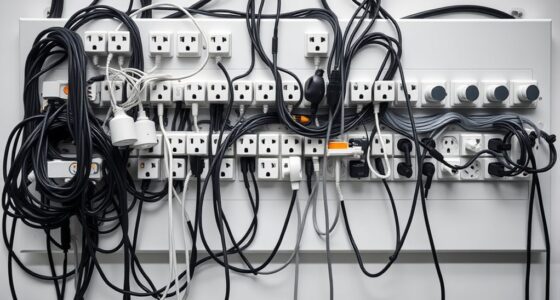
You need more voltage when your household or workshop tasks involve large appliances, power tools, or HVAC systems that require more power than a standard 120V outlet can provide. 240V outlets are essential for heavy-duty devices like dryers, ranges, or welders to operate efficiently and safely. Understanding your appliance’s power needs and how to upgrade your wiring is key. If you want to learn about switching between voltages and safety tips, keep going.
Key Takeaways
- Use 120V outlets for typical household devices like lamps, small appliances, and electronics.
- Upgrade to 240V for high-powered appliances such as dryers, ranges, and large HVAC systems.
- Higher voltage (240V) is necessary when device wattage exceeds the capacity of 120V circuits.
- Consider 240V for improved efficiency, performance, and safety with heavy-duty tools and appliances.
- Proper wiring, circuit upgrades, and grounding are essential when converting from 120V to 240V systems.
Understanding Electrical Power Basics
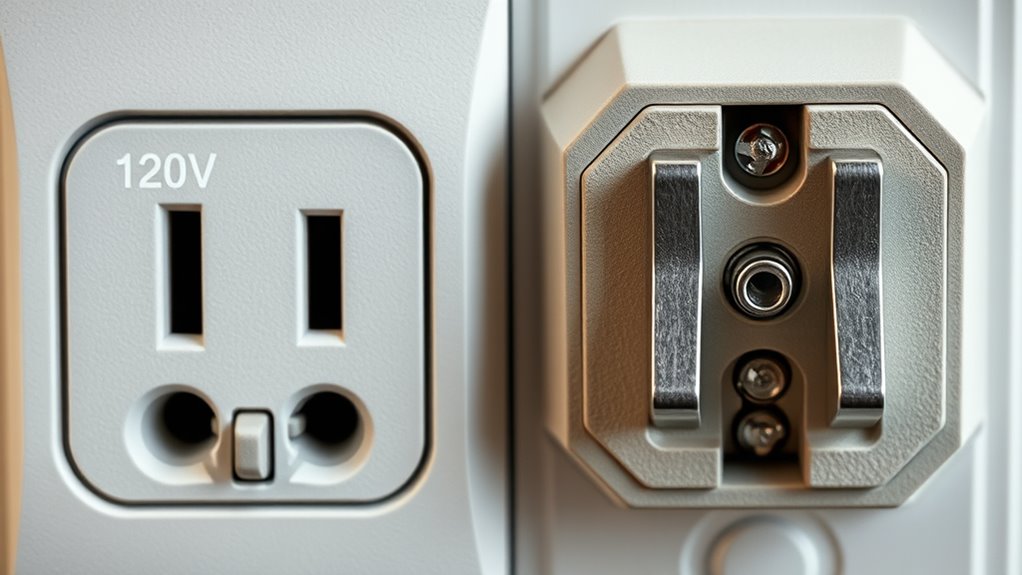
To understand the differences between 120V and 240V, grasping the basics of electrical power is essential. Most residential power runs on alternating current (AC), which changes direction periodically, making it ideal for efficient power distribution. This type of current allows electricity to travel over long distances with minimal loss, ensuring your home receives consistent energy. Voltage, measured in volts, indicates the electrical pressure pushing current through wires. Higher voltage, like 240V, delivers more power, suitable for high-demand appliances. Knowing how AC and power distribution work helps you recognize why some devices need more voltage. Whether it’s for everyday electronics or heavy-duty appliances, understanding these fundamentals clarifies how your electrical system functions and why different voltages are used.
Typical Uses of 120V Outlets
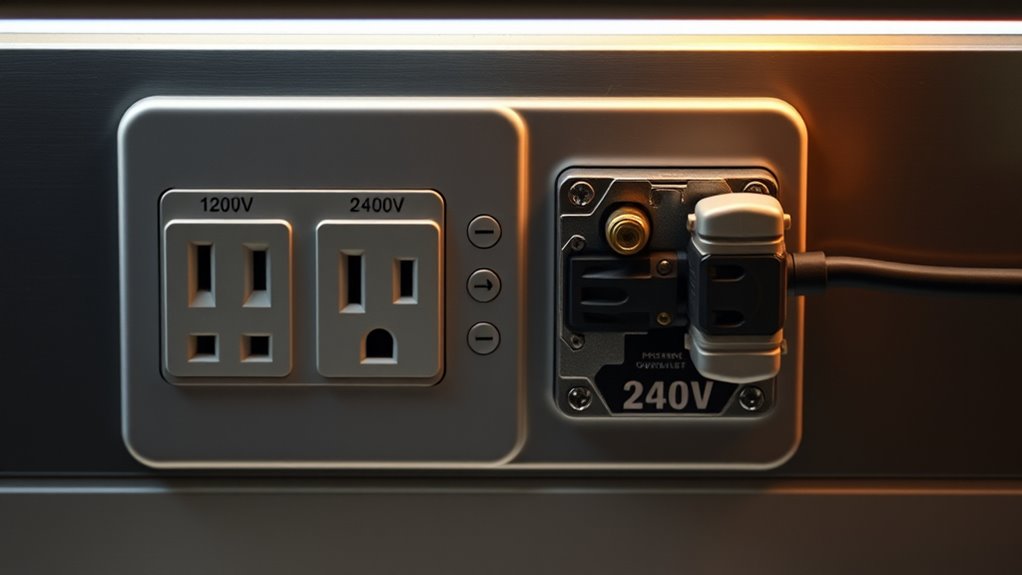
Since 120V outlets are the standard in most households, they power a wide range of everyday devices. You’ll find these outlets used for appliances that require low to moderate power, making them essential for daily tasks. Common uses include lighting, small kitchen appliances, and electronics. If you need to run higher-powered equipment, you might consider voltage conversion or dedicated circuits. The table below shows typical devices and their appliance compatibility with 120V outlets:
| Device Type | Compatibility & Notes |
|---|---|
| Small Kitchen Appliances | Usually compatible, may need voltage check |
| Computers & Electronics | Standard, universal compatibility |
| Lamps & Lighting | Fully compatible |
| Power Tools | Some may need higher voltage or conversion |
| Small Household Gadgets | Generally compatible |
Additionally, certain power tools and larger appliances may require 240V outlets to operate efficiently and safely. Understanding the voltage requirements of your devices ensures safe and efficient operation. Recognizing electrical safety guidelines can prevent potential hazards when using different voltage levels. Being aware of electrical compatibility is essential for proper device operation and safety. Proper electrical wiring is also crucial when installing new outlets or upgrading existing ones to meet your power needs.
When to Consider 240V Power Supply
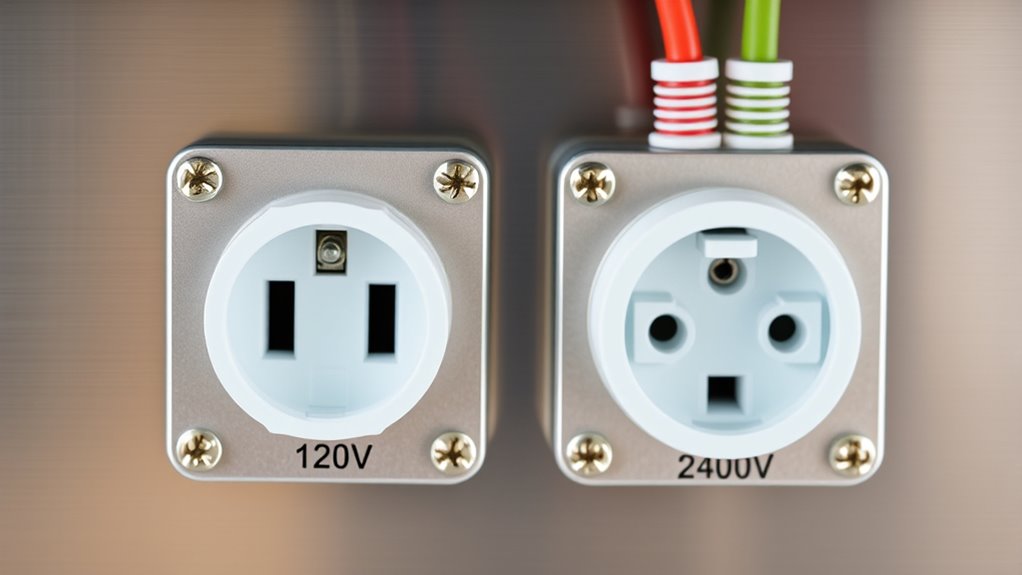
You should consider switching to a 240V power supply when you need to run high-powered appliances or equipment that require more energy than a standard 120V outlet can provide. This is especially true for devices like large appliances, power tools, or HVAC systems. In such cases, voltage conversion becomes necessary to ensure proper operation without overloading your household wiring. Upgrading to 240V involves modifying your home’s wiring setup to accommodate the higher voltage, providing more power efficiently. This switch helps prevent overheating and reduces strain on your electrical system. If your equipment’s wattage exceeds what a standard outlet can handle, moving to 240V is a smart choice for safety and performance. Always consult a professional to ensure proper installation and adherence to local electrical codes.
Comparing Safety Considerations for Both Voltages

When working with both 120V and 240V systems, safety starts with understanding the risks of electrical shock. Proper grounding is essential to prevent dangerous faults and guarantee safety. By following best practices, you can minimize hazards and protect yourself during electrical tasks. Additionally, implementing automation’s role in business intelligence can help monitor and analyze electrical system performance to identify potential safety issues proactively. Understanding electrical safety standards and adhering to them ensures that systems operate safely and reliably over time. Recognizing the differences in voltage and their impact on equipment can further reduce the risk of damage or malfunction. Being aware of performance upgrades and modifications can also help in planning safer and more efficient electrical systems. Moreover, being familiar with voltage-specific safety procedures ensures comprehensive protection tailored to the voltage in use.
Electrical Shock Risks
Electrical shock risks differ considerably between 120V and 240V systems, primarily because higher voltages have the potential to cause more severe injuries. With 240V, the risk of shock is greater, and the chances of lasting harm increase if safety measures aren’t in place. Proper grounding safety is essential for shock prevention, as it helps direct stray currents safely into the ground, reducing the risk of shock. When working with higher voltages, you must be extra cautious, ensuring all equipment is properly grounded and maintained. While 120V systems pose less danger, they still carry shock risks if precautions aren’t followed. Always respect voltage levels, use appropriate safety gear, and verify grounding before handling any electrical system to prevent injury. Implementing proper safety procedures can also help minimize risks associated with higher voltage systems. Being aware of electrical safety standards can further ensure safe practices when working with both voltage levels. Additionally, understanding the potential severity of electrical shocks underscores the importance of rigorous safety protocols. Awareness of voltage-specific risks can help prevent accidents and protect individuals from harm.
Proper Grounding Practices
Proper grounding is essential for safety in both 120V and 240V systems, but the approach and significance vary with voltage levels. Grounding safety helps prevent electrical shocks and reduces fire risks. Adhering to wiring standards guarantees your system is correctly grounded. For 120V, grounding typically involves a grounding wire connected to a grounding rod or metal conduit. For 240V, grounding is even more critical due to higher potential differences. Use the table below to compare grounding practices:
| Voltage Level | Grounding Approach | Safety Considerations |
|---|---|---|
| 120V | Ground wire to grounding rod | Less risk but still essential for safety |
| 240V | Multiple grounding points | Higher safety importance, stricter standards |
How to Identify Your Power Needs

To determine your power needs, start by verifying the wattage ratings on your appliances. Next, examine your circuit’s capacity to make certain it can manage the load. Additionally, inspecting the relationship between voltage and appliance performance can help ensure proper operation. Understanding the cost implications of higher voltage systems can also influence your decision-making process. Considering the types of home security systems you plan to install can also influence your voltage requirements. Moreover, assessing the impact of voltage on energy efficiency can help optimize your electrical setup. Finally, confirm whether your devices are designed for 120V or 240V to ensure compatibility.
Assess Appliance Power Ratings
Understanding your appliance’s power ratings is essential for choosing the right voltage. Check the label or user manual to find the wattage (W) and amperage (A). Higher wattage indicates greater power needs, influencing your voltage choice. Consider appliance efficiency, as more efficient models use less power for the same task, potentially reducing the need for higher voltage. When planning for voltage conversion, knowing these ratings helps make certain you don’t overload circuits or underpower devices. If your appliance has a range of wattages or mentions both 120V and 240V compatibility, confirm its voltage requirements before making any changes. Accurate assessment prevents damage, improves performance, and ensures safety. Always use the rated power specifications to determine whether your appliance is suited for your existing or preferred voltage supply. Additionally, understanding appliance compatibility can help you select the appropriate power supply to prevent electrical hazards. Being aware of power ratings can also assist in optimizing energy consumption and avoiding potential electrical overloads.
Examine Circuit Capacity
Before connecting a new appliance or adjusting your electrical setup, you need to assess your circuit capacity to guarantee it can handle the load. Start by checking your circuit load—look at your breaker’s amperage rating and compare it to the total power requirements of your appliances. Capacity planning involves understanding how much current your circuit can safely carry without tripping or causing damage. If your devices demand more power than your circuit can supply, you risk overloads or electrical hazards. To prevent this, calculate the total wattage or amperage of all connected appliances and ensure it stays within your circuit’s limits. Proper capacity planning helps you avoid issues and ensures your electrical system remains safe and efficient. Additionally, understanding credit card terms can help you manage your finances more effectively when dealing with large appliances or electrical upgrades. Being aware of your circuit’s capacity is essential to prevent electrical overloads and maintain a safe environment. Recognizing circuit capacity is also crucial for preventing potential fire hazards and ensuring your electrical system functions reliably. Incorporating sound health practices like regular inspections can further help you identify and mitigate risks before they lead to problems.
Determine Voltage Compatibility
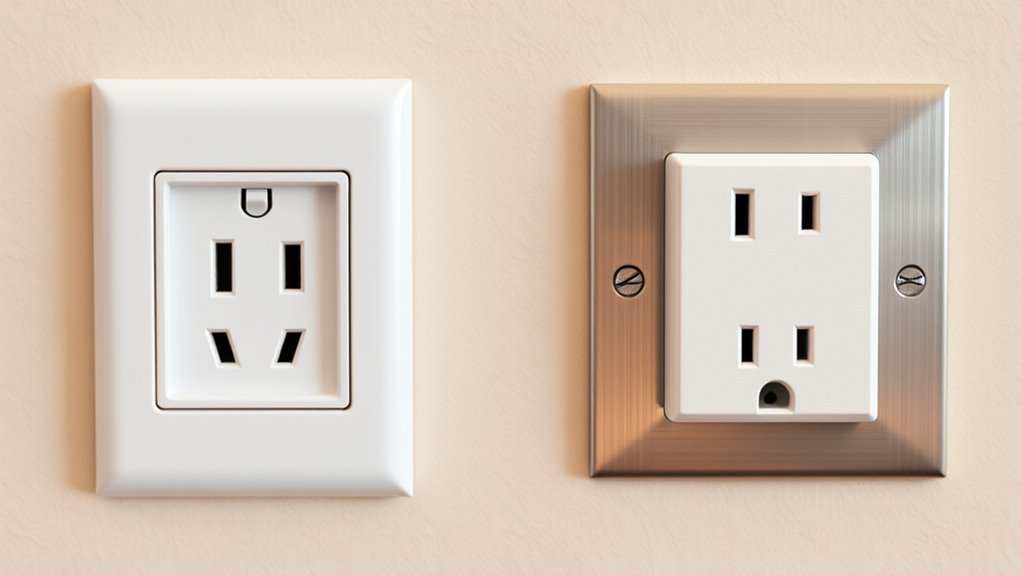
Determining your voltage needs is essential before connecting new appliances or modifying your electrical system. Start by checking the appliance’s label or user manual for voltage requirements, which helps you assess if voltage adaptation is necessary. Confirm your power source matches these needs; using a device designed for 120V on a 240V supply can damage it. Additionally, verify plug compatibility—different voltages often have different plug types or configurations. If your appliance doesn’t fit your outlet, you may need an appropriate adapter or consider rewiring options. Knowing whether your system supports the required voltage prevents electrical mishaps, protects your devices, and guarantees safe operation. Conducting a voltage compatibility check ensures you select the right voltage and maintain compatibility across your electrical setup.
Installing or Upgrading to Higher Voltage Systems

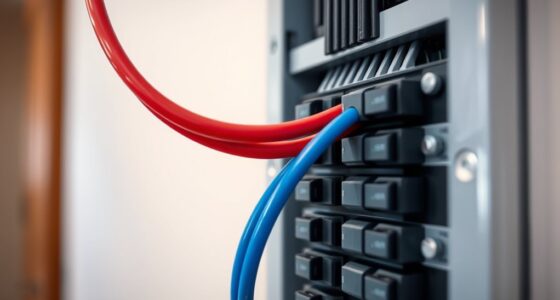
Upgrading to a higher voltage system, such as moving from 120V to 240V, can substantially improve your electrical capacity and efficiency. This process involves voltage conversion and circuit optimization to guarantee safety and performance. You’ll need to assess your existing wiring, upgrade your panel, and possibly install new outlets. Proper planning minimizes risks and maximizes benefits. Here’s a quick overview:
| Step | Consideration |
|---|---|
| Voltage conversion | Ensuring compatibility and safety |
| Circuit optimization | Balancing loads for efficiency |
| Wiring upgrades | Replacing or extending wiring |
| Professional installation | Hiring licensed electricians |
Always consult professionals to handle upgrades safely and verify code compliance. Proper installation ensures your system works reliably and efficiently at higher voltages.
Common Devices That Require 240V Power
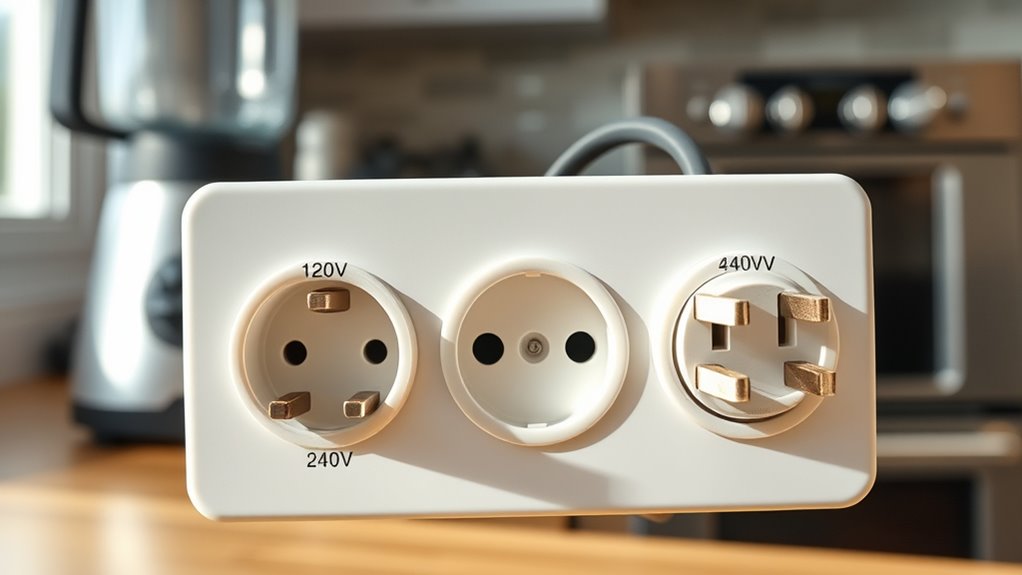
Many household and commercial appliances rely on 240V power to operate efficiently and effectively. These devices often require voltage conversion and proper breaker sizing to guarantee safety and performance. Common examples include:
- Electric ranges and ovens
- Clothes dryers
- Large air conditioning units
- Power tools like welders and compressors
- Electric water heaters
These appliances typically need dedicated circuits with appropriately rated breakers to handle the higher voltage and current. Using the correct breaker sizing prevents overloads and electrical hazards. When upgrading or installing these devices, ensure your electrical system supports the voltage requirements. Proper voltage conversion is essential if you’re adapting from 120V outlets, and professional assessment helps guarantee safe, reliable operation for these high-demand appliances.
Frequently Asked Questions
Can I Convert a 120V Outlet to 240V?
You can convert a 120V outlet to 240V, but it’s not a simple plug-and-play process. Guarantee voltage compatibility and safety by hiring a licensed electrician for outlet conversion. They’ll install the correct wiring, circuit breaker, and outlet to handle the higher voltage. Attempting this yourself risks electrical hazards and code violations. Always prioritize professional help for safe and proper conversion.
What Are the Cost Differences Between 120V and 240V Systems?
Picture your electrical setup as a garden path—more volts like a wider, smoother road. Generally, 240V systems cost more upfront due to higher installation expenses and specialized wiring. The cost comparison shows that while initial investment is steeper, you might save on energy bills if you power high-demand appliances. So, weigh installation expenses carefully against long-term savings before choosing the right voltage for your needs.
How Does Voltage Affect Energy Efficiency?
Higher voltage generally improves energy efficiency because it reduces power loss over long distances, allowing you to use less energy for the same amount of work. When you operate at higher voltage, efficiency gains are noticeable, especially in large systems, as less power is wasted as heat. So, choosing the right voltage can save you money and energy, making your system more effective and environmentally friendly.
Are There Specific Building Codes for Higher Voltage Installations?
While it might seem straightforward, you should be aware that higher voltage installations are governed by strict building codes and safety regulations. These codes ensure safe and proper setup, reducing risks. You need to consult local authorities or licensed electricians to confirm specific requirements for your project. Ignoring these rules could lead to safety hazards, so always follow the proper channels to make certain your installation complies with all necessary building codes.
What Are Common Mistakes When Upgrading Voltage Systems?
When upgrading voltage systems, you often make wiring errors or overlook insufficient grounding. Double-check your wiring connections to guarantee they match the new voltage requirements, avoiding loose or incorrect wiring. Additionally, prioritize proper grounding to prevent electrical hazards. Failing to do so can cause equipment malfunctions or safety issues. Always follow electrical codes and consult a professional if you’re unsure, to ensure a safe and effective upgrade.
Conclusion
Knowing when to switch from 120V to 240V is like upgrading from a steady stream to a raging river—you access more power for your biggest needs. By understanding your devices and safety measures, you can confidently navigate this voltage journey. Think of it as tuning your electrical system like a finely crafted instrument, ensuring every note plays perfectly. When you need that extra punch, stepping up to 240V is your ticket to smooth, unstoppable performance.