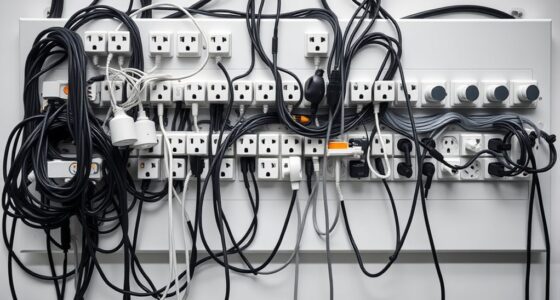
A short circuit happens when a unintended low-resistance path allows a sudden surge of current, which can damage appliances and cause sparks or burning smells. An overload occurs when you draw more current than your circuit can handle, leading to overheating, warm outlets, or tripped breakers. Understanding the difference helps you identify hazards and prevent damage. Keep going to learn how to spot and avoid these electrical issues safely.
Key Takeaways
- A short circuit is an unintended path that causes a sudden surge of current, often damaging components.
- Overload occurs when too many devices draw more current than the circuit can handle, risking overheating.
- Short circuits usually result from damaged wiring or faulty connections, while overloads stem from excessive device usage.
- Signs of a short circuit include sparks or burning smells; overload signs include frequent breaker trips and warm outlets.
- Both pose safety risks like fires and equipment damage, but short circuits involve unintended current paths, unlike overloads.

Understanding the difference between a short circuit and an overload is essential for electrical safety and system maintenance. When your electrical system behaves unexpectedly, recognizing what’s happening can prevent damage, fires, or injuries. A short circuit occurs when electricity takes an unintended path, usually because of damaged wiring or faulty components. This faulty connection causes a sudden surge of current, often leading to sparks, tripped circuit breakers, or blown fuses. The causes of short circuit include damaged insulation, loose connections, or the presence of conductive objects where they shouldn’t be. For example, if a wire’s insulation wears out and exposes the metal, it can accidentally touch other conductors or grounded surfaces, creating a shortcut for the current. Faulty appliances or manufacturing defects can also be culprits.
On the other hand, an overload happens when you draw more current than the circuit is designed to handle. This typically occurs when multiple devices are plugged into the same outlet or circuit, exceeding its capacity. For example, plugging in too many high-power appliances into a single outlet can overburden the wiring. Signs of overload include frequent tripping of circuit breakers, flickering lights, or warm outlets. You might notice that certain circuits seem to heat up or that your appliances don’t work properly. Overloads strain the electrical system, causing overheating that can damage wiring and components over time. Unlike short circuits, which involve unintended paths, overloads result from intentional, but excessive, demand on the system. Understanding electrical load capacity is crucial for preventing overloads and ensuring safe operation.
Recognizing these issues early can save you money and prevent hazards. If your circuit breaker trips repeatedly, or if outlets or switches feel warm or hot, it’s a sign of overload. Sharp electrical smells or sparks when plugging in devices indicate a more serious problem, potentially a short circuit. Regular inspection and proper load management help prevent these issues. Avoid daisy-chaining multiple power strips or overloading circuits with high-wattage appliances. Using correctly rated wiring and circuit breakers also reduces risks. When in doubt, consulting a professional electrician is the safest approach. They can identify the causes of short circuit, such as damaged wiring or faulty devices, and recommend proper solutions. Staying vigilant about signs of overload and understanding their causes helps you maintain a safe, well-functioning electrical system. By knowing what causes short circuits and recognizing overload signs, you’re better equipped to respond quickly and keep your home or workplace safe from electrical hazards.

KAIWEETS Circuit Breaker Finder with LCD Display, GFCI Outlet Tester, Electrical Circuit Tracer Tool with NCV Test & Flashlight, Includes Carrying Case and Adapters- KT301P
All-in-One Circuit Diagnosis: KT301P circuit breaker finder Easily locate breakers, check outlet wiring, and test GFCI protection—all with…
As an affiliate, we earn on qualifying purchases.
As an affiliate, we earn on qualifying purchases.
Frequently Asked Questions
How Can I Tell if a Device Has a Short Circuit or Overload?
You can tell if a device has a short circuit or overload by observing electrical safety signs like tripped circuit breakers or blown fuses. Overloads usually cause the device to overheat or shut down temporarily, while a short circuit might produce sparks, a burning smell, or constant tripping. Use troubleshooting tips like unplugging the device and testing with a multimeter to identify the issue safely and prevent damage.
What Are the Warning Signs of a Short Circuit?
You’ll notice warning signs of a short circuit through circuit heat, such as warm or hot outlets and switches. Wiring faults may cause flickering lights or sparks, indicating a short. If you see burning smells or smoke, stop using the device immediately. These signs point to electrical issues that require prompt attention to prevent damage or fire hazards. Always inspect wiring faults and circuit heat carefully to stay safe.
Can Overloads Cause Permanent Damage to Electrical Components?
Overloads can cause permanent damage to electrical components if you disregard electrical safety. When a circuit is overloaded, it generates excessive heat that can weaken or burn out components, reducing their durability. This damage might not be immediately visible, but it risks future failures or electrical fires. To protect your system, guarantee proper load management and regular inspections, boosting both safety and component longevity.
Are Circuit Breakers Different for Short Circuits and Overloads?
Yes, circuit breakers are designed differently for short circuits and overloads to guarantee electrical safety standards. They have specialized circuit breaker design features that detect rapid current spikes from short circuits, quickly disconnecting power. Overload protection involves a different setting that trips more slowly when current exceeds safe levels. This differentiation helps prevent damage to electrical components and maintains safety, complying with strict electrical safety standards.
How Can I Prevent Short Circuits and Overloads in My Home?
To prevent short circuits and overloads, keep an eye on grounding issues and guarantee your wiring is up to code. Regular electrical inspections help identify potential problems early. Avoid overloading outlets by spreading out high-power devices and replacing damaged cords promptly. Installing circuit breakers with proper ratings also offers protection. Staying proactive with maintenance and professional checks keeps your home safe and reduces the risk of electrical failures.

6 Ft Surge Protector Power Strip – 8 Widely Outlets with 4 USB Ports, 3 Side Outlet Extender with 6 Feet Extension Cord, Flat Plug, Wall Mount, Desk USB Charging Station, ETL,White
【4+4 Outlets Power Strip with 4 USB Ports】- The 3-side power strip with 8AC widely outlets and 4…
As an affiliate, we earn on qualifying purchases.
As an affiliate, we earn on qualifying purchases.
Conclusion
Now that you know the difference between a short circuit and overload, you’re practically an electrical superhero! Understanding these threats can save your appliances and maybe even your home from turning into a fireworks show. Remember, a short circuit is like an unexpected lightning strike, while overloads are like a traffic jam of too many appliances. Stay vigilant, and you’ll keep your electrical system running smoothly—because nobody wants their home to become a disaster zone!

EM415Pro Automotive Wire Tracer Circuit Breaker Finder, 6-42V Short Circuit Finder Electrical Tester, Cable Tracker & Voltage Detector with 7 Inch Flexible Probe for Car and Low Voltage DC Diagnostics
Locate Open & Short Circuits Fast – Automotive wire tracer helps identify open wires, short circuits, and circuit…
As an affiliate, we earn on qualifying purchases.
As an affiliate, we earn on qualifying purchases.

Power Gear Child Safety Electrical Outlet Covers, Tamper‑Resistant Plug Protectors for Standard Wall Outlets, Baby‑Proof & Child‑Proof Safety Caps, Clear, 30 Pack, 51175
CHILD SAFETY PROTECTION — Covers unused electrical outlets to help babyproof living rooms, bedrooms, kitchens and play areas…
As an affiliate, we earn on qualifying purchases.
As an affiliate, we earn on qualifying purchases.