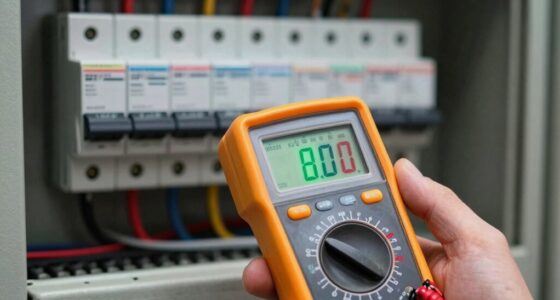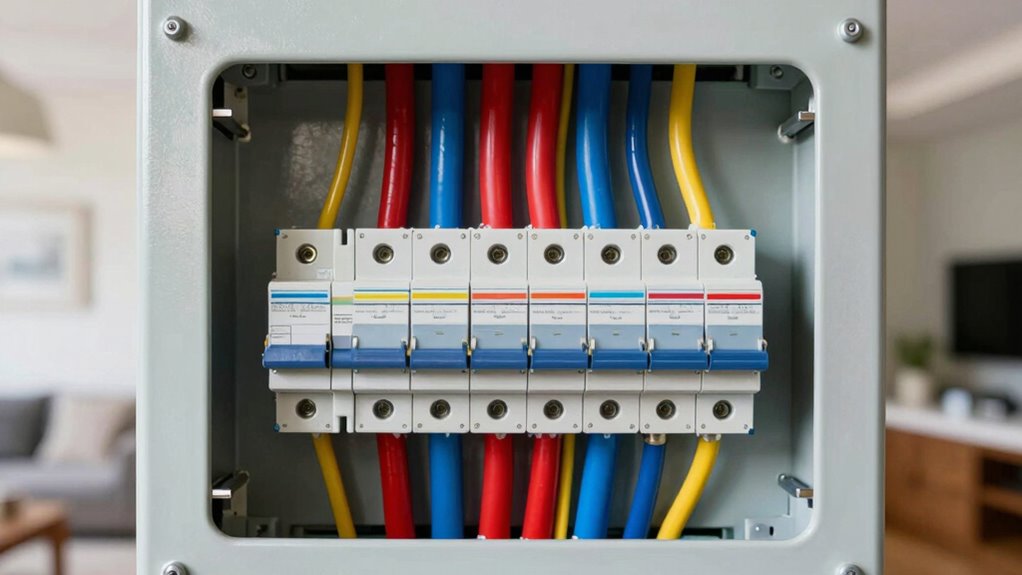

Proper load balancing in your home’s electrical panel is essential for safety, efficiency, and reliability. By evenly distributing power, you prevent overloads, reduce fire risks, and extend the lifespan of your wiring and circuit breakers. It also helps avoid frequent trips and enhances energy savings. Well-managed load distribution makes your home safer and more dependable. To understand how balancing your electrical system benefits your home even further, keep exploring these important concepts.
Key Takeaways
- Prevents circuit overloads and reduces the risk of electrical fires.
- Ensures even distribution of power, enhancing system efficiency and reducing energy waste.
- Maintains circuit breaker functionality and prevents frequent tripping.
- Aids in planning for appliance upgrades and avoids costly electrical damage.
- Improves overall safety and stability of the home’s electrical system.
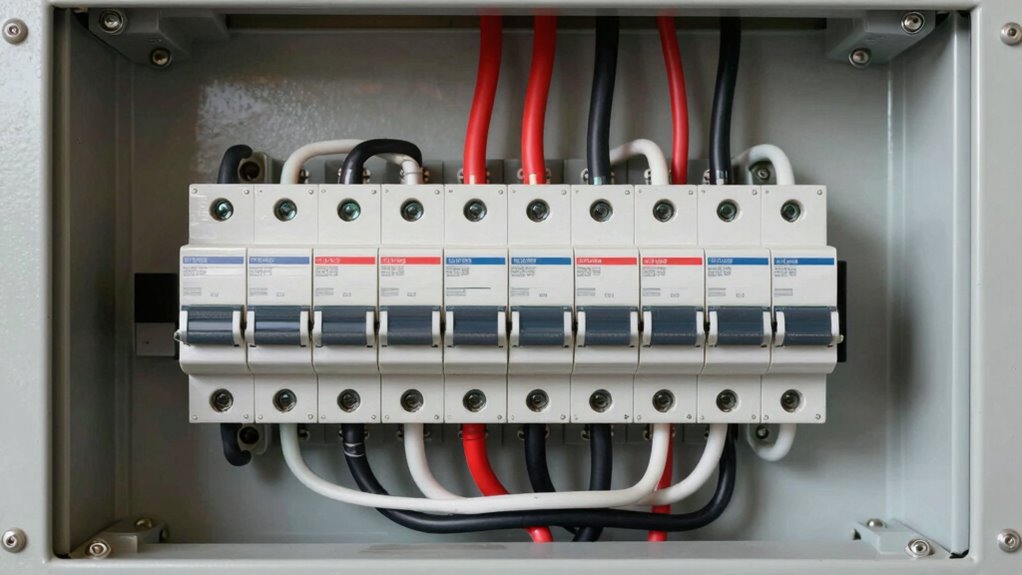
Have you ever wondered how to prevent your electrical panel from becoming overloaded? It’s a common concern, especially when you rely on multiple appliances and devices simultaneously. Proper load balancing is essential because it directly impacts your home’s energy efficiency and circuit safety. When your electrical load isn’t evenly distributed across the circuits, some circuits may carry more current than they’re designed to handle. This overloading can lead to tripped circuit breakers, which interrupts power and can be inconvenient or even dangerous. By balancing the load, you guarantee that no single circuit becomes a bottleneck, reducing the risk of electrical failures and potential fire hazards.
Proper load balancing prevents overloads, enhances safety, and improves your home’s energy efficiency.
Load balancing also plays a significant role in improving your home’s energy efficiency. When circuits are unevenly loaded, your electrical system works harder, consuming more energy and increasing your utility bills. Overloaded circuits strain the wiring and components, making your entire electrical system less efficient. When you distribute the electrical demand evenly, each circuit operates within its ideal capacity, minimizing energy waste and reducing the overall load on your electrical panel. This not only saves you money but also prolongs the lifespan of your electrical components, sparing you costly repairs or replacements down the line. Additionally, understanding electrical load capacity is crucial for effective load balancing and ensuring optimal performance.
In addition, circuit safety is a critical reason why load balancing matters. Overloading a circuit increases the risk of overheating, which can damage wiring insulation or even cause fires. Circuit breakers are designed to trip when they detect excessive current, acting as a safety barrier. But if the load isn’t evenly spread, some circuits may frequently trip while others are underutilized. Proper load balancing ensures that each breaker operates within its safe threshold, preventing unnecessary trips and maintaining a stable electrical system. It’s also an essential step if you want to upgrade or add new appliances in your home, as it helps you identify which circuits can handle additional load without compromising safety. Moreover, circuit overload prevention is vital for maintaining a secure home environment. Incorporating smart load management systems is an emerging technology that can further optimize load distribution and enhance safety measures.
Achieving effective load balancing often involves understanding your home’s power usage patterns and planning accordingly. In essence, load balancing in your residential panel isn’t just about preventing overloads; it’s a proactive way to enhance energy efficiency and safeguard your home. When you take time to evaluate and distribute your electrical load properly, you create a safer, more reliable electrical system. This not only provides peace of mind but also ensures your home runs smoothly, efficiently, and securely for years to come.

ABB ReliaHome Flex Hub FXH1W • Wireless Ethernet Control Unit • Energy Management System • Real Time Load Monitoring • Residential Smart Device • Avoid Costly Panel Upgrades
- Load Management: Central unit for dynamic load balancing
- Cost-Effective Solution: Affordable alternative to panel upgrades
- Reliable Connectivity: Ethernet connection for consistent internet access
As an affiliate, we earn on qualifying purchases.
As an affiliate, we earn on qualifying purchases.
Frequently Asked Questions
How Often Should Residential Panel Load Balancing Be Checked?
You should check your residential panel load balancing annually or whenever you add major appliances. Keep an eye on circuit capacity and guarantee no circuits are overloaded. If you notice frequent tripping or dimming lights, it’s time for a panel upgrade or load redistribution. Regular checks prevent electrical hazards, optimize performance, and help avoid costly repairs. Don’t wait until problems arise—stay proactive with your electrical system.
Can Load Balancing Prevent Electrical Fires?
Imagine the moment a fire starts, and you realize it could’ve been prevented. Load balancing plays an essential role in electrical safety and fire prevention by ensuring no circuit is overloaded. When your panels are properly balanced, you reduce the risk of overheating and electrical fires. It’s a simple step that protects your home and loved ones, giving you peace of mind knowing your electrical system is safe and secure.
Is Load Balancing Necessary for Small Homes?
Yes, load balancing is necessary for small homes, especially if you’re considering solar integration. Proper load balancing guarantees your circuit capacity isn’t overwhelmed, preventing overloads and electrical issues. Even in smaller spaces, distributing electrical loads evenly helps maintain safety and efficiency. It allows your system to handle additional solar power or appliances without risking circuit trips or damage, making your home safer and more reliable.
What Signs Indicate Uneven Load Distribution?
You notice flickering lights or frequent breaker trips—that’s a clear sign of uneven load distribution. When circuits become overloaded, they strain your system, causing breakers to trip unexpectedly. If some outlets or appliances feel unusually warm or if certain areas experience dimming or power fluctuations, don’t ignore these clues. These signs point to an imbalance that could lead to circuit overload, risking damage or even fire. Address it promptly.
Does Load Balancing Affect Energy Efficiency?
Yes, load balancing affects energy efficiency by ensuring power is evenly distributed across your home’s electrical system. When your panels are balanced, your appliances run more efficiently, reducing wasted energy and lowering your electricity bills. This process supports energy conservation and promotes power optimization, helping your system operate smoothly without overloading certain circuits. Proper load balancing ultimately maximizes your energy use, making your home more sustainable and cost-effective.

ABB 100A Main Breaker Load Center • Indoor Panel • 20-Space/20-Circuit
- Expanded Capacity: 20 spaces and circuits for residential use
- Includes Main Breaker: Factory-equipped with 100A main and starter breakers
- Durable Construction: Galvanized steel enclosure resists rust
As an affiliate, we earn on qualifying purchases.
As an affiliate, we earn on qualifying purchases.
Conclusion
By now, you see how load balancing keeps your home’s electrical system running smoothly—like a tightrope walker maintaining perfect balance. Without it, your panels could become overwhelmed, risking outages or damage. Think of load balancing as the conductor of an orchestra, ensuring every instrument plays in harmony. So, take charge of your home’s safety and efficiency by prioritizing proper load management—because a well-balanced system is the secret to a reliable, worry-free home.
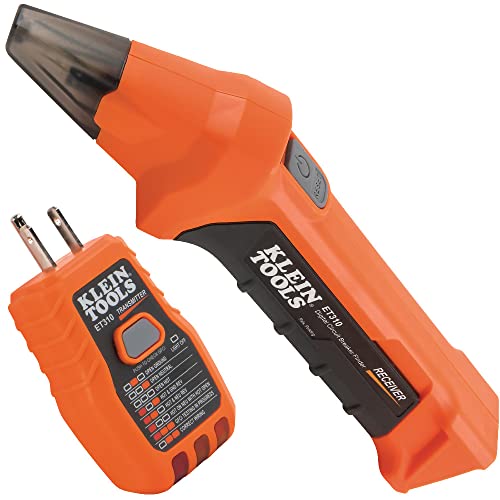
Klein Tools ET310 AC Circuit Breaker Finder, Electric and Voltage Tester with Integrated GFCI Outlet Tester
- Accurate Breaker Identification: Quickly locate the correct breaker
- Two-Part System: Transmitter and receiver for easy use
- Clear Visual and Audible Cues: Indicates when the correct breaker is found
As an affiliate, we earn on qualifying purchases.
As an affiliate, we earn on qualifying purchases.
ABB ReliaHome Flex Hub FXH1W • Wireless Ethernet Control Unit • Energy Management System • Real Time Load Monitoring • Residential Smart Device • Avoid Costly Panel Upgrades
- Load Management: Central unit for dynamic load balancing
- Cost-Effective Solution: Affordable alternative to panel upgrades
- Reliable Connectivity: Ethernet connection for consistent internet access
As an affiliate, we earn on qualifying purchases.
As an affiliate, we earn on qualifying purchases.