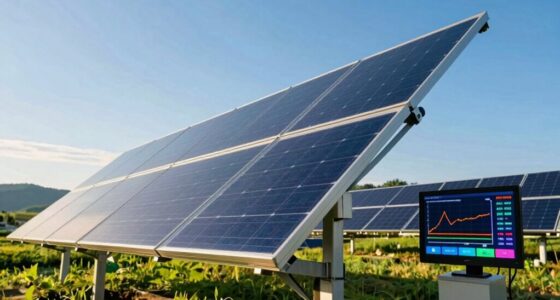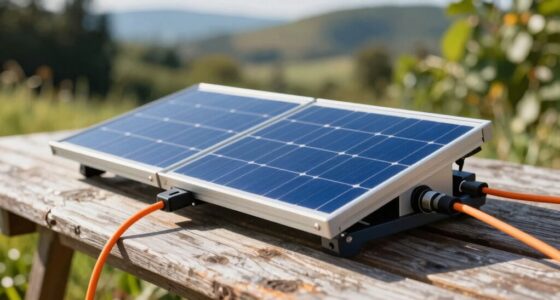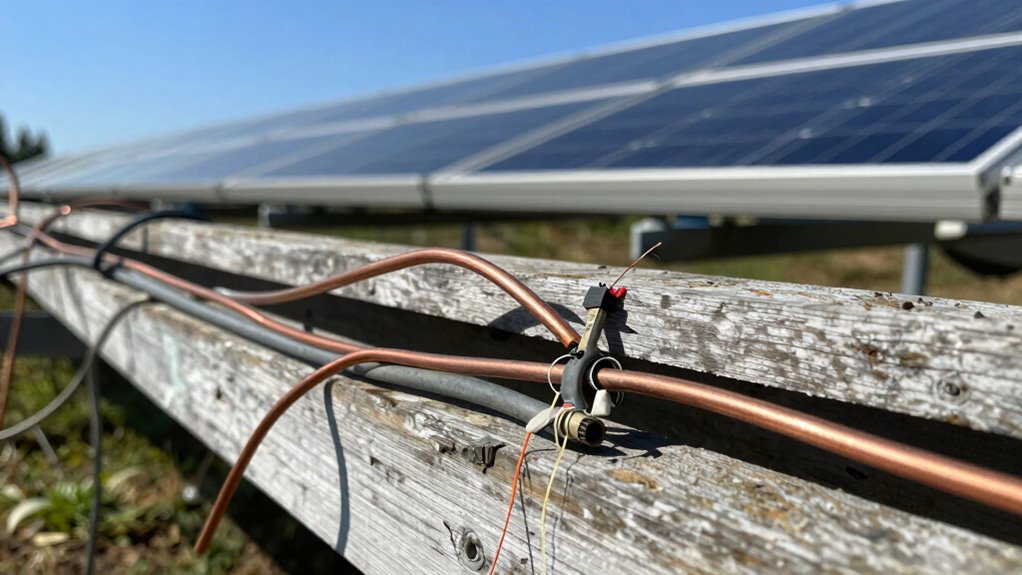

Choosing the wrong wire size for your solar system can lead to significant energy loss and decreased output. Using wires that are too thin causes voltage drops, forcing your inverter to work harder and wasting energy. On the other hand, oversizing wires raises costs without adding benefits, and long runs require thicker wires to maintain efficiency. Getting the size right guarantees safety and ideal performance. Keep going, and you’ll discover how to avoid these costly mistakes and maximize your system’s output.
Key Takeaways
- Using undersized wires causes voltage drops, reducing system efficiency and wasted energy output.
- Overlooking wire length and increasing wire gauge accordingly can lead to power losses.
- Selecting improper wire material or ignoring standards increases resistance and energy loss.
- Failing to properly size wires for battery voltage and current limits diminishes system performance.
- Ignoring the importance of proper wire sizing results in increased energy waste and potential safety risks.
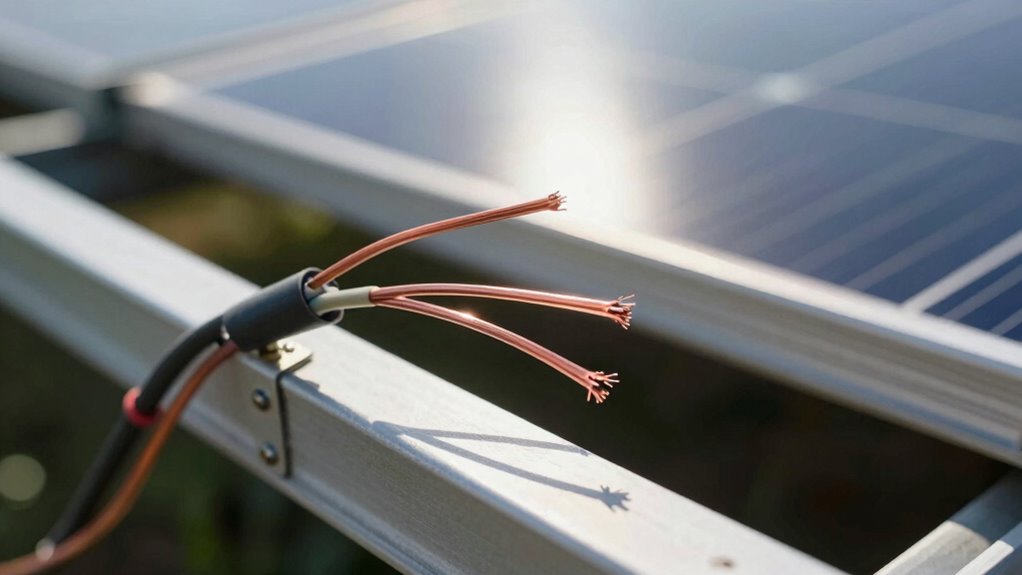
One of the most common mistakes in solar system installation is choosing the wrong wire size, which can lead to safety hazards, system inefficiency, or even system failure. When wiring your solar setup, especially from the panels to the inverter and battery bank, selecting the proper wire gauge isn’t just a technical detail; it’s a vital factor that influences overall performance and safety. If your wires are too thin, they can overheat, potentially causing fires or damaging your equipment. Conversely, using thicker wires than necessary can increase costs without added benefit. The key is to find the right balance based on your system’s current and voltage requirements.
Choosing the correct wire size is essential for safety, efficiency, and cost-effectiveness in your solar system.
Battery compatibility is a vital element to consider when sizing your wires. Different batteries have varying voltage and current specifications, which impacts how much current your wiring must handle safely. If you choose a wire size that’s too small for your battery’s output, you risk voltage drops that reduce the efficiency of charging and discharging cycles. This inefficiency not only hampers your battery’s lifespan but also diminishes the overall output of your solar system. Proper wire sizing ensures your batteries receive the correct voltage without unnecessary loss, maximizing your investment in storage capacity.
Inverter efficiency is directly affected by wire size as well. An undersized wire causes voltage drops as current passes through, which forces your inverter to work harder to deliver usable power. This additional strain can reduce the inverter’s efficiency, meaning less energy gets converted from DC to AC and ultimately wasted. Over time, this inefficiency translates into lower energy output and higher electricity bills. When you choose the correct wire size, you minimize voltage drops and ensure your inverter operates at peak performance, converting the maximum amount of solar energy into usable electricity.
Paying attention to wire length is also essential. Longer runs require thicker wires to compensate for voltage drops, especially when dealing with high current loads. Failing to account for this can lead your system to underperform, wasting potential energy that could be harnessed with proper wire sizing. It’s tempting to cut costs by opting for smaller wires, but doing so jeopardizes system safety, reduces efficiency, and can cause premature component failures. Additionally, understanding the importance of conductor material can influence wire choice, as different materials have varying conductivity and resistance properties that affect overall system performance. Proper consideration of wire gauge standards can help ensure your system is both safe and efficient.

Solar Panel Wire 10 AWG(6mm²) – Solar Extension Cable 100Ft Black & 100Ft Red 10 Gauge Tinned Copper PV Wire for Outdoor Automotive RV Solar Panel Boat Marine (Black+Red)
- Wire Gauge: 10 AWG tinned copper wire
- Material: XLPE insulation for durability
- Temperature Range: -40°F to 248°F (-40°C to 120°C)
As an affiliate, we earn on qualifying purchases.
As an affiliate, we earn on qualifying purchases.
Frequently Asked Questions
How Does Wire Size Affect Solar System Efficiency?
Your wire size directly impacts solar system efficiency because choosing the wrong wire gauge can cause significant voltage drop, reducing power output. If you use too thin a wire, it increases resistance, leading to energy loss and decreased system performance. Conversely, using an appropriately sized wire minimizes voltage drop, ensuring maximum power delivery from your panels to your batteries or inverter, boosting overall efficiency and system longevity.
What Are the Signs of Incorrect Wire Sizing?
Signs of incorrect wire sizing include excessive voltage drop, visible overheating, and dimming lights. When the wire gauge is too small, you’ll notice more heat, which can lead to insulation damage, and you’ll experience a drop in system performance. Keep an eye out for these signs, as they indicate the wire isn’t properly sized, risking efficiency loss and potential safety hazards. Correct wire gauge minimizes voltage drop and guarantees ideal system operation.
Can Improper Wiring Cause Safety Hazards?
Yes, improper wiring can definitely cause safety hazards. If grounding safety isn’t maintained, you risk electric shocks or fires. Poor insulation integrity can lead to short circuits, increasing the danger of equipment damage or personal injury. Always make sure your wiring is correctly sized, grounded, and insulated to protect yourself and your system. Regular inspections help identify potential issues before they turn into serious safety risks.
How Often Should Solar Wiring Be Inspected?
Think of your solar wiring as the veins of your system—constantly flowing with energy. You should inspect it annually, checking for wear on insulation types and ensuring wire color coding remains clear. Over time, exposure can cause deterioration, risking efficiency. Regular inspections help catch issues early, keeping your system healthy and maximizing output. Don’t wait for failure; be proactive to keep your solar veins flowing smoothly.
What Tools Are Needed for Proper Wire Sizing?
To properly size solar wires, you need a wire gauge tool to measure the thickness, guaranteeing it matches the amperage load. You also require a voltage tester and a multimeter for accurate readings. Don’t forget cable insulation to prevent shorts and wire connectors that securely join wires. These tools help you select the right wire gauge, avoid overheating, and ensure your system performs efficiently without energy loss.

Bateria Power Solar Panel Wire 50Ft Black and 50Ft Red Kit, 10AWG (6mm²) Solar Panel Extension Cable PV Tinned Copper Wire for Outdoor Home Off-Grid Photovoltaic Systems Automotive RV Boat Marine
- Length and Gauge: 50Ft 10AWG solar extension cables
- Color Coding: Red positive, black negative insulation
- Material Quality: Tinned copper for low resistance
As an affiliate, we earn on qualifying purchases.
As an affiliate, we earn on qualifying purchases.
Conclusion
If you overlook proper wire sizing, it’s like trying to water a garden with a thin hose—you’ll lose precious energy along the way, leaving your solar system underperforming. Imagine your sunlight-laden panels as a powerful river, and the wires as the pipes guiding that flow. Size them right, and you’ll disclose the full potential of your solar harvest, ensuring every ray of sunshine reaches your batteries efficiently, fueling your home without waste or loss.
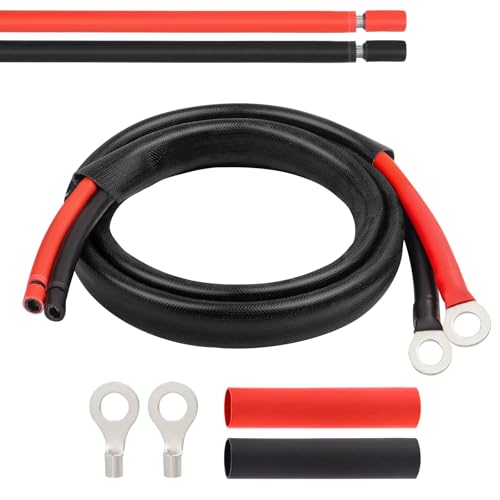
MOOKEERF Solar Battery Cable – 10 Gauge 3FT Power Inverter Cable with PV Flame Retardant Protective Sleeving Connect Battery and Charge Controller for Solar Panel Automotive RV Motorcycle Marine
- Wire Gauge and Material: 10AWG tinned copper for minimal power loss
- Flame Retardant Sleeving: Reduces abrasion, heat resistant up to 392℉
- Double Insulation: XLPE jacket withstands -40°F to 248°F
As an affiliate, we earn on qualifying purchases.
As an affiliate, we earn on qualifying purchases.

Linkstyle 6PCS 2 AWG 6 Inch Battery Cables, Heavy Duty Pure Copper Battery Bank and Inverter Cable Set with Tinned Copper 3/8" Lugs Terminals, for Solar, RV, Marine, Truck, Automotive 12V-48V
- Complete 6-Piece Cable Set: Includes six 6-inch heavy-duty cables
- High-Quality Material: Made from 99.9% pure copper with nickel-plated terminals
- Corrosion-Resistant Insulation: PVC insulation for durability and protection
As an affiliate, we earn on qualifying purchases.
As an affiliate, we earn on qualifying purchases.