Your home uses both 120V and 240V power to guarantee your appliances operate safely and efficiently. Most everyday devices like lamps and computers run on 120V, while large appliances like dryers and ovens need 240V for high power. Proper wiring and grounding are essential to prevent risks and keep your system balanced. Understanding how these voltages work together helps you maintain a safe, reliable home—if you want to learn more, keep exploring this topic.
Get ready for Prime Big Deal Days — try Prime free
Exclusive member deals on October 6–7, plus fast free delivery. Cancel anytime.
As an affiliate, we earn on qualifying purchases.
Key Takeaways
- Different appliances require specific voltages for safe and efficient operation.
- 120V powers everyday devices, while 240V handles high-power appliances like dryers and ovens.
- Proper wiring and grounding ensure safety and prevent electrical hazards in both voltage systems.
- Using the correct voltage prevents appliance damage and maintains optimal performance.
- Understanding both voltages ensures a reliable, balanced electrical system in the home.
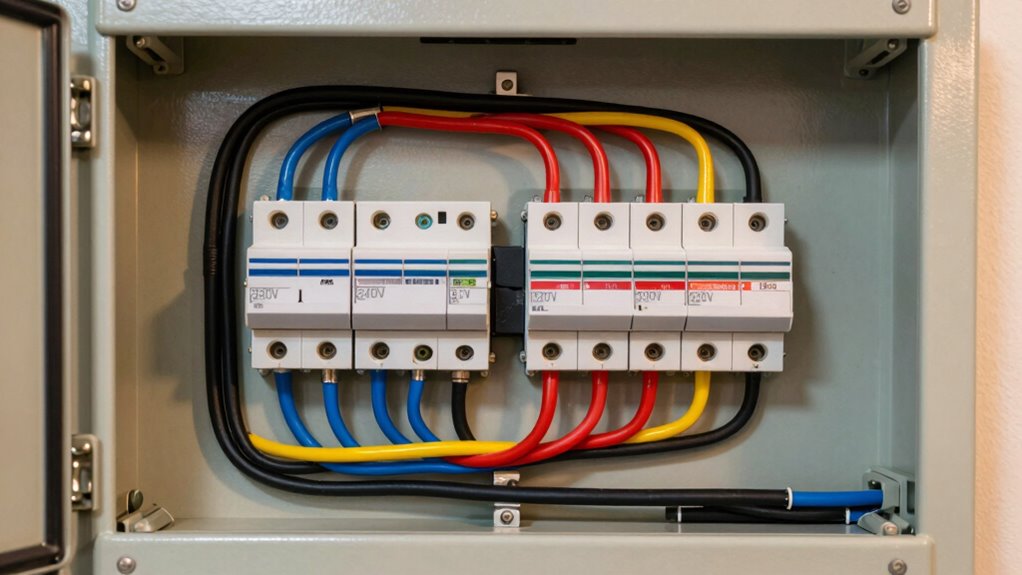
Understanding the power voltage in your home is essential for guaranteeing your appliances operate safely and efficiently. Most homes in North America use both 120V and 240V supplies, and knowing why both matter can save you from potential issues and help you make smarter choices about your electrical setup. The difference in voltage levels isn’t just a technical detail—it directly influences appliance compatibility and how your wiring configuration should be designed. Recognizing the roles of each voltage helps you avoid damage, reduces fire risks, and guarantees your home’s electrical system functions smoothly.
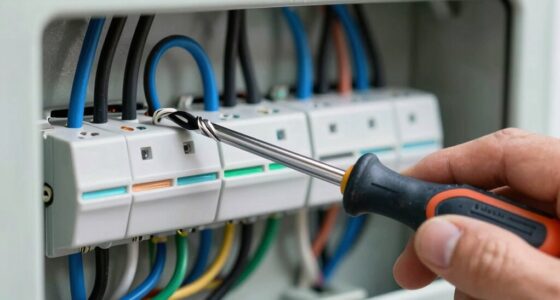
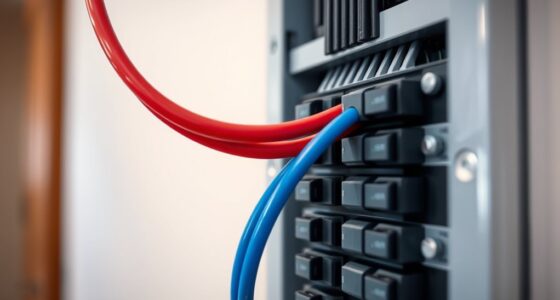
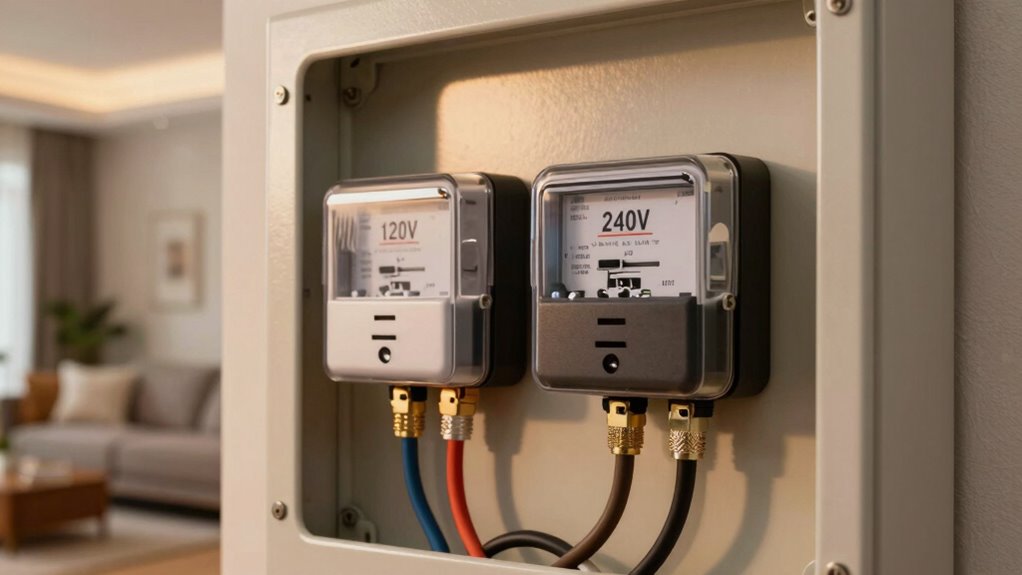
Your standard household outlets deliver 120V, powering most everyday appliances like lamps, computers, and small kitchen devices. These outlets are designed to handle lower voltage, which makes them safe for daily use and easy to install. Meanwhile, 240V outlets are necessary for larger appliances that require more power, such as dryers, ovens, and HVAC systems. These appliances need higher voltage to operate efficiently and safely, which is why they connect to a separate, dedicated circuit. Understanding this distinction is vital because not all appliances are compatible with just any outlet or voltage supply. Attempting to connect an appliance designed for 240V to a 120V outlet could cause it to malfunction or become damaged, and vice versa. Additionally, power supply specifications influence how circuits are wired and protected to ensure safety. Proper wiring configuration plays a critical role in supporting both voltage levels. Typically, your home’s wiring is set up with a main panel that supplies both 120V and 240V circuits. The 120V circuits are derived from a single hot wire, a neutral wire, and a ground wire, which makes them straightforward and safe for most smaller devices. The 240V circuits, on the other hand, involve two hot wires, each carrying 120V but out of phase, which combine to produce 240V. This configuration allows high-power appliances to draw the necessary voltage without overloading the system. Understanding phase relationships between hot wires is crucial for ensuring the safe operation of 240V circuits. Proper grounding is also essential for maintaining safety and preventing electrical shocks throughout your home. Additionally, balanced phase relationships are important to prevent voltage fluctuations and ensure stable operation of your electrical system, especially when multiple high-power appliances run simultaneously.
120V household outlet extension cord
As an affiliate, we earn on qualifying purchases.
As an affiliate, we earn on qualifying purchases.
Frequently Asked Questions
Can I Convert 240V Appliances to 120V?
You can convert 240V appliances to 120V, but you need to take into account voltage conversion and safety considerations. Using a proper transformer or converter is essential to ensure the appliance functions correctly and safely. Never attempt to modify wiring yourself, as improper conversion can cause electrical hazards. Always consult a licensed electrician to handle voltage conversion, ensuring your home’s electrical system remains safe and compliant with codes.
Do All Homes Need Both 120V and 240V Outlets?
Yes, your home needs both 120V and 240V outlets for full circuit compatibility. Imagine plugging in your refrigerator or dryer—these appliances require 240V for efficient operation, while everyday devices like your laptop or TV run on 120V. Voltage conversion isn’t always practical or safe, so having both outlets guarantees you can power everything safely without risking damage or overload.
How Do I Identify 120V Versus 240V Outlets?
To identify 120V versus 240V outlets, look at the outlet’s configuration and voltage compatibility. A standard 120V outlet has two vertical slots and a round grounding hole, suitable for most household appliances. In contrast, a 240V outlet often has two large horizontal slots, sometimes with a third for grounding. Always check outlet identification and voltage ratings before plugging in appliances to guarantee safety and proper voltage compatibility.
Are 240V Outlets Safer Than 120V?
240V outlets aren’t necessarily safer than 120V ones; in fact, they carry higher risks due to increased voltage. About 20,000 electrical fires annually involve higher voltage systems, emphasizing the importance of proper voltage conversion and outlet safety. Always handle 240V outlets carefully, using proper tools and precautions. Remember, safety depends on correct installation and usage, not just the voltage level, so respect both types equally to prevent accidents.
What Appliances Require Both Voltage Types?
You’ll find that appliances like ovens, dryers, and large HVAC systems require both voltage types for voltage compatibility and efficient circuit design. These appliances often need 240V for power-intensive functions, while smaller components operate on 120V. Understanding how circuit design accommodates both voltages guarantees safe, reliable operation. By matching the right voltage to each appliance’s requirements, you optimize performance and maintain safety in your home’s electrical system.
240V heavy-duty power cord for appliances
As an affiliate, we earn on qualifying purchases.
As an affiliate, we earn on qualifying purchases.
Conclusion
Understanding why both 120V and 240V power matter in your home is like knowing the different tools in your toolbox—you need each for specific tasks. 120V powers your everyday devices, keeping life running smoothly, while 240V handles the heavy-duty appliances that make life easier. Together, they create a balanced system, much like a well-orchestrated symphony. Without both, your home wouldn’t function as efficiently or comfortably as it does now.
As an affiliate, we earn on qualifying purchases.
As an affiliate, we earn on qualifying purchases.
Fall Picks
fall essentials
As an affiliate, we earn on qualifying purchases.