

Aluminum service conductors are still common because they’re lightweight, cost-effective, and durable. They’re easier to handle and install, saving you time and labor costs. Aluminum naturally resists corrosion and performs well in harsh environments, reducing maintenance needs. Plus, their flexibility allows for complex wiring layouts. When installed correctly, aluminum conductors meet safety standards and provide reliable electrical service. Keep exploring to discover even more reasons why they’re a smart choice for many applications.
Key Takeaways
- Aluminum conductors are lighter and easier to handle, simplifying installation and reducing labor costs.
- They are cost-effective, offering lower material expenses compared to copper wiring.
- Naturally resistant to corrosion due to a protective oxide layer, ensuring durability in harsh environments.
- Their flexibility allows for easy shaping and installation in complex or tight spaces.
- They meet safety standards when properly installed, providing reliable, long-term performance.
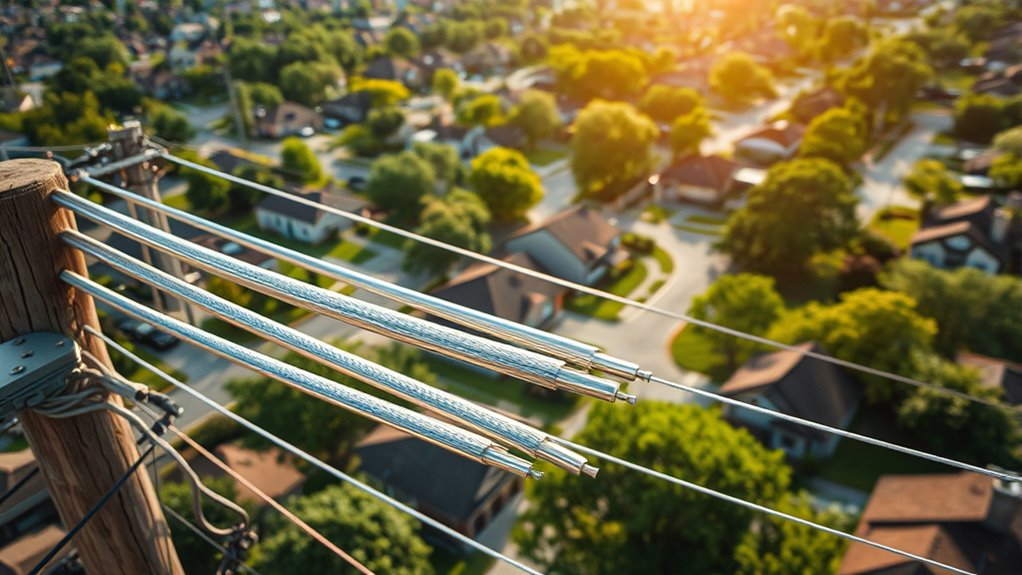
Aluminum service conductors are widely used in electrical systems because they offer a lightweight, cost-effective alternative to copper. When you’re choosing wiring options for your electrical setup, aluminum stands out because it combines affordability with practical benefits. One of the most significant advantages is its corrosion resistance. Aluminum naturally forms a thin oxide layer when exposed to air, which helps protect the metal from rust and corrosion over time. This durability means that your wiring remains reliable even in harsh environments, such as coastal areas or places with high humidity. You won’t need to worry about frequent replacements or maintenance due to corrosion, making aluminum a smart choice for long-term performance. Additionally, their free floating nature allows for easier installation and adjustments in various applications. Cost efficiency is another key reason why aluminum service conductors stay popular. Compared to copper, aluminum is less expensive both in terms of material cost and installation. Because aluminum is lighter, it’s easier and cheaper to handle during installation, reducing labor costs and the need for heavy-duty equipment. This weight advantage also means that longer spans can be achieved with fewer supports, further cutting expenses. If you’re installing or upgrading a large electrical system, these savings can add up quickly, making aluminum a budget-friendly option without sacrificing safety or quality. Despite common misconceptions, aluminum conductors are designed to meet strict safety standards. Proper installation practices, such as using the right connectors and ensuring tight connections, prevent issues like increased resistance or overheating. When you follow manufacturer guidelines, aluminum conductors perform just as well as copper in most applications. Their ability to resist corrosion enhances their reliability, ensuring that your electrical system remains safe and functional over many years. Additionally, aluminum’s flexibility allows it to be shaped and bent to fit various installation scenarios. This adaptability means you can work with it more easily in tight spaces or complex layouts, saving you time and effort. It’s also compatible with various types of connectors and fittings, which further simplifies installation and maintenance.
Frequently Asked Questions
How Does Aluminum Compare to Copper in Durability?
Aluminum is quite durable, especially when it comes to corrosion resistance, making it suitable for outdoor use. While its tensile strength is lower than copper’s, proper installation techniques can mitigate this. You’ll find aluminum conductors flexible and lightweight, easing handling and installation. Overall, aluminum’s resistance to corrosion and good tensile strength make it a reliable choice, especially when cost and weight are important considerations in your electrical system.
Are Aluminum Conductors More Cost-Effective Long-Term?
Aluminum conductors are more cost-effective long-term, like a wise investment that pays off over time. They offer significant cost savings due to their lower material costs and lighter weight, making installation ease a bonus. Their durability ensures fewer repairs, saving you money in the long run. Choosing aluminum means you’re balancing affordability now with reliability later, making it a smart move for your electrical needs.
What Safety Concerns Exist With Aluminum Conductors?
You should be aware that aluminum conductors pose safety concerns mainly related to handling safety and corrosion resistance. Aluminum is more prone to oxidation, which can weaken connections over time if not properly maintained. When handling, use protective gear to avoid cuts or injury from sharp edges. Ensuring proper installation and regular inspections helps mitigate corrosion issues, maintaining safety and performance in your electrical system.
How Are Aluminum Conductors Installed in Existing Infrastructure?
Imagine threading a silver ribbon through an intricate maze—that’s similar to installing aluminum conductors in existing infrastructure. You follow precise installation procedures, guaranteeing proper connections and safety measures. Compatibility challenges, like fitting aluminum into older copper setups, require adapters or transition joints. You must be careful to prevent corrosion and ensure secure contacts, maintaining system integrity. With careful planning, aluminum conductors seamlessly integrate, providing reliable, lightweight power delivery.
What Advancements Have Improved Aluminum Conductor Performance?
Advancements like enhanced corrosion resistance and flexibility improvements have notably boosted aluminum conductor performance. You’ll notice better durability against environmental factors, reducing maintenance needs. The increased flexibility makes installation easier, especially in tight or complex setups. These innovations ensure aluminum conductors remain reliable, cost-effective, and easy to work with, helping you build safer, long-lasting electrical systems. Such developments keep aluminum a top choice for service conductors today.
Conclusion
So, next time you look up at those wires, imagine them as the threads weaving your home’s connection to the world. Aluminum service conductors remain common because they’re lightweight, durable, and cost-effective—like sturdy, graceful vines climbing toward the sky. They may seem simple, but they’re the unseen heroes powering your everyday life. Remember, beneath the surface, these conductors silently hold the world together—an unbreakable link woven with strength and resilience.