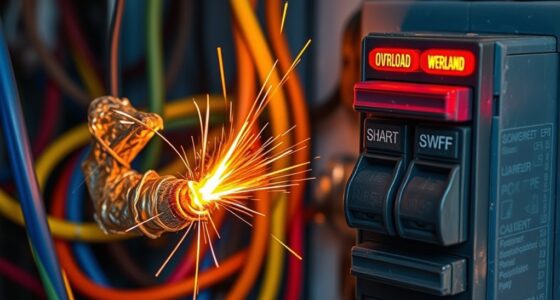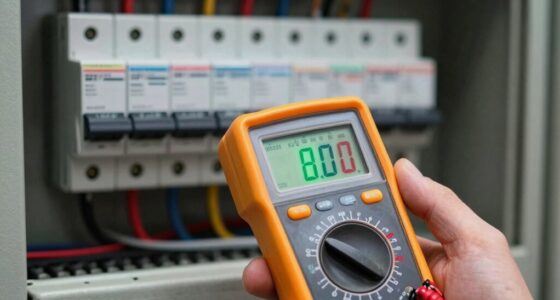

When large appliances like refrigerators or air conditioners start, they draw a burst of high inrush current that temporarily reduces your household voltage. This sudden power draw causes your lights to flicker or dim briefly because the increased current momentarily overwhelms your system, leading to voltage drops. If you want to understand how this works and how to reduce it, explore further to learn more about managing inrush current and protecting your electrical system.
Open a free Amazon Business account
Business pricing, bulk buying and tax-exempt orders.
As an affiliate, we earn on qualifying purchases.
Key Takeaways
- Inrush current is a surge of high electrical current when appliances like motors or compressors start.
- This surge temporarily reduces voltage in the circuit, causing lights to dim or flicker.
- Large appliances draw more power at startup, creating a voltage drop across wiring.
- Voltage drops during inrush current affect neighboring devices, leading to dimming of lights.
- Proper wiring, circuit capacity, and load management can minimize these temporary voltage fluctuations.
inrush current limiter for appliances
As an affiliate, we earn on qualifying purchases.
As an affiliate, we earn on qualifying purchases.
What Is Inrush Current and How Does It Work?

When you power on an electrical device, it often draws a much higher current than during normal operation. This surge, known as inrush current, happens because the device’s electric circuit initially resists the change in current flow. When the device starts, components like motors or transformers need extra energy to reach their operating state. This sudden increase in current flow can be several times higher than the steady-state current. The inrush current quickly diminishes once the device stabilizes. Understanding this behavior helps you see why appliances momentarily cause lights to flicker or circuits to overload. It’s a normal part of how electrical devices operate, designed to guarantee they start up correctly before settling into their regular power consumption.
voltage stabilizer for home appliances
As an affiliate, we earn on qualifying purchases.
As an affiliate, we earn on qualifying purchases.
Common Appliances That Cause Lights to Flicker

You might notice your lights flicker whenever your refrigerator compressor starts or your air conditioner kicks on. Power tools can also cause temporary dips in lighting when they activate. These appliances draw a surge of current that affects your home’s electrical flow, leading to flickering. This phenomenon is often related to inrush current, which is the initial surge of current required to start these devices. Understanding power fluctuations can help homeowners identify and address underlying electrical issues more effectively. Additionally, electrical wiring and circuit capacity play crucial roles in how well your electrical system handles these surges.
Refrigerator Compressors
Refrigerator compressors are among the most common household appliances that cause lights to flicker. When the compressor starts, it draws a surge of inrush current, known as refrigerator startup, which can cause your lights to dim briefly. This sudden spike happens because the compressor’s motor requires a large burst of power to overcome initial resistance. During this moment, you might notice flickering or dimming, especially if your wiring or circuit is sensitive. Think of it like a wave that quickly passes. To visualize, consider this table:
| Stage | Effect on Lights |
|---|---|
| Compressor startup | Lights flicker briefly |
| Inrush current | Power surge causes dimming |
| Compressor surge | Momentary voltage drop |
| Running steady | Lights stabilize |
| Shutdown | No flicker |
This cycle repeats each time your fridge turns on. Additionally, electrical resistance within your wiring can influence the severity of flickering during these surges.
Air Conditioner Motors
Air conditioner motors often cause lights to flicker because they draw a large inrush current at startup. When you turn on your AC, the motor needs a surge of power to overcome inertia and start spinning. This sudden power demand creates a power surge effect, which can temporarily reduce voltage in your home’s electrical system. As a result, your lights might dim or flicker briefly. The inrush current from air conditioner motors is remarkably higher than their running current, making them a common cause of flickering lights during startup. If you notice frequent flickering whenever your AC kicks on, it could indicate that your electrical system isn’t handling these power surge effects well, possibly requiring an upgrade or the installation of surge protection devices. Additionally, power quality can significantly influence how your electrical system responds to such surges, affecting the stability of your lighting. Properly managing electrical loads can help reduce the occurrence of flickering caused by appliance startup currents. Regular maintenance of your electrical system can also prevent issues related to voltage fluctuations that exacerbate flickering phenomena.
Power Tools Activation
Ever wonder why your lights flicker when you turn on your power tools? It’s due to inrush current, which happens when motors start suddenly. Power tools like drills and saws draw a surge of electricity that can temporarily dip your lights. This effect is similar to how battery storage systems and renewable energy setups experience initial power spikes during startup. Understanding this helps you realize that high startup currents impact your home’s electrical load. Properly managing comfort solutions for electrical appliances can help minimize flickering issues.
surge protector with inrush current management
As an affiliate, we earn on qualifying purchases.
As an affiliate, we earn on qualifying purchases.
Why Do Lights Dim When Large Devices Start?

When large devices turn on, they create a sudden power surge that briefly lowers the voltage in your home. This voltage drop causes your lights to dim temporarily. Understanding these voltage dynamics helps explain why your lights flicker during appliance startup. Inrush current is the key electrical phenomenon responsible for this temporary voltage fluctuation. Certain electrical systems, like those found in Mazda Tuning, can be designed to better handle such surges, minimizing the flickering effect. Incorporating proper electrical wiring and surge protection can also help reduce the impact of these inrush currents. Additionally, using advanced circuit breakers can help mitigate the effects of sudden current surges, providing a more stable power supply during appliance startup. Recognizing the importance of voltage regulation can further improve your home’s electrical stability during these events.
Power Surge Effects
Large appliances like refrigerators or air conditioners draw a significant amount of current when they first turn on, causing a sudden power surge. This surge creates voltage fluctuations in your electrical system, temporarily disrupting power stability. When these surges occur, the extra current pulls down the voltage levels, making your lights dim. The power grid tries to compensate, but the rapid change can momentarily overload the system. These power surge effects are especially noticeable when multiple large devices start simultaneously. Understanding this helps you recognize that the dimming isn’t a malfunction but a normal response to the surge. To maintain consistent lighting, consider installing surge protectors or dedicated circuits for high-power appliances, helping to stabilize voltage fluctuations and improve overall power stability. Additionally, managing electrical loads responsibly can also contribute to a healthier, more sustainable energy use, as understanding power supply stability is crucial for preventing electrical issues. Being aware of power fluctuations can help you take proactive measures to protect your devices and maintain a steady power supply. Recognizing these effects can also assist in preventing electrical damage and prolonging the lifespan of your appliances.
Voltage Drop Dynamics
The sudden influx of current from large appliances causes a temporary drop in voltage levels in your electrical system. This phenomenon, known as voltage drop dynamics, occurs because of circuit impedance, which resists sudden current changes. When a heavy device starts, voltage fluctuations happen because: 1. Increased inrush current temporarily raises circuit impedance, reducing voltage downstream. 2. The electrical load causes a voltage dip across wiring and connections. 3. Lights dim because they receive less voltage, impacting their brightness temporarily. 4. Proper wiring capacity and circuit design can help mitigate these fluctuations. Understanding this process helps you see that the voltage drop isn’t a fault but a natural response to large appliances’ inrush current. These quick fluctuations illustrate the delicate balance within your electrical system and highlight why proper wiring and capacity matter. Additionally, AI security research emphasizes the importance of safety measures in complex systems, underscoring how critical sound circuit design is for preventing issues. Recognizing the role of circuit impedance is crucial in comprehending how electrical systems respond to sudden load changes. Furthermore, understanding electrical load behavior can help prevent unnecessary concerns about system performance.
circuit breaker for high inrush current appliances
As an affiliate, we earn on qualifying purchases.
As an affiliate, we earn on qualifying purchases.
The Electrical Principles Behind Inrush Current

Understanding the electrical principles behind inrush current involves recognizing how electrical devices initially draw a surge of current when they’re powered on. When you turn on an appliance, the device’s internal components, like transformers or motors, create a temporary demand for a large amount of current. This happens because, at startup, the resistance within these components is low, allowing more current to flow easily. The electrical principles here revolve around the relationship between voltage, current, and impedance. As the device begins to operate, its internal impedance increases, and the current flow stabilizes to its normal level. This initial surge, driven by the device’s design and electrical properties, explains why inrush current can be markedly higher than the steady-state current. Additionally, the power supply design of the appliance influences how significant this surge can be during startup, as some designs incorporate inrush current limiters to protect the device and electrical infrastructure. The presence of electrical components with low resistance at startup is a key factor contributing to the inrush phenomenon.
How Electrical Systems Respond to Sudden Power Surges

Have you ever wondered how electrical systems handle sudden power surges? When a surge occurs, your system reacts to maintain voltage stability, but you might notice power fluctuations. Here’s what happens:
Electrical systems respond to power surges by protecting components and causing brief voltage fluctuations.
- Circuit breakers trip or reduce current flow to protect components.
- Voltage levels drop briefly, causing lights to dim or appliances to momentarily lose power.
- System components absorb the surge energy, often resulting in temporary instability until voltage levels normalize.
- Proper system design can help reduce the impact of these surges and improve overall stability.
These responses prevent damage but can cause noticeable disruptions. Your electrical system’s ability to respond quickly keeps devices safe, yet frequent surges may stress the infrastructure over time. Understanding these reactions helps you appreciate why power fluctuations happen and the importance of protective measures to maintain steady voltage stability.
Ways to Minimize the Impact of Inrush Current

To reduce the impact of inrush current, you can implement several practical strategies that limit the initial surge when equipment powers on. One effective method is optimizing circuit design by incorporating soft-start circuits, which gradually increase power, reducing sudden demand. Proper voltage regulation also helps maintain stable voltage levels, preventing voltage dips that can worsen inrush effects. Using power limiting devices like NTC thermistors can automatically restrict current flow during startup, protecting your system. Additionally, spreading out the startup times of multiple appliances prevents simultaneous surges. These techniques work together to smooth power progressions, minimize dimming, and extend equipment lifespan. By focusing on sound circuit design and stable voltage regulation, you make your electrical system more resilient and efficient during startup periods.
Safety Considerations When Managing Inrush Currents

Managing inrush current isn’t just about minimizing electrical stress; it’s also about ensuring safety. Excessive inrush can lead to hazards like ground faults or circuit overloads. To protect yourself and your systems, consider these safety measures:
- Install proper circuit protection devices, like circuit breakers designed to handle inrush currents.
- Use ground fault interrupters (GFCIs) to quickly shut off power if a ground fault occurs during startup.
- Regularly inspect wiring and connections to prevent loose contacts that could cause sparks or faults.
Tips for Homeowners to Reduce Light Flickering

Light flickering can often be a sign of electrical issues related to inrush currents, especially when large appliances or LED lights turn on. To reduce flickering, consider improving your home’s lighting design by installing dimmer switches or voltage stabilizers, which help manage sudden power surges. Upgrading to energy-efficient LED fixtures with compatible drivers can also minimize inrush effects. Verify your wiring and connections are up to code, as loose or outdated wiring worsens flickering. Additionally, spreading out the use of high-power appliances can prevent voltage dips. Investing in these upgrades not only stabilizes your lighting but also enhances your home’s energy efficiency. Regular electrical inspections help catch issues early, keeping your lighting steady and your energy costs low.
Frequently Asked Questions
Can Inrush Current Damage Household Appliances?
Yes, inrush current can damage household appliances if it causes frequent power surges. When appliances start, the sudden surge of current stresses electrical components, potentially shortening their lifespan. To protect your appliances, avoid overloading circuits and consider installing surge protectors. Regularly inspecting your electrical system helps prevent damage, ensuring your appliances run smoothly without risking harm from unexpected power surges or inrush currents.
How Do Circuit Breakers Handle Inrush Current?
Think of circuit breakers as vigilant gatekeepers, designed to dance with inrush current without breaking a sweat. They handle sudden surges through circuit breaker coordination, ensuring the breaker trips only if the current exceeds safe limits consistently. Surge suppression devices work alongside, absorbing the initial spike. This teamwork prevents nuisance trips, protecting your appliances and maintaining smooth operation, even when appliances demand a hefty burst of power at startup.
Are There Appliances That Don’t Cause Dimming?
Some appliances, like modern LED lights or well-designed appliances with soft-start technology, don’t cause dimming or power surges when they turn on. These appliances have a minimal inrush current, reducing the appliance quirk that causes dimming. If you notice issues, upgrading to devices with better inrush current management can help. This way, you avoid the power surge effect that typically dims your lights during startup.
How Does Wiring Length Affect Inrush Current?
Imagine the wiring in your home as a winding river. As cable length increases, wiring resistance grows, making it harder for current to flow smoothly. Longer cables mean more resistance, causing a drop in voltage during appliance startup. This inrush current becomes more noticeable, leading to dimming lights. Shorter cables reduce wiring resistance, allowing inrush current to flow easily and keeping your lights steady.
What Are Advanced Methods to Control Inrush Current?
You can control inrush current effectively by implementing soft start techniques and active inrush control methods. Soft start devices gradually increase power to appliances, reducing sudden current surges and dimming lights. Active inrush control uses electronic components like thyristors or triacs to modulate current flow during startup. These advanced methods help protect your electrical system, extend appliance lifespan, and guarantee stable lighting when large appliances turn on.
Conclusion
Understanding inrush current helps you see why lights flicker when appliances start. By recognizing the signs and taking simple steps, you can reduce the impact and keep your home’s electrical system running smoothly. Remember, a stitch in time saves nine—addressing electrical issues early prevents bigger problems later. Stay aware, be proactive, and your home will remain safe and bright, even when big appliances kick on.
Flea & tick season Picks
flea and tick prevention
As an affiliate, we earn on qualifying purchases.