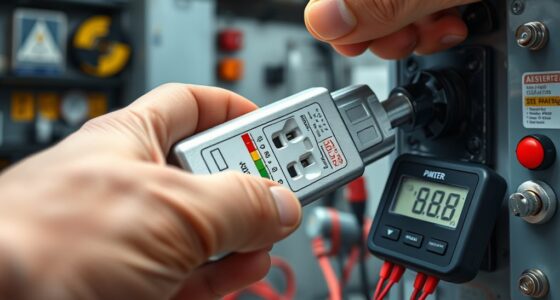
Non-contact voltage testers are great for quickly checking if wires are live and ensuring safety before working on electrical systems. They’re simple to use and help you identify live points without touching the wires, saving time and effort. However, they can’t measure voltage levels or test for continuity, and their accuracy can be affected by interference or poor wiring. To get a complete picture, it’s helpful to combine them with other tools—more details await beyond this overview.

Get backup power and energy gear delivered free with Prime
- Fast, free delivery on millions of items
- Prime Video, Amazon Music and more included
- Member-only deals all year
Key Takeaways
- Non-contact voltage testers are ideal for quick safety checks to confirm if wires are live without direct contact.
- They cannot measure specific voltage levels or diagnose detailed electrical issues.
- Useful for identifying live circuits during troubleshooting, saving time and reducing risk.
- Limitations include potential false readings caused by electromagnetic interference or wiring conditions.
- Should be used with other tools like multimeters for comprehensive electrical testing and verification.
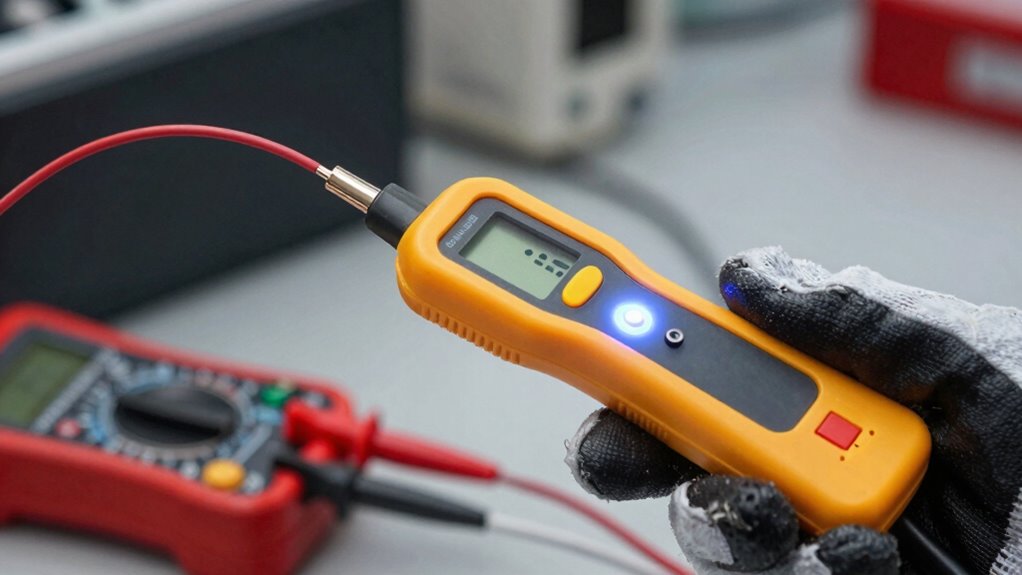
These testers are also invaluable during circuit troubleshooting. When troubleshooting electrical problems, you need to quickly determine if power is reaching certain points in a circuit. A non-contact voltage tester provides an immediate yes-or-no answer, saving you time and effort. Instead of setting up complex testing equipment or risking contact with live wires, you can simply bring the tester close to a wire, outlet, or switch. If the tester lights up or beeps, you know the circuit is live. If it doesn’t, you can safely proceed to investigate further, knowing that no electrical current is present in that specific part of the system. This simplifies diagnosing problems and helps you isolate faulty components with confidence. Additionally, understanding projector technology can aid in creating optimal viewing environments by controlling ambient light and enhancing image quality.
Furthermore, the accuracy of non-contact voltage testers can be affected by wiring conditions, making it essential to use them alongside other testing tools for comprehensive electrical assessments. They are also useful for quick safety checks, allowing you to verify the presence of voltage before beginning work on electrical systems. However, these testers do have limitations. They’re not designed for detailed circuit troubleshooting, like measuring voltage levels or testing for continuity. They only indicate whether voltage is present, not how much or in what phase. This means they shouldn’t replace multimeters or other precise testing tools when you need detailed information about a circuit’s condition. Additionally, these testers can sometimes give false positives or negatives, especially if the wiring is poorly insulated or if there’s electromagnetic interference nearby. They also don’t provide information about grounding safety beyond indicating if a wire is live, so you’ll still need to verify grounding and wiring integrity with appropriate tools. In some cases, electromagnetic interference from nearby devices may cause unreliable readings, emphasizing the importance of using a combination of testing methods. It’s also worthwhile to understand that holistic SEO strategies can improve your overall safety and efficiency by ensuring your electrical systems meet current standards and best practices.
As an affiliate, we earn on qualifying purchases.
Frequently Asked Questions
Can Non-Contact Voltage Testers Detect Live Wires Through Insulation?
Yes, non-contact voltage testers can detect live wires through insulation, but their accuracy depends on insulation resistance and voltage differentiation. You should understand that thick or high-quality insulation might reduce the tester’s ability to sense voltage, so it’s not foolproof. Always verify with a multimeter if you need precise measurements, and remember that these testers are mainly for quick, initial checks rather than detailed diagnostics.
Are Non-Contact Testers Safe to Use on All Electrical Systems?
Yes, non-contact testers are generally safe for most electrical systems when you follow safety precautions. However, you should be aware of device limitations, like their inability to detect low-voltage or deeply insulated wires. Always wear protective gear, keep your hands dry, and double-check the tester’s instructions. These safety precautions help prevent accidents, but understanding device limitations makes sure you don’t rely on them for critical or complex electrical work.
How Accurately Can Non-Contact Voltage Testers Identify Voltage Levels?
Imagine a thin, invisible lightning bolt dancing through wires—that’s what a non-contact voltage tester detects. Its voltage sensitivity varies, so it can identify live wires with decent accuracy, but it’s not pinpoint precise. Calibration accuracy influences how well it reads different voltage levels, often giving you a quick yes or no rather than exact numbers. You can rely on it for safety checks, but not for detailed voltage measurements.
Do Environmental Factors Affect the Performance of Non-Contact Voltage Testers?
Environmental impact can influence how well your non-contact voltage tester performs, especially in extreme temperatures or high humidity, which may cause false readings or reduce accuracy. Additionally, environmental factors like dust, moisture, or chemicals can affect tester durability over time. To guarantee reliable performance, choose a tester built to withstand tough conditions, and always store it properly to minimize environmental impact on its functionality.
Can Non-Contact Voltage Testers Be Used for Troubleshooting Complex Electrical Issues?
While non-contact voltage testers are handy, they’re best suited for simple checks rather than advanced troubleshooting of complex wiring. They can help you quickly identify live circuits but fall short in diagnosing intricate issues involving multiple components or hidden faults. For complex electrical problems, you’ll want to combine their use with more detailed tools and techniques, ensuring accurate diagnostics without missing subtle or deep-seated issues.
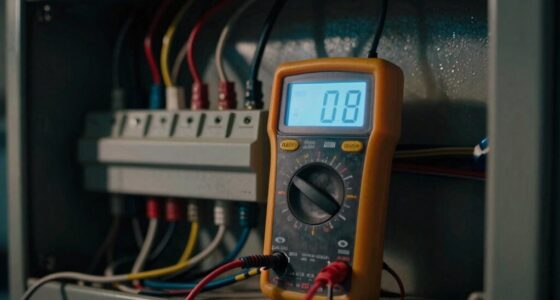
electrical circuit tester multimeter
As an affiliate, we earn on qualifying purchases.
As an affiliate, we earn on qualifying purchases.
Conclusion
While non-contact voltage testers are handy for quick checks and avoiding electrical shocks, they aren’t foolproof. Some models may give false positives or miss live wires, leading to potential hazards. Trusting them entirely could be risky—think of them as a first step, not a definitive test. Always verify with a multimeter or consult a professional for critical tasks. Remember, even the best tools have their limits—use them wisely and stay safe.
As an affiliate, we earn on qualifying purchases.
As an affiliate, we earn on qualifying purchases.
Fall Picks
fall essentials
As an affiliate, we earn on qualifying purchases.