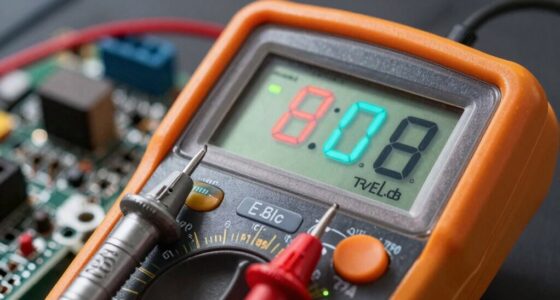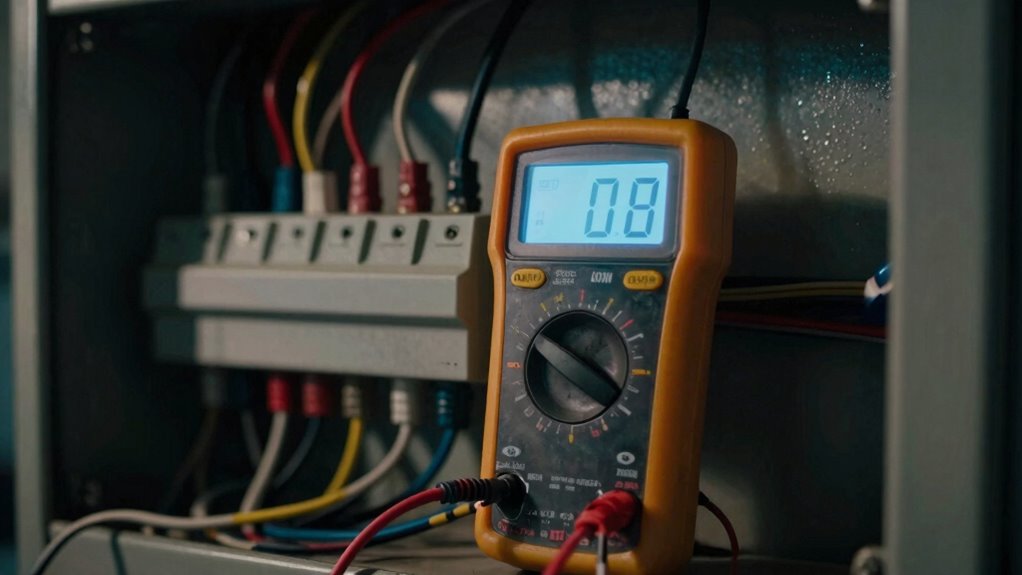

Ghost voltage occurs when small, false voltages appear on wires due to capacitive coupling or residual charges, even if the circuit is off. These readings can mislead you into thinking a circuit is live, risking unnecessary work or safety issues. It’s important to use the right tools, like low-impedance testers, to confirm if the voltage is real. Understanding this phenomenon helps prevent mistakes—stay with us to find out how to accurately diagnose and troubleshoot these tricky signals.

Get backup power and energy gear delivered free with Prime
- Fast, free delivery on millions of items
- Prime Video, Amazon Music and more included
- Member-only deals all year
Key Takeaways
- Ghost voltage is a false reading caused by capacitive coupling or induced currents, not actual live voltage.
- Low-impedance testers can confirm if a voltage is real or just ghost voltage.
- Ghost voltage typically appears on open or disconnected wires and isn’t a shock hazard.
- Proper measurement techniques and tools prevent misdiagnosis and ensure safety.
- Understanding ghost voltage helps troubleshoot accurately and avoid unnecessary repairs.
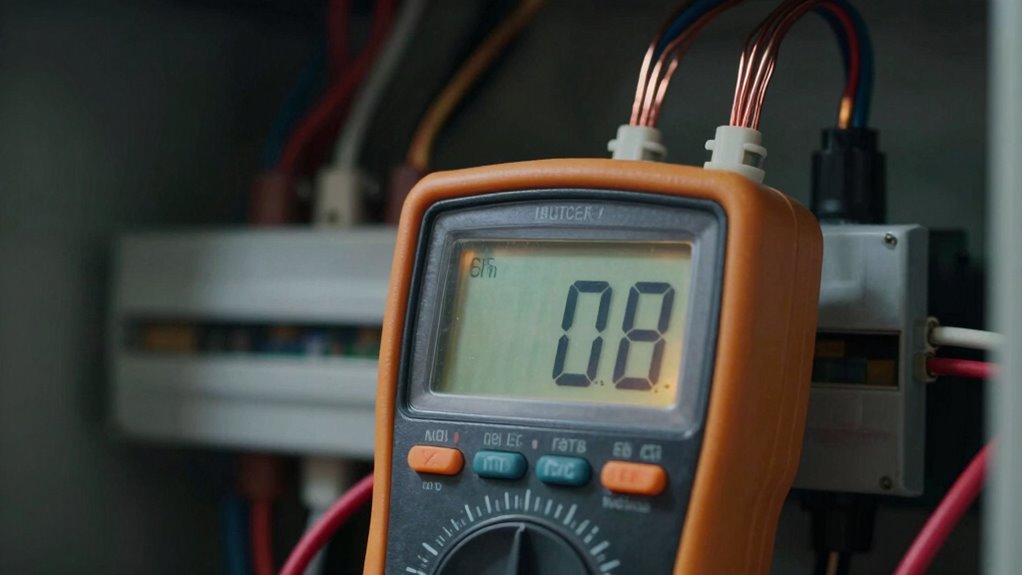
Many electricians have encountered what’s known as ghost voltage—small, lingering readings on a circuit that seem real but often aren’t. These faint voltages can be confusing, especially when you’re trying to diagnose electrical issues or confirm the safety of a circuit. Understanding what ghost voltage is and how to accurately measure it is vital for maintaining electrical safety and ensuring reliable troubleshooting. When you’re dealing with voltage measurement techniques, it’s important to recognize that these tiny voltages can appear due to capacitive coupling, induced currents, or even residual charge in the wiring. They don’t usually pose a shock hazard, but misinterpreting them could lead to unnecessary repairs or unsafe assumptions about the circuit’s condition.
Ghost voltage can cause confusing readings; understanding how to measure it ensures safe, accurate electrical troubleshooting.
To differentiate ghost voltage from actual live voltage, you should use the right measurement tools and techniques. A standard multimeter set to voltage mode can sometimes give you a reading, but it might not tell the whole story. When you encounter a small voltage reading, try using a low-impedance tester or a solenoid tester. These devices are designed to absorb the small charge that causes ghost voltage, allowing you to determine if the circuit is truly energized or if the reading is just a false signal. If the voltage drops to zero when tested with a low-impedance device, you’re probably dealing with ghost voltage. This knowledge helps you preserve electrical safety by avoiding unnecessary disconnections or shutdowns. Recognizing the causes of ghost voltage can further improve your troubleshooting accuracy and safety.
Proper voltage measurement techniques are vital when working with complex wiring systems or in environments where safety is paramount. Always start by turning off power before testing, and then use appropriate tools to confirm the circuit’s status. Remember that ghost voltage can appear on open or disconnected wires due to capacitive effects. This doesn’t mean the circuit is live, but it’s a reminder to proceed with caution. Recognizing ghost voltage and knowing how to measure correctly helps prevent accidents, reduces troubleshooting time, and improves your overall electrical safety. Additionally, understanding how capacitive coupling influences voltage readings can further improve diagnostic accuracy. Being aware of electrical phenomena like ghost voltage enhances your ability to troubleshoot effectively and safely.
Ultimately, understanding ghost voltage isn’t just about avoiding false alarms; it’s about applying precise voltage measurement techniques to safeguard and properly diagnose. When you’re aware of how these small voltages behave, you can distinguish between real, live circuits and harmless residual charges. This knowledge empowers you to work confidently and safely, reinforcing best practices in electrical safety and troubleshooting.
As an affiliate, we earn on qualifying purchases.
Frequently Asked Questions
Can Ghost Voltage Cause Electrical Hazards?
Ghost voltage itself typically doesn’t cause electrical hazards, but it can lead to incorrect voltage testing and misdiagnosed issues. When you encounter ghost voltage, it may seem like a danger, but it’s usually due to stray or induced voltage, not a live, dangerous current. However, always prioritize electrical safety by properly testing and verifying circuits before handling. If unsure, consult a professional to prevent potential hazards.
How Accurate Are Ghost Voltage Testers?
Ghost voltage testers are fairly accurate for detecting static or induced voltages, but their readings can sometimes be misleading. Theoretical explanations suggest that these testers measure small voltages caused by capacitive coupling, not actual current flow. Testing methods, like using a multimeter or confirming with a load test, help guarantee accuracy. Keep in mind, ghost voltage readings often don’t indicate a real hazard, but proper testing confirms safety.
Do All Ghost Voltages Indicate Wiring Problems?
Imagine your wiring as a quiet river, sometimes ripples appear without a current—these are ghost voltages. Not all ghost voltages signal wiring problems; some are harmless residuals during voltage testing. When doing wiring inspections, you need to distinguish between real issues and these faint signals. Use proper tools and methods to interpret your readings accurately, ensuring you don’t mistake harmless ripples for dangerous currents.
Can Ghost Voltage Affect Sensitive Electronic Devices?
Ghost voltage, also known as phantom currents or voltage illusions, can affect sensitive electronic devices. These small voltages, often caused by nearby wiring or electromagnetic interference, might not seem harmful but can introduce noise or disrupt delicate electronics. You should be cautious, especially with precision equipment, as even these tiny phantom currents can cause malfunctions or inaccuracies, making it essential to identify and mitigate ghost voltages in your electrical system.
How Can I Permanently Eliminate Ghost Voltage?
Think of eliminating ghost voltage as sealing cracks in a dam. To do this, you should perform a proper voltage measurement using a high-impedance meter to detect any residual voltage. Then, guarantee electrical isolation by properly grounding and troubleshooting your wiring. Installing a load or a resistor across the circuit can also help drain any lingering voltage, making your readings more accurate and preventing ghost voltage from affecting sensitive electronics permanently.
As an affiliate, we earn on qualifying purchases.
Conclusion
So, next time you see that ghost voltage reading flicker on your meter, remember it’s often just a coincidence—an unexpected whisper from your wiring, not a haunting. Sometimes, what seems like a spectral anomaly is simply the universe’s subtle way of reminding you to look closer, question what you see, and trust your instincts. After all, in the end, it’s these tiny coincidences that often lead to the greatest discoveries.
multimeter for electrical troubleshooting
As an affiliate, we earn on qualifying purchases.
As an affiliate, we earn on qualifying purchases.
circuit tester for ghost voltage
As an affiliate, we earn on qualifying purchases.
As an affiliate, we earn on qualifying purchases.
Halloween Picks
halloween
As an affiliate, we earn on qualifying purchases.