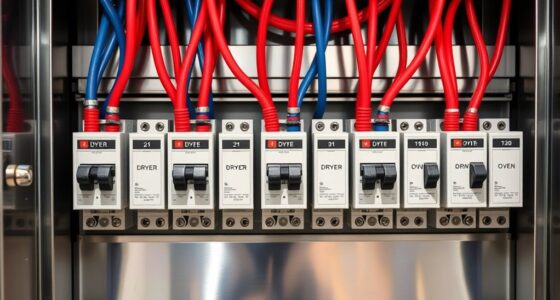

Motors need more juice to start because they require a high initial electrical current to produce enough torque to overcome inertia. When you turn the key or press the start button, your motor relies on this surge of power to begin turning. Without enough current, the motor may struggle or won’t start at all. If you want to understand how electrical current influences motor starting and what affects it, keep exploring further.
Key Takeaways
- Motors require a high initial current to generate sufficient startup torque to overcome inertia.
- Adequate electrical current is essential to initiate motor rotation effectively.
- Insufficient current leads to weak torque, causing difficulty or failure to start.
- Larger capacity batteries provide more energy, ensuring the motor receives enough “juice” to begin turning.
- Proper electrical connections maximize current flow, enabling reliable motor starts.
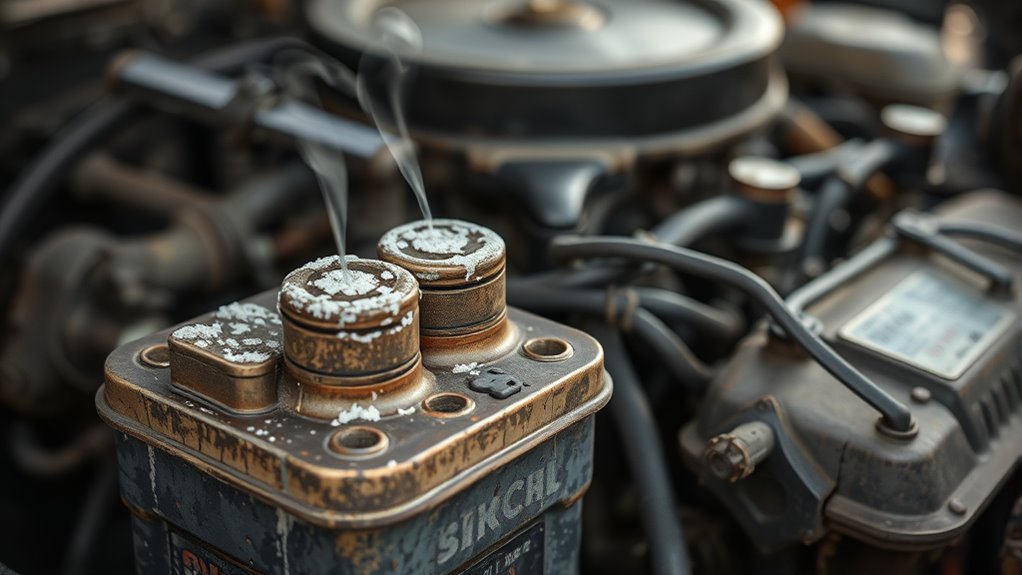
If your motor struggles to start, it’s often because it isn’t getting enough electrical current. When you turn the key or press the button, the motor’s success depends heavily on the amount of energy supplied. One essential factor here is battery capacity. A battery with low capacity simply can’t provide the necessary current to jump-start the motor effectively. Think of battery capacity as the fuel tank for your vehicle’s electrical system; if it’s too small or drained, the motor won’t receive the power it needs to get moving. A larger capacity means more stored energy, which translates into a higher likelihood of delivering a strong, reliable current during startup. If your battery is aging or frequently drained, it may lack the juice to meet the motor’s demands, leading to sluggish starts or complete failure to start.
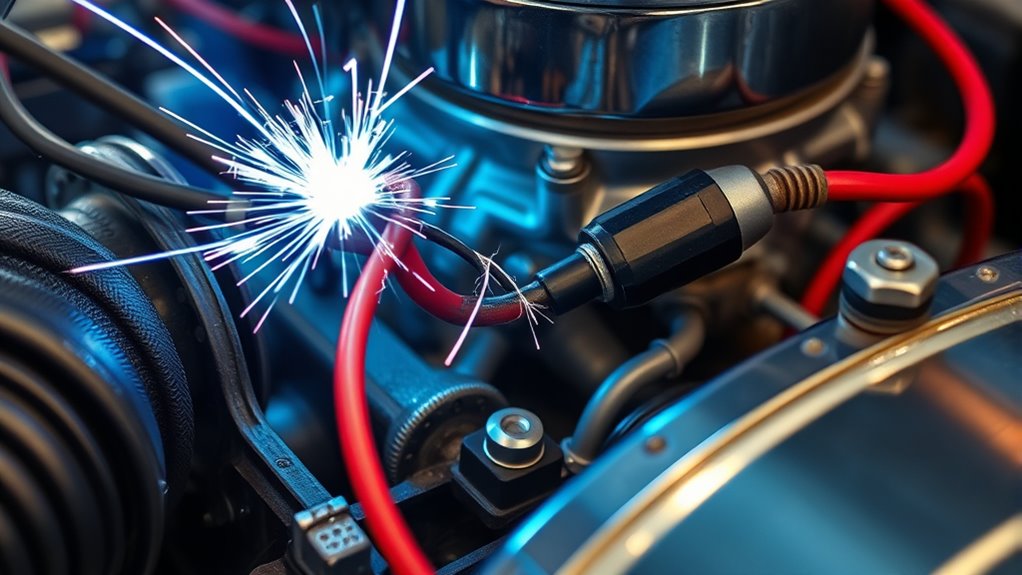
Another vital element is startup torque, which refers to the initial rotational force your motor needs to overcome inertia and begin turning. When you try to start your motor, it requires a burst of high current to generate enough torque. If the electrical current supplied is insufficient, the motor won’t produce enough startup torque, and it simply won’t turn over. Think of startup torque as the push needed to get a heavy object rolling; without enough force, it stays put. Your motor’s ability to generate this torque depends heavily on the electrical current being supplied from the battery. If the battery can’t provide a high enough current—either because of low capacity, aging, or poor connections—the motor will struggle to reach the necessary torque, making it hard or impossible to start.
Additionally, high-quality electrical connections can significantly influence the amount of current reaching the motor, ensuring that it receives enough power to start reliably.
In practical terms, if you notice your vehicle or machine has trouble starting, it’s worth checking the battery’s capacity and health. Upgrading to a battery with higher capacity can guarantee more consistent power delivery, especially in cold weather or after long periods of inactivity. Additionally, ensuring your connections are clean and tight helps maximize the current flow, boosting startup torque. Remember, a well-maintained, adequately sized battery doesn’t just keep your motor running—it guarantees it has enough juice to get started every time. When your motor receives the proper amount of electrical current, thanks to a healthy battery and sufficient startup torque, you’ll experience smoother, more reliable starts, and fewer frustrating delays.
Frequently Asked Questions
How Does Temperature Affect a Motor’s Starting Power?
You’ll notice that temperature impacts your motor’s starting power because thermal effects influence the motor’s internal resistance. When ambient temperature drops, resistance increases, making it harder for the motor to start smoothly. Conversely, higher temperatures reduce resistance, easing starting power. So, colder environments require your motor to draw more current to overcome increased resistance, while warmer conditions help it start more easily, ensuring efficient operation across varying temperatures.
Can a Weak Battery Cause Starting Issues?
A weak battery can definitely cause starting issues because it struggles to provide sufficient battery capacity and maintain voltage stability. When your battery’s capacity diminishes, it can’t supply the necessary power, and fluctuating voltage hampers the motor’s ability to start smoothly. You’ll notice slow cranking, hesitation, or complete failure to start. To avoid these problems, guarantee your battery stays charged, in good condition, and can deliver steady voltage when needed.
What Role Do Internal Motor Components Play in Starting?
Internal motor components like brushes in brushed motors or the stator in brushless motors play a crucial role in starting your motor. Starter capacitors provide the initial boost of energy needed to overcome inertia. If these components are worn or malfunctioning, your motor struggles to start. Ensuring your brushes and capacitors are in good condition helps your motor start smoothly and efficiently, preventing unnecessary strain or failure.
How Can I Test if My Motor Needs More Starting Current?
To test if your motor needs more starting current, check your battery capacity first—if it’s weak, your motor may struggle. Also, test your starter relay; if it’s faulty, it won’t deliver enough current. Turn on the ignition and listen for slow or labored engine cranking. Use a multimeter to measure voltage at the starter; a significant voltage drop indicates your motor isn’t receiving enough current to start properly.
Are There Specific Motors That Require More Juice to Start?
Yes, certain motor types, like induction motors and large universal motors, require more power to start due to their design and torque needs. These motors typically have higher power requirements at startup, demanding a surge of current to overcome inertia. If you’re working with heavy-duty or industrial equipment, expect these motor types to need more juice initially, ensuring they start smoothly and avoid potential damage.
Conclusion
So, next time your motor struggles to start, remember it’s simply demanding more power to overcome inertia and get moving. Have you ever wondered how something so small can require such a surge of energy? Understanding this helps you appreciate the importance of proper voltage and maintenance. After all, isn’t it better to give your motor the juice it needs upfront rather than face the frustration of a stubborn start every time?