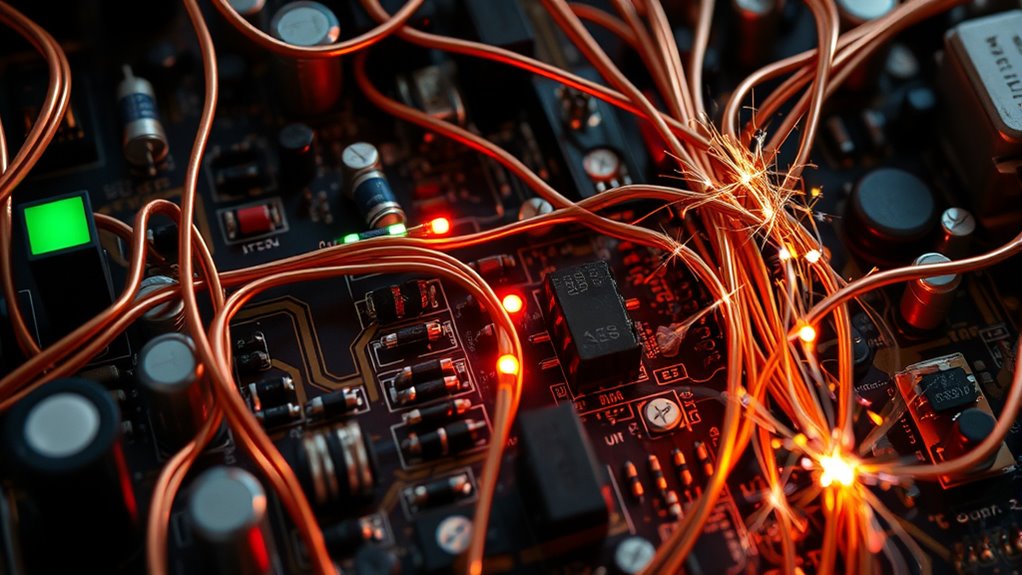

Total Harmonic Distortion (THD) measures how much unwanted harmonic frequencies contaminate your electrical power, often caused by non-linear devices like computers and chargers. High THD means “dirty power,” which can cause flickering lights, buzzing sounds, and even damage or shorten your electronics’ lifespan. Maintaining THD low ensures your devices operate smoothly and last longer. If you keep exploring, you’ll discover ways to improve your power quality and protect your gadgets.
Key Takeaways
- High THD indicates poor power quality, often called “dirty power,” which can harm electronic devices.
- Harmonic distortion from non-linear loads creates waveforms that deviate from a perfect sine wave.
- Dirty power with high THD can cause flickering, buzzing, overheating, and reduced lifespan of electronics.
- Monitoring THD helps identify and address harmonic issues to maintain clean, stable power.
- Using power conditioners and regular system checks can mitigate harmonic distortion and protect electronics.
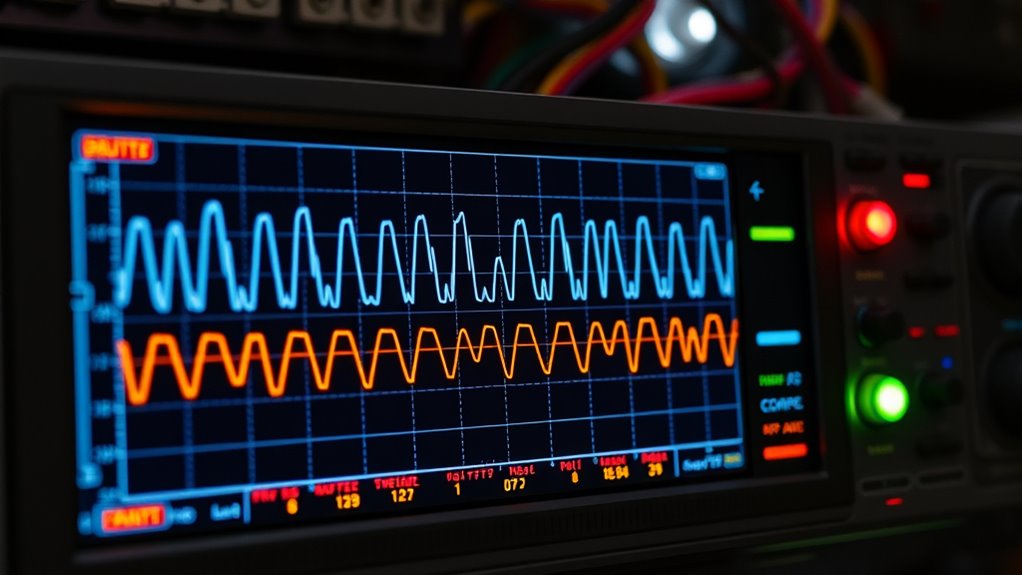
Have you ever wondered what THD really means in the context of audio quality? Well, it’s more than just a technical term; it’s a key indicator of how clean or dirty your power supply really is. Total Harmonic Distortion, or THD, measures the level of harmonic distortion present in an electrical signal. When power quality is high, the electricity flowing to your devices is stable and consistent, guaranteeing ideal performance. But when power quality drops, harmonic distortion increases, which can cause your electronics to behave unpredictably or even get damaged over time.
High THD indicates poor power quality, risking device performance and longevity.
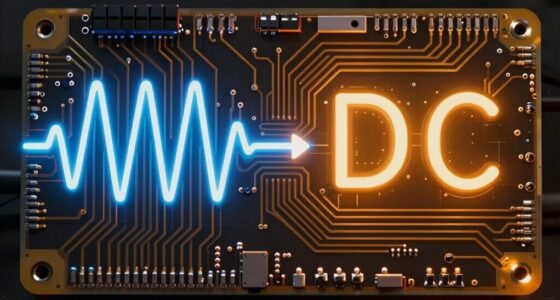
Think of your power supply as the foundation for all your devices. If that foundation is shaky or filled with unwanted noise, your electronics have to work harder, which can lead to overheating, reduced lifespan, or degraded audio and video quality. Harmonic distortion happens when the current or voltage waveform deviates from a perfect sine wave—adding extra frequencies that aren’t part of the original signal. These extra frequencies, or harmonics, are usually generated by non-linear loads like computers, chargers, or energy-efficient appliances. When these harmonics build up, they distort the power waveform, which directly impacts power quality.
In practical terms, high harmonic distortion can manifest as flickering lights, buzzing sounds in speakers, or even sudden shutdowns of sensitive equipment. If your home or office has poor power quality, your electronics are constantly fighting against these distortions, which can impair their functioning. This is why understanding and monitoring THD is vital. A low THD level indicates cleaner power, meaning fewer harmonics interfering with your devices. Conversely, a high THD signals that harmonic distortion is present and might be causing issues.
To keep your electronics running smoothly, it’s important to be aware of harmonic distortion and its impact on power quality. Using power conditioners or surge protectors designed to reduce harmonic distortion can help mitigate these problems. Regularly checking the harmonic content in your electrical system ensures you’re not unknowingly exposing your devices to excessive distortion, which can accelerate wear and tear. Additionally, incorporating Glycolic Acid Benefits into skincare routines demonstrates how regular maintenance can improve overall performance, similar to how managing power quality benefits your electronics. In the end, maintaining good power quality isn’t just about saving energy; it’s about protecting your investments and guaranteeing your electronics perform at their best for years to come. So, next time you notice strange noises or flickering lights, you’ll know that harmonic distortion and power quality might be at the root of the issue.

Radial Power-2 Power Conditioner
- Number of Outlets: 9 outlets for power supply
- Noise Filtering: Reduces electrical noise
- Surge Protection: Protects against power surges
As an affiliate, we earn on qualifying purchases.
As an affiliate, we earn on qualifying purchases.
Frequently Asked Questions
How Does THD Affect Audio and Video Quality?
High THD can substantially impact your audio and video quality. When THD levels are elevated, you might notice reduced audio clarity, with background noise or distortion marring sound output. For video, it can cause instability, leading to flickering or pixelation. By ensuring clean power, you help maintain ideal audio and video performance, preventing these issues and enhancing your overall entertainment experience.
Can Dirty Power Damage Sensitive Electronic Devices?
Yes, dirty power can damage sensitive electronic devices. Power line interference and voltage fluctuations cause stress on your electronics, leading to overheating, component failure, or reduced lifespan. When your devices receive inconsistent or contaminated power, their internal components struggle to operate correctly. To protect your electronics, use surge protectors and power conditioners that help filter out interference and stabilize voltage, ensuring your devices stay safe and functional.
What Are Common Sources of Power Contamination?
You often encounter common sources of power contamination like power line interference and electromagnetic noise, which disrupt your electronic devices. These issues stem from nearby electrical equipment, fluorescent lights, and even your home’s wiring, creating fluctuations and interference. Such power line interference and electromagnetic noise introduce dirty power, risking damage or malfunction of sensitive electronics. To protect your devices, consider using filters or surge protectors that mitigate these common sources of power contamination.
How Can I Measure the THD in My Home?
A stitch in time saves nine, so measuring your home’s THD is essential. To do this, you need a power quality analyzer or a clamp meter with THD measurement capabilities. Follow electrical standards by ensuring proper safety protocols. Connect the device to your outlets or main panel, then read the THD level displayed. Regular measurements help maintain electrical standards and protect your electronics from dirty power issues.
Are There Affordable Solutions to Reduce THD?
Yes, you can reduce THD with affordable solutions like budget power filters that help clean up power line noise. These filters are easy to install and can substantially improve your home’s power quality. While they may not eliminate all harmonics, they’re a cost-effective way to protect your electronics from dirty power. Invest in a good quality filter to keep your devices running smoothly and extend their lifespan.

BSEED WiFi Smart Plug, 3 Outlet Surge Voltage Protector with Light Indicator, APP Control, Energy Monitoring, Wall Mount Power Suppressor for Refrigerator/TV/PC, 125V/1875W, FCC Listed,1 Pack
- Automatic Surge Protection: Cuts off hazardous current instantly
- Remote App Control: Control devices remotely via mobile app
- Energy Monitoring: Track energy consumption in real time
As an affiliate, we earn on qualifying purchases.
As an affiliate, we earn on qualifying purchases.
Conclusion
Now that you’ve learned about THD and dirty power, you might wonder if all these issues truly harm your electronics. While some believe minor power distortions are harmless, others argue they can shorten device lifespan or cause malfunctions. The truth is, high levels of dirty power definitely pose risks, but everyday fluctuations are often manageable. Staying informed and using quality surge protectors can help safeguard your electronics, proving that understanding power quality genuinely makes a difference.

Klein Tools RT390 Circuit Analyzer with Large LCD, Identifies Wiring Faults, GFCI and AFCI Tester, Voltage Drop, Displays Trip Time
- Large Color LCD Display: Clear wiring fault and trip time results
- Wiring Fault Detection: Identifies faults in standard, AFCI, GFCI outlets
- Dual Wiring Fault Detection: Detects open neutral and ground faults
As an affiliate, we earn on qualifying purchases.
As an affiliate, we earn on qualifying purchases.

Briidea Dirty Electricity Filters, Reduce High-Frequency Noise Caused by Electronic Devices for a Stable and Clean Power Supply for You, Extend the Lifespan of Your Electric Device, White
- Advanced EMI Filtering: Eliminates high-frequency electrical noise
- Creates Healthier Environment: Reduces electromagnetic radiation and pollution
- Protects Electronic Devices: Extends lifespan by reducing power fluctuations
As an affiliate, we earn on qualifying purchases.
As an affiliate, we earn on qualifying purchases.