

The volts, amps, and watts triangle helps you quickly understand electrical power. Volts measure potential difference, current (amps) shows electron flow, and watts combine both to show work capacity. The key formula is watts = volts x amps. If you know any two, you can find the third, making troubleshooting easier and ensuring safe, efficient operation. Keep exploring these connections to master the essentials of electrical systems.
Key Takeaways
- Watts = Volts x Amps; knowing any two allows you to calculate the third easily.
- The triangle visually shows how volts, amps, and watts relate in electrical systems.
- Understanding this relationship simplifies troubleshooting and helps determine power requirements.
- To find current, divide watts by volts; to find wattage, multiply volts by amps.
- Mastering the triangle enhances electrical safety, efficiency, and device compatibility.
The Basics of Voltage, Current, and Power
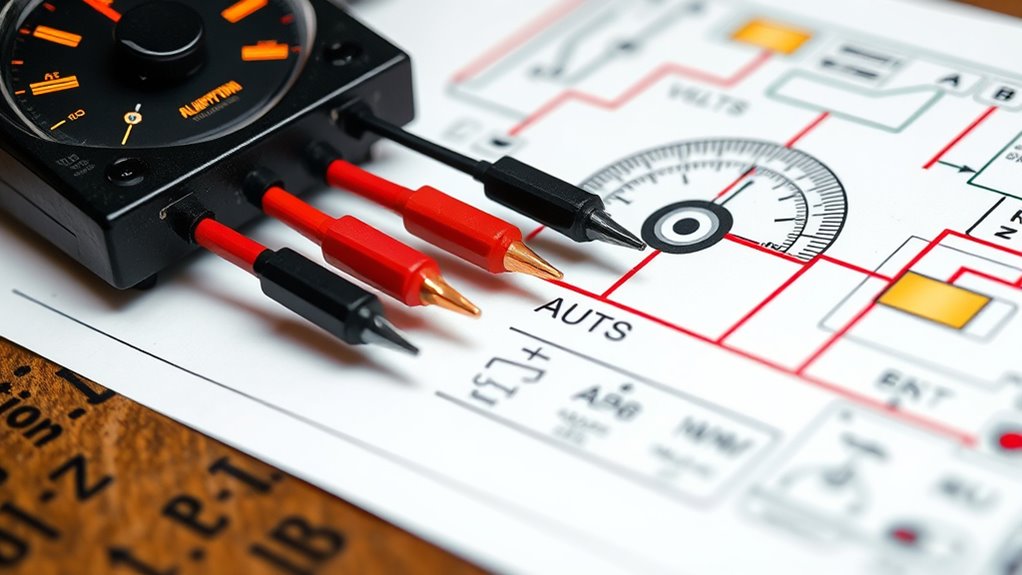
Understanding voltage, current, and power is essential for grasping how electrical systems work. When you understand these basics, you can improve electrical safety and boost energy efficiency. Voltage measures the potential difference that pushes electrical energy, while current indicates the flow of electrons through a wire. Power combines these two, showing how much work electricity can do. Keeping these concepts clear helps you avoid overloads and electrical hazards, making your setup safer. It also allows you to choose appliances that use energy wisely, saving money and reducing waste. Proper wiring is crucial for safe electrical operation and preventing hazards. Additionally, understanding the relationship between volts, amps, and watts can help you recognize common issues like voltage dips that affect device performance. Recognizing how mindfulness techniques can be applied to monitor and manage electrical systems can further enhance your control and safety. By mastering the relationship between volts, amps, and watts, you gain control over your electrical system, ensuring safe, efficient operation. Developing a digital-friendly environment at home can further enhance your understanding and safety with electrical systems and technology integration.
How the Triangle Works: Connecting Volts, Amps, and Watts
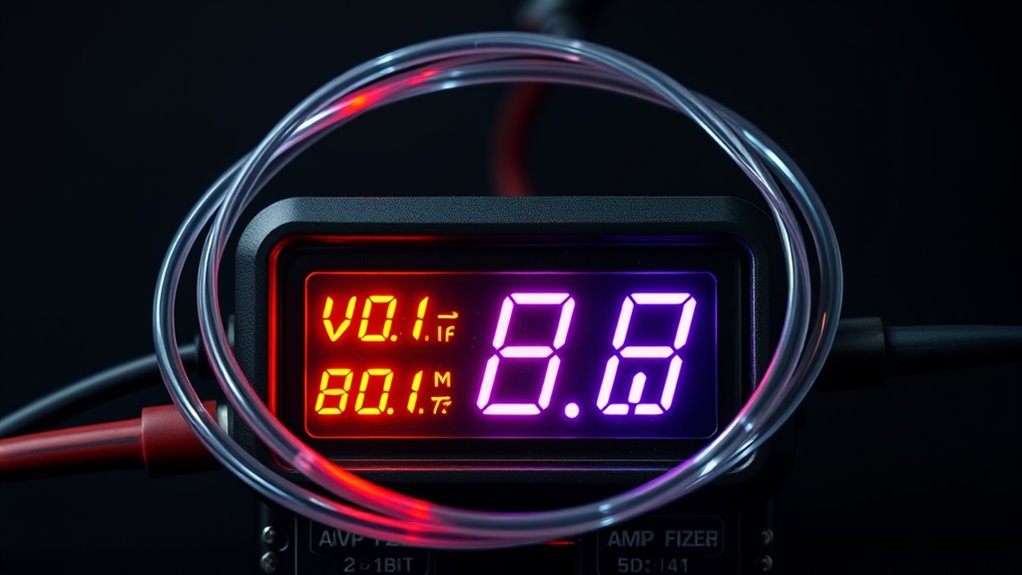
The relationship between volts, amps, and watts forms a simple but powerful triangle that shows how these three electrical quantities connect. Understanding this triangle helps you with power calculations and circuit analysis. When you know any two of these values, you can easily find the third by applying basic formulas. For example, Watts = Volts x Amps, which helps determine how much power a device consumes or supplies. This connection simplifies troubleshooting and designing circuits because it clarifies how voltage and current influence power flow. By visualizing this triangle, you can quickly estimate the wattage or current needed for a circuit, making your calculations more straightforward. Mastering this relationship is essential for efficient circuit analysis and ensuring your electrical systems work safely and effectively. Additionally, understanding the power flow in a circuit allows for better energy management and system efficiency. Recognizing the compatibility of headphones with various devices ensures optimal performance and sound quality in your setup.
Practical Examples to Master the Relationship

To master the relationship between volts, amps, and watts, applying practical examples can make the concepts clear and easy to remember. For instance, if you know a device uses 120 volts and draws 2 amps, multiply these to find the power: 120V x 2A = 240 watts. To improve energy efficiency, understanding resistance calculation helps you see how different components affect current flow, ensuring you select the most efficient options. If a lamp consumes 60 watts at 120 volts, divide watts by volts to find the current: 60W ÷ 120V = 0.5A. These examples reinforce how volts, amps, and watts interconnect, making it easier to optimize electrical systems and select energy-efficient devices. Practical calculations like resistance and power help you master the triangle effectively. Additionally, knowing how different projector technologies like DLP and LCD influence color accuracy can help you choose the best equipment for your home cinema setup. Furthermore, understanding dog breeds involved in various assistance roles can provide insights into the qualities needed for specific electrical applications. Exploring AI-driven energy management systems can also enhance your ability to optimize electrical efficiency in your home or workspace. Recognizing power factor is also essential for improving energy consumption and reducing electrical costs. Moreover, understanding how air purifier features like HEPA filters and UV light technology contribute to better indoor air quality can help you select more effective models for health benefits.
Frequently Asked Questions
How Does Resistance Affect Voltage, Current, and Power?
Resistance impacts voltage, current, and power by following Ohm’s law. When resistance increases, voltage stays the same but current decreases, making devices less efficient. Conversely, lower resistance allows more current to flow, increasing power output. You can see resistance directly affects how much current flows through a circuit and how much power is consumed, so understanding resistance impact helps you manage circuit performance and safety effectively.
Can I Convert Watts to Volts or Amps Directly?
You can’t directly convert watts to volts or amps because watts measure power, while volts and amps measure voltage and current. Instead, you need to use power conversion and measurement techniques involving the formulas P=VI or P=I²R to find the missing value. For example, if you know watts and voltage, you can calculate current by dividing watts by volts. Always guarantee you’re using the right measurements for accurate conversions.
Why Does Increasing Voltage Sometimes Decrease Current?
When you increase voltage in a power supply with constant resistance, the current decreases because the system adjusts through voltage regulation. As voltage rises, the supply limits current to protect components, so higher voltage doesn’t always mean more current. This dynamic helps maintain safe operation, ensuring devices don’t draw excessive current. Fundamentally, voltage regulation manages how voltage and current interact, preventing overloads and keeping your electrical system balanced.
How Do Safety Factors Relate to Electrical Calculations?
Think of safety factors as your electrical safety net. They relate to calculations by including insulation ratings and safety margins to prevent overloads, shocks, or fires. By adding these buffers, you guarantee your system can handle unexpected surges or faults. This extra cushion acts like a sturdy safety harness, giving you peace of mind knowing your wiring and components won’t fail under stress. Always prioritize safety margins for reliable, secure electrical systems.
What Are Common Mistakes When Calculating Watts, Volts, or Amps?
You might mistake power factor or circuit impedance for actual wattage, leading to errors. Often, you forget to account for power factor in AC circuits, causing overestimation of power needs. Also, ignoring circuit impedance can lead to incorrect current calculations. To avoid mistakes, always check the power factor, especially in inductive loads, and include circuit impedance in your calculations to make sure of accurate watt, volt, or amp estimations.
Conclusion
Now that you’re familiar with the easy triangle of volts, amps, and watts, you can see how they dance together effortlessly. Think of it as a gentle rhythm guiding your understanding of electrical flow, making complex concepts feel like a friendly conversation. With a little practice, you’ll find yourself confidently steering these relationships, turning what once seemed tricky into a smooth, enjoyable journey of discovery. Keep exploring, and you’ll enjoy every step of the way.