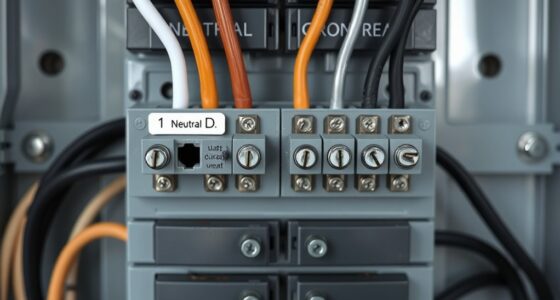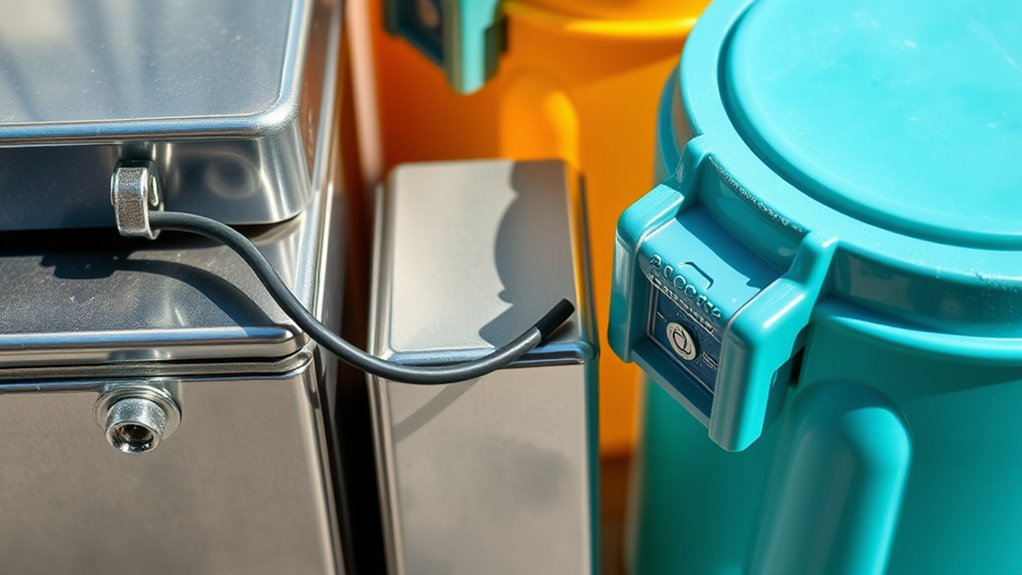

Metal boxes are conductive, allowing for reliable grounding when installed correctly, which enhances safety and prevents electrical hazards if properly maintained. Plastic containers are non-conductive, so they don’t require grounding but may need extra insulation to ensure safety. Metal offers better durability and corrosion resistance for outdoor or harsh environments, while plastic reduces maintenance. Choosing the right option depends on your setup and safety standards, and the details you’ll find next can help you make a smart decision.
Key Takeaways
- Metal boxes are conductive and require proper grounding to ensure electrical safety.
- Plastic containers are non-conductive and do not need grounding, simplifying installation.
- Metal boxes offer better corrosion resistance in outdoor environments, maintaining grounding integrity.
- Plastic boxes resist corrosion but may pose safety concerns if not installed with additional safety measures.
- Proper installation and adherence to electrical codes are essential for safety, regardless of material choice.
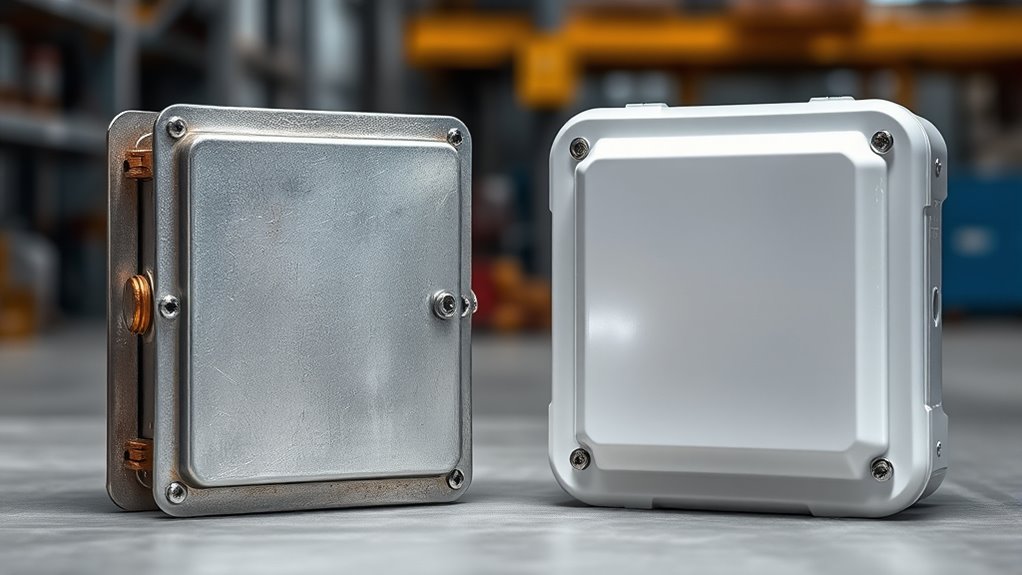
When choosing storage options, metal boxes and plastic containers each offer distinct advantages that can influence your decision. One vital aspect to consider is grounding and safety, especially when it comes to electrical installations. Metal boxes naturally conduct electricity, making grounding straightforward. This conductivity allows for a reliable connection to grounding systems, which helps prevent electrical shocks and minimizes fire hazards. Proper grounding ensures any stray electrical current is safely diverted into the ground, protecting both the equipment and the people around it. Because of their conductive nature, metal boxes often require careful insulation to prevent accidental contact with live wires.
Metal boxes conduct electricity, making grounding easy and enhancing safety in electrical setups.
Plastic containers, on the other hand, are non-conductive, which means they don’t require grounding. This can simplify installation since you don’t need to worry about establishing a grounding connection. However, the absence of conductivity also means that plastic isn’t inherently grounded, which might raise concerns about safety in certain electrical setups. You’ll need to rely on other safety measures, such as insulation or specialized grounding methods, to ensure electrical safety when using plastic boxes. This added complexity can sometimes create more steps during installation but can also reduce the risk of accidental grounding errors.
Corrosion resistance plays a significant role when it comes to safety and longevity. Metal boxes, especially those made from galvanized steel or aluminum, offer excellent corrosion resistance, making them suitable for outdoor or humid environments. Their durability ensures that grounding connections remain intact over time, maintaining safety standards. Plastic containers, by their very nature, are impervious to corrosion, which makes them ideal for damp or corrosive environments. They won’t rust or degrade, reducing maintenance concerns and the need for frequent replacements. However, keep in mind that if a metal box begins to corrode, it could compromise the grounding connection, potentially creating safety hazards.
Installation complexity is another factor to weigh. Metal boxes often require more careful handling due to their weight and the need to properly ground them. You’ll need to ensure that all grounding connections are secure and compliant with electrical codes, which can add steps during installation. Plastic containers tend to be lighter and easier to install, especially in DIY projects. Since they don’t need grounding, you can often skip that step altogether, streamlining the process. However, you should verify that the plastic container meets safety standards for electrical applications, as improper use might lead to safety issues.
Ultimately, your choice depends on your specific needs. If grounding reliability and durability in challenging environments matter most, a metal box might be your best bet. If ease of installation and resistance to corrosion without grounding are priorities, plastic containers can serve you well. Both options have their merits, but understanding how grounding and corrosion resistance influence safety will help you make an informed decision. Additionally, proper grounding techniques are essential to maximize safety regardless of the material chosen.
Frequently Asked Questions
How Do Grounding Requirements Differ Between Metal and Plastic Enclosures?
You need to ground metal enclosures because their material conductivity allows stray currents to safely flow, reducing shock risk. Installation procedures for metal boxes include connecting grounding conductors directly to the enclosure using approved connectors. In contrast, plastic enclosures don’t require grounding since their material isn’t conductive, but you should still follow safety guidelines. Always guarantee proper grounding practices to protect people and equipment effectively.
Can Plastic Boxes Become Hazardous if Improperly Grounded?
Yes, plastic boxes can become hazardous if improperly grounded. Without proper grounding, plastic insulation can accumulate static buildup, which might lead to sparks or electrical shocks. Since plastics are insulative, they don’t naturally conduct electricity, so grounding helps dissipate static charges safely. Failing to ground a plastic enclosure increases the risk of static discharge and potential safety hazards, especially in environments with sensitive electronics or flammable materials.
Are Metal Enclosures More Resistant to Electrical Faults Than Plastic?
You’ll find that metal enclosures are generally more resistant to electrical faults because of their superior material durability, which helps contain sparks and prevent fire spread. While they cost more upfront, their durability can reduce long-term maintenance expenses. Plastic boxes are cheaper but less resistant to electrical faults, especially if improperly grounded. So, choosing metal offers better safety, especially in high-risk environments, despite the higher initial investment.
What Safety Standards Govern Grounding for Plastic Versus Metal Boxes?
You need to follow safety standards like NEC and IEC, which govern grounding for both plastic and metal boxes. These standards specify color coding for grounding conductors and require insulation standards to prevent electrical faults. Metal boxes often have dedicated grounding pathways, while plastic ones rely on grounding through connectors or external grounding methods. Always guarantee proper grounding practices to maintain safety and compliance regardless of the box material.
How Does Environmental Exposure Impact Grounding Practices for Both Materials?
Just like a ship faces storms at sea, your grounding practices must adapt to environmental exposure. For metal boxes, corrosion resistance and environmental durability are essential, especially in humid or corrosive environments, requiring proper sealing and coatings. Plastic boxes naturally resist corrosion, but ensure grounding connections remain intact, as environmental factors like UV exposure can degrade materials. Regular inspection keeps your grounding safe, regardless of environmental challenges.
Conclusion
When it comes to grounding and safety, choosing between metal and plastic boxes isn’t just a decision — it’s a matter of life and death! Metal boxes, with their unmatched durability and grounding capabilities, could save your life in a lightning storm or electrical mishap. Plastic might be lighter and easier to work with, but it’s no match for the safety powerhouse that metal provides. Don’t gamble with safety — go metal and keep danger at bay!