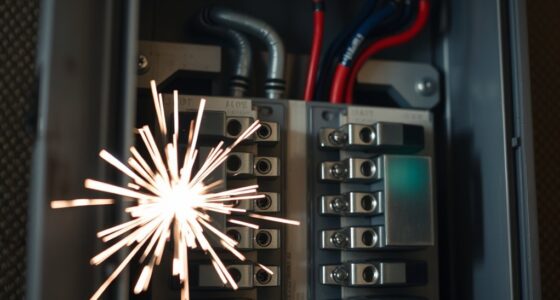
Many believe neutral and ground can be connected in a subpanel, but that’s a myth. Properly separating them is crucial for safety and code compliance. In a subpanel, neutral should only be bonded at the main panel, while the ground bus remains isolated from the neutral. Connecting them incorrectly can create shock hazards and cause system issues. To guarantee you get it right, there’s more to understand about proper wiring practices and standards.

Get backup power and energy gear delivered free with Prime
- Fast, free delivery on millions of items
- Prime Video, Amazon Music and more included
- Member-only deals all year
Key Takeaways
- Neutral and ground conductors must be separated in subpanels; neutral bonding should only occur at the main panel.
- Connecting neutral and ground in a subpanel creates shock hazards and violates electrical codes.
- The neutral bus in a subpanel must be isolated from the metal enclosure and only bonded at the main panel.
- Proper installation involves isolating the neutral and bonding the ground to the subpanel frame and grounding system.
- Miswiring or mixing neutral and ground can lead to electrical shocks, fires, and equipment damage.
As an affiliate, we earn on qualifying purchases.
Understanding the Purpose of Neutral and Ground Conductors

Understanding the purpose of neutral and ground conductors is vital for safe and effective electrical system operation. These conductors play a key role in maintaining electrical safety by directing current safely back to the source during normal operation and fault conditions. Grounding standards guarantee that the ground wire provides a reliable path to prevent shock hazards and protect equipment. The neutral conductor carries current under normal use, while the ground wire acts as a safety backup, preventing dangerous voltage buildup. Properly separating these conductors according to electrical safety guidelines minimizes the risk of electrical shock or fire. Knowing their distinct roles helps you avoid common mistakes and guarantees your electrical system functions safely and reliably, keeping you and your property protected. Understanding electrical safety is crucial for anyone working with or maintaining electrical systems. Additionally, understanding grounding principles ensures that your system is compliant with safety standards and effectively safeguards your environment. Proper separation also helps prevent current leakage, which can lead to dangerous situations or equipment damage. Maintaining clear distinctions between these conductors is essential for system reliability and overall safety.
As an affiliate, we earn on qualifying purchases.
Common Misconceptions About Neutral and Ground Separation

Many people believe that grounding and neutral wires can be swapped or combined without issues, but this is dangerous and incorrect. Proper separation of ground and neutral is essential for safety and system performance. Understanding why these conductors must stay separate helps prevent electrical hazards and equipment damage. For example, support hours for electrical systems can impact troubleshooting and maintenance procedures, emphasizing the importance of correct wiring practices.
Ground and Neutral Interchange
A common misconception is that the ground and neutral wires can be used interchangeably or connected together at the subpanel. This is incorrect and can create safety hazards. Neutral bonding, for example, is only done at the main panel, not in the subpanel. Mixing grounding methods or connecting the neutral to the grounding bus can lead to unintended current paths and shock risks. Proper grounding practices, including correct wiring techniques, are essential for maintaining a safe and code-compliant electrical system, especially when understanding the separation of neutral and ground. Recognizing the role of electrical codes helps ensure proper installation and safety. Additionally, understanding grounding and bonding principles helps maintain a safe, code-compliant electrical system.
Proper Separation Importance
When neutral and ground wires aren’t kept separate, it can cause serious safety issues and violate electrical codes. If they’re connected together within a subpanel, a ground fault can energize the grounding system, creating shock hazards. Proper separation guarantees that the neutral carries current back to the panel without affecting the grounding system. Using a bonding strap to connect the neutral bus to the subpanel’s metal frame is only needed at the main panel; it must be removed in a subpanel to prevent unintended current flow on grounding paths. This separation prevents dangerous voltage on grounding parts and reduces fire risk. Maintaining proper separation preserves system integrity, keeps you safe, and ensures compliance with electrical standards. Additionally, understanding the subpanel wiring process is crucial for proper installation and safety. A clear grasp of electrical code compliance helps avoid common mistakes and ensures that your wiring setup is safe and up to standard. Properly testing electrical connections further verifies that the separation is correctly implemented and functioning as intended. Regular inspections and using proper tools ensure the ongoing safety and compliance of your electrical system.
grounding and neutral wire separator
As an affiliate, we earn on qualifying purchases.
As an affiliate, we earn on qualifying purchases.
The Importance of Proper Bonding and Isolation

Proper bonding and isolation are critical to ensuring electrical safety and system reliability in subpanel installations. When done correctly, they prevent issues like circuit overloads and ensure your panel labeling remains accurate. If you fail to bond or isolate properly, you risk creating dangerous voltage paths that could lead to shocks or fires. To maintain safety and code compliance, consider these key points: 1. Verify that the grounding conductor is bonded to the subpanel frame only at the main panel, not within the subpanel. 2. Keep neutral and ground buses isolated in the subpanel to prevent unintended current flow. 3. Regularly inspect connections to ensure proper panel labeling and avoid confusion during troubleshooting or upgrades. 4. Using self watering plant pots as an analogy, proper electrical bonding and isolation help maintain a balanced and healthy system, preventing issues before they arise. Additionally, understanding electrical system grounding helps ensure all components are correctly referenced to prevent potential hazards. Proper electrical system installation practices are essential for safeguarding both people and property. For example, implementing correct grounding techniques enhances overall system safety. Consistent adherence to these practices, along with ongoing system maintenance, helps maintain system integrity and safety.
main panel neutral bonding block
As an affiliate, we earn on qualifying purchases.
As an affiliate, we earn on qualifying purchases.
When to Isolate Neutral From Ground in a Subpanel

Knowing when to isolate the neutral from the ground in a subpanel is vital for maintaining electrical safety and code compliance. Typically, you should keep the neutral isolated from the ground in the subpanel, except where the ground bus is bonded to the neutrals at the main panel. This setup prevents neutral current from flowing through the ground system, reducing shock risks. The ground bus should be connected to the grounding system but not bonded to the neutral bus in the subpanel. If you bond the neutral to the ground in a subpanel, it creates a parallel path for current, which can cause safety hazards. Always verify the neutral is isolated from the ground bus in the subpanel unless local codes specify otherwise.
Correct Wiring Practices for Subpanels

When wiring a subpanel, you need to pay close attention to proper breaker placement to guarantee safety and code compliance. You also must follow correct grounding methods to prevent electrical hazards. Getting these details right helps your system operate reliably and safely. Additionally, understanding the grounding and bonding requirements ensures your system remains safe and compliant with electrical codes. Proper grounding helps prevent electric shock and minimizes the risk of electrical fires by providing a safe path for fault currents. A solid understanding of DE – Patchology.ORG can help in designing systems that optimize safety and efficiency within budget constraints. Moreover, adhering to established electrical standards is crucial for ensuring long-term safety and performance.
Proper Breaker Placement
To guarantee safety and code compliance, placing the breaker for a subpanel in the correct position is essential. Proper breaker placement ensures the panel configuration supports safe operation and easy maintenance. First, install the breaker in a dedicated slot designated for the subpanel’s main disconnect, avoiding shared spaces. Second, position the breaker at the top or bottom of the panel according to manufacturer instructions and local codes to maintain clear circuit separation. Third, verify that the breaker matches the subpanel’s amperage rating, preventing overloads. Correct breaker placement minimizes confusion, reduces wiring errors, and supports proper neutral and ground separation. Proper wiring practices for subpanels also involve ensuring that the neutral and ground buses are isolated, which is crucial for safety and is often associated with electrical grounding principles. Always follow manufacturer guidelines and local electrical codes for panel configuration to assure safe, reliable operation.
Correct Grounding Methods
Are you confident you’re wiring your subpanel’s grounding system correctly? Proper grounding methods ensure safety and code compliance. Always connect the equipment grounding conductor from the main panel to the subpanel’s ground bus. Additionally, install a grounding electrode, such as a grounding rod, if required by local codes. This electrode provides an extra path for fault current, enhancing safety. Use a dedicated grounding conductor and avoid mixing neutral and ground conductors. Here’s a quick overview:
| Grounding Method | Purpose | Requirements |
|---|---|---|
| Equipment Grounding | Safety during faults | Connect to ground bus in subpanel |
| Grounding Electrode | Additional fault path | Rod or other approved electrode |
| Bonding Jumpers | Neutral-ground separation | Do not connect neutral and ground in subpanel |
| Main Panel Connection | Power source | Connect main ground to subpanel |
| Local Code Compliance | Legal safety | Follow local electrical codes |
Proper wiring guarantees a safe, effective grounding system.
Code Requirements for Neutral and Ground in Subpanels

Understanding the code requirements for neutral and ground conductors in subpanels is essential for ensuring electrical safety and compliance. In subpanels, the neutral bus must be isolated from the subpanel’s metal enclosure, while the ground bus is bonded to the panel and connected to a grounding electrode. Key requirements include:
- The neutral conductor should not be bonded to the subpanel’s metal case or grounding conductor.
- The grounding conductor must be connected to the grounding bus, which is bonded to the subpanel’s metal enclosure.
- A grounding electrode, like a grounding rod, must connect to the grounding system if required by local codes, ensuring proper grounding and fault path. Neutral bonding is only permitted at the main panel, not within subpanels, to prevent stray currents.
The Risks of Incorrect Neutral and Ground Connections

Have you ever considered what could happen if neutral and ground connections are made incorrectly in your subpanel? Miswiring the neutral conductor or ground conductor can lead to serious risks, including electrical shocks, fires, or damage to appliances. When the neutral and ground are not properly separated, stray current may flow through grounding paths, creating a shock hazard. Incorrect connections can also cause overcurrent issues, damaging wiring and devices. To better understand, see the table below:
| Potential Issue | Cause | Consequence | Solution | Severity |
|---|---|---|---|---|
| Shock risk | Neutral and ground mixed | Electric shock | Proper separation | High |
| Fire hazard | Faulty wiring | Overheating | Correct wiring practices | Critical |
| Equipment damage | Incorrect grounding | Malfunction | Follow code standards | Moderate |
| Ground fault | Neutral conductor miswired | Shock or fire | Verify connections | High |
| Voltage imbalance | Neutral issues | Equipment failure | Regular inspections | Moderate |
Step-by-Step Guide to Separating Neutral and Ground

To guarantee your electrical system is safe and compliant, it’s essential to properly separate the neutral and ground conductors in your subpanel. This process helps prevent electrical faults and ensures proper circuit operation. First, turn off the main breaker to disconnect power. Next, follow these steps:
- Remove the subpanel cover and identify the neutral bar and grounding bus.
- Disconnect the neutral wire from the main panel and connect it to the separate neutral bus in the subpanel.
- Attach the grounding wire to the grounding bus, ensuring it’s isolated from the neutral bar.
Use circuit breaker labels for easy identification, and keep in mind that proper separation aids wireless troubleshooting by reducing interference. This simple process enhances safety and system reliability.
Troubleshooting Neutral and Ground Issues in Subpanels

When you suspect neutral and ground issues in your subpanel, quick and accurate troubleshooting can prevent potential hazards and system failures. First, turn off the power and inspect the grounding wire connected to the subpanel’s grounding bus. Confirm it’s secure and properly attached to a grounding rod or other grounding system. Next, check the neutral bus to verify it’s isolated from the grounding bus; they should not be bonded in a subpanel. Use a multimeter to test for continuity between the neutral bus and the grounding wire. If you find a connection where there shouldn’t be one, disconnect it. Proper separation of the neutral and ground is vital for safe operation and to prevent stray currents.
Frequently Asked Questions
Can I Wire a Subpanel Without Separating Neutral and Ground?
You shouldn’t wire a subpanel without separating the neutral and ground. If you connect the grounding wire to the neutral bus, it can create a path for return currents, which is dangerous. Instead, you need to install a separate neutral bus and connect the grounding wire to the main panel’s grounding system. This guarantees proper grounding and prevents electrical hazards, keeping your system safe and compliant.
What Tools Are Best for Checking Proper Neutral and Ground Connections?
Imagine your wiring as a delicate dance—each step must be precise. To check proper neutral and ground connections, you’ll want a multimeter for testing and continuity verification. Set the multimeter to the appropriate setting, then test between neutral and ground to ensure they’re correctly connected without unintended contact. This simple tool helps you confirm everything’s wired safely, giving you confidence in your electrical setup.
How Does Separating Neutral and Ground Affect Electrical Noise?
Separating neutral and ground reduces electrical noise caused by ground loops, which can create unwanted electrical interference. When you keep them apart in a subpanel, it helps prevent circulating currents that generate noise, ensuring cleaner signals and safer operation. This separation minimizes interference issues, especially in sensitive electronics, by breaking the ground loop. As a result, your system works more reliably, and you avoid potential problems caused by electrical interference.
Are There Specific Subpanel Models That Simplify Neutral-Ground Separation?
Yes, some subpanel models are designed to facilitate neutral-ground separation. Look for panels with clear, dedicated neutral and ground bus bars, and check their compatibility with your existing grounding methods. These panels often include features like isolated neutral bars or easy-to-install grounding connectors, making proper separation straightforward. Choosing the right model ensures safe, code-compliant electrical setup and minimizes noise issues caused by improper neutral-ground connections.
What Safety Precautions Should I Take Before Working on Subpanel Wiring?
Before working on subpanel wiring, don’t forget to turn off the main breaker—ironic, right? Always wear personal protective equipment like gloves and goggles, and double-check that the circuit breaker is properly tested before touching any wires. This way, you prevent shocking yourself or causing a dangerous short. Taking these safety precautions ensures you stay safe and avoid unnecessary surprises, making your project smooth and accident-free.
Conclusion
By understanding and following proper neutral and ground separation, you’re not just wiring — you’re building a fortress of safety around your home. Missteps here can lead to shocking surprises or fire hazards that threaten your peace of mind. So, stay sharp, follow the code, and don’t let myths cause chaos in your electrical system. When you get it right, you’re more protected than a superhero in a shield factory!
Halloween Picks
halloween
As an affiliate, we earn on qualifying purchases.