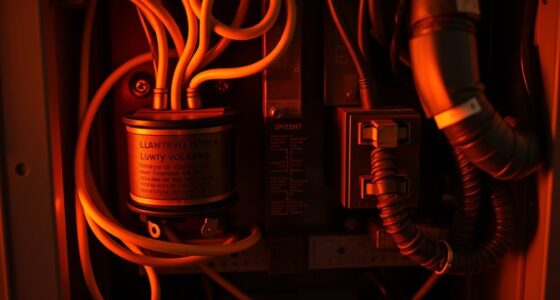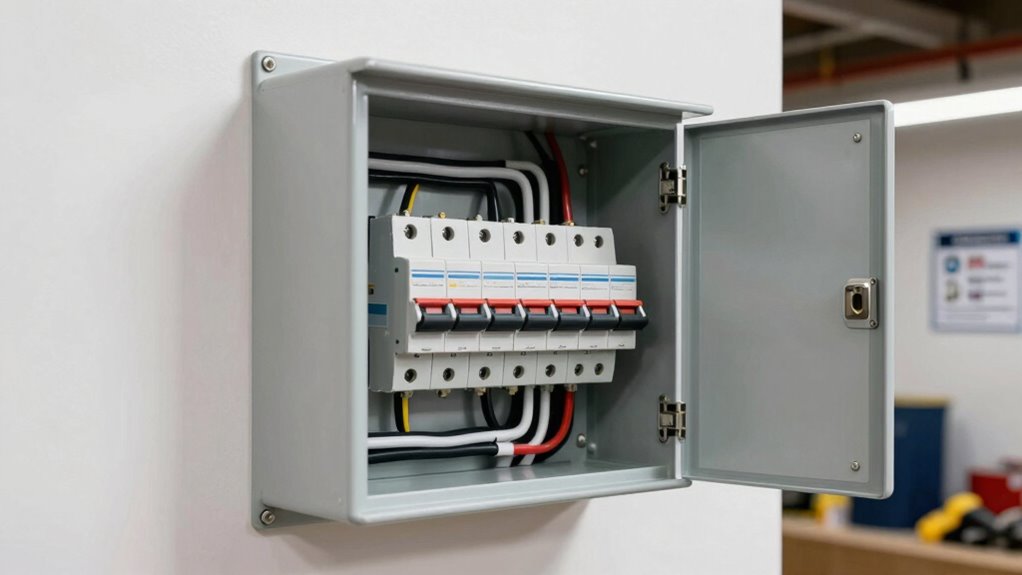

As a homeowner, you should know that a subpanel acts as a secondary distribution point, helping you manage circuits safely and expand your electrical system. It protects your home from overloads with different types of breakers like GFCI and AFCI for safety. Proper wiring, sizing, and installation are essential to prevent hazards and guarantee code compliance. If you want to understand how to choose, install, and maintain your subpanel, you’ll find valuable tips if you keep exploring further.
Key Takeaways
- A subpanel distributes electrical circuits, preventing overloads and enabling system expansion safely.
- Choose the right size and number of circuit slots for current and future needs.
- Use appropriate wiring standards, including correct wire gauge and grounding, for safety.
- Install the subpanel in an accessible location with proper clearance and secure connections.
- Regular inspection and adherence to electrical codes ensure ongoing safety and compliance.
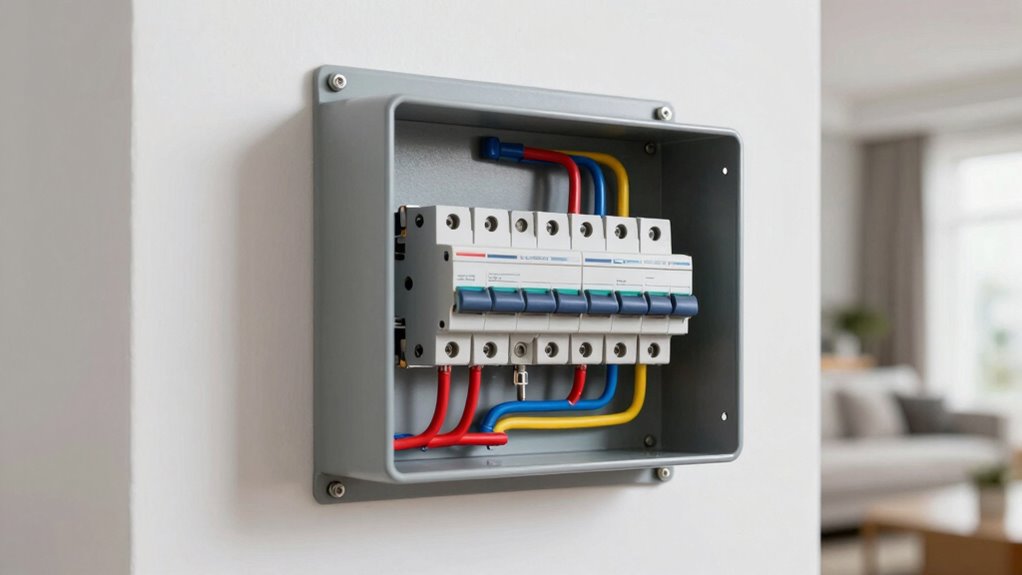
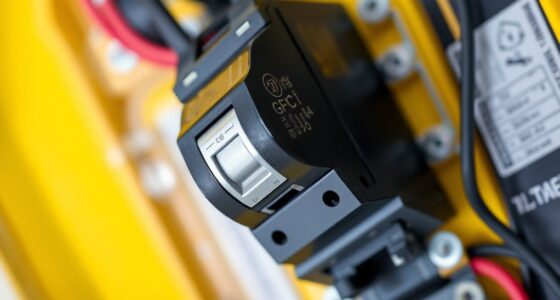
If you’re expanding your home’s electrical system or need additional circuits, installing a subpanel can be an effective solution. A subpanel acts as a secondary distribution point, allowing you to manage multiple circuits without overloading your main panel. Understanding the basics of subpanels helps guarantee you set up a safe and efficient system. The first thing to think about is the type of circuit breakers you’ll use. Circuit breaker types vary, including standard, GFCI, and AFCI breakers, each serving specific safety functions. Standard breakers protect against overloads and short circuits, while GFCI breakers offer protection against ground faults, which are essential in areas like kitchens or bathrooms. AFCI breakers help prevent fires caused by arc faults, so knowing which type fits your needs is important for safety and code compliance.
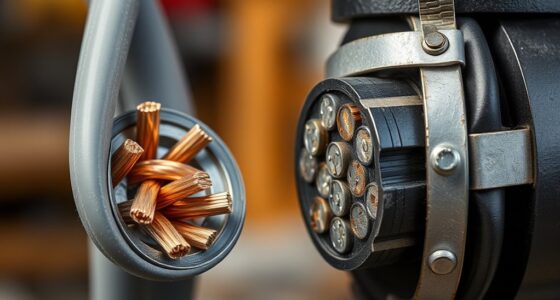
Wiring safety standards are equally significant when installing or modifying a subpanel. These standards, set by organizations like the National Electrical Code (NEC), specify how wiring should be done to prevent electrical hazards. For example, using the correct gauge wire for your circuit load is key to prevent overheating. Typically, a 20-amp circuit requires 12-gauge wire, while a 30-amp circuit uses 10-gauge wire. Proper grounding is also crucial; your subpanel must be grounded according to safety standards, which usually involves connecting it to the main grounding system of your home. This helps prevent electrical shocks and equipment damage. Additionally, understanding electrical safety standards is vital to ensure compliance and prevent potential hazards. Regularly inspecting your system and keeping up with electrical code updates can further enhance safety and reliability. It’s also beneficial to familiarize yourself with subpanel configuration to ensure your setup matches your home’s specific needs.
When installing a subpanel, you need to properly size it based on your current and future electrical needs. This involves selecting a panel with enough slots for the circuits you plan to run. You should also make sure that the subpanel is installed in a location that’s accessible and has adequate clearance for maintenance and inspections. Connecting the subpanel to your main panel involves running a feeder cable, which must be rated for the load and compliant with wiring safety standards. The connection points should be tight and secure to prevent loose connections, which can cause arcing and fires. Proper planning and adherence to subpanel sizing guidelines can ensure you avoid issues related to overloading or insufficient capacity.

#US AWM-DAK200, Subpanel Depth Adjustment Kit
Model: AWM-DAK200
As an affiliate, we earn on qualifying purchases.
As an affiliate, we earn on qualifying purchases.
Frequently Asked Questions
Can I Install a Subpanel Without Professional Help?
You can install a subpanel yourself, but it’s not recommended without professional help. You need to carefully determine the subpanel location and make certain it’s accessible and properly grounded. Proper circuit labeling is essential for safety and future maintenance. If you’re unfamiliar with electrical codes and wiring, mistakes could lead to hazards. Always consider hiring a licensed electrician to guarantee the installation is safe, code-compliant, and reliable.
How Do I Know if My Subpanel Is Overloaded?
You can tell if your subpanel is overloaded by checking its capacity and looking for overload indicators. If circuit breakers frequently trip or if there’s a burning smell or buzzing sound, these are signs of overload. Confirm your subpanel’s capacity matches your power needs; exceeding it can cause issues. Regularly monitoring your electrical use helps prevent overloads and keeps your system safe and efficient.
What Safety Precautions Are Necessary When Working on a Subpanel?
When working on a subpanel, you need to prioritize grounding safety by turning off the main power and using insulated tools. Always verify proper circuit labeling to avoid confusion, and confirm the subpanel is properly grounded to prevent shocks. Wear protective gear, avoid touching live wires, and double-check that power is off before starting any work. These precautions help keep you safe while maintaining your electrical system.
Can a Subpanel Increase My Home’s Electrical Capacity?
Sure, a subpanel can boost your home’s electrical capacity—if you’re dreaming big! It’s like giving your electrical system a shot of espresso, handling more circuits and appliances. But don’t forget, subpanel capacity isn’t magic; it’s about smart electrical load management. You’ll need a professional to make certain your new subpanel matches your power needs without risking overloads. So, yes, it can help, but only with proper planning!
How Often Should I Have My Subpanel Inspected?
You should have your subpanel inspected at least every three to five years. Regular inspections help catch grounding issues early and guarantee circuit labeling remains accurate, preventing potential hazards. If you notice flickering lights, tripped breakers, or any unusual electrical behavior, schedule an inspection sooner. Properly maintained subpanels keep your electrical system safe, efficient, and compliant with codes, giving you peace of mind.

SIEMENS Q120DF 20-Amp Afci/Gfci Dual Function Circuit Breaker, Plug-in Load Center Style
Faster, more cost effective installation to meet code requirements compared to installing an AFCI breaker and GFI receptacle
As an affiliate, we earn on qualifying purchases.
As an affiliate, we earn on qualifying purchases.
Conclusion
Think of your subpanel as the heart’s secondary chamber, quietly ensuring your home’s electrical flow keeps beating smoothly. By understanding its basics, you’re not just managing wires—you’re safeguarding your home’s lifeblood. When you know how to care for this essential symbol of power, you’re empowered to keep your household running safely and efficiently. Remember, a well-maintained subpanel is the steady pulse that keeps your entire home alive and thriving.

Southwire Romex SIMpull™ 25 ft. 12/2 Solid CU NM-B W/G Wire, 28828221
Coated in patented SIMpull Cable Jacket for easier pulling; stripping; and installation
As an affiliate, we earn on qualifying purchases.
As an affiliate, we earn on qualifying purchases.

Ultimate Guide Wiring, Updated 10th Edition: Meets Current National Electrical Code Standards (Creative Homeowner) DIY Residential Electrical Installations and Repairs – Diagrams and Step-by-Step
As an affiliate, we earn on qualifying purchases.
As an affiliate, we earn on qualifying purchases.