
You can’t interchange 12-2 and 14-2 cables because they have different wire gauges, which impacts their current-carrying capacity. 14-2 wire is rated for up to 15 amps, while 12-2 can handle up to 20 amps. Using the wrong cable with the circuit breaker can cause overheating and safety issues. It is crucial to match the right cable to the correct breaker for safety and code compliance—keep exploring to understand why this matters.

Get backup power and energy gear delivered free — and shop member deals
- Fast, free delivery on millions of items
- Access to Prime Big Deal Days deals on October 6–7
- Prime Video, Amazon Music and more included
Key Takeaways
- 12-2 cable has thicker, 12-gauge conductors rated for 20 amps, unlike 14-2’s 14-gauge conductors rated for 15 amps.
- Using 14-2 on a 20-amp circuit risks overheating and fire hazards, violating safety standards.
- 12-2 cable is suitable for higher load applications compared to 14-2, making them non-interchangeable.
- Electrical codes require matching wire gauge to circuit breaker ratings, forbidding substitution.
- Incorrectly substituting cables can lead to code violations, safety hazards, and potential inspection failures.
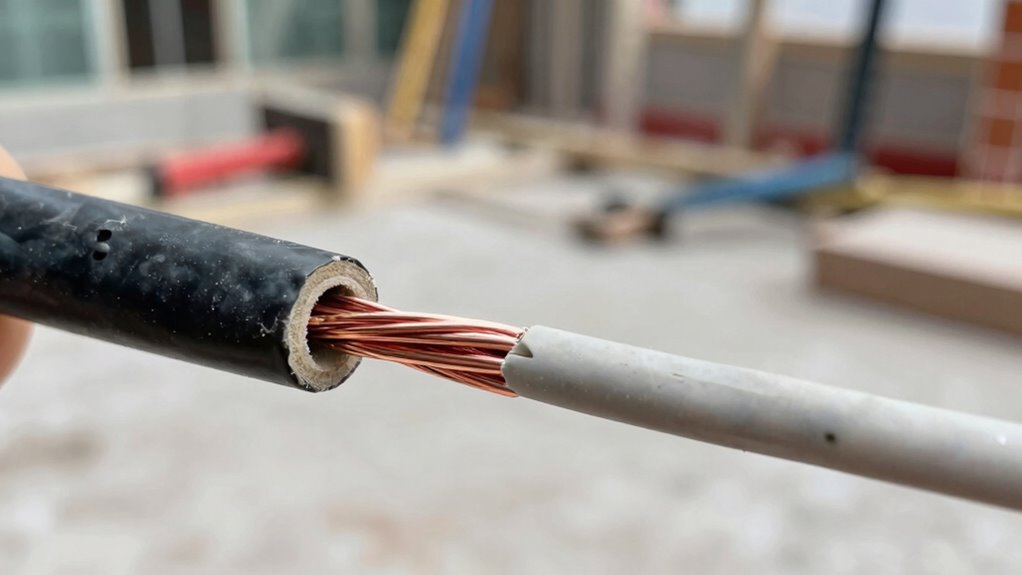
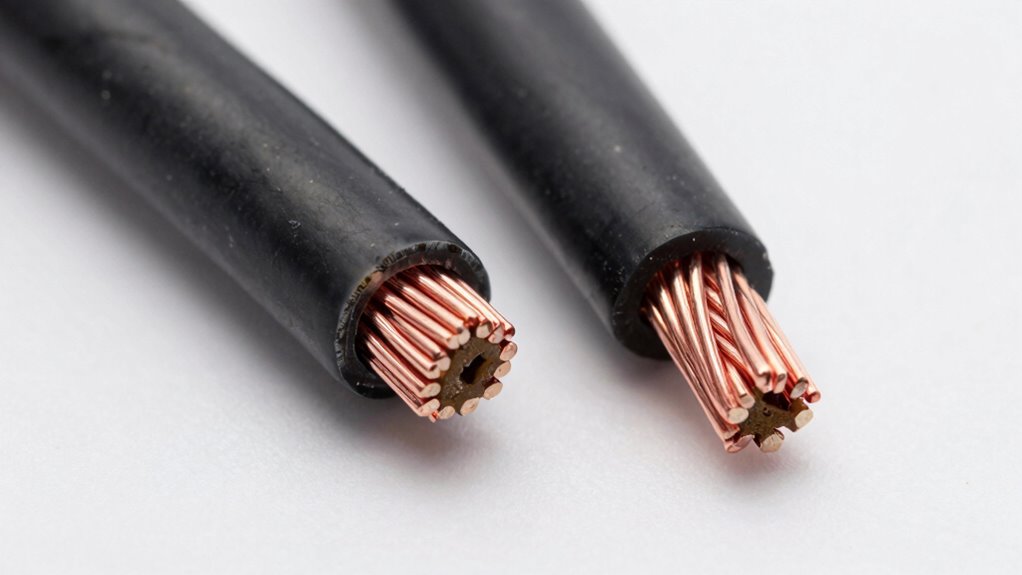
When working on electrical projects, it’s tempting to think that different types of cable can be used interchangeably, but that’s not always the case. One common mistake is assuming 12-2 and 14-2 cables are interchangeable since they look similar and are both used in household wiring. However, they have key differences that can impact safety, performance, and code compliance. The primary distinction lies in their wire gauge, with 12-2 cable featuring 12-gauge conductors and 14-2 having 14-gauge conductors. This difference is vital because it directly affects the circuit breaker ratings you should use and whether the wiring meets electrical code requirements.
Using 12-2 cable where 14-2 should be installed can lead to overcurrent issues. Circuit breaker ratings are designed to protect wiring from overheating and potential fires. A 14-gauge wire is typically rated for a maximum of 15 amps, so it’s paired with a 15-amp circuit breaker. Conversely, 12-gauge wire can handle up to 20 amps, which means it’s matched with a 20-amp breaker. If you ignore these ratings and substitute one for the other, you risk creating a dangerous situation. For example, installing 14-2 cable on a 20-amp circuit violates electrical code compliance and can cause the wire to overheat if the breaker trips or if there’s a fault downstream.
Electrical code compliance is essential when selecting wiring. It mandates that the gauge of the wire matches the circuit breaker rating, ensuring safe operation and minimizing fire hazards. Using the wrong cable gauge not only risks safety but can also fail inspections, leading to costly rewiring or delays in your project. Additionally, local electrical codes often specify exact requirements for different applications, such as receptacles, lighting, or appliances. Ignoring these standards by substituting 12-2 for 14-2 or vice versa can result in non-compliance, which might jeopardize insurance coverage or legal liability. Understanding wire gauge and circuit ratings is crucial for ensuring safe and compliant electrical installations. Moreover, adhering to electrical standards helps prevent potential hazards and ensures the longevity of your wiring system. It’s also important to consider proper wiring practices, such as correct connections and secure grounding, to further enhance safety and performance.
Adding to this, selecting the correct cable type also involves considering the application environment, which can influence insulation and durability requirements.
As an affiliate, we earn on qualifying purchases.
Frequently Asked Questions
Can 14-2 Cable Handle Outdoor Wiring Applications?
You shouldn’t use 14-2 cable for outdoor wiring because it lacks adequate weather resistance and insulation durability needed outdoors. Outdoor environments expose cables to moisture, UV rays, and temperature changes, which 14-2 isn’t designed to withstand. For outdoor applications, choose 12-2 or outdoor-rated wiring that offers superior weather resistance and durable insulation, ensuring safety and longevity. Using the right cable prevents damage and code violations.
What Are the Cost Differences Between 12-2 and 14-2 Cables?
You’ll find that 14-2 cables are generally cheaper than 12-2 cables due to their insulation material and thicker gauge. 14-2 uses thinner insulation, which lowers costs, while 12-2 has thicker insulation for higher capacity, often marked with different color coding for easy identification. The price difference reflects these factors, making 14-2 a budget-friendly option for lighter loads, whereas 12-2 costs more but supports higher amperage needs.
Are There Specific Electrical Codes for Using Each Cable Type?
You need to follow specific electrical codes for each cable type, considering voltage compatibility and insulation materials. 12-2 cable is rated for higher voltage and current, often used in outlets and appliances, while 14-2 is suited for lighting circuits with lower loads. Codes specify proper insulation and gauge, ensuring safety and compliance. Always check local electrical codes to confirm you’re using the correct cable for your application.
How Does Cable Length Affect Performance and Safety?
Think of cable length like a water hose—longer hoses can cause pressure drops. Similarly, longer runs can reduce voltage stability, risking dimming lights or malfunction. With 12-2 and 14-2 cables, longer distances strain insulation durability and can lead to overheating or voltage drops. Keep your runs short when possible to maintain safe, reliable power, ensuring both voltage stability and insulation stay intact.
Can 14-2 Cable Be Used in High-Humidity Environments?
You can use 14-2 cable in high-humidity environments if it has moisture-resistant insulation. However, keep in mind that standard 14-2 cables are more susceptible to corrosion in moist conditions, which can compromise safety and performance over time. For better durability, choose cables specifically rated for moisture resistance and corrosion resistance, ensuring your wiring stays safe and reliable in high-humidity settings.
As an affiliate, we earn on qualifying purchases.
Conclusion
Think of 12-2 and 14-2 cables as different keys for distinct locks—they might look similar, but they aren’t interchangeable. Using the wrong one is like trying to fit a square peg in a round hole; it just won’t work safely or effectively. Respect their unique roles, and always choose the right cable for the job. That way, your electrical project remains a smooth symphony, not a discordant clash.
As an affiliate, we earn on qualifying purchases.
circuit breaker compatible wiring
As an affiliate, we earn on qualifying purchases.
As an affiliate, we earn on qualifying purchases.
Halloween Picks
halloween
As an affiliate, we earn on qualifying purchases.