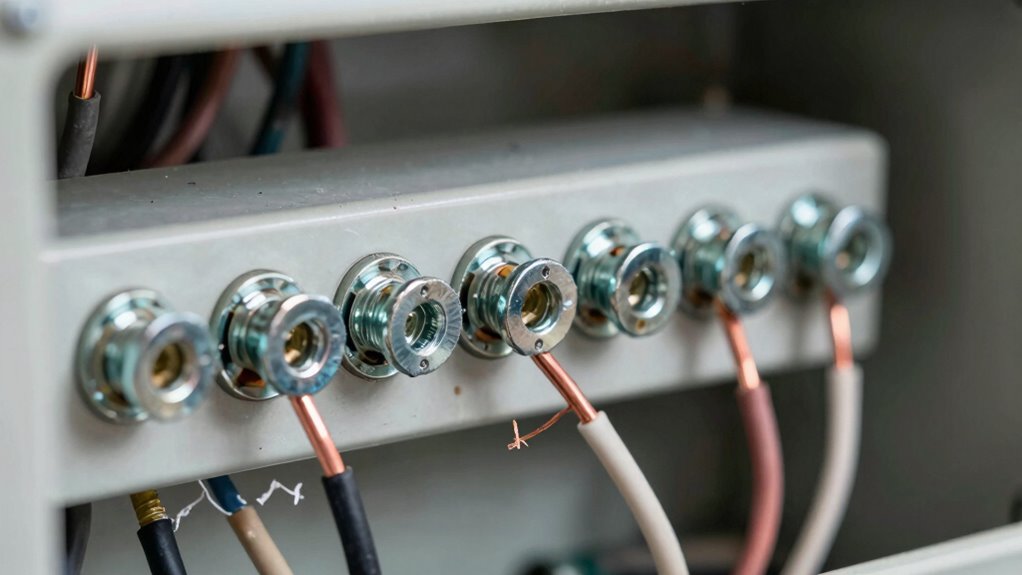

Screw terminals usually beat backstab connections because they offer a more secure and reliable hold, especially in vibration-prone environments. They let you tighten wires manually, ensuring a solid connection that can be inspected and adjusted if needed. Unlike backstab clips, screw terminals accommodate various wire sizes and reduce the risk of loose or damaged connections over time. For better safety, performance, and control, screw terminals are generally the better choice—keep going to learn more about why that is.

Get backup power and energy gear delivered free — and shop member deals
- Fast, free delivery on millions of items
- Access to Prime Big Deal Days deals on October 6–7
- Prime Video, Amazon Music and more included
Key Takeaways
- Screw terminals provide a more secure, long-lasting connection through manual tightening, reducing the risk of loosening over time.
- They accommodate various wire gauges, ensuring proper contact and safety, unlike limited backstab compatibility.
- Screw terminals allow easy inspection and adjustment, enhancing installation control and reducing errors.
- They minimize heat buildup and electrical failures, improving safety and long-term system reliability.
- Overall, screw terminals offer superior durability, safety, and reliability compared to backstab connections.
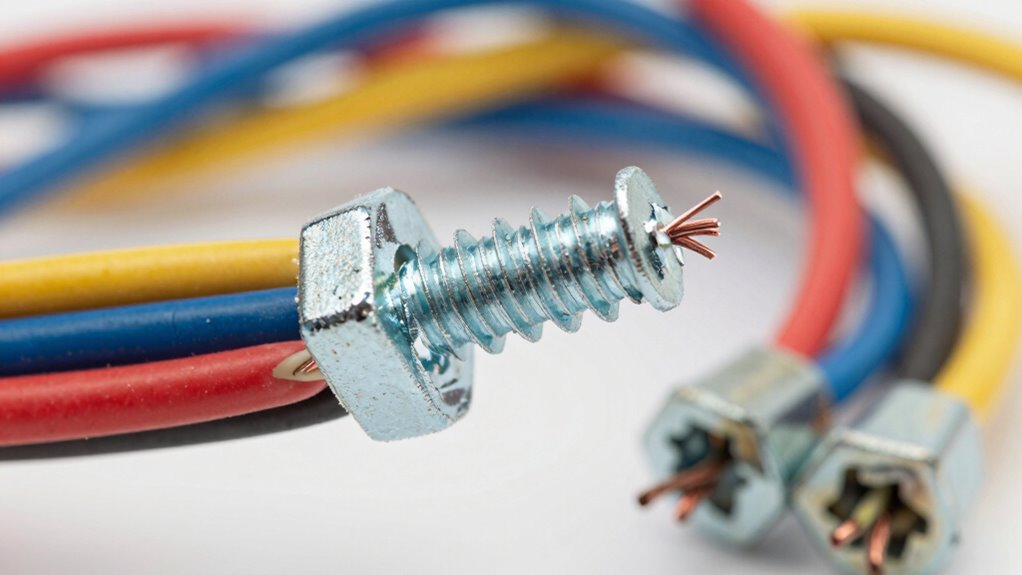
When it comes to securing electrical connections, screw terminals generally outperform backstab connections because they offer a more reliable and robust hold. With screw terminals, you have the advantage of manually tightening the screw to clamp the wire securely in place. This method ensures a solid connection that’s less likely to loosen over time, especially in environments where vibrations or movement are common. Backstab connections, on the other hand, rely on spring-loaded clips that snap onto the wire. While they seem faster and more convenient, they often don’t provide the same level of grip, which can compromise long-term reliability.
Screw terminals provide a more secure, reliable connection compared to backstab clips, especially in vibration-prone environments.
Wire gauge compatibility is another critical factor that makes screw terminals a better choice. Most screw terminal blocks are designed to accommodate a range of wire sizes, allowing you to select the right gauge for your specific application. When you tighten the screw, it compresses the wire firmly, ensuring good electrical contact without damaging the conductor. Backstab connections, however, are usually limited to specific wire gauges and can be less forgiving if you use a wire that’s too thick or too thin. This mismatch can lead to loose connections or even damage the wire, which risks electrical failures or safety hazards. Proper installation practices are essential for ensuring safety and reliability, and screw terminals facilitate adherence to these practices. Additionally, the ability to adjust the connection easily with a screwdriver can help prevent poor contact, which can cause heat buildup and potential fire hazards. Using proper wiring techniques also reduces the likelihood of accidental disconnections or shorts that could compromise safety.
Furthermore, screw terminals give you more control during installation. You can inspect each connection closely, ensure the wire is inserted correctly, and tighten the screw to your desired torque. This level of control minimizes errors and enhances overall safety. Additionally, using appropriate wiring techniques can significantly improve connection stability and prevent potential hazards. Backstab connections often lack this transparency; once the wire is inserted and the clip snaps in place, it’s difficult to verify if the connection is truly secure without testing. Overall, while backstab connections might save time initially, screw terminals consistently deliver stronger, more reliable, and safer electrical connections. Proper wiring techniques are crucial for preventing heat buildup, fumes, and potential fire hazards in electrical systems.
As an affiliate, we earn on qualifying purchases.
Frequently Asked Questions
Are Screw Terminals More Cost-Effective Than Backstab Connections?
Yes, screw terminals tend to be more cost-effective than backstab connections. They offer greater installation flexibility, allowing you to securely connect wires of various sizes and types. Additionally, screw terminals reduce wiring complexity by making it easier to troubleshoot and modify connections later. While backstab connections might seem quicker initially, screw terminals often save you money over time through durability and easier maintenance, making them a smarter choice overall.
How Do Screw Terminals Perform in High-Vibration Environments?
You’ll find screw terminals excel in high-vibration environments because they offer superior vibration damping and connection reliability. Unlike backstab connections, screw terminals stay put, resisting loosening and disconnection amid constant shaking. So, if your setup involves relentless vibrations, rely on screw terminals—they’re the steadfast champions that keep your connections tight and secure, no matter how much the machinery rattles. Who knew stability could be so simple?
Can Backstab Connections Be Reused Multiple Times Without Losing Integrity?
Backstab connections generally can’t be reused multiple times without losing connection durability. Each time you insert and remove a wire, the metal contact’s reuse longevity diminishes, increasing the risk of loose connections. For reliable, long-term performance, screw terminals are better because they maintain connection integrity through multiple adjustments. If you need a secure, durable connection that can be reused, screw terminals offer superior connection durability and reuse longevity compared to backstab connectors.
What Maintenance Is Required for Screw Terminal Connections?
Maintaining screw terminal connections is like tending a garden—you need regular care. You should check for loose screws and tighten them when needed. Always prepare your wire properly by stripping the right amount of insulation and avoiding damaged strands. To prevent corrosion, consider applying anti-corrosion compound or ensuring the terminal is kept dry. Regular inspections and cleanings keep your connections secure and reliable over time.
Are There Specific Applications Where Backstab Connections Are Preferable?
In some specific applications, backstab connections can be preferable due to their quick installation and minimal tool requirements. If you’re dealing with temporary setups, testing, or situations where ease of access is essential, backstab connections offer an alternative wiring method. However, for connection reliability over time, screw terminals generally perform better. Choose backstab connections when speed matters, but for long-term security, screw terminals are often the better choice.
As an affiliate, we earn on qualifying purchases.
Conclusion
In the end, choosing screw terminals over backstab connections often means better reliability and safety. They’re less likely to loosen over time, reducing the risk of electrical failures. Did you know that screw terminals can withstand vibrations up to 30% more than backstab connections? That’s a significant advantage in demanding environments. So, next time you’re wiring, remember that investing in screw terminals can save you headaches and guarantee your connections stay solid for years to come.
As an affiliate, we earn on qualifying purchases.
multi-gauge screw terminal block
As an affiliate, we earn on qualifying purchases.
As an affiliate, we earn on qualifying purchases.
Halloween Picks
halloween
As an affiliate, we earn on qualifying purchases.