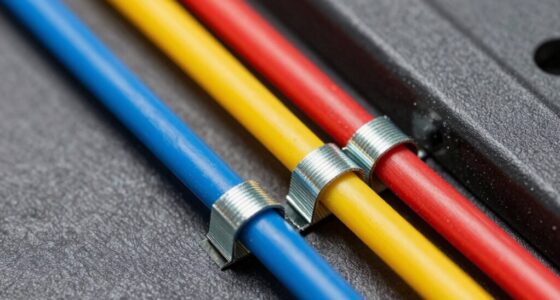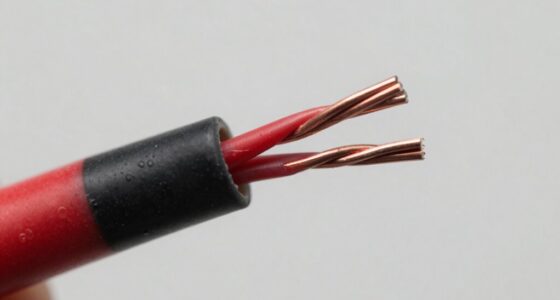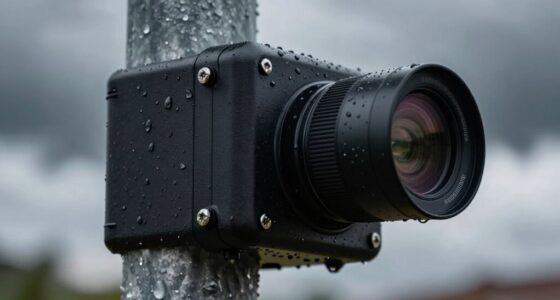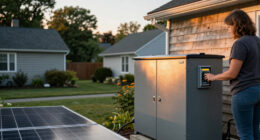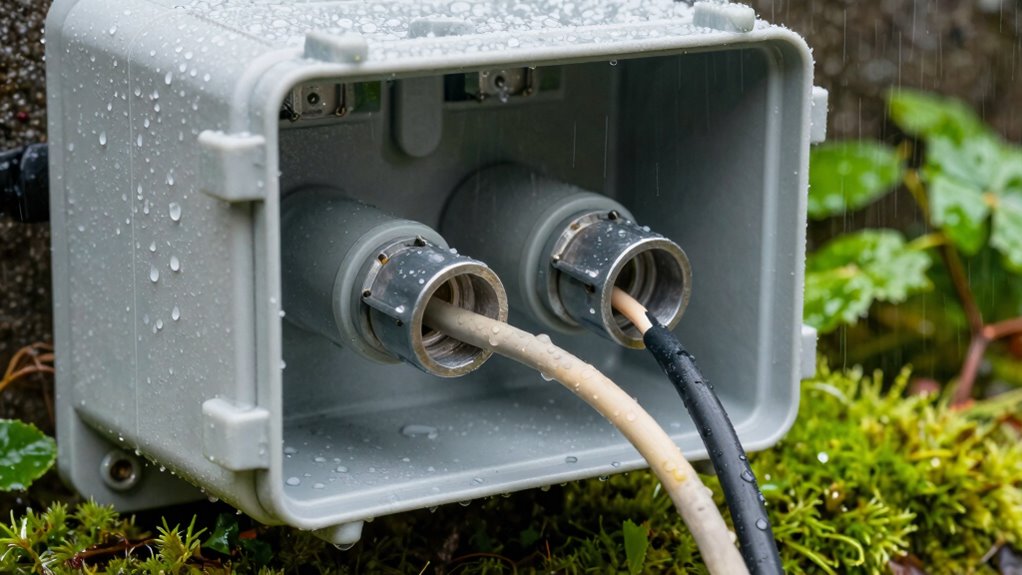
The most important rule for weatherproof electrical installations is ensuring all components are airtight, waterproof, and resistant to environmental damage. You need to use weather-resistant materials, seal connections tightly, and follow proper drainage and corrosion prevention measures. This protects your system from moisture, rust, and temperature fluctuations. Adhering to these standards keeps your outdoor wiring safe and durable over time. Stay with us to discover additional tips for a reliable weatherproof setup.

Get backup power and energy gear delivered free with Prime
- Fast, free delivery on millions of items
- Prime Video, Amazon Music and more included
- Member-only deals all year
Key Takeaways
- Ensure all electrical connections are sealed tightly to prevent moisture ingress.
- Use weather-resistant materials and enclosures designed for outdoor environments.
- Implement proper drainage and waterproofing techniques to protect electrical components.
- Regularly inspect and maintain to identify and address corrosion or damage early.
- Follow industry standards and local codes for installation, insulation, and environmental protection.
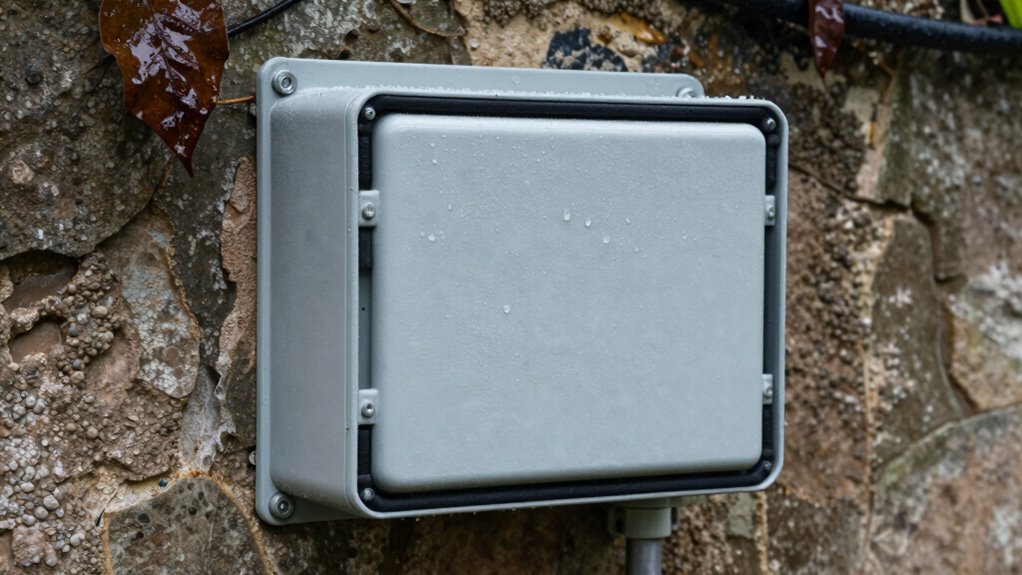
When it comes to electrical installations exposed to the elements, ensuring your setup is weatherproof isn’t just a good idea—it’s the most important rule for safety and durability. Exposure to rain, snow, humidity, and temperature fluctuations can severely damage electrical systems if not properly protected. To meet insulation standards, you need to select materials and methods that resist moisture infiltration and temperature changes. Proper insulation acts as the first line of defense, preventing electrical shorts and reducing the risk of fires. Use weather-resistant conduit and enclosures designed for outdoor use, and make sure all connections are sealed tightly. This not only maintains insulation standards but also minimizes exposure to environmental elements that can cause deterioration over time. Additionally, selecting appropriate sealing techniques is essential to prevent water ingress and ensure long-term protection.
Corrosion prevention becomes critical when installing electrical systems outdoors. Metal components, such as conductors and connectors, are especially vulnerable to rust and corrosion, which can compromise the entire system’s integrity. Applying protective coatings, like galvanization or specialized corrosion-resistant paints, helps safeguard these parts. Additionally, using corrosion-resistant materials like stainless steel or plastic components reduces the risk of degradation. Regular inspections are vital to identify early signs of corrosion, especially in harsh climates. When you catch corrosion early, you can replace or treat affected parts before they cause failures or safety hazards. Understanding the importance of resistance to environmental factors, as highlighted in industry standards, can help guide material selection and installation practices. Incorporating environmental considerations into your planning ensures your system remains resilient over time. Furthermore, paying attention to proper grounding techniques enhances the overall safety and durability of outdoor electrical setups.
Furthermore, ensuring proper drainage around outdoor electrical installations is essential. Water pooling or seepage can accelerate corrosion and compromise insulation. Installing drainage channels or using waterproof enclosures helps keep moisture away from sensitive components. It’s also crucial to follow local electrical codes and standards, which specify requirements for outdoor wiring, grounding, and sealing methods. These standards are designed to maximize safety and longevity, so adhering to them is not optional.
Additionally, selecting high-quality, weatherproof materials as recommended in the industry standards can significantly extend the lifespan of outdoor electrical systems. These standards help ensure that all components perform reliably under various environmental conditions. Ultimately, the key to a durable weatherproof electrical setup lies in diligent planning and execution. Use high-quality, weatherproof materials, follow insulation standards rigorously, and implement corrosion prevention strategies. Regular maintenance and inspections help catch issues early before they develop into major problems. When you prioritize these aspects, you ensure that your electrical system remains safe, functional, and resistant to the damaging effects of the environment. Weatherproofing isn’t just about shielding wires; it’s about creating a reliable, long-lasting installation that withstands the elements and keeps everyone safe.
Products Worth Considering

Bose SoundLink Flex Bluetooth Speaker (2nd Gen), Portable Waterproof Speaker, Black

Philips Hue Festavia Globe Outdoor String Lights, 32 Bulbs, 91 ft

Dyson Ball Animal 3 Corded Upright Vacuum
As an affiliate, we earn on qualifying purchases.
Frequently Asked Questions
What Are Common Mistakes in Weatherproof Electrical Installations?
A common mistake in weatherproof electrical installations is neglecting proper sealing around connections, which compromises electrical safety. Using materials that aren’t durable enough for outdoor conditions can lead to deterioration and failures over time. You might also overlook the importance of waterproof enclosures or incorrect wiring practices, risking damage from moisture. Ensuring you choose high-quality, weather-resistant materials and follow proper sealing techniques helps maintain safety and durability in outdoor electrical systems.
How Often Should Weatherproofing Components Be Inspected or Replaced?
Imagine your electrical components standing resilient against the elements, shielded by sturdy sealant. You should inspect weatherproofing components at least once a year, especially after severe weather. Regular sealant maintenance keeps moisture out, preventing corrosion and extending the lifespan of your installation. Replace any cracked or deteriorated seals promptly, ensuring your electrical system remains protected, safe, and reliable in all weather conditions.
Are There Specific Regulations for Outdoor Electrical Installations?
Yes, there are specific regulations for outdoor electrical installations. You must follow environmental regulations that guarantee minimal impact on the surroundings and adhere to safety standards designed to protect people and property. These regulations often specify proper weatherproofing, grounding, and equipment placement. Make sure to check local codes and standards, like the NEC, to ensure your outdoor electrical setup complies with all safety and environmental requirements.
What Tools Are Essential for Weatherproofing Electrical Systems?
You need essential tools like a caulking gun for sealant application, waterproof connectors, and weatherproof enclosures. These tools help you master weatherproofing techniques effectively. A quality sealant is vital to keep moisture out, so make sure you have a reliable applicator to create a tight seal. With the right gear, you can stay ahead of the weather and protect your electrical systems from the elements.
Can DIY Weatherproofing Be as Effective as Professional Installation?
DIY weatherproofing can be effective if you follow proper safety precautions and adhere to professional standards. You need to understand electrical codes, use the correct tools, and take your time to make sure all connections are sealed properly. However, if you’re unsure about your skills or safety, it’s best to hire professionals. They guarantee compliance with safety regulations, minimizing risks and ensuring your electrical system stays protected against the elements.
Conclusion
Remember, the most important rule for weatherproof electrical installations is to prioritize safety and proper sealing. Don’t let your setup become a modern-day Tower of Babel—confusing and vulnerable to the elements. Even the greatest engineers from the days of the Wright Brothers knew the importance of protecting their inventions from weather. Stick to the basics, make sure everything is sealed tight, and your electrical system will stand strong against any storm, just like a true pioneer.