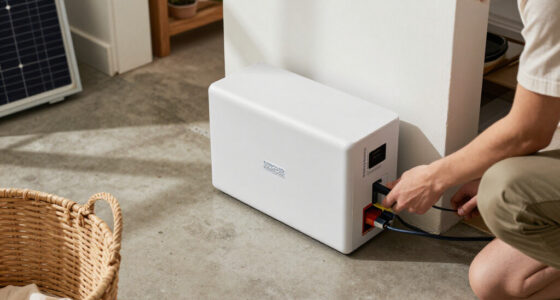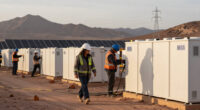
Portable solar generators pair a battery power station with solar panels, but the right choice depends on whether you need a small travel-ready supply or backup power for larger appliances. I rank the Jackery HomePower 3000 with two 200W panels as the best overall bundle for balancing substantial capacity with a ready-to-charge solar setup. The Anker SOLIX C1000 Gen 2 is a more manageable option for versatile everyday backup, while the OUKITEL P5000 Pro targets buyers who need very high capacity. The main tradeoffs are battery size versus portability, bundled panels versus system flexibility, and upfront system scale versus the power you will actually use. Read on for the full breakdown of all 15 options and guidance on matching a generator to your needs.

Get backup power and energy gear delivered free with Prime
- Fast, free delivery on millions of items
- Prime Video, Amazon Music and more included
- Member-only deals all year
Complete the kit


Key Takeaways
- The lineup spans very different jobs: the MARBERO 155Wh and Jackery Explorer 300 models suit small-device charging, while the OUKITEL P5000 Pro and Jackery HomePower 3600 Plus are aimed at extended, higher-demand backup.
- Bundled panels make setup simpler, not automatically faster: several Jackery, 300W-class, and large-capacity kits include panels, but panel wattage and the generator’s solar input limit still determine recharge pace.
- Small capacity and low output go together in this selection: the 155Wh and 292Wh units are easier to place in a travel kit, but they are not substitutes for running larger appliances for long periods.
- The two BROWEY 1600W listings center on built-in solar: that feature may suit buyers who value an integrated setup, but it is worth checking how the panel arrangement and charging conditions fit the intended use.
- Several models appear in both station-only and solar-bundle versions: compare the Explorer 300 and HomePower 3600 Plus packages by the panel kit you need, rather than treating the included panels as a measure of battery capacity.
| Jackery HomePower 3000 Portable Power Station with Two 200W Solar Panels |  | Best for Backup with Panels Included | Battery capacity: 3,072Wh | Battery type: LiFePO4 | AC output: 3,600W | VIEW LATEST PRICE | See Our Full Breakdown |
| Jackery HomePower 3600 Plus Portable Power Station, 3584Wh, 3600W |  | Best for Expandable Home Backup | Battery capacity: 3,584Wh | AC output: 3,600W | Parallel output: 7,200W; 240V in parallel | VIEW LATEST PRICE | See Our Full Breakdown |
| EnginStar 300W Portable Power Station with 60W Foldable Solar Panel |  | Best Starter Solar Kit | Battery capacity: 296Wh | Battery type: Lithium-ion | AC output: 300W | VIEW LATEST PRICE | See Our Full Breakdown |
| ZeroKor 300W Portable Power Station with 60W Solar Panel |  | Best for Basic Solar Camping | Maximum power station output: 300W | Battery capacity: Not specified | Included solar panel: 60W monocrystalline | VIEW LATEST PRICE | See Our Full Breakdown |
| Jackery Explorer 300 Portable Power Station, 292Wh |  | Best Compact Long-Life Pick | Battery capacity: 292Wh | Battery chemistry: LiFePO4 | Peak surge output: 600W | VIEW LATEST PRICE | See Our Full Breakdown |
| Anker SOLIX C1000 Gen 2 Portable Power Station with Car Charging Cable |  | Best for Fast Recharging | Battery capacity: 1,024Wh | Battery chemistry: LiFePO4 | Output / peak output: 2,000W / 3,000W | VIEW LATEST PRICE | See Our Full Breakdown |
| Jackery Explorer 300 Portable Power Station with 40W Solar Panel |  | Best Lightweight Solar Kit | Battery capacity: 292Wh | Battery chemistry: LiFePO4 | Included solar panel: 40W | VIEW LATEST PRICE | See Our Full Breakdown |
| OUKITEL P5000 Pro 5120Wh Portable Power Station with 400W Solar Panel |  | Best for Maximum Capacity | Battery capacity: 5,120Wh | Output / surge output: 3,600W / 6,000W | Battery chemistry: LiFePO4 | VIEW LATEST PRICE | See Our Full Breakdown |
| Jackery Explorer 2000 v2 Portable Power Station with Two 200W Solar Panels |  | Best for Balanced Home and Camp Backup | Battery capacity: 2,042Wh | AC output: 2,200W | Battery chemistry: LiFePO4 | VIEW LATEST PRICE | See Our Full Breakdown |
| Jackery HomePower 3600 Plus Portable Power Station with Two 200W Solar Panels |  | Best Expandable Home Backup | Battery capacity: 3,584Wh | Output wattage: 3,600W | Parallel output: 7,200W | VIEW LATEST PRICE | See Our Full Breakdown |
| Jackery Solar Generator 1000 v2 with 200W Solar Panel |  | Best Overall for Balanced Capacity | Battery capacity: 1,070Wh | Battery type: LFP | AC output: 1,500W | VIEW LATEST PRICE | See Our Full Breakdown |
| BROWEY 1600W Portable Power Station with Built-In Solar Panel |  | Best for a Self-Contained Solar Setup | Battery capacity: 1,024Wh | Battery type: LiFePO4 | AC output: 1,600W pure sine wave | VIEW LATEST PRICE | See Our Full Breakdown |
| Apowking 300W Portable Power Station with 40W Solar Panel |  | Best Lightweight Pick for Basic Loads | Battery capacity: 220Wh | Battery type: Lithium-ion | Peak output: 600W | VIEW LATEST PRICE | See Our Full Breakdown |
| MARBERO 155Wh Solar Generator with 30W Solar Panel Kit |  | Best for Minimal Emergency and Camp Loads | Capacity: 155Wh | Solar panel: 30W | AC output: 100W running, 150W surge | VIEW LATEST PRICE | See Our Full Breakdown |
| BROWEY 1600W (3200W Peak) Portable Power Station with Built-in Solar Panel |  | Best High-Output Built-In-Panel Alternative | Battery capacity: 1,024Wh | Battery type: LiFePO4 | Continuous output: 1,600W | VIEW LATEST PRICE | See Our Full Breakdown |
| portable solar generator | Battery capacity | Weight |
|---|---|---|
| Jackery HomePower 3000 Portabl | 3,072Wh | 59.5 pounds |
| Jackery HomePower 3600 Plus Po | 3,584Wh | 77.2 pounds |
| EnginStar 300W Portable Power | 296Wh | 6.5 pounds |
| ZeroKor 300W Portable Power St | Not specified | — |
| Jackery Explorer 300 Portable | 292Wh | 7.5 pounds; also listed as 7.1 pounds |
| Anker SOLIX C1000 Gen 2 Portab | 1,024Wh | — |
| Jackery Explorer 300 Portable | 292Wh | 12.9 lb |
| OUKITEL P5000 Pro 5120Wh Porta | 5,120Wh | 52 lb |
| Jackery Explorer 2000 v2 Porta | 2,042Wh | 66.8 lb |
| Jackery HomePower 3600 Plus Po | 3,584Wh | 77.2 lb |
| Jackery Solar Generator 1000 v | 1,070Wh | 23.8 lbs |
| BROWEY 1600W Portable Power St | 1,024Wh | 26 lbs |
| Apowking 300W Portable Power S | 220Wh | 5 lbs |
| MARBERO 155Wh Solar Generator | — | 3.7 lbs |
| BROWEY 1600W | 1,024Wh | 12 kg |
More Details on Our Top Picks
Jackery HomePower 3000 Portable Power Station with Two 200W Solar Panels
For buyers who want a substantial outage reserve and a solar starting point in one package, the Jackery HomePower 3000 pairs a 3,072Wh battery with two 200W panels. Its 3,600W AC output can handle more home essentials than the 300W EnginStar or ZeroKor, while the UPS switches within 20ms for supported devices that need backup power. Solar charging is slower than a quick top-up: the stated estimate is nine hours to reach 80% with both included panels. The LiFePO4 battery is rated for 4,000 cycles to 70% capacity, and several charging methods add flexibility when sunlight is limited. The tradeoff is portability: at 59.5 pounds, it is better moved between locations than carried on an outing. The station and panels may also ship separately.
Pros:- 3,072Wh capacity and 3,600W AC output suit a broader range of home essentials than 300W options.
- Two 200W solar panels are included for solar charging.
- UPS switching within 20ms can keep supported devices powered through an outage.
- LiFePO4 battery is rated for 4,000 cycles to 70% capacity.
Cons:- At 59.5 pounds, it is cumbersome to carry regularly.
- The stated solar charge time to 80% is nine hours with both panels.
- The power station and panels may arrive in separate packages.
Best for: Households seeking a high-capacity outage battery with solar panels included for gradual daytime recharging.
Not ideal for: Campers who need a light, frequently carried power source, or buyers who need a compact unit for small devices.
- Battery capacity:3,072Wh
- Battery type:LiFePO4
- AC output:3,600W
- Surge output:7,200W
- UPS switching time:≤20ms
- Included solar panels:Two 200W panels
- Solar charging estimate:Up to 80% in 9 hours with two 200W panels
- Weight:59.5 pounds
Our verdict“Choose this package for substantial home backup and included solar panels, but skip it if low weight or rapid solar replenishment matters most.”
Jackery HomePower 3600 Plus Portable Power Station, 3584Wh, 3600W
The Jackery HomePower 3600 Plus is the more flexible long-term choice for buyers planning beyond a single power station. Its 3,584Wh capacity is slightly larger than the HomePower 3000, and its expandable system can grow to 21kWh per unit or 43kWh with multiple units. Parallel operation also enables 240V output, giving it a path to support needs that a standalone 120V unit cannot. A wheeled base and telescopic handle make its 77.2 pounds easier to move across a floor than the HomePower 3000’s hand-carried form, though it remains heavy to lift into a vehicle. The battery is rated for 6,000 cycles, but solar panels are optional, unlike the HomePower 3000 bundle. I’d pick this for a scalable backup setup, not for buyers seeking an all-in-one solar kit.
Pros:- 3,584Wh capacity and 3,600W output provide substantial standalone power.
- Expandable capacity and parallel 240V output support a larger system later.
- Wheels and a telescopic handle help move the 77.2-pound unit on level surfaces.
- Battery is rated for 6,000 cycles and includes a five-year warranty.
Cons:- Solar panels are optional, unlike the panel-included HomePower 3000 bundle.
- At 77.2 pounds, it is still difficult to lift and transport.
- The listed configuration has only two outlets.
Best for: Homeowners who want a wheeled backup station now and may expand capacity or add 240V output later.
Not ideal for: Buyers who want solar panels included or need a power station light enough to carry by hand.
- Battery capacity:3,584Wh
- AC output:3,600W
- Parallel output:7,200W; 240V in parallel
- Expandable capacity:Up to 21kWh per unit or 43kWh with multiple units
- Battery cycle life:6,000 cycles
- Charging options:Hybrid AC+DC, AC, solar, and gas generator
- Weight:77.2 pounds
- Warranty:5 years
Our verdict“Choose this if expandability and wheeled movement matter more than getting solar panels in the box.”
EnginStar 300W Portable Power Station with 60W Foldable Solar Panel
The EnginStar 300W is a practical entry point for charging small devices away from an outlet because its 60W foldable panel is included. At 6.5 pounds, the station is far easier to pack than either large Jackery HomePower model, but its 296Wh battery and 300W AC limit make it a device-and-small-electronics option rather than home backup. Eight output ports provide room to charge several items, and the pure sine wave AC outlets suit compatible sensitive electronics. Compared with the similarly rated ZeroKor 300W, EnginStar lists its battery capacity and provides a stated recharge estimate of about three hours, giving buyers clearer expectations. That estimate depends on the charging method and conditions; the maximum listed charging speed is 65W. Its 12-month warranty is also shorter than the HomePower 3600 Plus’s five-year coverage.
Pros:- Includes a 60W foldable monocrystalline solar panel.
- At 6.5 pounds, it is much easier to carry than the large HomePower stations.
- Eight output ports support charging several small devices.
- Pure sine wave AC outlets and listed battery protections suit common electronics.
Cons:- The 296Wh capacity and 300W output limit it to small loads.
- Maximum listed charging speed is 65W, so it cannot replenish as quickly as larger backup units.
- The 12-month warranty is shorter than the HomePower 3600 Plus’s five-year warranty.
Best for: First-time solar-generator buyers who want a lightweight kit for phones, cameras, and other low-draw devices.
Not ideal for: People who need to run appliances drawing more than 300W or maintain household essentials through a long outage.
- Battery capacity:296Wh
- Battery type:Lithium-ion
- AC output:300W
- AC outlets:2 × 110V pure sine wave
- Output ports:8
- Included solar panel:60W monocrystalline
- Maximum charging speed:65W
- Weight:6.5 pounds
- Warranty:12 months
Our verdict“Pick the EnginStar for a portable, panel-included starter kit for small electronics, not for appliance backup.”
ZeroKor 300W Portable Power Station with 60W Solar Panel
The ZeroKor 300W is aimed at simple outdoor charging: it includes a 60W monocrystalline panel, supports AC, car, and solar input, and adds a flashlight with reading and SOS modes. Its 300W ceiling puts it in the same small-device class as the EnginStar 300W, so neither is a substitute for the 3,600W HomePower stations when running larger appliances. ZeroKor lists an MPPT solar input and several electrical protections, but it does not specify battery capacity. That omission makes it harder to estimate runtime or compare it fairly with EnginStar’s stated 296Wh battery. The panel’s junction box is also not waterproof, so buyers need to keep that part protected outdoors. I’d choose it for basic camping functions and included solar charging only if the unclear capacity is acceptable.
Pros:- Includes a foldable 60W monocrystalline solar panel.
- Supports charging from AC, a 12V car port, or solar input with built-in MPPT.
- Flashlight includes reading and SOS modes for campsite use.
- Lists protections for short circuit, over-current, over-voltage, overload, and overheating.
Cons:- Battery capacity is not specified, making runtime difficult to estimate or compare with EnginStar’s 296Wh unit.
- The 300W maximum output rules out appliances drawing more power.
- The solar panel junction box is not waterproof.
Best for: Casual campers who want a small, panel-included charging setup with a built-in SOS light for low-draw devices.
Not ideal for: Buyers who need predictable runtime estimates, want to power appliances above 300W, or expect the solar panel components to withstand rain without protection.
- Maximum power station output:300W
- Battery capacity:Not specified
- Included solar panel:60W monocrystalline
- Solar panel conversion efficiency:20.5%
- AC outlets:2
- USB ports:3 USB-A ports and 1 quick-charge USB port
- DC output:9V–12.6V, 10A maximum
- Recharge methods:AC outlet, 12V car port, or 13V–23V solar input
Our verdict“Choose the ZeroKor for basic campsite charging and its SOS light, but favor the EnginStar if stated battery capacity matters.”
Jackery Explorer 300 Portable Power Station, 292Wh
For buyers who value a compact power station and a battery rated for extended use, the Jackery Explorer 300 offers a 292Wh LiFePO4 battery in a 7.5-pound body with an integrated handle. Its 4,000-plus cycle rating to 70% capacity is a standout distinction from the EnginStar 300W’s stated lifespan of more than 1,000 cycles. The 100W USB-C PD port is also useful for compatible devices that need more than basic USB charging. At 300W rated output, though, it remains limited to small electronics and low-draw equipment, just like the 300W EnginStar and ZeroKor. The key package tradeoff is that solar panels are sold separately; EnginStar and ZeroKor include 60W panels. Choose this Jackery when compact transport and long cycle life matter more than getting a ready-made solar kit.
Pros:- LiFePO4 battery is rated for over 4,000 cycles to 70% capacity.
- At about 7.5 pounds with an integrated handle, it is portable for trips.
- 100W USB-C PD port supports compatible higher-power USB-C devices.
- Supports solar charging and can reach about 80% in approximately 2.8 hours with a 100W panel.
Cons:- Solar panel is not included, unlike the EnginStar and ZeroKor bundles.
- The 300W rated output limits use to small loads.
- Listed weight varies between 7.1 and 7.5 pounds.
Best for: Frequent campers and travelers who want a compact, light-duty station with a high stated cycle-life rating.
Not ideal for: Buyers seeking a complete solar kit in one package or enough output for larger appliances and home backup.
- Battery capacity:292Wh
- Battery chemistry:LiFePO4
- Peak surge output:600W
- USB-C PD output:100W
- Solar charging estimate:About 80% in 2.8 hours with a 100W panel
- Charge cycles:Over 4,000 cycles to 70% capacity
- Weight:7.5 pounds; also listed as 7.1 pounds
Our verdict“Choose the Explorer 300 for compact portability and long stated battery life, but pick a panel-included 300W kit if you want solar charging gear in the box.”
Anker SOLIX C1000 Gen 2 Portable Power Station with Car Charging Cable
The Anker SOLIX C1000 Gen 2 is a strong fit for buyers who want a genuinely portable solar generator without stepping up to the bulk of the 2kWh-plus models. Its 1,024Wh LiFePO4 battery and 2,000W output can cover a broad mix of camping gear and household essentials, while the 10 ports make sharing power easier. The standout is recharge flexibility: AC charging is listed at 49 minutes, and up to 600W of solar input is listed for a 1.8-hour solar recharge. Compared with the Jackery Explorer 2000 v2, it holds much less energy, but its more compact dimensions make it easier to move. The tradeoff is its 600W solar-input ceiling, and the included car charging cable does not remove the need for suitable solar panels.
Pros:- 1,024Wh capacity and 2,000W output cover more than small device charging.
- Fast AC recharge and support for up to 600W solar input reduce downtime.
- Ten ports allow several devices to run or charge at once.
- IP54 water resistance and an included protective bag suit outdoor use.
Cons:- A 600W maximum solar input limits how quickly a larger panel setup can replenish it.
- Its capacity is well below the Jackery Explorer 2000 v2 and larger home-backup options.
- The listed 1.8-hour solar recharge depends on suitable input conditions and panels.
Best for: Campers and homeowners who want a mid-capacity unit that can recharge quickly and power several devices without the footprint of a large backup station.
Not ideal for: Buyers who need multi-day, high-load home backup or want to recharge from a large solar array beyond 600W.
- Battery capacity:1,024Wh
- Battery chemistry:LiFePO4
- Output / peak output:2,000W / 3,000W
- Ports:10
- Maximum solar input:600W, 60V maximum
- AC recharge time:49 minutes at 1,600W
- Dimensions:15.1 x 8.2 x 9.6 in
- Water resistance:IP54
- Warranty:5 years
Our verdict“Choose the C1000 Gen 2 for fast-recharging portable power at around 1kWh, but choose a larger unit for extended household backup.”
Jackery Explorer 300 Portable Power Station with 40W Solar Panel
The Jackery Explorer 300 with 40W solar panel is the light-duty choice in this group: its 292Wh capacity and 12.9-pound weight suit weekend camping, day trips, and charging personal electronics. Unlike the larger Anker SOLIX C1000 Gen 2, it is easier to carry, and the included panel gives buyers a simple starting point for off-grid charging. The USB-C PD port delivers up to 100W, a useful option for compatible devices, while two AC outlets and a car port add flexibility. The tradeoff is limited stored energy and a 300W rated output, so it is not a substitute for a household backup station or for powering demanding appliances. The 40W panel is also a slow replenishment source: the listed charge to 80% takes about 7.5 hours.
Pros:- 12.9-pound weight is easier to carry than the larger power stations in this roundup.
- Included 40W solar panel provides an off-grid charging option.
- 100W USB-C PD, AC outlets, USB-A, and a car port support varied devices.
- LiFePO4 battery is rated for over 4,000 cycles to 70% capacity.
Cons:- 292Wh capacity and 300W rated output limit runtime and appliance compatibility.
- The 40W panel is listed to take about 7.5 hours to charge the unit to 80%.
- The power station and solar panel may ship separately.
Best for: Solo campers and travelers who mainly need to recharge phones, cameras, laptops, and a few low-wattage accessories.
Not ideal for: Households needing to run appliances, multiple high-draw devices, or equipment through a long outage.
- Battery capacity:292Wh
- Battery chemistry:LiFePO4
- Included solar panel:40W
- Ports:2 AC outlets, 1 USB-C PD (100W), 2 USB-A, 1 car port (120W)
- Weight:12.9 lb
- Dimensions:15.43 x 9.92 x 11.89 in
- Warranty:3+2 years
Our verdict“Pick this Jackery kit for portable, low-demand trips where the included small panel matters more than long runtime or appliance power.”
OUKITEL P5000 Pro 5120Wh Portable Power Station with 400W Solar Panel
The OUKITEL P5000 Pro is the capacity-first pick: 5,120Wh and 3,600W output put it far beyond portable stations such as the Jackery Explorer 2000 v2 when the goal is longer backup or running several substantial loads. Its included 400W panel, 15 output ports, and UPS backup feature make it useful as a substantial home or site power source, while wheels and a drawbar help move its 52-pound body. That weight still matters: this is portable in the wheeled, relocate-around-a-property sense, not an easy carry for trails or frequent vehicle loading. Solar replenishment is listed at five hours using 400W panels in series, so buyers should plan around panel placement and charging conditions. The large reserve and output come at the cost of a much less grab-and-go setup.
Pros:- 5,120Wh capacity supports longer use between recharges than the smaller stations listed here.
- 3,600W output and 6,000W surge rating handle a wider range of equipment.
- Included 400W solar panel, UPS backup, and pass-through charging add practical flexibility.
- Wheels and drawbar make moving the 52-pound unit easier on suitable surfaces.
Cons:- At 52 lb, it is cumbersome for carrying over uneven ground or frequent transport.
- The listed five-hour solar recharge uses 400W panels in series and depends on available solar conditions.
- Its large capacity and dimensions make it excessive for basic device charging or short outings.
Best for: Homeowners, workshop users, and campers with vehicle access who need substantial stored energy and want a wheeled backup unit.
Not ideal for: Hikers, frequent travelers, or anyone who needs a light station that can be lifted in and out of a car often.
- Battery capacity:5,120Wh
- Output / surge output:3,600W / 6,000W
- Battery chemistry:LiFePO4
- Included solar panel:400W
- Solar recharge time:5 hours with 400W panels in series
- Output ports:15 total
- Weight:52 lb
- Features:UPS backup, pass-through charging, wheels and drawbar
Our verdict“Choose the P5000 Pro when long runtime and high output matter more than carrying convenience.”
Jackery Explorer 2000 v2 Portable Power Station with Two 200W Solar Panels
The Jackery Explorer 2000 v2 balances meaningful backup capacity with a more moderate scale than the 5,120Wh OUKITEL P5000 Pro. Its 2,042Wh battery and 2,200W AC output can support a range of household essentials or a well-equipped campsite, and the package includes two 200W solar panels. A 20ms UPS transfer can help keep connected equipment powered during an outage, making this a more home-oriented choice than the smaller Jackery Explorer 300. It also lists fast AC charging, with 80% reached in 66 minutes. The tradeoff is that the 66.8-pound station is not an effortless carry, despite its compact listed dimensions, and three AC outlets may be limiting for buyers connecting several plug-in appliances. Solar charging is listed at six hours with 400W panels.
Pros:- 2,042Wh capacity and 2,200W AC output suit more demanding use than compact stations.
- Two included 200W solar panels provide a substantial solar setup.
- 20ms UPS transfer supports connected devices during a power interruption.
- AC charging is listed to reach 80% in 66 minutes.
Cons:- At 66.8 lb, the station is heavy to lift despite its compact dimensions.
- Three AC outlets may require careful planning when several appliances need connection.
- The station and solar panels may ship separately, and the panels use a straight DC8020 plug.
Best for: Campers with vehicle access and homeowners who want a mid-to-high-capacity station with solar panels and UPS support for selected devices.
Not ideal for: Buyers seeking a genuinely lightweight camping battery or enough capacity for prolonged, high-load backup without recharging.
- Battery capacity:2,042Wh
- AC output:2,200W
- Battery chemistry:LiFePO4
- Included solar panels:2 x 200W
- AC outlets:3
- USB-C PD output:100W
- UPS switching time:20ms
- Weight:66.8 lb
- Charging times:80% in 66 minutes by AC; full charge in 102 minutes with Emergency Super Charging; 6 hours with 400W solar panels
Our verdict“Choose the Explorer 2000 v2 for a capable solar-ready backup system that is smaller than the OUKITEL P5000 Pro but still heavy to move.”
Jackery HomePower 3600 Plus Portable Power Station with Two 200W Solar Panels
The Jackery HomePower 3600 Plus is built for buyers whose idea of portability is rolling a power station between storage, a vehicle, and a backup location—not carrying it by hand. It combines 3,584Wh capacity with 3,600W output, and its listed expansion options reach 21kWh per unit or 43kWh across multiple units. That makes it a more scalable home-backup choice than the Jackery Explorer 2000 v2, while the included pair of 200W panels offers a starting point for solar charging. AC, solar, gas-generator, and hybrid charging give it more replenishment paths than smaller portable models. The costs of that capability are its 77.2-pound weight and larger footprint; the wheels and telescopic handle help with movement but do not make lifting easy. The panels may also arrive separately.
Pros:- 3,584Wh capacity and 3,600W output support substantial backup loads.
- Expandable capacity provides a growth path beyond the base unit.
- AC, solar, gas-generator, and hybrid charging allow several ways to replenish power.
- Wheels and a telescopic handle make ground-level movement more manageable.
Cons:- At 77.2 lb, it is heavy to lift into a vehicle or carry up stairs.
- Its size and capacity are excessive for lightweight camping and basic device charging.
- The power station and included solar panels may arrive in separate packages.
Best for: Homeowners who want expandable backup capacity, multiple recharge options, and a wheeled station for outages or property use.
Not ideal for: Campers who need a battery to carry by hand, or buyers who want a compact unit for occasional phone and laptop charging.
- Battery capacity:3,584Wh
- Output wattage:3,600W
- Parallel output:7,200W
- Expandable capacity:Up to 21kWh per unit or 43kWh with multiple units
- Included solar panels:2 x 200W
- Charging times:Hybrid AC+DC: 2 hours; AC: 2.5 hours; solar: 4 hours; gas generator: 2.5 hours
- Ports / outlets:9 ports, including 4 outlets
- Weight:77.2 lb
- Battery cycle life:6,000 cycles
Our verdict“Choose the HomePower 3600 Plus for expandable, wheeled home backup, not for trips where you need to carry your generator by hand.”
Jackery Solar Generator 1000 v2 with 200W Solar Panel
The Jackery Solar Generator 1000 v2 is the most balanced choice here for buyers who want meaningful appliance support without moving up to a much larger, heavier backup unit. Its 1,070Wh LFP battery and 1,500W AC output give it a clear capacity advantage over the Apowking 300W, which is better reserved for phones, lights, and other modest loads. The included 200W solar panel also gives it a more practical solar-recharging setup than the BROWEY models’ built-in 40W panels.
Its 23.8-pound weight is manageable for car camping, while the app adds charging controls such as quiet overnight mode. The tradeoffs are that the panel and station ship separately, and the fastest one-hour charging mode requires app activation. I would choose this for flexible trips and short outages, but not for powering a home through extended blackouts.
Pros:- 1,070Wh LFP battery paired with 1,500W AC output supports a wider range of devices than the compact Apowking
- Includes a 200W solar panel, offering a more capable solar setup than the BROWEY units’ built-in 40W panels
- LFP battery is rated for 4,000 charge cycles while retaining over 70% capacity
- App-controlled charging modes include quiet overnight charging
Cons:- Solar panel and power station ship separately
- One-hour charging requires enabling emergency charging in the app
- At 23.8 pounds, it is suited to vehicle-based use rather than carrying long distances
Best for: Car campers and households seeking a portable, mid-capacity backup with an included, higher-output solar panel
Not ideal for: Backpackers or buyers planning long outages who need a much lighter unit or substantially more stored energy
- Battery capacity:1,070Wh
- Battery type:LFP
- AC output:1,500W
- Surge capacity:3,000W
- Solar panel:200W
- Weight:23.8 lbs
- Ports:3 AC, 2 USB-C, 1 USB-A, 1 DC car port
- USB-C output:100W
- Warranty coverage:5 years
Our verdict“Choose the Jackery 1000 v2 for a capable car-camping or short-outage setup with a useful included solar panel, rather than a lightweight or long-duration backup system.”
BROWEY 1600W Portable Power Station with Built-In Solar Panel
The BROWEY 1600W puts a useful amount of battery capacity and output into a package with a built-in 40W solar panel. That panel can help top up the unit without bringing a separate folding panel, which makes this a different kind of portable solar generator from the Jackery 1000 v2 and its included 200W panel. The convenience comes with a limitation: 40W is modest against a 1,024Wh battery, so the integrated panel is better treated as a supplemental charging option than a fast refill source.
With 1,600W of pure sine wave output and a LiFePO4 battery rated for 3,000-plus cycles to 80% capacity, it suits RV users and campers who value multiple charging paths and appliance support. At 26 pounds, it is heavier than the Jackery. I would skip it if weight matters most or if solar charging speed is a priority.
Pros:- 1,024Wh LiFePO4 battery and 1,600W pure sine wave output support substantial device and appliance loads
- Built-in 40W solar panel and MPPT controller allow panel-based charging without packing a separate panel
- Supports AC, USB-C PD, car, and solar charging
- Can reach 80% charge in 3 hours using the AC adapter and 100W USB-C PD simultaneously
Cons:- The 40W built-in panel is low output relative to the battery capacity
- At 26 pounds, it is less convenient to carry than compact options such as the Apowking
- The provided information does not specify the full port-by-port layout beyond eight ports
Best for: RV travelers and car campers who want a sizable LiFePO4 power station with a solar panel permanently on the unit
Not ideal for: Buyers who need fast solar replenishment, extended off-grid power, or a lighter station to carry between campsites
- Battery capacity:1,024Wh
- Battery type:LiFePO4
- AC output:1,600W pure sine wave
- Peak output:3,200W
- Built-in solar panel:40W with MPPT controller
- Battery life:3,000+ cycles to 80% capacity
- USB-C output:100W PD
- Weight:26 lbs
- Charging time:80% in 3 hours using AC adapter and 100W USB-C PD simultaneously
Our verdict“Pick this BROWEY if you value an integrated panel and strong appliance output more than carrying weight or rapid solar charging.”
Apowking 300W Portable Power Station with 40W Solar Panel
At just 5 pounds, the Apowking is the easiest option in this group to bring along when space and carrying effort matter more than runtime. Its 220Wh battery, included 40W monocrystalline panel, and built-in floodlight make a compact kit for charging personal devices and running small electronics. That is a much narrower job than the Jackery 1000 v2 or either BROWEY: the listed 300W rated output rules out many larger appliances, despite a 600W peak figure.
Seven ports offer flexibility for several small devices, but they do not change the limited stored energy; the supplied information lists a two-hour runtime without specifying the load. The LED light and battery protections add practical camp utility. I would favor it over the MARBERO when a higher stated output and a 40W panel matter, but choose the MARBERO if a lighter, smaller battery kit is enough.
Pros:- 5-pound weight and compact dimensions make it the easiest station here to carry
- Includes a 40W monocrystalline solar panel
- Two AC outlets and multiple USB and DC connections accommodate several small devices
- Built-in 300-lumen floodlight and battery management protections add useful camp and emergency functions
Cons:- 300W rated output limits it to smaller appliances and electronics
- 220Wh capacity offers limited runtime for sustained use
- 12-month warranty support is shorter than the five-year coverage listed for the Jackery
Best for: Travelers and casual campers who need to charge phones, small electronics, and lights while keeping their kit light
Not ideal for: Buyers who need to run kitchen appliances, power tools, or devices for long stretches without recharging
- Battery capacity:220Wh
- Battery type:Lithium-ion
- Peak output:600W
- Solar panel:40W monocrystalline
- AC outlets:2 × 110V pure sine wave
- Ports:2 USB-C PD, 3 USB-A, 1 DC car port
- Weight:5 lbs
- LED light:Approximately 300 lumens, up to 30+ hours
Our verdict“Choose the Apowking for lightweight trips and small-device charging, not for appliance use or extended backup power.”
MARBERO 155Wh Solar Generator with 30W Solar Panel Kit
The MARBERO 155Wh kit is aimed at buyers who want a small station, panel, and converter together for modest loads—not a general-purpose appliance generator. At 3.7 pounds, it is lighter than the Apowking, but its 100W running AC output and 155Wh capacity make it even more limited for anything beyond small electronics and low-draw gear. The Apowking’s 220Wh battery and 300W rated output provide more headroom, while the MARBERO stays focused on portability and a compact emergency kit.
Its 30W panel is listed to charge the station in six to seven hours, and the flashlight’s SOS and strobe modes add a useful signaling feature. Multiple USB and DC ports help keep small devices connected, but the low AC ceiling excludes many common appliances. I would pick this for light travel or basic outage readiness, not as a primary home backup source.
Pros:- Complete kit includes a 155Wh power station, 30W solar panel, and power converter
- Light 3.7-pound design is well suited to compact travel kits
- Multiple USB, DC, and car-port outputs cover a range of small devices
- Three-mode flashlight includes steady, SOS, and strobe settings
Cons:- 100W running AC output excludes many appliances
- 30W panel and 155Wh capacity limit its usefulness for sustained off-grid power
- Listed solar charging time is six to seven hours
Best for: Minimalist campers and emergency-kit planners who mainly need to recharge phones and run low-power devices
Not ideal for: Campers who want to power larger appliances or buyers seeking more stored energy and output than the Apowking provides
- Capacity:155Wh
- Solar panel:30W
- AC output:100W running, 150W surge
- USB ports:1 QC3.0 USB-A, 2 USB-A, 1 USB-C
- DC outputs:3 DC outputs and 1 car port
- Solar charging time:6–7 hours
- Weight:3.7 lbs
- Dimensions:8.14 × 3.77 × 7.08 in
- LED flashlight:3 modes: steady, SOS, and strobe
Our verdict“Choose the MARBERO for a lightweight kit centered on phones, lights, and other small loads, and choose a larger station for appliance support.”
BROWEY 1600W (3200W Peak) Portable Power Station with Built-in Solar Panel
This BROWEY S1600 is another 1,024Wh LiFePO4 station with 1,600W continuous output and a built-in 40W solar panel, so its core appeal closely matches the other BROWEY in this roundup. The listed details set it apart through a specified nine ports and eight outlets, plus a 100W USB-C PD output. Compared with the Jackery 1000 v2, it offers slightly more continuous AC output and an integrated panel, while the Jackery includes a much higher-output 200W panel for solar charging away from an outlet.
The 12kg weight makes this a vehicle-based choice, not a grab-and-go unit, and the built-in panel remains modest for a 1,024Wh battery. Its LiFePO4 cells are listed for 3,000-plus cycles and 10-plus years, but a separate panel would be a more practical addition for faster off-grid replenishment. I would favor it when its output and port count suit your setup, not for lightweight travel.
Pros:- 1,024Wh LiFePO4 battery with 1,600W continuous and 3,200W peak output
- Nine ports and eight outlets provide broad connection options
- 100W USB-C PD supports compatible devices and charging
- Supports AC, USB-C PD, car, and solar charging
Cons:- 12kg weight limits easy carrying compared with the Apowking and MARBERO
- Built-in 40W solar panel is modest for the battery capacity
- A separate higher-output panel may be needed for faster solar replenishment
Best for: RV users and household backup planners who want 1,600W output, several connection options, and a panel integrated into the station
Not ideal for: Backpackers or solar-dependent campers who need a lighter unit or faster charging from the included panel
- Battery capacity:1,024Wh
- Battery type:LiFePO4
- Continuous output:1,600W
- Peak output:3,200W
- Built-in solar panel:40W
- USB-C PD output:100W
- Ports:9
- Outlets:8
- Weight:12 kg
Our verdict“Pick this BROWEY when you want high output and varied ports in a vehicle-based station, but add external solar capacity if off-grid recharging speed matters.”
How We Picked
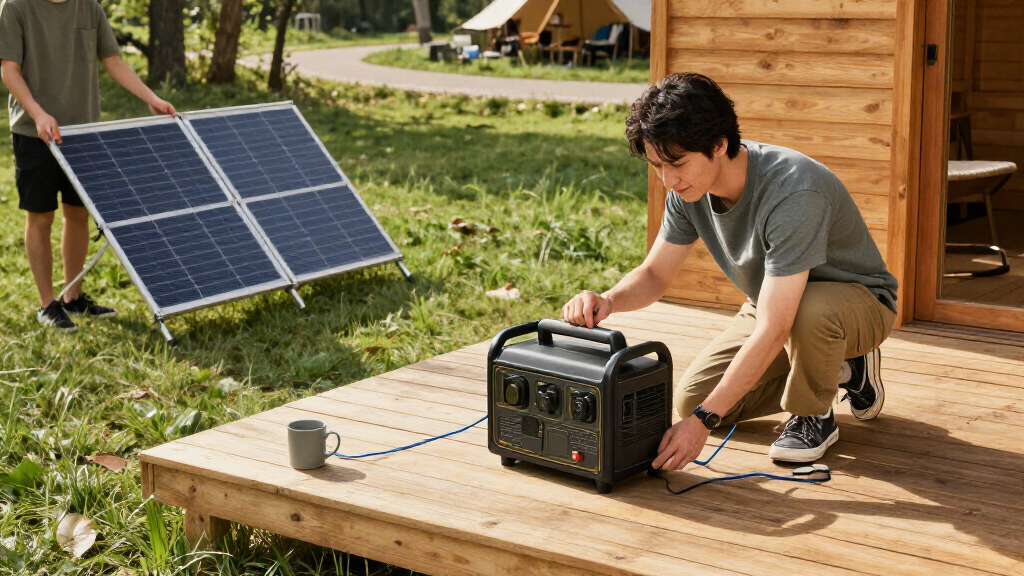
I compared these portable solar generators by the needs they can realistically serve: capacity for stored energy, inverter output for running devices, solar-panel inclusion, and the practicality of carrying or storing the system. I also considered how clearly each listing signals its intended role, from small electronics and short trips to larger backup needs. A larger battery does not automatically rank higher; extra capacity matters only when it matches the appliances, runtime, and transport limits a buyer has.
The order favors useful balance and a clear buyer fit over the biggest headline number. Bundled panels help simplify a solar-ready purchase, while station-only versions can make sense for owners who already have compatible panels. I distinguish compact choices from high-capacity systems because they solve different problems, and I treat near-duplicate listings as package comparisons rather than separate performance claims. Product names and listed specifications are the basis here; buyers should confirm current configuration, solar-input limits, and compatibility before purchase.
Factors to Consider When Choosing Portable Solar Generators
Choosing among these models starts with the job the generator must do, not its largest specification. I would work backward from devices, runtime, recharge conditions, and where the unit needs to go. These factors help prevent the common mismatch of buying a heavy system for occasional phone charging—or a compact unit for appliances it cannot support.
Match Capacity to the Runtime You Need
Battery capacity describes stored energy, while your devices determine how quickly it is used. Add up the watt-hours your essential devices consume during the outage or trip, then leave room for conversion losses and changing use. A refrigerator, for example, cycles rather than drawing its rated power constantly, so its real energy demand differs from a simple wattage-times-hours estimate. Compact models such as the 155Wh MARBERO and 292Wh Explorer 300 are better framed as short-duration, small-device options than household backup. Buyers often overbuy capacity for occasional use or underbuy it by focusing only on whether a device can turn on.
Check Running and Surge Output Separately
A station’s continuous AC output and its surge capability answer different questions. Continuous output needs to cover the appliance while it runs; surge capacity can matter when motors start, such as in some refrigerators or power tools. Do not assume a large battery can power every high-wattage appliance: energy capacity controls runtime, while inverter output controls what can run at once. List each device’s startup and operating demands, then account for simultaneous loads. If your use is mostly phones, lights, and laptops, paying for high output may add weight and cost without improving the experience.
Treat Solar Panels as a Charging System, Not a Runtime Guarantee
Bundled panel wattage gives a starting point, not a promise of a particular recharge time. Sun angle, shade, clouds, temperature, and the unit’s solar-input ceiling all affect how much power reaches the battery. A panel kit can be convenient when you are starting from scratch, while a station-only model may be a better fit if you own compatible panels already. Check connector type, voltage range, and maximum solar input before mixing equipment. For outage planning, think about daily energy collection as well as battery size: a large battery without enough usable sunlight may take longer to replenish than expected.
Be Honest About Portability and Storage
“Portable” covers everything from a small device-charging box to a heavy backup station that is movable but not comfortable to carry far. Consider the distance from storage to the place you will use it, whether one person must lift it, and how much room the unit and panels occupy. Large-capacity options such as the OUKITEL P5000 Pro and HomePower 3600 Plus prioritize stored energy over easy carrying. That may be a sensible exchange for a fixed home backup spot, but a poor one for frequent car camping. Check dimensions and weight in the exact package configuration before choosing a storage location.
Decide Whether an All-in-One Bundle Fits Your Setup
A station bundled with panels can reduce compatibility guesswork and get a new owner to solar charging sooner. Still, a bundle is not always the best match: you may need more panel capacity, already own panels, or prefer to buy panels suited to limited roof or campsite space. Integrated-panel designs such as the BROWEY listings offer a different approach, but buyers should check how much panel area is built in and whether external solar expansion is supported. Compare the complete charging path, including cables and input limits, rather than judging by panel wattage alone. The best package is the one that fits your real charging conditions and future plans.
Plan for Loads, Safety, and Long-Term Use
Portable power stations are not interchangeable with a home electrical panel or a permanent generator installation. Before relying on one for medical equipment, heating, or other essential loads, confirm the device’s power requirements and consult the manufacturer’s guidance. For home backup, decide which items get priority and whether they can be connected safely without improvised wiring. Also check the warranty, battery chemistry, operating-temperature guidance, and storage instructions for the exact model, since these affect ownership beyond the first trip. A realistic load plan often helps buyers choose a smaller, easier-to-use station instead of paying for capacity they cannot recharge or transport.
Frequently Asked Questions
Can a portable solar generator run a refrigerator during an outage?
It can, if both the inverter output and available battery energy suit the refrigerator’s startup demand and daily consumption. Check the appliance label or manual for power requirements, and remember that compressor startup can briefly demand more than normal running power. A larger battery may extend runtime, but it cannot compensate for an inverter that cannot handle the load. Solar panels can replenish the battery during daylight, though actual input varies with weather and panel placement. For a dependable plan, estimate daily energy use and decide how many hours of backup you need before choosing a station.
Should I choose a solar bundle or buy the power station by itself?
A bundle is usually the simpler route if you do not own compatible panels and want a system that is intended to work together. A station-only purchase can be more flexible if you already have panels or want to select a different array size. Before deciding, compare the panel’s rated output with the station’s solar-input limits and confirm connector and voltage compatibility. Bundled panels do not guarantee fast charging, especially in shade or weak sunlight. Choose based on the charging conditions you expect, not just whether panels are included.
Is a 300W portable power station enough for camping?
It may be enough for phones, lights, cameras, and some small electronics, depending on battery capacity and how many days you need power. The 300W label generally refers to output capability, not how long the battery will last. Appliances with heating elements or motors can exceed a small unit’s output or drain it quickly. For a trip, total the watt-hours of your devices and account for cloudy conditions if you expect to recharge by solar. A compact unit works best when your loads are modest and you have a plan for conserving energy.
What matters more: battery capacity or inverter wattage?
Neither specification replaces the other: inverter wattage determines which devices can run, while battery capacity influences how long they can run. If a device draws more power than the inverter supports, a larger battery will not solve the problem. If the inverter can run the device but the battery is small, runtime may be disappointing. Check both the appliance’s operating and startup needs, then estimate energy use over the period you need backup. Matching both figures to your actual loads is more useful than choosing by a single headline number.
Are the Jackery Explorer 300 listings different power stations?
The roundup lists an Explorer 300 station by itself and a version packaged with a 40W solar panel, as well as a separate 300W-class listing bundled with a 60W panel. Do not assume two listings with similar names have identical battery specifications or included accessories. Compare the exact model identifier, capacity, ports, panel details, and solar input information shown for the configuration you plan to buy. If you already own compatible panels, the station-only listing may avoid an unnecessary duplicate. Verify the package contents because product bundles can differ even when the station name looks similar.
Conclusion
For most buyers seeking a balanced solar-ready package, I would start with the Jackery HomePower 3000 and its two 200W panels; it is my best overall pick in this lineup. The best value depends on your existing gear: buyers who already own compatible solar panels can compare station-only options such as the Anker SOLIX C1000 Gen 2, while newcomers may prefer a clearly bundled setup rather than adding panels separately. For best premium, high-capacity backup, consider the OUKITEL P5000 Pro or Jackery HomePower 3600 Plus, choosing by output, package, and storage needs. Beginners with modest loads can start with a Jackery Explorer 300 kit or the MARBERO 155Wh for lighter device-charging duties, but should not expect them to replace a household backup system. For specific needs, choose the BROWEY 1600W models if built-in solar suits your setup, or the Jackery Explorer 2000 v2 bundle if you want a larger station paired with panels; confirm the exact configuration and input limits before buying.