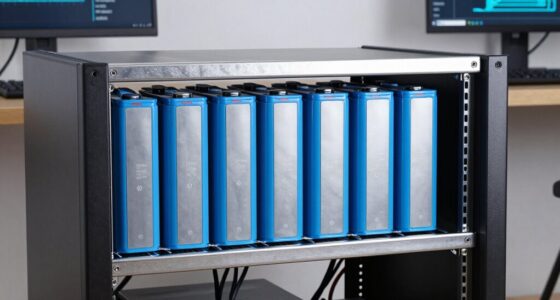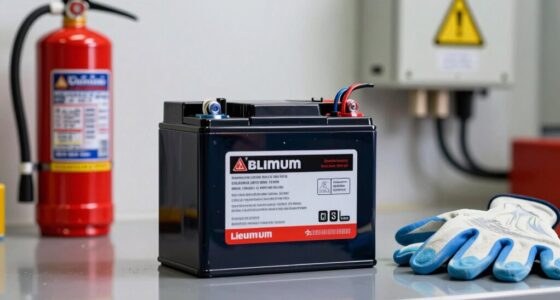
As a homeowner, you need a battery safety mindset first to protect your loved ones and property from hazards like fires, leaks, and explosions. Proper handling, regular maintenance, and quick response to issues can prevent accidents and damage. With more household batteries from solar or portable sources, awareness becomes even more critical. Staying informed helps you recognize risks early. If you want to know how to keep your home safe and your batteries secure, keep exploring these safety tips.
Key Takeaways
- To prevent accidents and protect loved ones from potential battery-related hazards.
- To ensure proper handling and maintenance, reducing risks of fire, leaks, or explosions.
- To stay prepared for emergencies like fires or leaks, enabling quick and safe responses.
- To prolong battery system lifespan through regular inspections and proper storage practices.
- To minimize environmental and health risks by following safe disposal and handling procedures.
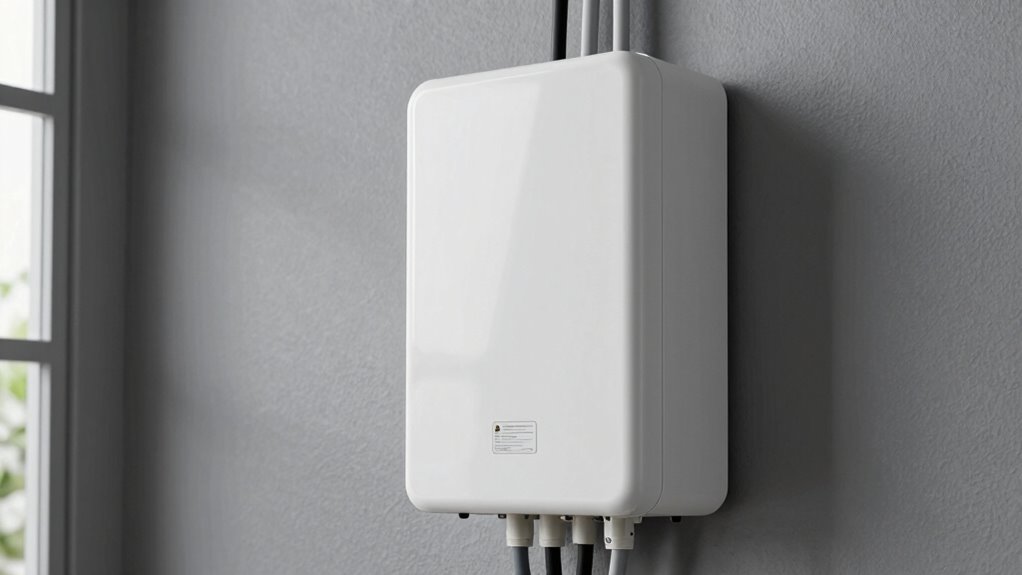
With the increasing use of batteries in homes for backup power, renewable energy, and everyday gadgets, understanding battery safety is more important than ever. As you incorporate batteries into your household, whether through solar panel systems or portable power sources, you need to prioritize safety to protect your loved ones and your property. Developing a battery safety mindset means being proactive about preventing accidents, knowing how to handle emergencies, and maintaining your equipment properly.
One key aspect of this mindset is understanding the importance of solar panel maintenance. When your home relies on solar energy, batteries store the power generated by your panels. If you neglect maintenance, such as checking connections or ensuring proper ventilation, you risk potential hazards like overheating or electrical fires. Regular inspections help you catch issues early, reducing safety risks. It’s also essential to keep the battery area clean and dry, avoiding corrosion or damage that could compromise safety. Proper maintenance not only prolongs your system’s lifespan but also ensures it operates safely and efficiently.
Regular solar panel and battery maintenance ensures safety, efficiency, and long-lasting performance in your home energy system.
Emergency preparedness is another critical component. You should have a plan in place for battery-related emergencies, such as fires or leaks. Batteries, especially large ones used in home energy storage, can pose fire risks if damaged or improperly handled. Keep fire extinguishers suitable for electrical fires nearby and know how to use them. Make sure everyone in your household knows the basics of battery safety, including recognizing signs of trouble like swelling, smoke, or unusual odors. Having emergency contacts and procedures mapped out ensures quick action if an incident occurs. Remember, in case of a fire, never attempt to extinguish it with water if it involves batteries like lithium-ion—use a suitable extinguisher instead and evacuate immediately. Additionally, being aware of microplastics in household dust can help you understand and mitigate indoor air quality concerns that may impact your safety during maintenance or emergency situations. Being informed about battery chemistry can also aid in understanding potential risks and proper handling techniques. Staying informed about battery storage guidelines helps ensure that your setup remains safe over time. Furthermore, understanding the proper disposal methods for batteries is essential for environmental safety and compliance with regulations.

Kidde Basic 110 Fire Extinguisher for Home, 1-A:10-B:C, FA110G, 1 Pack
- Reliable Fire Protection: Protects against common household fires
- All-Metal Construction: Durable and long-lasting build
- Easy Pull Safety Pin: Simple to operate in emergencies
As an affiliate, we earn on qualifying purchases.
As an affiliate, we earn on qualifying purchases.
Frequently Asked Questions
How Can I Tell if My Battery Is Overheating?
You can tell if your battery is overheating by feeling for excessive warmth or noticing a strange smell. Overheating can shorten your battery’s lifespan and is often caused by poor charging habits, like overcharging or using incompatible chargers. Keep an eye out for rapid battery drain, swelling, or discoloration. Addressing these signs early helps prevent damage and safety hazards, ensuring your battery stays safe and lasts longer.
What Should I Do if I Smell a Strange Odor From My Battery?
If you smell a strange odor from your battery, act quickly like a firefighter responding to a blaze. Turn off power immediately, ventilate the area, and avoid touching the battery. If the smell persists, carefully disconnect the battery and move it to a safe, well-ventilated space. Never attempt to dispose of a damaged battery yourself—seek professional battery disposal. This helps prevent fires and keeps your home safe.
Are There Specific Safety Certifications I Should Look For?
You should look for batteries with certification standards like UL or IEC, ensuring they meet strict safety and quality criteria. These certifications indicate the battery has passed rigorous safety tests, reducing risks during battery maintenance. Always choose products with recognized safety seals, and follow manufacturer guidelines. Prioritizing certified batteries helps prevent hazards like overheating, leaks, or fires, keeping your home safe while maintaining your battery’s peak performance.
How Often Should I Inspect My Home Battery System?
Think of your home battery system as a delicate garden—you need regular attention to keep it thriving. You should inspect your battery system at least once every three to six months, focusing on battery maintenance and safety precautions. Look for signs of corrosion, leaks, or damage. Regular inspections help prevent hazards, extend battery life, and guarantee safety. Remember, proactive care keeps your home and loved ones protected.
Can I Safely Install a Battery Without Professional Help?
You shouldn’t attempt a DIY installation of your battery without professional help, as it involves complex wiring and safety risks. Proper battery maintenance is essential to avoid hazards like leaks or fires. By relying on a licensed expert, you guarantee your system is installed correctly and safely. Always follow manufacturer instructions and safety guidelines to protect yourself and your home. Professional installation is the safest way to handle your battery system.
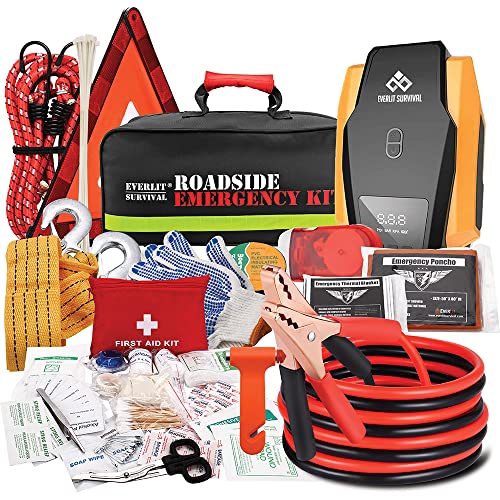
Everlit Survival Car Emergency Kit, Roadside Safety Tool Kit with Gloves,Digital Auto Air Compressor Tire Inflator, First Aid Kit, 12 Feet Jumper Cable, Tow Strap, Flashlight for Women, Men, Teenagers
- Roadside Emergency Kit: Comprehensive tools for roadside emergencies
- Digital Tire Inflator: Inflates tires quickly with auto shutoff
- LED Light & Nozzles: Includes LED light and multiple inflator nozzles
As an affiliate, we earn on qualifying purchases.
As an affiliate, we earn on qualifying purchases.
Conclusion
By adopting a battery safety mindset, you protect your home and loved ones from potential hazards. Remember, over 60% of household fires involve electrical issues, often linked to batteries or chargers. Staying informed and cautious can prevent accidents before they happen. Prioritize proper handling, storage, and maintenance of batteries. A small safety investment now can save you from costly damage or injury later—so stay vigilant and keep safety at the forefront of your home management.

EZRED BMK1914 5-Piece Battery Maintenance Kit
- Complete Battery Maintenance Kit: Includes essential tools for battery service
- Portable & Easy Storage: Sturdy roll-up case for convenient transport
- High-Quality Hand Tools: Durable tools for various automotive tasks
As an affiliate, we earn on qualifying purchases.
As an affiliate, we earn on qualifying purchases.

Jackery Explorer 300 Portable Power Station,292Wh
- Lightweight Design: Only 7.5 lbs with 292Wh capacity
- Multiple Device Compatibility: Power for laptops, drones, cameras, and more
- Robust Power Output: 300W rated, 600W surge capacity
As an affiliate, we earn on qualifying purchases.
As an affiliate, we earn on qualifying purchases.