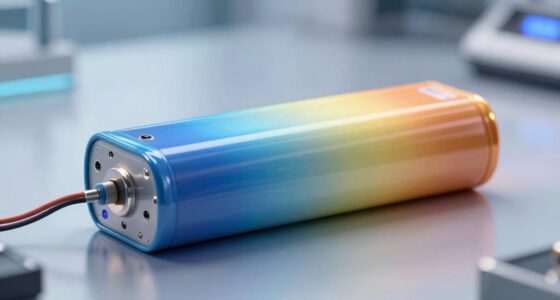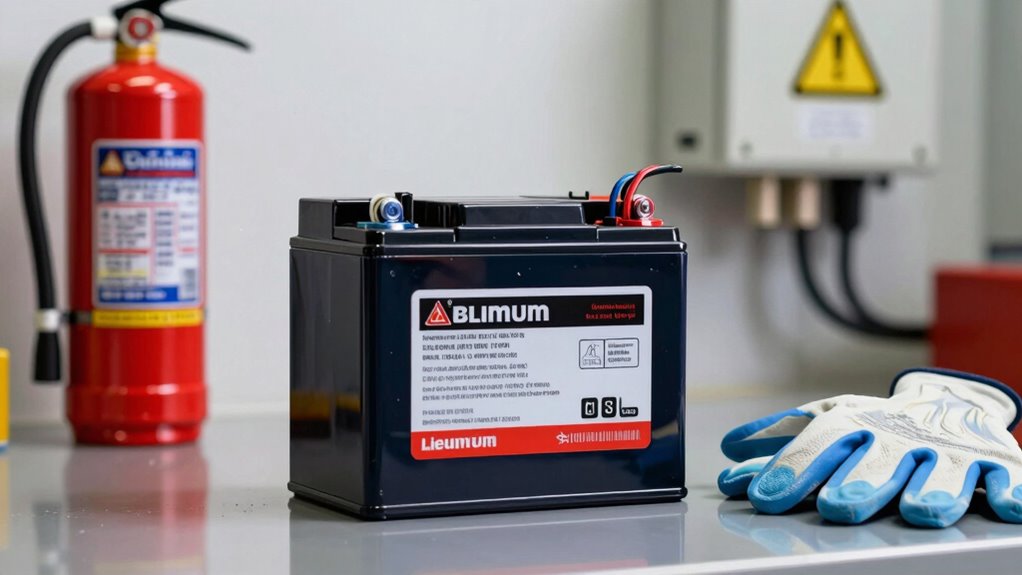

As a battery owner, you need to understand fire safety basics to prevent accidents. Always handle batteries carefully, avoiding damage or leakage which can cause fires. Never toss batteries in trash or recycling—use designated disposal centers. Be aware of warning signs like swelling, excessive heat, or corrosion. Keep fire extinguishers nearby, especially Class C for electrical fires, and know how to use them. Staying informed about safety practices helps protect you and your environment—continue to learn more to stay safe.

Get backup power and energy gear delivered free — and shop member deals
- Fast, free delivery on millions of items
- Access to Prime Big Deal Days deals on October 6–7
- Prime Video, Amazon Music and more included
Key Takeaways
- Recognize warning signs like swelling, overheating, or corrosion to prevent fire risks.
- Never dispose of batteries in regular trash; use designated disposal centers.
- Use appropriate fire extinguishers, such as Class C, for electrical or battery fires.
- Handle damaged batteries with caution to avoid leaks, short circuits, or thermal runaway.
- Regularly train on fire safety protocols and ensure fire safety equipment is accessible and functional.
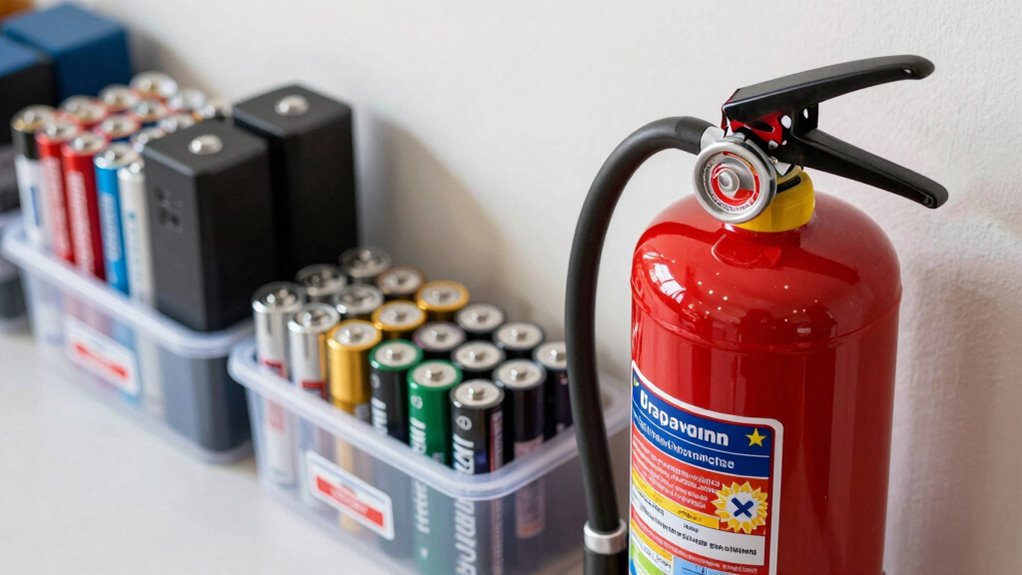
Have you ever wondered what it takes to stay safe in the event of a fire? Knowing the basics of fire safety is crucial, especially if you own batteries, since they can pose fire risks if not handled properly. One of the most critical aspects is understanding how to dispose of batteries safely. Batteries, particularly lithium-ion types, contain chemicals and materials that can ignite if damaged or disposed of improperly. You should never throw them in regular trash or recycling bins. Instead, look for designated battery disposal centers or collection events in your area. Proper disposal prevents potential fires caused by leakage, short circuits, or thermal runaway. Always follow local regulations and manufacturer instructions for battery disposal to reduce hazards and protect the environment. Additionally, understanding the fire hazards associated with batteries can help you recognize warning signs and prevent accidents before they happen. Recognizing signs like swelling, overheating, or corrosion can alert you to potential dangers and prompt timely disposal or professional handling.
In addition to safe disposal, knowing the right fire extinguisher types is essential. When a fire breaks out, choosing the correct extinguisher can make the difference between containment and disaster. For fires involving electrical equipment or batteries, a Class C fire extinguisher is your best bet. These extinguishers use non-conductive agents like dry chemicals that safely put out electrical fires without risking electrical shock. If the fire involves flammable liquids or solid combustibles, a Class B or ABC extinguisher might be necessary. It’s wise to have multiple extinguisher types accessible in your home or workplace, especially near areas where batteries are stored or charged. Regularly check the pressure gauge and ensure they are in working condition, and familiarize yourself with how to operate them correctly. Proper fire safety training can greatly improve your response time and effectiveness during emergencies.
Class C fire extinguisher for electrical fires
As an affiliate, we earn on qualifying purchases.
As an affiliate, we earn on qualifying purchases.
Frequently Asked Questions
How Do I Safely Dispose of a Damaged Battery?
You should never throw a damaged battery in the trash. Instead, handle it carefully and take it to a certified battery recycling center, as damaged batteries are considered hazardous waste. Contact your local waste management authority for guidance on proper disposal. This prevents environmental contamination and fire risks. Remember, proper disposal guarantees safety for everyone and helps protect the environment from the dangers of hazardous waste.
What Signs Indicate a Battery Is Overheating or Failing?
You’ll notice warning signs when your battery starts overheating or failing. Keep an eye on battery temperature—if it feels unusually hot or heats up quickly, that’s a clear warning sign. Other signs include swelling, leaks, a strange smell, or strange noises. If you see any of these warning signs, stop using the battery immediately, avoid charging it, and handle it with care to prevent potential fire hazards.
Can I Use a Third-Party Charger for My Battery?
Can you use a third-party charger for your battery? Think of it as fitting a puzzle piece—you need proper charger compatibility to avoid damaging your battery. Using an incompatible charger risks reducing your battery lifespan and may cause safety issues. Always check if the third-party charger meets the manufacturer’s specifications. When in doubt, sticking to the original charger guarantees safety and extends your battery’s performance, keeping your device reliable and safe.
How Often Should I Inspect My Batteries for Safety?
You should inspect your batteries monthly for safety, checking for signs of damage, corrosion, or leaks. During inspections, follow proper storage precautions to prevent accidents. If your batteries are damaged or no longer usable, prioritize battery recycling to dispose of them responsibly. Regular checks help catch issues early, reducing fire risks and ensuring safe operation. Always handle batteries with care and adhere to safety guidelines during inspections and disposal.
What Should I Do if My Battery Catches Fire?
If your battery catches fire, act quickly by using a fire extinguisher suitable for electrical fires, such as a Class C or ABC extinguisher. Remember fire extinguisher techniques like aiming at the base of the flames and sweeping side to side. Stay safe by having an emergency response plan in place, which includes evacuating the area and calling emergency services. Always prioritize personal safety over property.
As an affiliate, we earn on qualifying purchases.
Conclusion
By understanding fire safety basics, you’re like a skilled captain steering your battery’s ship safely through a storm. Staying alert to signs of trouble and handling your batteries with care keeps the flames at bay. Remember, a little caution now prevents a blaze later. Keep these safety tips close, and you’ll navigate your battery journey smoothly—avoiding sparks that could ignite a fire and ensuring your home stays safe and sound.
As an affiliate, we earn on qualifying purchases.
As an affiliate, we earn on qualifying purchases.
Fall Picks
fall essentials
As an affiliate, we earn on qualifying purchases.