Shared neutrals on multi-wire branch circuits can be safe if they’re designed, installed, and maintained properly according to electrical codes. Proper grounding, correct breaker coordination, and avoiding sharing neutrals across different phases are essential to prevent safety hazards. When done correctly, shared neutrals simplify wiring and reduce costs. However, mishandling the setup can lead to overloads, unbalanced currents, or shock risks. If you want to make certain of safety and compliance, there’s more important information to consider.
Key Takeaways
- Shared neutrals can be safe if properly designed, grounded, and compliant with electrical codes.
- Correct wiring and sizing prevent neutral overloads and unbalanced currents.
- Proper breaker coordination ensures faults are isolated without affecting other circuits.
- Adequate grounding minimizes shock hazards and voltage potentials on metallic parts.
- Regular inspection and adherence to standards are essential for safety when using shared neutrals.
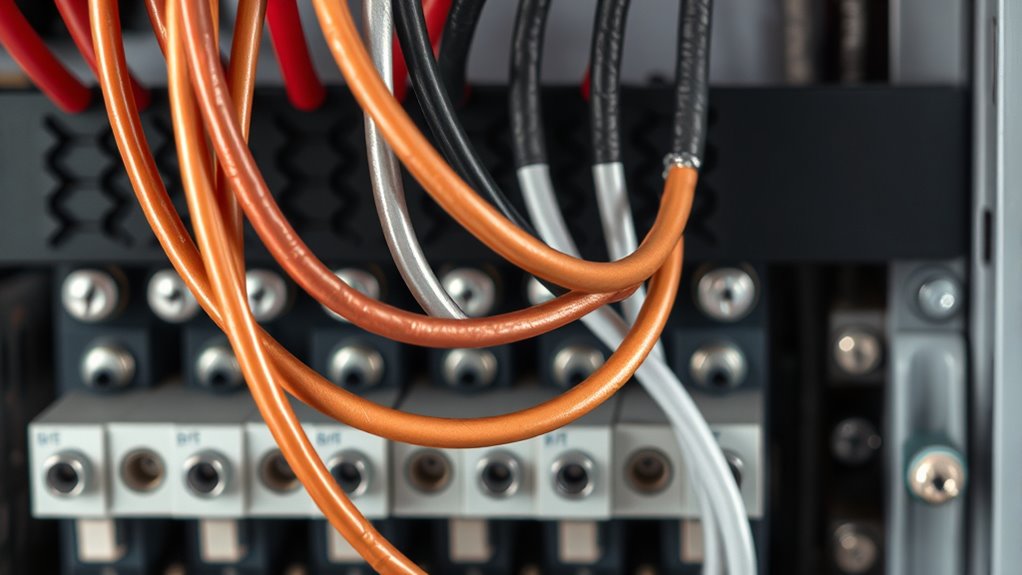
Shared neutrals on multi-wire branch circuits can simplify wiring and reduce material costs, but they also introduce safety considerations that must be carefully managed. When you’re working with these circuits, understanding grounding methods is vital to ensuring safety. Proper grounding helps prevent electrical shock hazards and protects equipment from faults. Typically, multi-wire branch circuits share a neutral conductor, which carries the unbalanced current. If grounding isn’t correctly established, this can lead to dangerous voltage potentials on metallic parts or equipment. You need to confirm that your grounding system adheres to local electrical codes, providing a low-resistance path to earth and ensuring that any fault currents are safely directed away from users.
Proper grounding of shared neutrals prevents dangerous voltage potentials and enhances electrical safety compliance.
Circuit breaker coordination plays an important role in maintaining safety with shared neutrals. Because the neutral carries current from multiple circuits, the circuit breakers must be properly coordinated to trip under fault conditions. If one circuit experiences a fault, the breaker should isolate that circuit without affecting others. Using a single disconnect for all circuits fed by a shared neutral can be risky if a fault occurs; the neutral may still carry current, increasing the risk of shock or fire. To prevent this, you should install individual circuit breakers for each hot wire, and ideally, use breakers that are designed for multi-wire branch circuits. These breakers can detect unbalanced loads or faults and trip accordingly, preventing overcurrent situations that could lead to overheating or fires.
You also need to be mindful of the wiring configuration. When sharing neutrals, it’s essential that the neutral wire is not shared among circuits that are on different phases unless specifically designed for that purpose. This prevents neutral overloads and unbalanced currents that could damage the neutral conductor or cause nuisance tripping. Proper circuit breaker coordination ensures that if one circuit trips, it doesn’t affect the operation of other circuits, maintaining system stability and safety. Additionally, understanding the importance of high quality projectors can help in visualizing complex wiring setups during planning or troubleshooting.
In addition to grounding methods and breaker coordination, you should always verify that the wiring follows the National Electrical Code (NEC) or your local standards. This includes ensuring the neutral conductor is properly sized and that connections are tight and secure. Regular inspections and testing can help identify potential issues before they become hazards. Remember, while shared neutrals can cut down on wiring complexity and costs, they elevate the importance of correct grounding methods and circuit breaker coordination. When you get these right, you’re considerably reducing the risk of shock, fire, and equipment damage, making your electrical system safer and more reliable.
Frequently Asked Questions
Can Shared Neutrals Be Used in Outdoor Wiring Installations?
Yes, you can use shared neutrals in outdoor wiring installations if you follow proper weatherproofing techniques. Make sure to use outdoor-rated cables and connectors designed for weather exposure. Protect connections with weatherproof boxes and seal all openings to prevent moisture ingress. Properly installed, shared neutrals can be safe outdoors, but always adhere to local electrical codes and manufacturer instructions to guarantee safety and reliability.
What Are the Code Violations Related to Shared Neutrals?
You risk code violations if you don’t guarantee proper neutral load balancing and neutral sizing when using shared neutrals. Overloading a neutral can cause overheating and potential fire hazards. The code requires that neutrals be sized correctly to handle the maximum unbalanced load and that current is evenly distributed across circuits. Failing to follow these rules violates safety standards and increases the risk of electrical failure or hazards.
How Do Shared Neutrals Affect Circuit Breaker Trips?
Shared neutrals can cause circuit breaker trips if neutral overloads occur, especially when the neutral carries more current than designed. This impacts breaker coordination, as a breaker might trip unexpectedly or fail to trip when needed. Properly balancing loads and ensuring correct breaker ratings help prevent nuisance trips and maintain safe operation, reducing risks of overcurrent issues and ensuring the circuit trips only under genuine fault conditions.
Are Shared Neutrals Permitted in Commercial Buildings?
Imagine a bustling commercial building where neutral conductors silently carry currents like a quiet river. In such settings, shared neutrals are generally permitted if the circuit design ensures proper circuit compatibility and adheres to electrical codes. You must verify that the neutral conductors are correctly sized and protected, preventing overloads or faults. Properly managed, shared neutrals can facilitate wiring while maintaining safety and efficiency in commercial environments.
What Are the Safety Risks of Improper Shared Neutral Connections?
Improper shared neutral connections can lead to serious safety risks like neutral overloads and wiring hazards. When neutrals aren’t correctly sized or bonded, it increases the chance of overheating, which could cause fires or equipment damage. You might also experience unexpected tripping of circuit breakers or electrical shocks. Always verify shared neutrals are properly installed and maintained to prevent these hazards and keep the system safe.
Conclusion
In the end, shared neutrals on multi-wire branch circuits are like tightrope walkers—balancing on a thin line between safety and danger. If you don’t follow proper procedures, a misstep can lead to serious hazards. Always double-check your wiring, use correct breaker ratings, and stay informed. Remember, safety isn’t just a guideline; it’s the safety net that keeps you from falling. Respect the risks, and your wiring will stay secure and sound.