

Bonding neutral and ground at only one point creates a clear path for fault currents, which helps protect you and your equipment from electrical shocks and fires. This setup prevents stray currents and minimizes risks associated with multiple bonding points, like energized metal parts or electrical noise. By following this practice, you guarantee your system stays safe, reliable, and compliant with codes. If you want to understand why this point matters, here’s more you should know.
Key Takeaways
- Bonding neutral and ground at a single point prevents unwanted current loops and stray currents in the system.
- It ensures fault currents have a clear, low-resistance path back to the source, enhancing safety.
- Multiple bonding points can cause energization of metal parts and increase shock hazards.
- Code standards, like NEC, require bonding only at the main panel to minimize electrical interference.
- Single-point bonding maintains system integrity, simplifies troubleshooting, and ensures compliance with safety regulations.
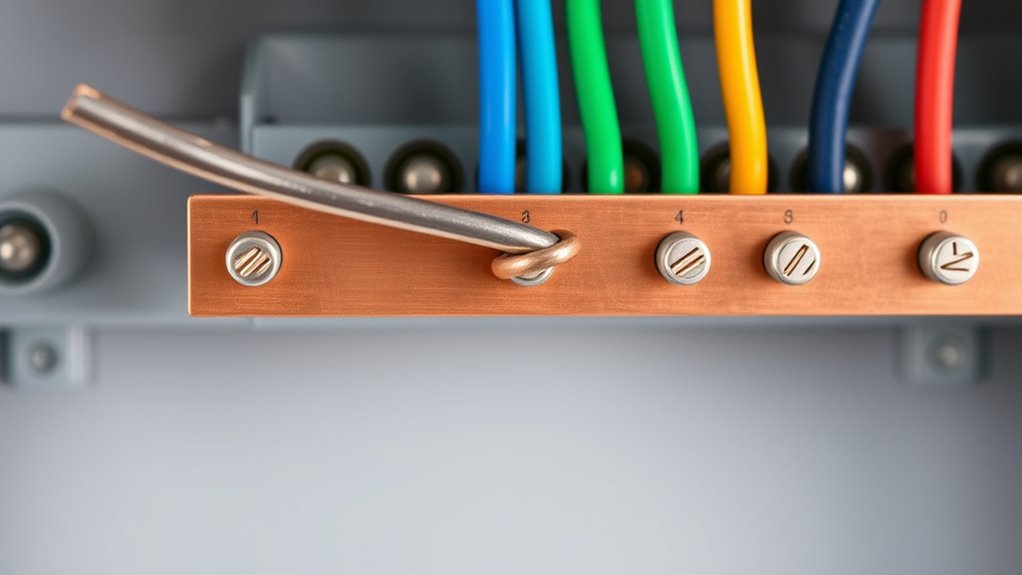
When working with electrical systems, understanding the concept of bonding neutral and ground at one point is essential for safety and proper operation. The grounding system you establish in an electrical setup plays a vital role in protecting people and equipment from electrical faults. By bonding the neutral and ground at a single point, usually at the main panel, you create a clear, low-resistance path for fault currents to return to the source, which helps prevent dangerous voltage buildup. This approach ensures that if a fault occurs, the system quickly trips the breaker, minimizing the risk of electrical shock or fire.
The main reason for bonding neutral to ground at just one point is to avoid creating multiple paths for current flow. If you bond the neutral and ground at multiple locations, it can cause unintended current loops, which can lead to unexpected voltage on grounded surfaces. These stray currents pose a significant electrical safety risk because they might energize metal parts that you’d expect to be safe to touch. This could result in shock hazards or damage to connected devices. When you bond the neutral and ground at a single point, you help maintain the integrity of the grounding system and reduce the likelihood of such issues.
Proper grounding and bonding practices are essential for ensuring electrical safety. Grounding provides a reference point for the system voltage and helps protect against lightning strikes, surges, and insulation failures. Bonding the neutral and ground at one point ensures that any fault current has a safe path back to the source, which facilitates quick disconnection of the power supply through circuit breakers. This setup is especially important in residential and commercial buildings where safety is paramount. It helps prevent dangerous voltage levels on exposed metal parts and reduces the risk of electric shock.
You should also be aware that codes and standards, such as the National Electrical Code (NEC), mandate that neutral and ground be bonded only at the main service panel. This rule is designed to keep the system safe and ensure reliable operation. Bonding at multiple points can cause current to flow on grounding paths, leading to potential electromagnetic interference and making troubleshooting more difficult. When you stick to the principle of bonding neutral and ground at just one point, you create a safer, more efficient electrical system that protects both users and equipment. Additionally, understanding system grounding is crucial for proper electrical system design and maintenance.
Frequently Asked Questions
What Are the Risks of Bonding Neutrals and Grounds at Multiple Points?
Bonding neutrals and grounds at multiple points can cause ground loops, which create unwanted current paths. These loops lead to a potential difference between ground points, increasing the risk of electrical shock and equipment damage. You might also experience interference and noise in sensitive devices. To guarantee safety and proper operation, it’s best to bond neutrals and grounds only at a single, designated point, preventing ground loop issues.
Can Grounding Be Shared Between Different Circuits?
You might wonder if grounding can be shared between different circuits, and the answer is yes, but with caution. Proper grounding practices involve careful bonding strategies to prevent dangerous voltage potentials. When shared, it can create unintended current paths, risking shock hazards or interference. Always guarantee each circuit has its own dedicated grounding point or follows strict codes to maintain safety and system integrity. Don’t cut corners—grounding safety is critical.
How Does Bonding Influence Electrical System Fault Detection?
Bonding helps detect electrical faults by creating a clear, low-resistance path to ground, which minimizes ground loops and electrical noise. When a fault occurs, the bonding guarantees the system quickly trips or alarms, preventing damage or shock. Proper bonding at one point maintains system stability, improves fault detection accuracy, and reduces electrical noise, making your system safer and more reliable during fault conditions.
Are There Specific Codes or Standards Mandating Single-Point Bonding?
Think of electrical systems as a well-orchestrated symphony, where bonds keep everyone playing in harmony. You’re required to follow safety standards and code compliance, which mandate single-point bonding to prevent electrical noise and fault currents from causing chaos. These standards, such as the NEC, guarantee your system’s safety and reliability by limiting bonding to one point, making sure the flow of electricity stays steady and predictable, like a conductor guiding an orchestra.
What Maintenance Is Required for a Single-Point Bonding System?
You should perform regular grounding maintenance and bonding inspection to guarantee your single-point bonding system remains effective. Check for corrosion, loose connections, or damage that could compromise the bond. Keep all components clean and tight, and verify continuity periodically. Proper maintenance helps prevent electrical issues, maintains safety, and ensures your system continues to provide effective grounding, reducing the risk of faults or electrical shock hazards.
Conclusion
By bonding neutral and ground at just one point, you create a subtle harmony in your electrical system, reducing the chance of unintended currents. This careful approach helps guarantee safety without drawing unnecessary attention to the connections. When done correctly, it fosters a seamless balance, allowing everything to work smoothly behind the scenes. Remember, sometimes the simplest touches make the most significant difference in maintaining a safe and reliable environment.