
To guarantee your smoke and CO alarms stay connected and reliable, consider wireless interconnects that link alarms seamlessly across your home for immediate alerts.Choose alarms with backup power options like long-lasting batteries or hardwired connections to keep them active during outages. It’s essential to use dedicated circuits for hardwired units to prevent power dips and reduce false alarms. Learning more about ideal setup ways can help you enhance your home safety even further.
Key Takeaways
- Choose wireless interconnected alarms for seamless communication without wiring, ensuring comprehensive coverage and quick alerts.
- Opt for alarms with built-in backup batteries or hardwired power with secondary sources to maintain operation during outages.
- Connect alarms to dedicated circuits to reduce electrical noise and prevent false alarms caused by fluctuating power.
- Ensure compatibility of wireless features with existing smart home systems for integrated safety management.
- Regularly test backup power and circuit integrity to guarantee continuous alarm functionality in emergencies.
Ensuring your smoke and CO alarms are properly powered is essential for keeping your home safe. One effective way to achieve this is through wireless integration, which allows your alarms to communicate seamlessly without the clutter of wires. Wireless systems connect alarms across your home, alerting you immediately if one detects smoke or carbon monoxide, even if you’re in a different room. This interconnected setup ensures everyone is alerted simultaneously, reducing the risk of delayed responses. When choosing alarms with wireless integration, make sure they are compatible with your existing smart home system or standalone units that support this feature. This way, you can receive alerts on your phone or integrate them with other safety devices, enhancing your overall home safety.
Additionally, backup power is a critical aspect of reliable smoke and CO alarm operation. Power outages are unpredictable, and a dead alarm offers no protection during critical moments. To prevent this, select alarms that have built-in backup power sources, such as batteries. Many models come with long-lasting batteries or can be hardwired with a secondary power supply. Proper backup power ensures your alarms remain active even when the main power source fails. Regularly check and replace backup batteries to maintain their effectiveness. Some alarms automatically test their backup power, alerting you when a battery needs replacing, which is a helpful feature to keep in mind. Incorporating reliable backup power sources into your alarm system is vital for continuous protection.
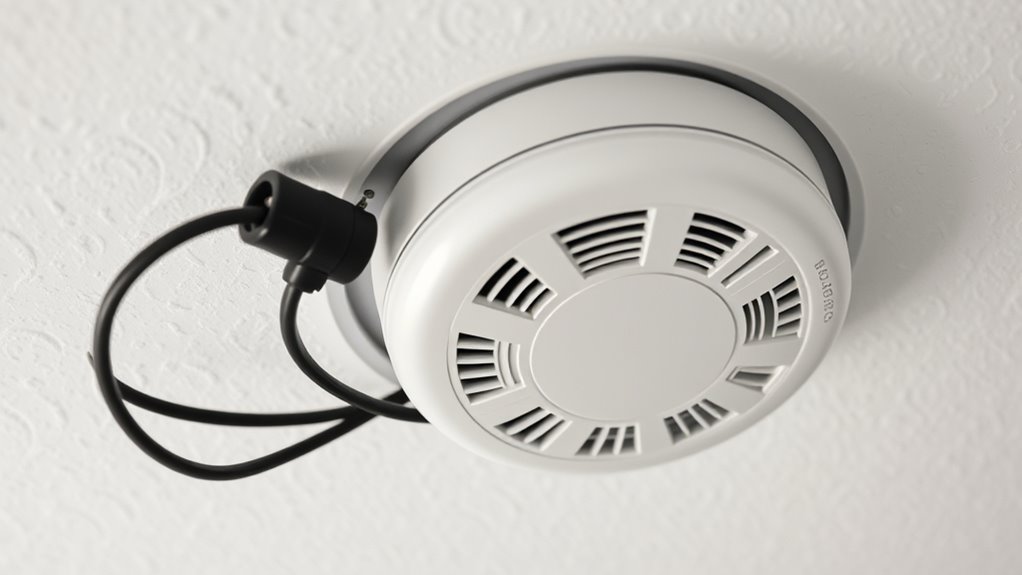
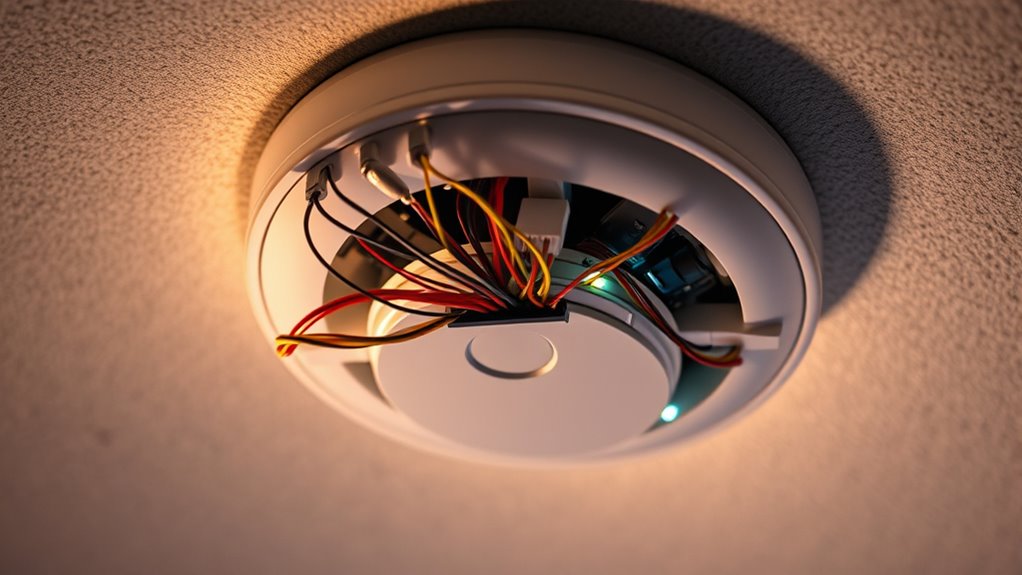
For a thorough safety system, consider alarms that combine wireless integration with backup power features. This integration allows multiple alarms to work together, providing a networked safety net across your home, while the backup power guarantees continuous operation during outages. When installing these alarms, ensure the circuit you choose supports their power requirements. Hardwired alarms with backup batteries typically connect directly to your home’s electrical system, but they should also be wired to a dedicated circuit to prevent power loss from other appliances. This dedicated circuit provides a stable power source, minimizing false alarms caused by electrical fluctuations.
Frequently Asked Questions
Can I Use a Standard Circuit Breaker for Smoke/Co Alarms?
You shouldn’t use a standard circuit breaker for smoke or CO alarms because installation guidelines and code compliance require dedicated circuits for safety devices. These alarms need reliable power sources, and dedicated circuits help prevent nuisance tripping or power interruptions. Always follow local electrical codes and manufacturer instructions, ensuring your alarms are properly interconnected and powered from appropriate circuit breakers. This guarantees maximum safety and compliance in your home.
What Are the Advantages of Wireless Interconnects Over Wired?
Did you know that homes with wireless interconnected alarms are 30% more likely to alert you early during emergencies? Wireless benefits include easy installation, as you don’t need complex wiring. You gain interconnect flexibility, allowing alarms to communicate across longer distances and through walls. Plus, wireless systems are more adaptable for renovations or moving alarms, making maintenance simpler and ensuring your safety setup stays current without costly rewiring.
How Does Power Redundancy Improve Alarm Reliability?
Power redundancy substantially boosts alarm reliability by ensuring the system remains operational even if one power source fails. You benefit from continuous protection because backup power supplies kick in seamlessly, preventing alarm silence during outages. This added layer of security minimizes false alarms and guarantees your smoke or CO alarm functions consistently, giving you peace of mind knowing that your safety system is resilient and dependable under all circumstances.
Are Rechargeable Batteries Suitable for Backup Power?
Rechargeable batteries can be suitable for backup power, but you need to consider their battery lifespan and recharge cycles. They tend to last around 2-5 years depending on usage and how often you recharge them. Over time, recharge cycles wear out the battery’s capacity, reducing reliability. If you choose rechargeable backup power, regularly check and replace the batteries to ensure your alarm stays functional during emergencies.
What Certifications Should I Look for in Alarm Power Supplies?
You should look for power supplies with certifications like UL and NFPA to guarantee fire code compliance and safety. These certifications verify the device meets strict standards, reducing fire risks. Additionally, choose energy-efficient power supplies to save on electricity and support sustainability. Confirm the product specifically states these certifications on the label or datasheet, and avoid uncertified options to ensure reliable, compliant, and eco-friendly alarm operation.
Conclusion
By choosing the right interconnects and circuits, you weave a safety net that’s as reliable as a lighthouse guiding ships through stormy nights. Your smoke and CO alarms become a vigilant chorus, standing guard against unseen dangers. When powered correctly, they’re not just devices—they’re your home’s heartbeat, keeping it safe and sound. So, take charge with confidence, and let your wiring be the steady hand that keeps danger at bay, brightening your peace of mind.