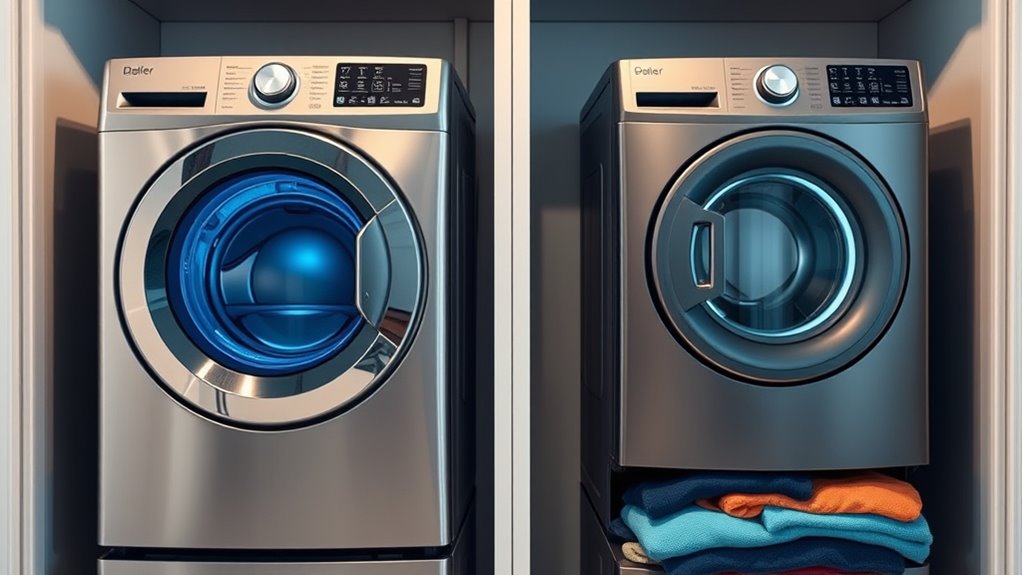

When choosing between an electric dryer and a heat-pump dryer, consider your energy costs and setup. Electric dryers are more affordable upfront and easier to install but use more electricity, leading to higher bills. Heat-pump dryers cost more initially but save money long-term due to their energy efficiency and gentler operation. If you want smarter, eco-friendly drying, a heat-pump might be the better choice—find out more about what suits your household.

Get backup power and energy gear delivered free — and shop member deals
- Fast, free delivery on millions of items
- Access to Prime Big Deal Days deals on October 6–7
- Prime Video, Amazon Music and more included
Key Takeaways
- Heat-pump dryers are more energy-efficient, recycling heat and lowering electricity consumption compared to electric dryers.
- Electric dryers have lower upfront costs and easier installation, making them more budget-friendly initially.
- Heat-pump models involve higher initial investment but offer long-term savings through lower energy bills.
- Electric dryers are straightforward, while heat-pump dryers operate quietly and are gentler on clothes.
- The choice depends on balancing higher upfront costs against ongoing energy savings and household setup.
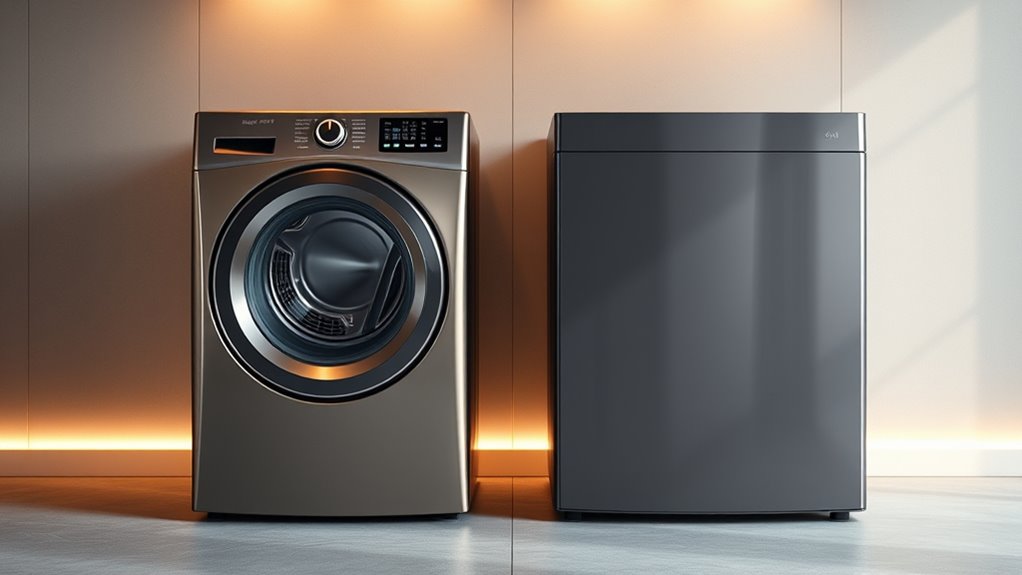
When choosing a dryer for your home, understanding the differences between electric and heat-pump models can help you make an informed decision. One of the key factors to weigh is energy efficiency. Heat-pump dryers are designed to use markedly less electricity than traditional electric dryers because they recycle and reuse the heat they generate, reducing overall energy consumption. While electric dryers heat air directly using heating elements, heat-pump models rely on a refrigeration cycle to dry clothes at lower temperatures, which leads to lower energy bills over time. This makes heat-pump dryers an attractive option if you’re looking to cut down on energy costs and minimize your environmental footprint.
However, the initial installation costs of these two types of dryers can differ quite a bit. Electric dryers generally have lower upfront costs and are easier to install because they only require a standard electrical outlet, which most homes already have. Heat-pump dryers, on the other hand, tend to be more expensive initially due to their advanced technology and more complex components. Plus, they often require a specialized venting setup or additional space for proper airflow, which can add to the installation costs. If you’re contemplating a heat-pump model, you’ll want to weigh these higher upfront expenses against the long-term savings on energy bills.
Another aspect to think about is how each dryer fits into your existing laundry setup. Electric dryers are straightforward, with fewer parts and simpler installation processes, making them a quick and easy choice. Heat-pump dryers, while more complex, are designed to operate quietly and with less heat output, which can be beneficial if your laundry area is in a space shared with living areas. They also tend to be gentler on your clothes, extending their lifespan, which might be worth the extra investment if you prioritize fabric care.
energy-efficient heat pump dryer
As an affiliate, we earn on qualifying purchases.
As an affiliate, we earn on qualifying purchases.
Frequently Asked Questions
How Long Does Each Dryer Type Typically Last?
You can expect an electric dryer to last around 10-13 years, while heat-pump dryers tend to last slightly longer, about 12-15 years. Proper maintenance requirements, like cleaning lint filters and occasional service, help prolong their dryer lifespan. Regular upkeep ensures both types run efficiently and last their full potential. Keep an eye on signs of wear, and address issues early to maximize your dryer’s longevity.
Are Heat-Pump Dryers More Eco-Friendly Than Electric Dryers?
Surprisingly, heat-pump dryers are more eco-friendly than electric dryers, despite sounding less powerful. They use less energy, notably reducing your carbon footprint. While electric dryers consume more power and emit more greenhouse gases, heat-pump dryers recycle air efficiently, cutting energy consumption. So, if you want to save the environment (and maybe some money), upgrading to a heat-pump dryer is a smarter, greener choice.
Can Heat-Pump Dryers Handle Large Loads Efficiently?
Yes, heat-pump dryers can handle large loads efficiently, but their load capacity is generally lower than traditional electric dryers. You’ll find that they excel in drying efficiency for smaller to medium-sized loads, which means you may need to run multiple cycles for bigger laundry days. If you frequently wash large loads, consider a model with a higher load capacity or sticking with a standard electric dryer for peak performance.
What Maintenance Is Required for Heat-Pump Dryers?
Think of your heat-pump dryer as a trusted garden: it needs regular pruning to stay healthy. You should clean the filter regularly to keep airflow clear and prevent overheating. Additionally, refrigerant checks are essential to ensure the cooling cycle runs smoothly. By maintaining these simple tasks, you’ll prolong your dryer’s life and keep it running efficiently, much like tending to your garden ensures a lush, thriving space.
Do Heat-Pump Dryers Dry Clothes Faster Than Electric Dryers?
Heat-pump dryers usually don’t dry clothes faster than electric dryers because their primary focus is on energy efficiency rather than drying speed. Electric dryers are designed to deliver quicker drying times, making them ideal if you need clothes done in a hurry. While heat-pump models save energy and reduce running costs, you’ll find their slower drying speed less suitable if speed is your priority.
electric clothes dryer with quick installation
As an affiliate, we earn on qualifying purchases.
As an affiliate, we earn on qualifying purchases.
Conclusion
Choosing between an electric and heat-pump dryer is like selecting the perfect dance partner—each has its rhythm and benefits. Electric dryers offer quick, powerful performance, while heat-pump dryers embrace efficiency and eco-friendliness like a gentle breeze. Think of your laundry routine as a dance floor; pick the partner that makes your chores feel lighter and more graceful. Whichever you choose, you’re steering your energy use toward a smarter, greener future—your home’s new best move.
As an affiliate, we earn on qualifying purchases.
best long-lasting electric dryer
As an affiliate, we earn on qualifying purchases.
As an affiliate, we earn on qualifying purchases.
Fall Picks
fall essentials
As an affiliate, we earn on qualifying purchases.