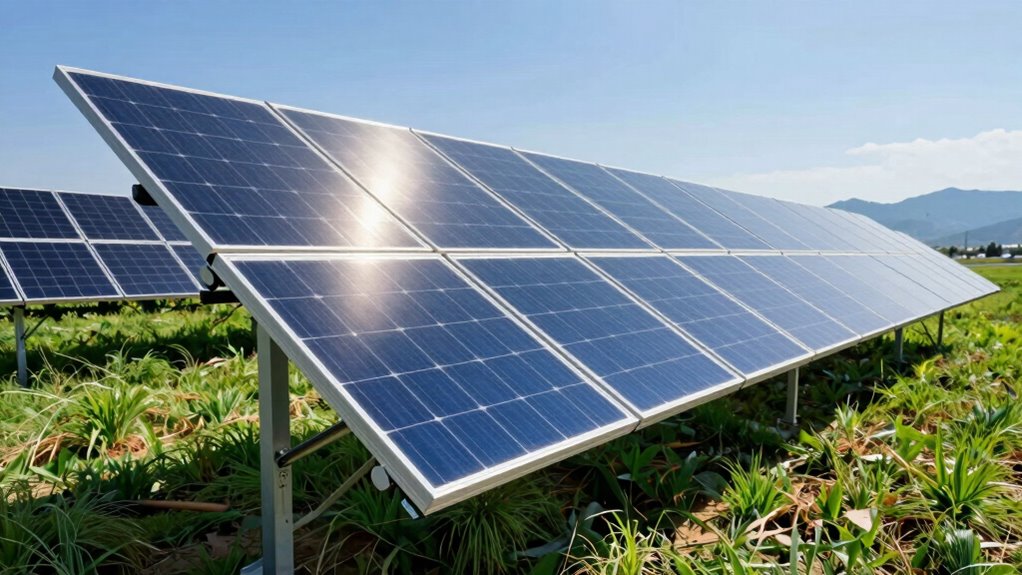

Bifacial panels change your performance planning by requiring you to evaluate site-specific factors like albedo and shading, since they capture sunlight from both sides. You’ll need to optimize layout, tilt, and spacing to maximize rear-side illumination and overall energy gains. Incorporating detailed performance modeling becomes essential to predict system output accurately. By adjusting your approach, you’ll release greater efficiency and ROI. Keep exploring how these factors influence your project’s success to get the most from bifacial technology.

Get backup power and energy gear delivered free with Prime
- Fast, free delivery on millions of items
- Prime Video, Amazon Music and more included
- Member-only deals all year
Key Takeaways
- They necessitate detailed site assessments, including albedo and shading analysis, to optimize rear-side illumination.
- Performance modeling must incorporate bifacial-specific factors like rear-side gain and reflection.
- Layout and tilt designs are adjusted to maximize sunlight capture from both sides.
- Reflective surfaces and environmental conditions are strategically integrated to enhance energy yield.
- System planning emphasizes comprehensive monitoring to ensure optimal bifacial panel efficiency.
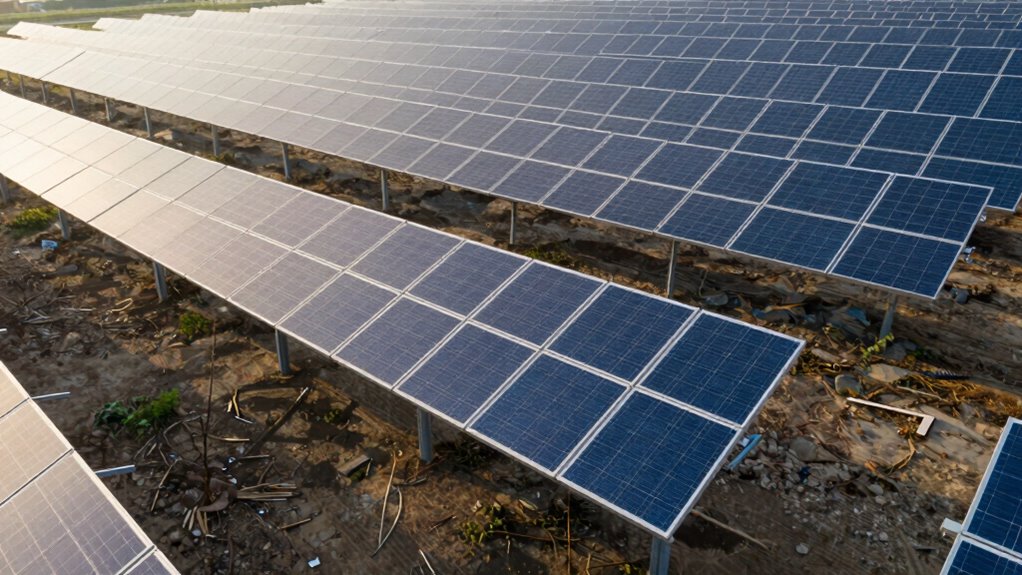
Have you considered how bifacial panels can revolutionize your solar energy projects? These innovative panels aren’t just a minor upgrade—they fundamentally change how you approach performance planning. Unlike traditional monofacial panels, bifacial technology captures sunlight from both sides, meaning you can generate more energy from the same footprint. This shift demands a reevaluation of your installation strategies, encouraging innovative installation techniques that maximize exposure to reflected and diffused sunlight. With bifacial panels, you might need to rethink panel tilt, spacing, and layout to optimize the benefits of rear-side illumination, leading to more efficient use of space and resources.
Bifacial panels transform solar projects by maximizing sunlight capture and optimizing layout for greater efficiency and space use
When planning your project, efficiency optimization becomes a central focus. Bifacial panels can substantially increase energy yields, but only if you understand how to harness their full potential. This involves detailed site assessments, including albedo analysis—what surfaces will reflect sunlight onto your panels? You’ll also need to take shading into account, so you don’t inadvertently block the rear side, which could undercut the advantages these panels offer. By modeling these factors early, you can identify the ideal tilt angles and spacing that maximize bifacial gains, ensuring your system performs at peak efficiency. Additionally, understanding the contrast ratio of your system can help you evaluate how well your panels will perform in varying lighting conditions. Incorporating site-specific adjustments into your planning process can further enhance overall system performance and longevity. Recognizing the importance of environmental factors can help you optimize installation conditions for maximum output and durability. Including reflective surfaces in your site layout can also significantly boost energy production. A well-thought-out installation not only boosts energy output but also minimizes maintenance issues related to dirt and debris accumulation on the rear surface.
Performance planning with bifacial panels also involves adjusting your expectations and energy modeling. You’ll need to incorporate factors like albedo, panel efficiency, and potential shading into your calculations. This all-encompassing approach provides a more accurate forecast of energy production, allowing you to plan financially and operationally with confidence. Developing accurate energy models is crucial for predicting system performance and ROI. In essence, bifacial technology prompts a more holistic view of your project—one that emphasizes optimization at every stage, from site assessment to installation to ongoing performance monitoring. Embracing these changes will help you realize the true potential of bifacial panels and elevate your solar energy endeavors.
As an affiliate, we earn on qualifying purchases.
Frequently Asked Questions
How Do Bifacial Panels Perform in Shaded Environments?
In shaded environments, bifacial panels still perform reasonably well because they can capture diffuse sunlight, which is prevalent in shaded areas. Additionally, the albedo effect helps by reflecting sunlight from nearby surfaces onto the back side of the panels, boosting their energy output. So, even when shadows dominate, bifacial panels can generate power more effectively than traditional monofacial ones, thanks to their ability to utilize reflected and diffuse sunlight.
What Are the Installation Challenges Specific to Bifacial Panels?
You’ll face unique installation challenges with bifacial panels, mainly in managing installation logistics and mounting considerations. These panels require precise elevation and tilt adjustments to maximize albedo reflection and energy output. Make sure your mounting system is sturdy and designed for ideal sun exposure, as shading or improper angles can considerably reduce performance. Careful planning during installation helps avoid future inefficiencies and boosts overall system effectiveness.
How Does Snow Cover Impact Bifacial Panel Efficiency?
Snow cover can considerably reduce bifacial panel efficiency, much like a mirror clouded by dirt. When snow blankets the panels, reflection from snow enhances energy production, but if snow covers the entire surface, efficiency drops. Regular panel cleanliness helps maintain ideal performance. Remember, snow reflection can boost output, but persistent snow cover blocks sunlight, so timely snow removal is essential for sustained energy gains in winter.
Are Bifacial Panels More Cost-Effective Long-Term?
Yes, bifacial panels are more cost-effective long-term. Their higher initial investment benefits you through increased energy output, especially in ideal conditions, which improves your overall return on investment. Conducting a thorough cost analysis reveals that the extra costs are often offset by greater efficiency and energy gains over time. This makes bifacial panels a smart choice if you’re aiming for better performance and long-term savings in your solar energy setup.
How Do Weather Variations Affect Bifacial Panel Output?
You might notice that weather variations considerably impact bifacial panel output. Coincidentally, increased solar irradiation boosts energy production, while temperature effects can reduce efficiency. Cloud cover and snow diminish sunlight absorption, lowering returns, especially during winter months. Conversely, clear, sunny days maximize bifacial gains by reflecting sunlight onto the rear side. Understanding these weather patterns helps you optimize performance planning, ensuring your system operates at peak efficiency regardless of seasonal or daily weather changes.
solar panel layout optimization kit
As an affiliate, we earn on qualifying purchases.
As an affiliate, we earn on qualifying purchases.
Conclusion
Just as a mirrored lake reflects more than just the sky, bifacial panels reveal hidden gains in your performance plan. By capturing sunlight from both sides, you’re not just installing panels—you’re opening a window to higher efficiency. Embrace this innovation and watch your energy yield flourish like a garden in full bloom under a bright sun. With bifacial technology, your solar strategy becomes a landscape of limitless potential, shimmering with opportunity at every turn.
albedo analysis tools for solar panels
As an affiliate, we earn on qualifying purchases.
As an affiliate, we earn on qualifying purchases.
solar panel shading measurement device
As an affiliate, we earn on qualifying purchases.
As an affiliate, we earn on qualifying purchases.
Halloween Picks
halloween
As an affiliate, we earn on qualifying purchases.