For most drivers seeking the best EV charger, I’d start with the ChargePoint HomeFlex Hardwired for its high-power home setup and established app features. The Emporia Pro stands out for drivers who want 48-amp charging with power-management features, while the Grizzl-E Classic favors straightforward, rugged plug-in charging. The main tradeoffs are charging speed versus installation demands, smart controls versus simplicity, and a fixed wall mount versus portability. Connector compatibility and the capacity of your home’s electrical circuit matter just as much as the charger’s headline amperage. Read on for my breakdown of all 15 options and how to match one to your needs.

Get backup power and energy gear delivered free with Prime
- Fast, free delivery on millions of items
- Prime Video, Amazon Music and more included
- Member-only deals all year
Key Takeaways
- Hardwired 48- and 50-amp models lead on charging capacity, but they call for a suitable electrical circuit and a more involved installation than plug-in choices.
- Plug-in chargers trade some installation flexibility for convenience: models with NEMA 14-50 plugs can be easier to remove or replace, but the outlet and circuit still need to be rated for sustained EV charging.
- Connector choice narrows the field quickly: the lineup includes J1772 and NACS options, so buyers should check their vehicle’s port and any adapter requirements before choosing.
- Portable models solve a different problem than permanent wall units: the 16-amp EVDANCE and bokman options are geared toward flexible, lower-power charging, not matching the output of 40- to 50-amp home chargers.
- Smart features are most useful when they serve a real household need: app connectivity and power management can aid scheduling or load planning, while drivers seeking uncomplicated charging may prefer a simpler unit.
| ChargePoint HomeFlex Level 2 Hardwired EV Charger, J1772, 50A | 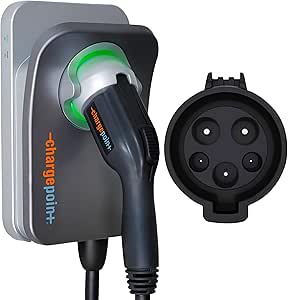 | Best for App-Based Hardwired Charging | Connector: J1772 | Installation: Hardwired; electrician required | Current: Adjustable 16A–50A | VIEW LATEST PRICE | See Our Full Breakdown |
| AIMILER Level 2 EV Charger, 32A, 25 ft Cable, Wi-Fi App, NEMA 14-50 Plug, J1772 Connector |  | Best for Plug-In App Controls | Maximum current: 32A | Adjustable current: 16A–32A | Maximum power: 7.68 kW | VIEW LATEST PRICE | See Our Full Breakdown |
| IYILO Level 2 EV Charger, 48A, 11.5 kW, 240V, J1772 |  | Best for Shared-Circuit Features | Maximum current: 48A | Power: 11.5 kW | Voltage: 240V | VIEW LATEST PRICE | See Our Full Breakdown |
| ELEGRP Level 2 Portable EV Charger, 40A, J1772, 240V NEMA 14-50 Plug, 25 ft Cable |  | Best Weather-Resistant Plug-In Pick | Maximum current: 40A | Maximum power: 9.6 kW | Selectable current: 16A, 20A, 24A, 32A, 40A | VIEW LATEST PRICE | See Our Full Breakdown |
| ChargePoint HomeFlex Level 2 EV Charger, J1772, NEMA 14-50 Plug |  | Best for Faster Plug-In Charging | Connector: J1772 | Plug: NEMA 14-50 | Output voltage: 240V | VIEW LATEST PRICE | See Our Full Breakdown |
| EVIQO Level 2 NACS EV Charger, 40A, NEMA 14-50, 25 ft Cable |  | Best Plug-In Pick for NACS Vehicles | Maximum current: 40 A | Voltage: 240 V | Connector: NACS | VIEW LATEST PRICE | See Our Full Breakdown |
| Autel MaxiCharger 40A Level 2 EV Charger with Wi-Fi, NEMA 14-50 Plug, J1772 Connector, and 25 ft Cable |  | Best for Adjustable Charging | Maximum current: 40 A | Adjustable current: 16–40 A | Voltage: 240 V | VIEW LATEST PRICE | See Our Full Breakdown |
| EVIQO Level 2 J1772 EV Charger, 48A, Hardwired, 240V |  | Best Hardwired J1772 Pick | Maximum charging current: 48 A; adjustable from 6–48 A | Optional maximum current: 50 A with DIP switch configuration | Required circuit: Dedicated 60A, 240V; 70A for optional 50A setting | VIEW LATEST PRICE | See Our Full Breakdown |
| Grizzl-E Classic Level 2 40A EV Charger with NEMA 14-50 Plug |  | Best for Straightforward Durability | Maximum current: 40 A | Adjustable current: 16 A, 24 A, 32 A, or 40 A | Voltage: 240 V | VIEW LATEST PRICE | See Our Full Breakdown |
| Emporia Pro Level 2 EV Charger with PowerSmart, 48 A, J1772, 25-Foot Cable |  | Best for Managing Household Electrical Load | Maximum current: 48 A | Input voltage: 240 V AC | Connector: J1772 | VIEW LATEST PRICE | See Our Full Breakdown |
| RIPPLEON Level 2 EV Charger, 48A, 11.5 kW, 240V, 25 ft Cable |  | Best for Connector Flexibility | Charging level: Level 2 | Hardwired output: Up to 48A, 11.5 kW | NEMA 14-50 output: Up to 40A, 9.6 kW | VIEW LATEST PRICE | See Our Full Breakdown |
| EVIQO EVIPOWER-2 48A Hardwired NACS Level 2 EV Charger |  | Best Hardwired Pick for NACS Vehicles | Connector: NACS | Installation: Hardwired | Voltage: 240V | VIEW LATEST PRICE | See Our Full Breakdown |
| EVDANCE Level 1 and Level 2 Portable EV Charger, 16A, 25 ft Cable |  | Best Portable Charger for Two Voltage Levels | Charging levels: Level 1 and Level 2 | Input: 120V at 12A or 240V at 16A | Maximum power: 3.84 kW | VIEW LATEST PRICE | See Our Full Breakdown |
| EVIQO Level 2 EV Charger, J1772, 40A, NEMA 14-50, 240V |  | Best Plug-In Charger for J1772 Vehicles | Connector: J1772 | Maximum output: 40A | Voltage: 240V | VIEW LATEST PRICE | See Our Full Breakdown |
| bokman Portable Level 1 and Level 2 EV Charger, 16A, 20 ft, NEMA 6-20P/5-15 Adapter |  | Best Portable Pick for Adjustable Charging | Charging levels: Level 1 and Level 2 | Current settings: 6A, 8A, 10A, 12A, and 16A | Connector: J1772 | VIEW LATEST PRICE | See Our Full Breakdown |
| EV charger | Cable length | Connector | Warranty |
|---|---|---|---|
| ChargePoint HomeFlex Level 2 H | 23 ft | J1772 | 3 years |
| AIMILER Level 2 EV Charger | 25 ft | J1772 | — |
| IYILO Level 2 EV Charger | 25 ft | SAE J1772 | 3 years |
| ELEGRP Level 2 Portable EV Cha | 25 ft | J1772 | 2 years |
| ChargePoint HomeFlex Level 2 E | 23 ft | J1772 | 3-year parts warranty |
| EVIQO Level 2 NACS EV Charger | 25 ft | NACS | 3 years |
| Autel MaxiCharger 40A Level 2 | 25 ft | SAE J1772 | 3 years |
| EVIQO Level 2 J1772 EV Charger | 25 ft | J1772 | 3 years |
| Grizzl-E Classic Level 2 40A E | 24 ft | — | — |
| Emporia Pro Level 2 EV Charger | 25 ft | J1772 | 3 years |
| RIPPLEON Level 2 EV Charger | 25 ft | J1772 with NACS adapter | 3 years |
| EVIQO EVIPOWER-2 48A Hardwired | 25 ft | NACS | — |
| EVDANCE Level 1 and Level 2 Po | 25 ft | J1772 | 1 year |
| EVIQO Level 2 EV Charger | 25 ft | J1772 | 3 years |
| bokman Portable Level 1 and Le | 20 ft | J1772 | — |
More Details on Our Top Picks
ChargePoint HomeFlex Level 2 Hardwired EV Charger, J1772, 50A
The hardwired ChargePoint HomeFlex suits drivers who want app controls and a broad range of charging settings without relying on a plug-in outlet. Its current adjusts from 16A to 50A, so an electrician can configure it around the home circuit, while the 23-foot cable helps reach a car parked farther from the installation point. ChargePoint’s app adds scheduling, reminders, and usage information; compared with the plug-in ChargePoint HomeFlex NEMA 14-50, this version calls for permanent electrician-installed wiring but avoids tying the charger to a specific outlet. The tradeoff is that installation is less flexible if you move, and Wi-Fi is needed for some features and troubleshooting. Tesla drivers also need a separate adapter. I’d choose it for a fixed home setup, not for renters or anyone seeking plug-and-play installation.
Pros:- Adjustable 16A–50A current can be configured to suit the home electrical setup.
- App provides charging controls, reminders, and usage information.
- 23-foot cable offers useful reach from the installation point.
- UL-certified and Energy Star rated, with indoor and outdoor installation permitted.
Cons:- Hardwired installation requires an electrician and is less portable than a plug-in charger.
- Some app features and troubleshooting depend on Wi-Fi.
- Tesla vehicles require a separate J1772 adapter.
Best for: Homeowners who want adjustable charging and app-based scheduling in a permanent installation, and have an electrician available.
Not ideal for: Renters, drivers who may move the charger between locations, or Tesla owners who want to connect without buying an adapter.
- Connector:J1772
- Installation:Hardwired; electrician required
- Current:Adjustable 16A–50A
- Output:240V AC
- Charging speed:Up to 37 miles of range per hour, depending on vehicle
- Cable length:23 ft
- Certification:UL-certified; Energy Star
- Warranty:3 years
Our verdict“Choose this hardwired HomeFlex for an adjustable, app-connected home charging setup; pick the NEMA 14-50 HomeFlex if you need a plug-in connection instead.”
AIMILER Level 2 EV Charger, 32A, 25 ft Cable, Wi-Fi App, NEMA 14-50 Plug, J1772 Connector
The AIMILER Level 2 is a plug-in pick for drivers who want scheduling and charging status in an app without stepping up to the higher output of the 40A ELEGRP Portable EV Charger. It supplies up to 32A (7.68 kW), with current adjustable from 16A to 32A, and its screen gives you a local way to check charging information. The 25-foot cable can help when the outlet and parking position do not line up neatly. Built-in leakage protection adds a safety feature, while ETL and FCC certifications are listed. Its key limitation is exposure: the manufacturer advises against direct sunlight and rainy-day use, unlike the ELEGRP’s stated IP67 weather resistance. The NEMA 14-50 plug also requires a compatible outlet, and Tesla or other NACS vehicles need an adapter.
Pros:- Adjustable 16A–32A charging current supports more than one charging setting.
- Wi-Fi app offers scheduling and charging-status monitoring.
- 25-foot cable gives flexibility around the parking area.
- Built-in leakage detection and protection.
Cons:- Manufacturer advises against direct sunlight or rainy-day exposure.
- Tesla and other NACS vehicles require a separate J1772 adapter.
- Requires a compatible NEMA 14-50 outlet; optional 110–120V operation reduces charging to Level 1 speeds.
Best for: J1772 EV and plug-in hybrid owners with a NEMA 14-50 outlet who want app scheduling, a screen, and a long cable.
Not ideal for: Drivers who need regular outdoor exposure, higher charging output, or a charger that connects to a Tesla or NACS vehicle without an adapter.
- Maximum current:32A
- Adjustable current:16A–32A
- Maximum power:7.68 kW
- Output voltage:240V
- Plug:NEMA 14-50
- Connector:J1772
- Cable length:25 ft
- Certifications:ETL, FCC
Our verdict“Pick the AIMILER if you want a 32A plug-in charger with app scheduling and can keep it sheltered; choose the ELEGRP for a higher output and a stated IP67 rating.”
IYILO Level 2 EV Charger, 48A, 11.5 kW, 240V, J1772
For a hardwired setup with room to expand, the IYILO 48A combines up to 11.5 kW output with power sharing between two chargers. That sharing feature gives it a different focus from the ChargePoint HomeFlex Hardwired: IYILO is aimed at homes that may need to coordinate charging across vehicles, while ChargePoint emphasizes its app controls and charging information. IYILO also offers current adjustment in 1A steps from 6A to 48A, scheduled charging, RFID, and connector temperature monitoring that can stop charging if the connector overheats. The price of that flexibility is a demanding installation: it needs a licensed electrician and a 60A breaker. Wi-Fi is limited to 2.4 GHz, and Tesla drivers must supply their own NACS adapter. This is a feature-rich fit for planned permanent installations, not a simple outlet-based setup.
Pros:- Up to 48A and 11.5 kW output for compatible vehicles and electrical setups.
- Current adjusts from 6A to 48A in 1A increments.
- Power sharing can help coordinate two chargers.
- Connector temperature monitoring, RFID, scheduling, and energy tracking add useful controls.
Cons:- Hardwired installation requires a licensed electrician and a 60A breaker.
- Wi-Fi supports 2.4 GHz only.
- Tesla vehicles require a separate NACS adapter.
Best for: Households planning a hardwired installation that want high output, fine-grained current settings, or power sharing between two chargers.
Not ideal for: Renters, owners who need a plug-in charger, or households without a suitable 60A circuit and electrician-installed wiring.
- Maximum current:48A
- Power:11.5 kW
- Voltage:240V
- Current adjustment:6A–48A in 1A increments
- Installation:Hardwired; 60A breaker and licensed electrician required
- Connector:SAE J1772
- Cable length:25 ft
- Connectivity:2.4 GHz Wi-Fi
- Warranty:3 years
Our verdict“Choose the IYILO for a permanent, feature-rich setup with power sharing; the ChargePoint HomeFlex is a simpler alternative if app-based charging controls matter more than that capability.”
ELEGRP Level 2 Portable EV Charger, 40A, J1772, 240V NEMA 14-50 Plug, 25 ft Cable
The ELEGRP Portable EV Charger stands out among the plug-in choices for its IP67 weather resistance and selectable charging current up to 40A. Its five settings—16A, 20A, 24A, 32A, and 40A—let drivers match charging to their electrical setup, while the 1–12-hour delay can shift a session to a later start without the Wi-Fi app offered by the AIMILER Level 2. Both have a 25-foot cable and a NEMA 14-50 plug, but ELEGRP’s stated weather rating makes it the more suitable fit for exposed locations. The tradeoff is a two-year warranty and fewer connected controls; this model lists a charging delay rather than app scheduling. It also needs a 240V NEMA 14-50 outlet, and Tesla drivers must buy an adapter separately.
Pros:- IP67 weather resistance supports indoor or outdoor use.
- Five selectable current levels, up to 40A, offer flexibility for different electrical setups.
- 25-foot cable provides room to position the charger.
- Charging delay can postpone a session by 1–12 hours.
Cons:- Requires a 240V NEMA 14-50 outlet.
- Tesla vehicles need a separately sold NACS adapter.
- Two-year warranty is shorter than the three-year coverage listed for both ChargePoint HomeFlex models.
Best for: Drivers with a NEMA 14-50 outlet who need a portable 40A charger for an outdoor or otherwise exposed parking area.
Not ideal for: Buyers who want Wi-Fi monitoring and scheduling, need hardwired installation, or drive a Tesla and do not want to source an adapter.
- Maximum current:40A
- Maximum power:9.6 kW
- Selectable current:16A, 20A, 24A, 32A, 40A
- Input:240V
- Plug:NEMA 14-50
- Connector:J1772
- Cable length:25 ft
- Weather resistance:IP67
- Warranty:2 years
Our verdict“Choose ELEGRP when weather resistance and adjustable 40A plug-in charging matter more than the app controls available with AIMILER.”
ChargePoint HomeFlex Level 2 EV Charger, J1772, NEMA 14-50 Plug
This plug-in ChargePoint HomeFlex is the faster-output choice among the five listed here, with charging speeds stated at up to 45 miles of range per hour, depending on the vehicle. It pairs a 240V NEMA 14-50 plug with ChargePoint app controls, reminders, and charging information, so it offers a less involved installation route than the hardwired ChargePoint HomeFlex 50A. Its 23-foot cold-resistant cable and indoor/outdoor installation rating suit a fixed home parking spot, while the listed circuit requirement is 40A or 50A. The tradeoff is that it needs a compatible outlet and circuit rather than hardwired installation, and Tesla drivers still need a separate adapter. The 23-foot cable is also shorter than the 25-foot leads on the AIMILER and ELEGRP options. Choose it when ChargePoint’s app and stated charging speed take priority over extra cable reach.
Pros:- Up to 45 miles of range per hour, depending on the vehicle.
- ChargePoint app provides controls, reminders, and charging information.
- Cold-resistant 23-foot cable is suitable for indoor or outdoor installation.
- UL-certified with a three-year parts warranty.
Cons:- Requires a compatible NEMA 14-50 outlet and 40A or 50A circuit.
- Tesla vehicles need a separate adapter.
- 23-foot cable is shorter than the 25-foot leads on the AIMILER and ELEGRP chargers.
Best for: J1772 EV owners with a compatible 240V NEMA 14-50 outlet who want ChargePoint app controls and high stated charging speed.
Not ideal for: Drivers without a compatible outlet and 40A or 50A circuit, Tesla owners who do not want a separate adapter, or anyone needing a cable longer than 23 feet.
- Connector:J1772
- Plug:NEMA 14-50
- Output voltage:240V
- Circuit requirement:40A or 50A circuit
- Charging speed:Up to 45 miles per hour, depending on vehicle
- Cable length:23 ft
- Installation:Indoor or outdoor
- Certification:UL
- Warranty:3-year parts warranty
Our verdict“Pick this HomeFlex for fast stated charging and ChargePoint app tools when you already have the required outlet; choose the hardwired HomeFlex if you prefer permanent wiring.”
EVIQO Level 2 NACS EV Charger, 40A, NEMA 14-50, 25 ft Cable
I’d put this EVIQO first for drivers who want a plug-in charger that connects directly to NACS vehicles without adding a separate charging adapter. Its 40A output and 25-foot cable make it a flexible home option, while app scheduling and energy tracking add control that the more basic Grizzl-E Classic does not offer. The tradeoff is that this charger needs a dedicated 50A circuit with a NEMA 14-50 outlet, so it is not a shortcut around electrical work. Its J1772 compatibility also depends on buying an adapter separately. The IP66/NEMA 4 enclosure suits indoor or outdoor installation, but app features require 2.4 GHz Wi-Fi. I’d choose it over the J1772-based Autel when direct NACS connection is the priority.
Pros:- Connects directly to Tesla and other NACS vehicles.
- App supports scheduling, remote controls, and energy tracking.
- 25-foot cable and weatherproof housing allow flexible indoor or outdoor placement.
- Includes a glow-in-the-dark holster and a three-year warranty.
Cons:- Requires a dedicated 50A circuit and NEMA 14-50 outlet.
- J1772 vehicles need an adapter that is not included.
- App connectivity requires 2.4 GHz Wi-Fi.
Best for: Tesla and other NACS-vehicle owners who have a NEMA 14-50 outlet and want app scheduling without hardwiring.
Not ideal for: Households with J1772 vehicles that do not want to buy a separate adapter, or homes without a dedicated 50A circuit and suitable outlet.
- Maximum current:40 A
- Voltage:240 V
- Connector:NACS
- Plug type:NEMA 14-50
- Cable length:25 ft
- Connectivity:2.4 GHz Wi-Fi
- Weather protection:IP66 / NEMA 4
- Warranty:3 years
Our verdict“Choose this EVIQO if you want a weather-resistant plug-in charger with direct NACS compatibility and can provide the required circuit.”
Autel MaxiCharger 40A Level 2 EV Charger with Wi-Fi, NEMA 14-50 Plug, J1772 Connector, and 25 ft Cable
The Autel MaxiCharger is a strong fit for drivers who want to set the charging current to match their circuit, with adjustment from 16A to 40A. That flexibility distinguishes it from the fixed-maximum positioning of the EVIQO NACS 40A, while the J1772 connector suits many non-Tesla EVs and plug-in hybrids without an extra adapter. Its app adds scheduling and remote control, and RFID access can help limit who starts a session. The NEMA 4X enclosure supports indoor or outdoor use, and Autel lists 24/7 customer support. The main limitation is connector choice: NACS vehicles need a compatible adapter, unlike the direct-fit EVIQO NACS model. It also depends on a NEMA 14-50 outlet, so it is less suited to homes planning a hardwired installation.
Pros:- Current adjusts from 16A to 40A to suit different circuit capacities.
- App offers remote control, scheduling, and RFID access.
- NEMA 4X-rated enclosure is designed for indoor or outdoor use.
- Includes a 25-foot cable and three-year warranty.
Cons:- Requires a NEMA 14-50 outlet and compatible circuit.
- J1772 connector means NACS vehicles need an adapter.
- Provides one charging port.
Best for: J1772 EV and plug-in hybrid owners who want to adjust charging current and use app scheduling or RFID access.
Not ideal for: NACS-vehicle owners seeking a direct connection, or homeowners who want a hardwired charger instead of a NEMA 14-50 plug-in unit.
- Maximum current:40 A
- Adjustable current:16–40 A
- Voltage:240 V
- Connector:SAE J1772
- Outlet plug:NEMA 14-50
- Cable length:25 ft
- Certification:CSA
- Warranty:3 years
Our verdict“Pick the Autel if your vehicle uses J1772 and you value adjustable current, RFID access, and app controls in a plug-in charger.”
EVIQO Level 2 J1772 EV Charger, 48A, Hardwired, 240V
This EVIQO is for buyers who want a higher-output, permanently installed J1772 charger rather than a plug-in setup. It delivers up to 48A on a dedicated 60A circuit, with a 25-foot cable and an IP66/NEMA 4 enclosure for indoor or outdoor mounting. The adjustable 6–48A range gives an electrician more room to configure charging around the installation. Compared with the Emporia Pro, it lacks the included home energy monitor and load-balancing feature, but it keeps the choice more focused on hardwired charging and weather protection. Installation requires a licensed electrician, and the optional 50A setting calls for a 70A circuit. Its J1772 plug works with many EVs and plug-in hybrids; Tesla vehicles need the included adapter.
Pros:- Up to 48A output with adjustable current from 6A to 48A.
- 25-foot cable and IP66/NEMA 4 enclosure support flexible placement.
- Includes a J1772-to-Tesla adapter for compatible Tesla vehicles.
- UL, ETL, FCC, and ENERGY STAR certifications are listed.
Cons:- Hardwiring requires professional installation by a licensed electrician.
- The optional 50A setting requires a dedicated 70A circuit.
- Smart features require 2.4 GHz Wi-Fi.
Best for: J1772 EV or plug-in hybrid owners planning a permanent outdoor-capable installation on a dedicated 60A circuit.
Not ideal for: Renters, drivers who need a plug-in charger, or homeowners who want whole-home load balancing without adding separate equipment.
- Maximum charging current:48 A; adjustable from 6–48 A
- Optional maximum current:50 A with DIP switch configuration
- Required circuit:Dedicated 60A, 240V; 70A for optional 50A setting
- Installation:Hardwired; licensed electrician required
- Connector:J1772
- Cable length:25 ft
- Weather protection:IP66 / NEMA 4
- Certifications:UL, ETL, FCC, ENERGY STAR
- Warranty:3 years
Our verdict“Choose this EVIQO for a hardwired J1772 installation with up to 48A output, provided the required circuit and electrician are available.”
Grizzl-E Classic Level 2 40A EV Charger with NEMA 14-50 Plug
The Grizzl-E Classic is the simplest choice here for drivers who want a rugged plug-in charger without app-dependent features. Its metal enclosure, UL certification, and IP67 rating make it a practical fit for exposed or demanding installation locations. Current settings of 16A, 24A, 32A, and 40A let owners match output to the circuit, a useful contrast with chargers whose appeal centers on connected controls, such as the Autel MaxiCharger. The 24-foot cable is slightly shorter than the 25-foot leads on the EVIQO and Emporia models, but still gives useful reach for many garage layouts. The tradeoff is a more basic feature set: there is no listed app scheduling or energy tracking. Buyers also need a compatible 240V outlet and circuit.
Pros:- Metal enclosure and IP67 rating suit indoor or outdoor use.
- Current can be set to 16A, 24A, 32A, or 40A.
- UL certified with overcurrent, voltage, ground fault, and temperature protections listed.
- Compatible with EVs and plug-in hybrids sold in North America.
Cons:- No app scheduling or energy tracking is listed.
- 24-foot cable is shorter than the 25-foot cables on several alternatives.
- Requires a compatible 240V outlet and circuit.
Best for: EV and plug-in hybrid owners who want a durable, adjustable-current plug-in charger and do not need app controls.
Not ideal for: Drivers who want scheduled charging, energy monitoring, or a 25-foot cable for a distant parking spot.
- Maximum current:40 A
- Adjustable current:16 A, 24 A, 32 A, or 40 A
- Voltage:240 V
- Plug type:NEMA 14-50
- Cable length:24 ft
- Ingress protection:IP67
- Certification:UL certified
- Weight:16.61 lb
Our verdict“Choose the Grizzl-E Classic if durability and simple adjustable charging matter more to you than connected features.”
Emporia Pro Level 2 EV Charger with PowerSmart, 48 A, J1772, 25-Foot Cable
Emporia earns this spot for pairing 48A charging with PowerSmart load balancing through the included Vue Home Energy Monitor. That combination can help households coordinate EV charging with other electrical demand rather than treating the charger as a standalone appliance. It also gives buyers a choice of NEMA 14-50 plug-in or hardwired installation, a flexibility the hardwired EVIQO does not provide. The app supports schedules and real-time energy tracking, with Wi-Fi and Bluetooth for setup and control. This added home-energy focus is more involved than the straightforward Grizzl-E Classic, and installation may call for an electrician depending on the home’s wiring and circuit. Its J1772 connector also means NACS vehicles need a compatible adapter.
Pros:- PowerSmart and the included Vue monitor balance charging with household electrical use.
- Supports up to 48A charging.
- Can be installed with a NEMA 14-50 plug or hardwired.
- App offers schedules and real-time energy tracking; Wi-Fi and Bluetooth are included.
Cons:- Installation may require an electrician depending on the home’s setup.
- J1772 connection may require an adapter for NACS vehicles.
- Smart monitoring features depend on using the Emporia system and app.
Best for: Homeowners who want 48A J1772 charging with household load balancing and can use the included Vue monitor.
Not ideal for: NACS drivers seeking a direct-fit charger, or buyers who want a simple charger without an energy monitor or connected features.
- Maximum current:48 A
- Input voltage:240 V AC
- Connector:J1772
- Cable length:25 ft
- Installation options:NEMA 14-50 plug or hardwired
- Connectivity:Wi-Fi and Bluetooth
- Included monitor:Vue Home Energy Monitor
- Certifications:ENERGY STAR, NEMA, UL
- Warranty:3 years
Our verdict“Choose the Emporia Pro if household load management and flexible installation matter more than a direct NACS connection or a simpler setup.”
RIPPLEON Level 2 EV Charger, 48A, 11.5 kW, 240V, 25 ft Cable
The RIPPLEON is a flexible home choice for households with J1772 and NACS vehicles: it includes a J1772 connector plus a NACS adapter, rather than making buyers source compatibility accessories separately. Hardwired, it reaches 48A and 11.5 kW; plug-in use with a NEMA 14-50 is limited to 40A, so the higher output comes with a professional-installation requirement. Its app scheduling, energy monitoring, and RFID access offer more control than the simpler portable EVDANCE, while the 25-foot cable and IP65 protection suit varied parking setups. The tradeoff is that plug-in buyers won’t get the full 48A, and its weather rating is below the EVIQO EVIPOWER-2’s IP66/NEMA 4 protection. Choose it when broad connector compatibility matters more than the simplest installation.
Pros:- Includes J1772 connector and NACS adapter for broader vehicle compatibility.
- Provides up to 48A hardwired output with scheduling and energy monitoring.
- 25-foot cable gives more reach to driveway parking positions.
- IP65 rating and RFID access suit outdoor use and controlled access.
Cons:- Professional installation is recommended for hardwired use.
- NEMA 14-50 plug-in operation is limited to 40A.
- IP65 protection is below the EVIQO EVIPOWER-2’s IP66/NEMA 4 rating.
Best for: Households with J1772 and NACS vehicles that want one app-connected home charger and can arrange hardwired installation.
Not ideal for: Drivers who need 48A without hardwiring, or buyers seeking the stronger IP66/NEMA 4 weather rating offered by the EVIQO EVIPOWER-2.
- Charging level:Level 2
- Hardwired output:Up to 48A, 11.5 kW
- NEMA 14-50 output:Up to 40A, 9.6 kW
- Voltage:240V
- Connector:J1772 with NACS adapter
- Cable length:25 ft
- Connectivity and access:Wi-Fi app, plug and play, or RFID
- Weather protection:IP65
- Warranty:3 years
Our verdict“Pick the RIPPLEON if you want one feature-rich charger for J1772 and NACS vehicles and accept a 40A ceiling when using its plug.”
EVIQO EVIPOWER-2 48A Hardwired NACS Level 2 EV Charger
For a NACS-port EV and a planned permanent installation, the EVIQO EVIPOWER-2 keeps the connection direct: its NACS cable avoids the adapter required by the J1772-based RIPPLEON. It delivers up to 48A on a dedicated 60A circuit, with a 25-foot cable and app functions for scheduling and energy tracking. The IP66/NEMA 4 housing gives it stronger stated weather protection than the RIPPLEON’s IP65 rating, and Energy Star certification adds another clear distinction. The compromises are practical: it is hardwired only, J1772 vehicles need a separately purchased adapter, and its app requires 2.4 GHz Wi-Fi. This is a more focused fit than the plug-in EVIQO J1772 40A model, which trades output for easier connection to a suitable NEMA 14-50 outlet.
Pros:- Native NACS connector works with compatible vehicles without an adapter.
- Offers up to 48A when installed on the specified dedicated 60A circuit.
- IP66/NEMA 4 housing is suited to indoor and outdoor installation.
- Includes a 25-foot cable, app controls, and a glow-in-the-dark holster.
Cons:- Requires hardwired professional installation and a suitable circuit.
- J1772 vehicles need a separately purchased adapter.
- App features require a 2.4 GHz Wi-Fi network.
Best for: NACS EV owners planning a permanent home installation on a dedicated 60A circuit who want app scheduling and outdoor-rated protection.
Not ideal for: J1772-only households without an adapter, renters, or drivers who need a plug-in charger rather than hardwired installation.
- Connector:NACS
- Installation:Hardwired
- Voltage:240V
- Maximum output:48A; up to 50A with specified circuit and DIP switch settings
- Recommended circuit:Dedicated 60A circuit for 48A charging
- Cable length:25 ft
- Connectivity:2.4 GHz Wi-Fi app
- Weather protection:IP66 / NEMA 4
- Certifications:UL, ETL, FCC, Energy Star
Our verdict“Choose this EVIQO for a permanent, high-output NACS setup; choose the plug-in EVIQO J1772 model if outlet-based installation matters more.”
EVDANCE Level 1 and Level 2 Portable EV Charger, 16A, 25 ft Cable
The EVDANCE EV-ACS1601U is the most flexible travel option here for drivers who may have access to either a standard 120V outlet or a compatible 240V outlet. It supplies 12A at 120V or 16A at 240V, making it more adaptable than the bokman portable charger, which offers a 20-foot cable and specified NEMA 6-20 and 5-15 connections. The EVDANCE adds five feet of cable, a carrying bag, and an LED status display, but neither portable unit matches the charging capacity of the 40A or 48A home chargers in this roundup. Outlet compatibility also needs checking, and Tesla drivers must supply a J1772 adapter. Its one-year warranty is shorter than the three-year coverage on the EVIQO home models.
Pros:- Supports both 120V Level 1 and 240V Level 2 charging.
- 25-foot cable and included carrying bag make it practical to transport and position.
- LED display shows charging status and errors.
- IP66 housing and stated safety protections suit portable use.
Cons:- Maximum 16A output is far below the 40A and 48A home chargers in this roundup.
- Some outlet types and Tesla vehicles require separately purchased adapters.
- One-year warranty is shorter than the three-year coverage on the EVIQO models.
Best for: J1772 EV or plug-in-hybrid owners who travel between locations and want one portable unit for compatible 120V and 240V outlets.
Not ideal for: Drivers seeking fast daily home charging, Tesla owners without a separate adapter, or anyone whose available outlet is not among the compatible types.
- Charging levels:Level 1 and Level 2
- Input:120V at 12A or 240V at 16A
- Maximum power:3.84 kW
- Connector:J1772
- Compatible outlets:NEMA 5-15/5-20 and NEMA 6-20
- Cable length:25 ft
- Weight:7 lb
- Weather protection:IP66
- Warranty:1 year
Our verdict“Choose the EVDANCE if portable access to compatible 120V and 240V outlets matters more than charging speed.”
EVIQO Level 2 EV Charger, J1772, 40A, NEMA 14-50, 240V
This EVIQO pairs a 40A output with a NEMA 14-50 plug, making it the more straightforward home-installation fit for buyers with a suitable outlet who don’t need hardwired 48A charging. Its J1772 connector serves compatible EVs and plug-in hybrids; Tesla owners can use the adapter supplied with their car. Compared with the RIPPLEON, it has no included NACS adapter, but it offers IP66/NEMA 4 protection and Energy Star certification, plus app scheduling and energy tracking. The 25-foot cable helps reach a vehicle parked away from the outlet. The limits are a dedicated 50A circuit requirement and reliance on 2.4 GHz Wi-Fi for app features. Choose the hardwired EVIQO NACS model instead if your vehicle has a NACS port and you want up to 48A.
Pros:- Plugs into a NEMA 14-50 outlet and delivers up to 40A.
- 25-foot cable supports flexible parking positions.
- IP66/NEMA 4 protection and UL, ETL, FCC, and Energy Star certifications.
- App provides charging controls, scheduling, and energy tracking.
Cons:- Requires a dedicated 50A circuit and NEMA 14-50 outlet.
- App features require a 2.4 GHz Wi-Fi network.
- J1772 connector does not include the NACS adapter supplied with the RIPPLEON.
Best for: J1772 EV and plug-in-hybrid owners with a suitable NEMA 14-50 outlet who want a weather-rated charger with app scheduling.
Not ideal for: Drivers without a dedicated 50A circuit, NACS-only vehicle owners seeking a native connector, or buyers who need more than 40A output.
- Connector:J1772
- Maximum output:40A
- Voltage:240V
- Outlet:NEMA 14-50
- Required circuit:Dedicated 50A circuit
- Cable length:25 ft
- Connectivity:2.4 GHz Wi-Fi app
- Weather protection:IP66 / NEMA 4
- Warranty:3 years
Our verdict“Pick this EVIQO if you have the right 50A outlet and want a 40A plug-in charger for J1772 vehicles.”
bokman Portable Level 1 and Level 2 EV Charger, 16A, 20 ft, NEMA 6-20P/5-15 Adapter
The bokman BKL21620 is a practical portable option when current control and common outlet flexibility matter more than a long cable or high charging rate. Its settings run from 6A to 16A, and the included NEMA 5-15 adapter lets it work with a standard outlet as well as its NEMA 6-20 plug. The 1–12 hour delay timer and LED display provide simple controls without an app. Compared with the EVDANCE, it has a shorter 20-foot cable and lacks the supplied carrying bag, but it offers adjustable current settings and a timer. Like the EVDANCE, it tops out at 16A, so it is not a substitute for the 40A EVIQO plug-in charger when faster home charging is the goal. Tesla drivers need a separate J1772 adapter.
Pros:- Adjustable current settings from 6A to 16A accommodate different charging needs.
- Includes NEMA 6-20 plug and NEMA 5-15 adapter.
- Delay timer and LED display provide simple, direct controls.
- ETL certification and IP65 weather protection.
Cons:- 16A maximum output is much lower than the 40A EVIQO plug-in charger.
- 20-foot cable is shorter than the EVDANCE’s 25-foot cable.
- Tesla vehicles require a separate J1772 adapter.
Best for: J1772 drivers who want a portable charger with adjustable current and a delay timer for use with compatible NEMA 6-20 or 5-15 outlets.
Not ideal for: Drivers who need faster Level 2 charging, a cable longer than 20 feet, or built-in compatibility with Tesla vehicles.
- Charging levels:Level 1 and Level 2
- Current settings:6A, 8A, 10A, 12A, and 16A
- Connector:J1772
- Plugs:NEMA 6-20P; NEMA 5-15 adapter included
- Cable length:20 ft
- Delay timer:1–12 hours
- Weather protection:IP65
- Certification:ETL
- Weight:7.65 lb
Our verdict“Choose the bokman for adjustable, portable charging on compatible outlets, not for high-output daily home charging.”
How We Picked
I compared the 15 chargers by the factors that shape daily home use: usable charging output, connector fit, installation style, cable reach, controls, and portability. I gave weight to whether a charger’s power level is practical for a typical home circuit, whether its plug-in or hardwired format suits different installations, and whether smart features or a simple design add meaningful value for a particular buyer. Build and maintenance considerations also matter: a home unit should fit its location and charging routine without adding avoidable complexity.
The ranking favors chargers that combine useful capability with a clear audience and manageable tradeoffs, rather than simply placing the highest amperage first. That puts the ChargePoint HomeFlex Hardwired near the top as a strong all-around fixed-installation pick, while the Emporia Pro earns a distinct place for power management and the Grizzl-E Classic for no-frills plug-in use. Connector-specific EVIQO models, portable chargers, and lower-amperage options rank according to the needs they serve; a 16-amp portable unit can be a better fit for occasional charging than a powerful hardwired charger, but it is not a like-for-like replacement.
| EV charger | Connector |
|---|---|
| ChargePoint HomeFlex Level 2 H | J1772 |
| AIMILER Level 2 EV Charger | J1772 |
| IYILO Level 2 EV Charger | SAE J1772 |
| ELEGRP Level 2 Portable EV Cha | J1772 |
| ChargePoint HomeFlex Level 2 E | J1772 |
| EVIQO Level 2 NACS EV Charger | NACS |
| Autel MaxiCharger 40A Level 2 | SAE J1772 |
| EVIQO Level 2 J1772 EV Charger | J1772 |
| Grizzl-E Classic Level 2 40A E | — |
| Emporia Pro Level 2 EV Charger | J1772 |
| RIPPLEON Level 2 EV Charger | J1772 with NACS adapter |
| EVIQO EVIPOWER-2 48A Hardwired | NACS |
| EVDANCE Level 1 and Level 2 Po | J1772 |
| EVIQO Level 2 EV Charger | J1772 |
| bokman Portable Level 1 and Le | J1772 |
Factors to Consider When Choosing Best EV Chargers
Before picking a charger, I’d work from the car and the home electrical setup outward. A unit’s maximum output only helps when the vehicle can accept it and the circuit can supply it; convenience, cable reach, and connector fit then decide whether it suits everyday use. These checks can prevent paying for capability your home or car cannot use.
Match Charger Output to Your Circuit and Vehicle
Amperage is not a promise of the speed you will get at home. A charger must be paired with a circuit sized for continuous charging, and the vehicle’s onboard charger can limit the power it accepts. Higher-output 48- or 50-amp models may make sense for drivers with compatible vehicles and electrical capacity, but they can call for a larger circuit and professional installation. A lower-output unit may be a better match if you charge overnight or have limited available capacity. Ask an electrician to review the panel and planned circuit before buying, rather than choosing by the charger’s maximum rating alone. This check can also reveal whether a hardwired installation or a receptacle-based setup is suitable.
Confirm the Connector Before Choosing a Model
J1772 and NACS are not interchangeable plugs, so identify the charging port on your vehicle before selecting a charger. Some vehicles can use a different connector through an approved adapter, but compatibility, charging limits, and adapter availability depend on the car and its manufacturer. A charger that fits one vehicle directly may be less convenient for a household with two cars using different ports. If you expect to change vehicles, compare the cost and practicality of using an adapter with choosing a connector that suits your likely fleet. Also check that the cable can reach the charging port where the car will normally park. A correct connector with an awkward cable route can still make daily charging frustrating.
Choose Plug-In or Hardwired Installation Deliberately
A plug-in charger can be easier to remove or take along if the outlet is correctly installed, but the outlet itself must be suitable for repeated, sustained charging. Do not assume an existing 14-50 receptacle is automatically safe for an EV charger; its wiring, condition, and circuit rating need review. Hardwired units can support higher output and remove the plug-and-receptacle connection, though installation is less portable and generally involves an electrician. Think about whether you may move, replace the charger, or change your charging location before deciding. Installation format can also affect the maximum power available, so compare the specific model’s instructions with your electrical plan. The most convenient choice is the one that fits the home safely, not the one that appears simplest on the product page.
Measure Parking Position and Cable Reach
Measure the path from the planned mounting point to the vehicle’s charge port, including the route around doors, corners, and obstacles. A 25-foot cable can give more parking flexibility, but extra length may create clutter if the charger is mounted close to the port. Check which side of the vehicle holds the inlet and whether you need to reach more than one parking space. Keep the cable clear of walkways and places where it could be driven over or pinched. Portable units add another question: where will you store the charger when it is not in use, and can you carry it comfortably? Planning cable reach before installation can save a costly move of the charging station.
Decide Whether Smart Controls Earn Their Keep
App controls can help schedule charging, check status, or manage power, but their value depends on how you charge. If your utility has time-based electricity rates or your home needs coordinated electrical loads, scheduling and power-management tools may support a more deliberate routine. If you simply plug in overnight and rarely change settings, a smart interface may add little beyond setup and connectivity requirements. Check whether key functions depend on Wi-Fi, an account, or ongoing software support, especially if the charger is mounted where the signal is weak. Smart controls do not increase the vehicle’s onboard charging limit. Choose features that solve a real household problem instead of treating connectivity as a substitute for output or electrical compatibility.
Treat Portable Level 1/Level 2 Units as Flexibility Picks
Portable chargers can be useful for travel, temporary setups, or drivers who cannot install a permanent wall unit, but their power depends on the outlet and configuration used. The 16-amp models in this roundup serve a different role from the 40- and 48-amp home chargers: they favor flexible connection options over fast replenishment. Confirm the required outlet, adapter, and circuit for every mode, and never use an improvised extension cord or an outlet that has not been checked for the load. A portable unit may be adequate if the car sits for long stretches, while frequent long-distance driving can make slower charging inconvenient. Think of portability as a practical benefit with a speed tradeoff, not as a way to get high-power charging from any outlet.
Frequently Asked Questions
Should I choose a 48-amp or 40-amp home EV charger?
I’d choose based on the vehicle’s charging limit and the circuit your home can support, not amperage alone. A 48-amp charger can offer more output when the car and electrical installation both allow it, but it may require a larger circuit and hardwired installation. A 40-amp model may be the more practical fit for an existing suitable 14-50 outlet or for overnight charging. Check your vehicle specifications and have an electrician verify the planned circuit before choosing. If your car cannot accept the extra power, the higher-rated charger may not shorten charging time.
Can I plug a 14-50 EV charger into any NEMA 14-50 outlet?
No: the outlet’s appearance does not confirm that its wiring, condition, and circuit are suitable for continuous EV charging. Have a qualified electrician check the receptacle, wiring, breaker, and installation before using a plug-in charger. The charger’s instructions specify the required circuit and permitted use, and those directions should guide the setup. A worn or incorrectly wired outlet can overheat under a sustained load. If the existing outlet is not appropriate, a new receptacle or hardwired installation may be the safer route.
Do I need a NACS charger if my EV has a J1772 port?
Not necessarily. Choose a connector that matches your vehicle, or confirm that the vehicle maker approves an adapter for the charger you want to use. Adapter fit and charging performance can vary by vehicle, so check the manufacturer’s compatibility guidance rather than assuming any adapter will work. If multiple cars share the charger, compare the connectors and adapter routine for each one. A direct match can reduce daily hassle, while an approved adapter may offer more flexibility if your household’s vehicles use different ports.
Is a portable 16-amp charger enough for regular home charging?
It can be enough for a driver who covers modest distances and leaves the car plugged in for long periods, but it will generally replenish the battery more slowly than the 40- or 48-amp options here. The answer depends on your daily driving, how long the car is parked, and the outlet available for the portable unit. Compare the vehicle’s energy use with the charging time you can actually provide, rather than relying on a broad claim about charge speed. For frequent long trips or short overnight windows, a higher-output Level 2 installation may fit better. Portable flexibility is useful, but it does not remove outlet and circuit limits.
Should I pay extra for app control and power management?
Smart features are most useful when you will use scheduled charging, need to monitor sessions, or have household electrical loads that call for coordinated power management. They may be less valuable if you plug in at the same time each night and rarely adjust settings. Before choosing a connected charger, check which functions need Wi-Fi and whether the installation location has reliable signal. Also confirm whether the power-management feature works with your home setup and the specific charging configuration you plan to use. I’d prioritize a safe, compatible installation and suitable output before adding app features.
Conclusion
For the broadest mix of home-charging capability and smart controls, my best overall pick is the ChargePoint HomeFlex Hardwired, provided your electrical setup supports it. The best value for straightforward use is the Grizzl-E Classic if you want a plug-in J1772 unit and do not need a feature-heavy app. I’d point buyers who want power management toward the Emporia Pro, while the ChargePoint HomeFlex Plug-In is a more approachable route for those who prefer a receptacle-based installation after electrical approval. For a specific need, the EVIQO NACS models suit buyers whose vehicle and setup call for that connector, and the EVDANCE or bokman portable units make more sense when flexibility matters more than charging speed. Match the connector and electrical plan first; then choose the features and format that fit your routine.
Columbus Day / Indigenous Peoples' Day Picks
long weekend sales
As an affiliate, we earn on qualifying purchases.